
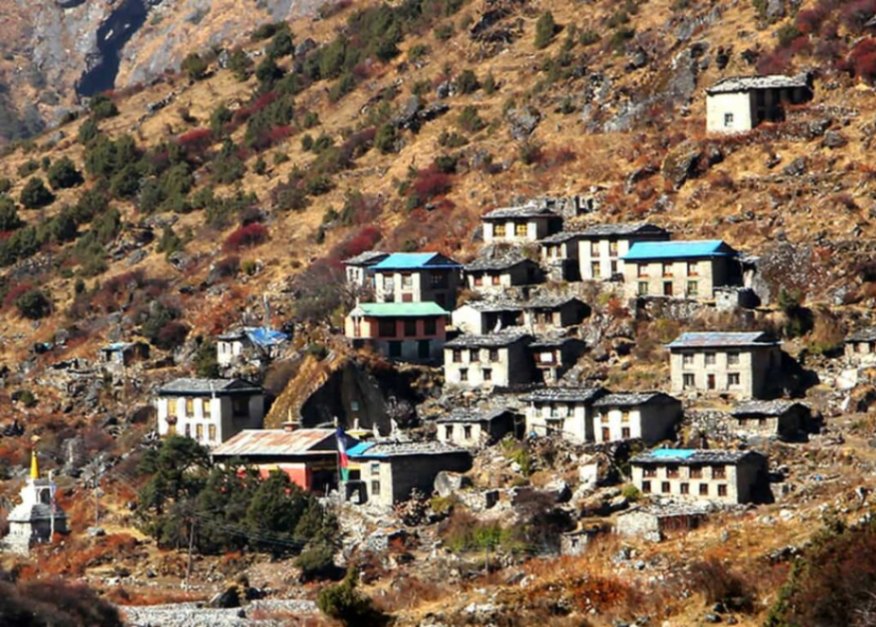
Pangboche Village on the Way to Everest Base Camp: Complete Travel Guide
Pangboche is one of the most beautiful and culturally significant villages along the Everest Base Camp (EBC) Trek. Pangboche is located in the Khumbu region of Nepal about 3,985m above sea level, and is a solitary village between Tengboche and Dingboche.
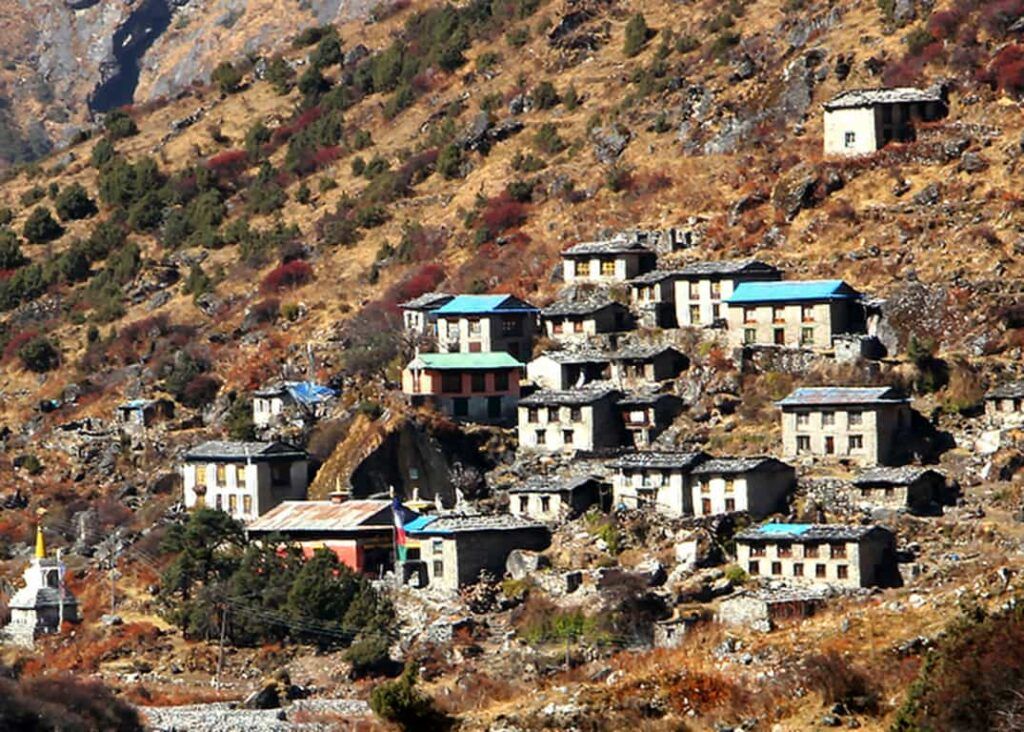
Enclosed by majestic Himalayan mountains, old Buddhist temples, stone houses and lush hills, Pangboche offers a window into the traditional Sherpa life. It is also an essential night-stop for trekkers going to Everest Base Camp.
For many trekkers, Pangboche is more than just a place to sleep. It's a chance to relax, learn about the local culture, take in the mountain scenery, and get ready for the climb up in elevation.
What is the location of Pangboche village?
Pangboche is situated in the Khumbu Valley of the Solukhumbu District of the Everest Region in Nepal. The village is located on the main trekking trail to EBC.
Trekkers typically arrive at Pangboche from the passing through Namche Bazaar and then Tengboche. From Pangboche, the trail heads towards Dingboche, Lobuche, Gorak Shep and to Everest Base Camp.
Traditional stone houses line the hillside of Pangboche, which can be divided into two main parts: the upper and the lower. It is an important point on the classic EBC trekking route due to its location.
Pangboche Altitude
The town of Pangboche is located about 3,985m (13,074ft) above sea level.
This is much higher than Namche Bazaar which is approximately 3,440 m. This rise in altitude can cause the effects of altitude to start being noticed by trekkers.
Symptoms include:
- Headache
- Tiredness
- Shortness of breath
- Reduced appetite
- Difficulty sleeping
- Mild dizziness
Slowly make the journey and drink enough water to get used to it.
What Makes Pangboche Special on the EBC Trek?
Pangboche has significant importance in several ways.
- Firstly, it is one of the oldest and traditional settlements in the Everest region. The village still had a lot of the Sherpa culture.
- Secondly, it is directly on the trekking route EBC so it is a convenient halt.
- Third, Pangboche provides impressive views of the surrounding Himalayan landscape.
- Last but not least, the village is home to the historic Pangboche Monastery, an important cultural and religious landmark in the area.
Pangboche Monastery
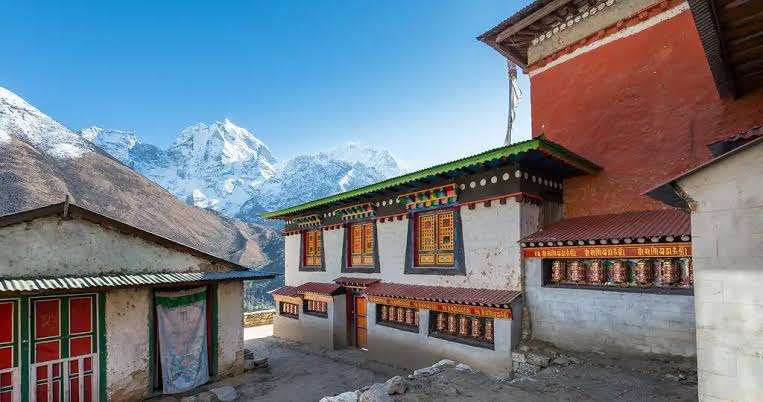
The Pangboche Monastery, also called as Pangboche Gompa is one of the major attractions of the village.
The monastery is also linked to Tibetan Buddhism and has been an integral part of the spiritual life of the local Sherpa community.
It is believed that the monastery was built several centuries ago and is one of the important monasteries in the Everest region.
It is important to keep in mind that monasteries are religious places in use. When trekking, wear respectful clothing, keep noise to a minimum and adhere to local directions for trekking.
What Can You See Around Pangboche?
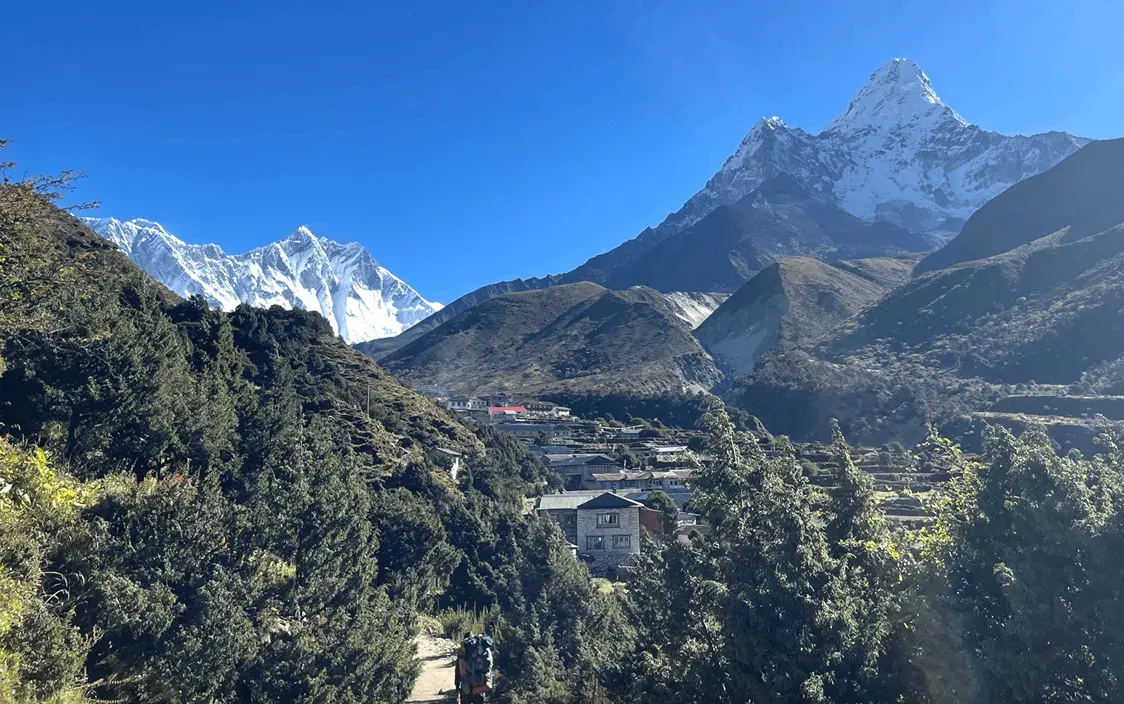
Pangboche is a place with stunning mountain views.
The summits viewed include:
- Ama Dablam
- Lhotse
- Everest
- Thamserku
- Kangtega
- Tawoche
- Island Peak
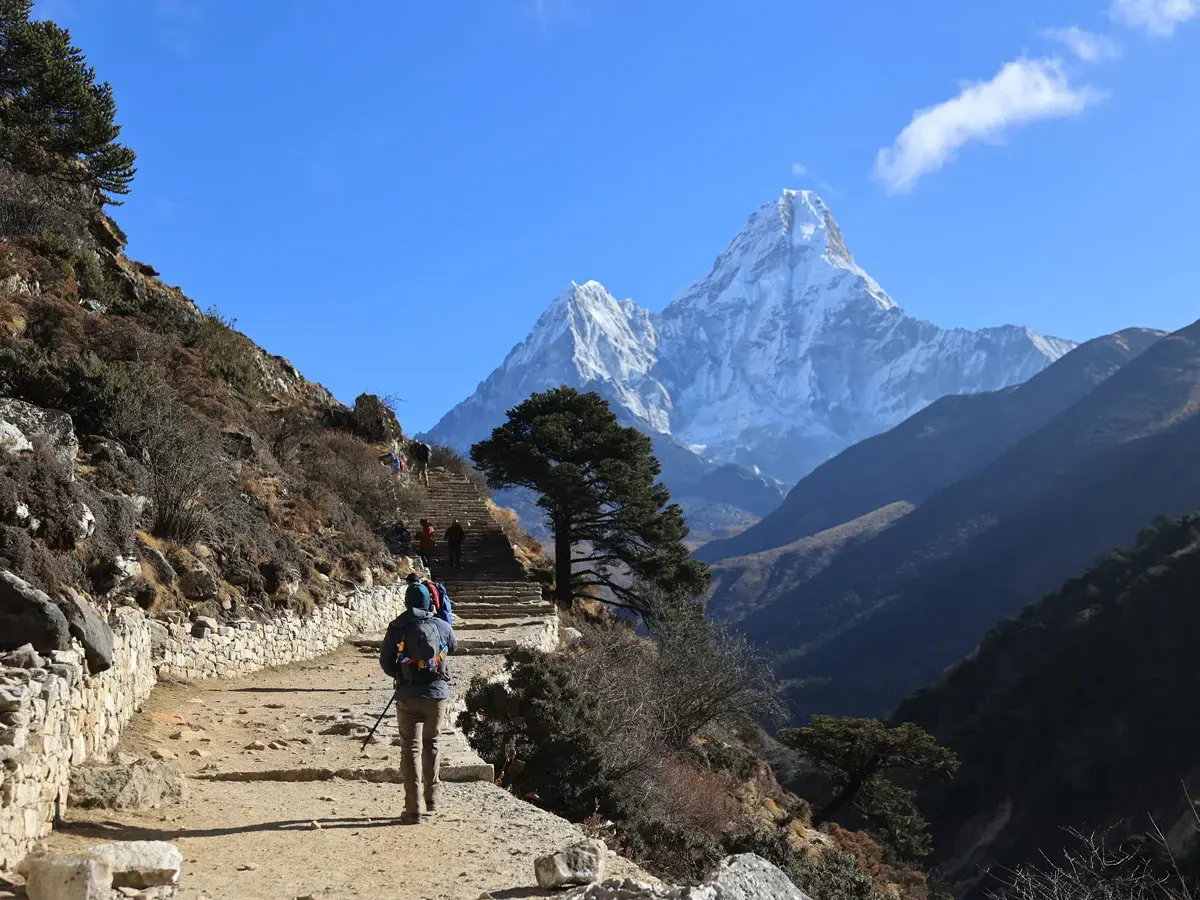
Ama Dablam is particularly impressive from this part of the Khumbu Valley. It stands out from the landscape with its unique pyramid shape at its top.
The area is very picturesque due to the mountain peaks, the Alpine vegetation, stone walls, prayer flags and traditional houses.
Pangboche on the Everest Base Camp Route
Pangboche is normally the destination after a trek from Tengboche.
A typical route is:
Lukla (to reach the village) to Phakding, to Namche Bazaar, to Tengboche, to Pangboche, to Dingboche, to Lobuche, to Gorak Shep, to Everest Base Camp.
But trekking routes are different, though. Depending on the schedule, fitness, weather and acclimatisation requirements, some trekkers choose to sleep in Pangboche while others proceed on to Dingboche.
Tengboche to Pangboche
Tengboche to Pangboche is one of the beautiful routes of EBC trekking.
Leaving Tengboche, the trail skirts through forests, then through the Khumbu landscape.
The trekking becomes more and more alpine as you enter the village of Pangboche.
This walk takes about 3-4 hours at a leisurely pace and depending on the trail conditions and stops.
Pangboche to Dingboche
Most trekkers would usually take around 3 to 4 hours to reach Dingboche from Pangboche.
The trail is along the Imja Valley with a great view of Ama Dablam and other nearby peaks.
The trek is also quite steep in terms of elevation, as Dingboche is situated at approximately 4,410 metres.
Activities and events you can experience in Pangboche.
While Pangboche is primarily a trekking destination, there are a few activities one can enjoy while at Pangboche.
1. Visit Pangboche Monastery
The Monastery is one of the most important destinations in the village.
Understand the Buddhist heritage of the Sherpa people and see the religious buildings and environment.
3. Take in the views of Ama Dablam
There is a good view of Ama Dablam from Pangboche.
Clear skies can provide some of the most beautiful lighting in the early morning and late afternoon.
3. Explore the Village
Walk slowly around Pangboche, enjoy the traditional stone houses, mani walls, prayer flags and mountain views.
There are also opportunities to experience the local atmosphere outside of the busier trekking centres by walking around the village.
4. Experience Sherpa Culture
Pangboche is a suitable place where you can learn the traditional culture of the Sherpa people.
You can communicate with locals, stay in a teahouse run by the locals and learn more about life in the highland Himalayas.
5. Rest and Acclimatize
At almost 4,000 m, Pangboche is a good place to stop on the way to the higher regions.
If the time permits, it may be helpful to spend extra days here to appreciate the environment and ease your body's acclimatization process.
Accommodation in Pangboche
There are a number of teahouses, lodges and guesthouses in Pangboche which serve the trekking visitors.
Accommodation is quite comfortable and simple, sufficient for a trek.
Most teahouses provide:
- Doubles or Twin rooms
- Beds and blankets
- Dining areas
- Hot meals
- Tea and coffee
- Charging facilities
The properties have Wi-Fi available in some.
Hot showers offered at some lodges for an extra fee
As you ascend up to Lobuche and Gorak Shep, facilities become more basic.
So it must be good to get a good night's sleep first in Pangboche and then move on to the higher part of the trek.
Food in Pangboche
Most teahouses at Pangboche will offer traditional Nepali cuisine as well as trekker cuisine.
Popular options include:
- Dal bhat
- Sherpa stew
- Thukpa
- Momo
- Noodles
- Fried rice
- Pasta
- Eggs
- Porridge
- Pancakes
- Toast
- Soups
- Tea
- Coffee
Dal bhat is one of the most popular trekking food items since it is a source of carbohydrates, protein, and is generally offered again.
However, high altitude meals tend to be warm and easy to digest.
Best Time to Visit Pangboche
The best seasons for trekking through Pangboche are generally spring and autumn.
Spring: March to May
Trekking conditions are relatively stable in the spring, with good mountain visibility.
The lower parts of the trail can also have blooming rhododendrons and other vegetation.
The EBC trek is especially popular during April and May.
Winter: December and January
Fall is another great trekking time of year.
The nights are typically clear after the monsoon and the visibility may be really great.
The Everest Base Camp route is one of the busiest months of the year in October and November.
Summer: June to August
Winter is cold with snow.
There may be some trekking routes and lodging available, but it can be difficult.
During the winter months, visitors to Pangboche should be prepared for the cold weather and the potential for snowfall.
Monsoon region (June-July-August).
Although the Everest region is relatively protected from the direct influence of the monsoon, the frequent rain showers, cloud and slippery trails can still disrupt travel plans, as can flight cancellations.
The visibility is also not as predictable on mountains.
How to Reach Pangboche
Most people who are looking for the Everest Base Camp Trek start from Kathmandu and fly to Lukla.
The next leg of the journey from Lukla is a hike along the Khumbu valley.
A typical itinerary is:
Day 1 Kathmandu to Lukla and trek to Phakding.
Day 2: Phakding to Namche Bazaar
Day 3:Acclimatizing in Namche.
Day 4:Namche to Tengboche.
Day 5: Tengboche to Pangboche.
Day 6: Pangboche to Dingboche
This is a sample only. There should be enough acclimatization days in a good plan, particularly in higher altitudes.
The distance from Pangboche to EBC is 120km.
Pangboche is still a few days from Everest Base camp.One of the most frequent routes from Pangboche goes through:
Everest Base Camp is located on the eastern side of the mountain.Everest Base Camp is on the east side of the mountain.
The distance and trekking time will be determined by a particular route and a particular itinerary.
Trekkers must not use distance as their sole criterion. Even relatively short strolls can take several hours at high altitudes, due to less oxygen in the air and steep terrain.
Is Pangboche Suitable for Acclimatization?
The elevation and position of Pangboche can make for a good stop on the acclimatization journey.
But, acclimatization isn't just a one-night-only thing at a certain village. The ascent needs to be gradual, there must be rest days on suitable elevation, and fluid intake and knowledge of the symptoms of altitude sickness are all important.
If symptoms become serious (e.g, difficulty breathing at rest, confusion, inability to walk normally, worsening symptoms) it is important to go to a lower altitude and seek medical help.
Items to bring to Pangboche.
You can use the same equipment you use (or brought) on the EBC trek for Pangboche.
Important items include:
- Warm down jacket
- Thermal base layers
- Trekking pants
- Waterproof jacket
- Warm hat
- Gloves
- Trekking boots
- Thermal or wool socks
- Sunglasses
- Sunscreen
- Water bottle
- Headlamp
- Power bank
- Personal medications
- Basic first-aid supplies
- A sleeping bag for cold weather conditions.A cold weather sleeping bag.
- Trekking poles
One of the best benefits of layering is that the temperatures may vary from day to night.
Mobile Network and Internet in Pangboche
In parts of the Everest region, there is mobile connectivity and internet access, which may not be consistent. A few teahouses have WiFi connectivity but it may not be as fast or reliable as in Kathmandu or Pokhara.
Don't use the mobile internet as your sole means of communication.
Before starting the hike it is recommended to download essential maps, booking information, documents and emergency contacts.
Electricity and Charging
There is electricity available in Pangboche, although charging may be available at different hotels and other lodging.
Most of the tea houses also have an extra electric charge.
It is therefore helpful to have a portable power bank or battery.
If you have a camera, phone, smartwatch or other electronic gear, think of packing enough battery for a few days.
Is Pangboche Safe for Trekkers?
Pangboche is one of the main destinations on the already established EBC trail and is visited by trekkers regularly.
But trekking at high altitudes is always risky.
The primary worry is altitude sickness.
Avoid dismissing symptoms, because you may already have successfully arrived at Pangboche without any issues. As you get higher, you may develop altitude sickness.
Take things slow, drink plenty of liquids, limit alcohol and give your body time to acclimate.
Mountains are a place where the weather can also turn suddenly. Always take the word of your guide and local authorities.
Tips for Visiting Pangboche
Keep these tips in mind when staying in Pangboche:
Take your time. Walking is more difficult than it would seem from a map when walking at the altitude.
Stay hydrated- Consume drinking water frequently during the day.
Carry cash- Card and electronic payment options aren't always available or reliable.
Respect local culture- Rule the monastery and respect the religious place.
Book in advance during peak hours- Pangboche can get busy in the spring and autumn.
Keep warm at night- Temperatures can drop significantly after sunset.
Charge batteries as much as possible- Not all the time, electricity may be unavailable.
Avoid making a hasty approach- A more leisurely pace can make the journey safer and more fun.
Pangboche vs Dingboche
Both villages are important stops on the EBC route, but they offer different experiences.
| Feature | Pangboche | Dingboche |
| Approx. altitude | 3,985 m | 4,410 m |
| Location | Imja Valley | Imja Valley |
| Main attraction | Pangboche Monastery and Sherpa culture | Acclimatization and mountain scenery |
| Landscape | Green and alpine | More barren and high-altitude |
| EBC route | Yes | Yes |
| Accommodation | Teahouses and lodges | Many teahouses and lodges |
| Acclimatization importance | Moderate | Very important |
Many EBC itineraries include Dingboche as the main acclimatization stop because of its higher elevation.
Why You Should Not Skip Pangboche
Some trekkers view Pangboche simply as another overnight stop.
However, spending time here can add a cultural dimension to your EBC journey.
Unlike the final stages of the trek, where the landscape becomes increasingly rocky and barren, Pangboche still has a strong connection with the traditional Khumbu village environment.
The monastery, stone houses, prayer flags, mountain views, and local community make it a memorable section of the trek.
Conclusion
One of the best places in the Everest Base Camp Trek is Pangboche. But it's so much more than just an overnight stop because of its Himalayan vista, Sherpa culture, traditional architecture and Buddhist heritage.
Pangboche is a significant village for trekkers en route to Everest Base Camp as it is a gateway to the higher Himalayas. The route begins to become a little trickier, the air gets thinner and the views gradually change from the urban landscape to a rugged alpine one.
Spending time to enjoy Pangboche, to appreciate its culture and acclimatize one's self properly will make the trip to the basecamp of Everest safer and more rewarding.
If you are a trekker planning a trek to EBC then do not think of Pangboche being just a camp between Tengboche and Dingboche. It's similar to one of the villages that defines the Everest Base camp tour.
FAQs
What is the height of Pangboche?
Pangboche is about 3985m (13074ft) above sea level.
Does Pangboche have a basecamp route on Everest?
Yes, Pangboche is on one of the classic trekking trails to Everest Base Camp, and is often visited after Tengboche.
How long does it take from Tengboche to Pangboche?
This hike typically takes about 3-4 hours and varies based on the pace, trail conditions, and stops along the way.
How long does it take from Pangboche to Dingboche?
Approximate time is about 3-4 hours, depending on the trail and trekker.
Is there a place to spend the night in Pangboche?
Yes,Trekkers can stay at several teahouse/lodges in Pangboche.
Which is higher between Pangboche and Namche Bazaar?
Yes,The altitude in Pangboche is approximately 545 meters above the altitude of Namche Bazaar and it is more important to acclimatize at high altitude.
What does Pangboche in the Himalayas known for?
Pangboche is famous for its traditional Sherpa settlement, Pangboche monastery and its breathtaking views of Ama Dablam and other Himalayan peaks.