
Sherpa Villages, Religious Festivals, and Local Traditions Around Gokyo Lake

In the heart of the Himalayas, Gokyo Lake is a beautiful turquoise glacial lake wrapped away in old pathways. Miles of higher elevation snow capped peaks. Many trekkers are drawn to this area simply because of the stunning landscape. But the wonderful part of Gokyo is all about trekking through Sherpa culture, and watching their unique intention and way of life in a really remote place.

From the warm and friendly hospitality in villages to the inspiring chanting of Buddhist monks in a monastery. Gokyo gives us the opportunity to experience the heart and soul of Sherpa life. Sherpa culture, including their customs, festivals, beliefs, and rituals, roots. The life of the mountains along with the experience of being in the Himalayas geographical and physical images and courage. In this blog, you will visit some of the Sherpa villages just outside Gokyo Lake to explore their spiritual festivals and ceremonials collectively. As well as traditions and aspects of Sherpa life in this amazing corner of Nepal.
1. Guardians of the Himalayas, Sherpa
Sherpas are likely the most well-known mountain community. They migrated from Tibet to the Khumbu area of Nepal. And now, they are settled in the Gokyo Valley and upper Everest area. The name Sherpa is derived from Shar-wa, meaning “the Eastern people.” The Sherpa have maintained their culture based solely on Tibetan Buddhism. They respect all living things, and a unique social structure partly based on communalism and sharing.
The Sherpa are noted for their unmatched climbing ability, as well as their ability to fsurvive at very high altitudes. However, recently the Sherpas have become known as elite climbers and trekkers. They are also cliff farmer, artisans, and guardians of divine mountains. Their lives exist in a practical and sustainable structure with spirituality alive. And living at 4000-5000 meters has a meaning that is simple, and yet not simple.
2. Sherpa Villages Along Gokyo Lake
The Gokyo is a part of Sagarmatha National Parl. It is one of the UNESCO World Heritage site for its geographic and mountainous culture of richness. While trekking the Gokyo Valley trail, there are a few special Sherpa villages that have remained as ancient as their history:
a. Namche Bazaar (3,440 m)
High in the heart of the Himalayas, Gokyo Lake is a beautiful glacial lake tucked away in old pathways and continuous miles of higher elevation snow capped peaks. Many trekkers are attracted to this area simply because of the stunning landscape. But the wonderful part of Gokyo is all about trekking through Sherpa culture, and watching their unique intention and way of life in a really remote place.
Namche is a fantastic place to experience Sherpa culture as well. The Sherpa Cultures Museum displays traditional dresses, farming implements, and articles from the first climbs to Everest. The museum provides a glimpse into Sherpa history and how their ways of life have changed over the years. On Saturdays, the locals gather together in the market, to trade goods, and share stories and conversation. This is so fun to witness, with the village covered in stall after stall of fresh groceries.
b. Dole and Machhermo: Quiet Mountain Villages
As you make your way up the trail to Gokyo you will come to the quiet villages of Dole (4,200 m) and Machhermo (4,470 m). While not as small a Namche, Dole and Machhermo are smaller and quiet. They offer more of the intimate experience of time spent together with Sherpa village life.
In this region, the livelihoods of its people are based on farming and yak husbandry. Potato and barley crops cling to the hill slopes, pasture is available for yak herding. The source of food for the high Himalayas for generations past. At night, the hum of spinning prayer wheels melds with the sound of voices in kitchen fires. Machhermo has special keeping in local myths. According to Sherpa legend, this was the location of the yeti sighting many yearsago. The elders, in the freezing cold of night, relay the history of the “mountain man.”
c. Gokyo Village (4,790 m)
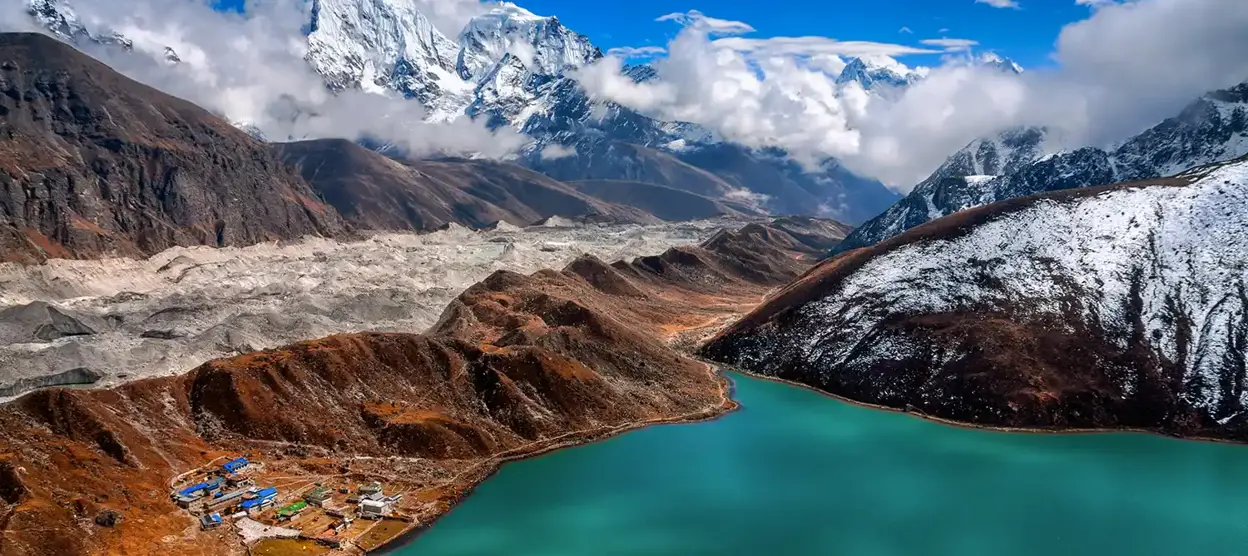
It is situated next to the third and largest of the Gokyo lakes. Gokyo Village is one of the most beautiful high-altitude villages in Nepal (it’s a bit remote yet peaceful and spiritual). Gokyo is surrounded by sacred lakes and Gokyo Ri (5,357 m) guards the small village. Within Gokyo there exists a prayer wheel, a small Buddhist monestary, and stupas (chortens). There is no doubt that the Sherpa of Gokyo have considerable respect for the lakes. They consider the lakes to be home to the Nagas, serpent deities tasked with ensuring the lakes remain a source of pure water.
During Janai Purnima,hundreds of pilgrims come to the lakes, often from the Khumbu region, but also noticeably from India and Tibet. To bathe, pray, and perform their rituals for purification and protection.
3. Spiritual Life: Buddhism in the Gokyo Region
Tibetan Buddhism forms the spiritual basis of Sherpa life. They carry the weight of the teachings of Guru Rinpoche (Padmasambhava), and possessing qualities of both the Nyingma and Gelug schools. Each settlement in the Gokyo Valley is marked with the visible aspects of Tibetan Buddhism such as reading sacred mantras and each village has a small monastery (gompa).
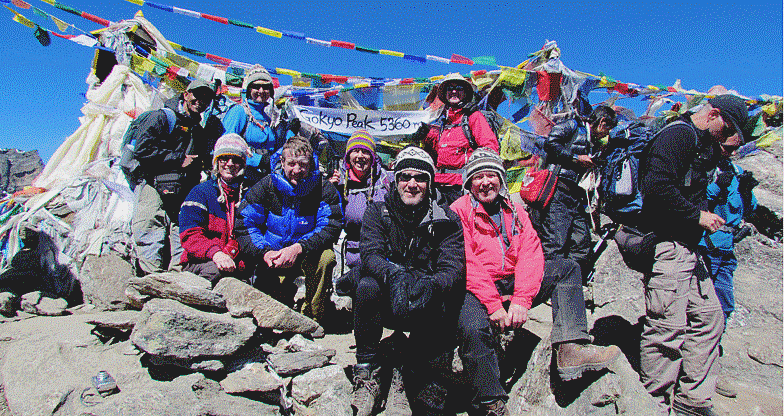
Often, we see prayer flags flying in the wind representing the way peace and compassion. They are spread in the mountains, and are regarded as cleansing (the wind carrying the travelers’ prayer requests to all beings). They believe it brings peace and well-being to the lives of humanity and nature.
Inside, monks can be observed spinning prayer wheels, singing sutras (the written prayers). Trekkers passing are also welcome to drop in and join in the “spirit” of the time during silent meditation, offering butter lamps, or simply listening to the entrancing rhythm of the chant.
Tengboche Monastery is recognized as one of the most important monasteries in the region, located along the trekking path to Everest Base Camp. Although the path does not lead directly to Gokyo, Tengboche is significant to the spiritual life of the Khumbu Sherpas. Many villagers from Gokyo take any chance they can get to visit Tengboche, especially during festivals.
4. Religious Festivals of Gokyo Lake
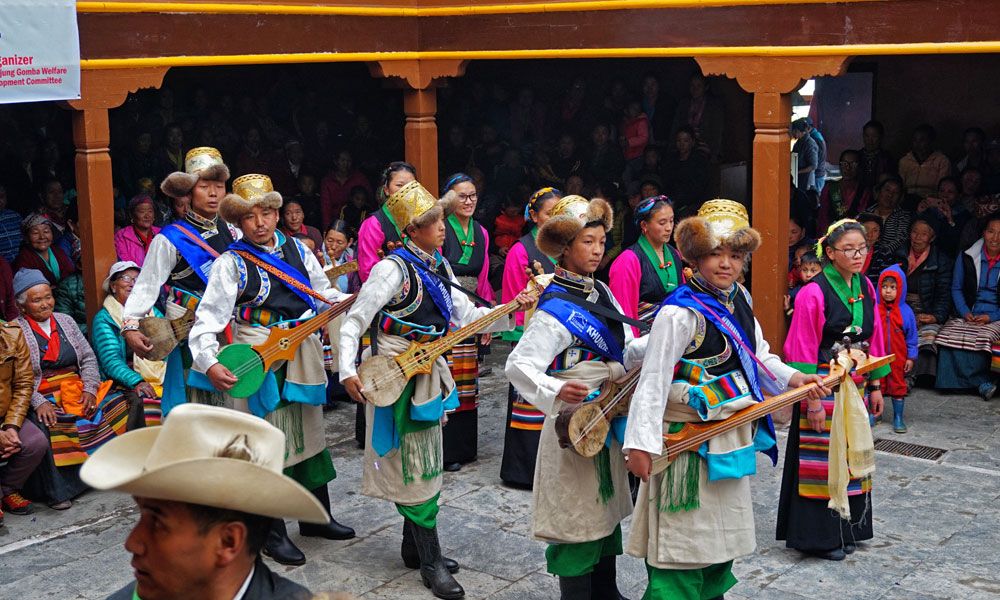
Sherpa festivals are fun and colorful expressions of faith and community. Sherpa calendars are based on the lunar calendar from Tibet and festivals are distinguished by dance, music, and ritual that connect the spiritual to the “secular world.”
We will only mention a couple of the more important religious festivals occurring around the villages surrounding Gokyo Lake.
a. Mani Rimdu Festival
Mani Rimdu is frequently regarded as one of the most sacred of all Sherpa festivals. It is normally celebrated at the Tengboche Monastery. Although there are also celebrations at the monasteries of Thame and Chiwong. Mani Rimdu is typically held in either October or November, and serves as a marker for the end of monsoon and the beginning of climbing season.
Monks perform a masked dance that illustrates the victory of good over evil. While the village lets in local Sherpas the community gathers for a blessing. The festival takes place over several days, and includes prayers, music, and dances that refer to the teachings of Buddhism. Even though the Gokyo villagers will have to travel to Tengboche to participate. The residents of Gokyo have built much anticipation around this event.
b. The Dumji festival
This festival takes place in almost every Sherpa village surrounding Gokyo. Dumji gives tribute to the Guru Rinpoche the founder of Tibetan Buddhism. As it is a family based commitment and offering of gratitude. This festival also consists of masked dances or chams, sharing of local food, and locally offering to the local god.
c. Lhosar
The only other significant event throughout the Khumbu area is Lhosar (the new year celebration in the Tibetan culture). Lhosar is celebrated either in February or March, and each year brings about the new lunar year.
Residences are organized up and decorated with vibrant prayer flags. Families cooks particular meal, one being guthuk (a noodle soup featuring ingredients that are meaningful). The monasteries hold a prayer service asking for peace and good luck. Villagers mix, wish well, exchange gifts, and a butter lamp (ghee lamp) with their neighbors. Families assemble in the Gokyo and pray for blessing in the upcoming year.
d. Janai Purnima and Gokyo Lake Pilgrimage
Every year in August, the full moon, and for Janai Purnima or Raksha Bandhan. Gokyo Lake is one of the sacred places for pilgrimage. Thousands of Hindu and Buddhist pilgrims make their way to the renowned lakes to get into the cold, icy water, some coming from as far as Nepal.
Many pilgrims believe that to immerse themselves in the holy, cold lakes will clean your sins and the gods will bless them in the process.
Monks, priests, and experienced leaders will provide a service on the lake. They bring flowers and incense, and chant prayers. The memorial memories for Sherpas signify a renewed relationship with the elements of nature and divine power through spiritual energies from the sacred lakes where the bodies of divine residence.
5. Local Customs and Traditions
The people of Gokyo Valley lead their lives in harmony with nature and with the Buddhist principle and value of balance and compassion. The following are a few of the important values and customs that create Sherpa lives:
a. Community and hospitality
Sherpas have a reputation for hospitality. Guests are usually greeted with a cup of butter tea (su cha) or salt tea made with yak butter and yak milk. The open hearth in homes and lodges is often the center of warmth and conversation.
Collaboration is an important value referred to as “Nawa” in Sherpa society. Villagers work together as a community in agriculture, assisting one another during both planting and harvesting seasons. In addition, villages share village resources to create trails, construct monasteries, and build schools.
b. Yak herding and the mountain economy
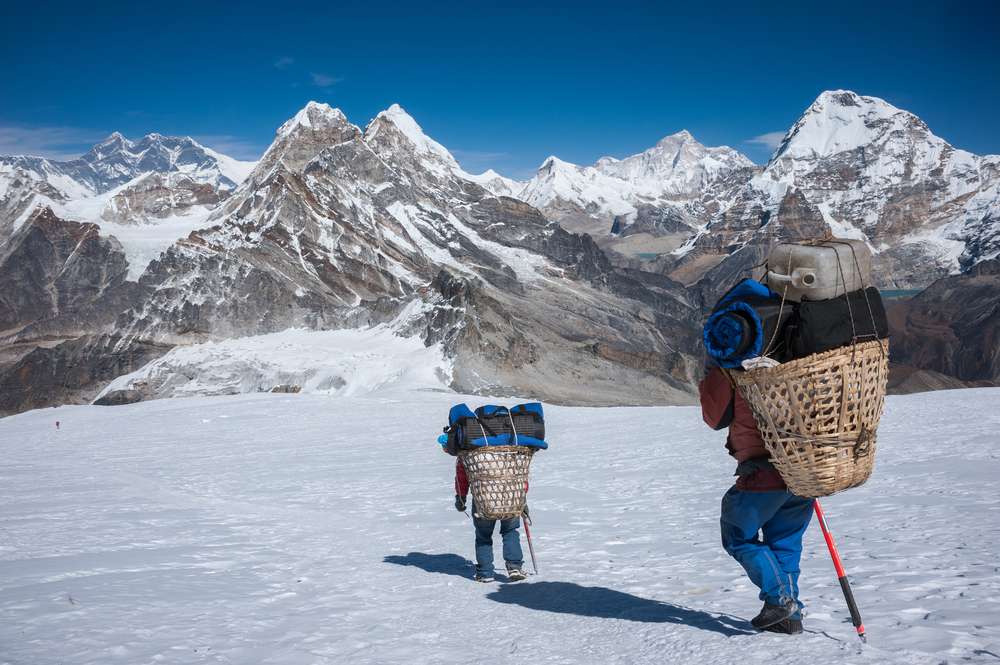
Yaks are a key pillar of durability of life at high altitude. They provide milk, butter, and wool, and they are heavily relied on as pack animals to carry goods over the mountain passes. For example, during the summer, Sherpa herders will walk-on foot to their yaks to high pastures. In the winter, when the crowd return to lower elevations with the yaks.
On your journey, you will likely see yaks of various colors traversing the landscape carrying goods between villages. This aspect of lifestyle reflects a fascinating duality of human beings and nature in the Himalayas.
c. Housing and Villages
Sherpa homes are typically made of local stone, possess wooden roofs, and feature small windows to keep in the warmth. Most homes contain a prayer altar room where the family carries out their daily prayers and burns a butter lamp. Villages are generally built around monasteries. Since living spiritually is an important lifestyle when living as a community.
Along the trails, prayer walls (mani walls). We can found with the words Om Mani Padme Hum written on them. Trekkers should always walk to the left of these walls; this too is a nod to Buddhist practice.
d. Food and Life
Typically, Sherpa meals are simple and easy to digest, Under the premise of providing energy to trekkers in a cold mountain environment. Sherpa dishes include dal bhat (lentils and rice), shyakpa (Sherpa stew), momo (dumplings), and tsampa (toasted barley flour).
Butter tea and chang (local barley beer) are commonplace in social gatherings and ceremonies. Friends and family often share a meal together, under the Sherpa tradition of generosity and shared time.
6. Preserving Culture in a Changing World
In recent decades, the trend of trekking and visiting Gokyo has drastically changed the region. The positive aspect of this change is that it created opportunity for the economy. However, Sherpa community continues to make efforts to protect their cultural identity and avoid the consequences faced from the effects on their environment. The central villages of Gokyo have lodges and monasteries which promote eco-tourism activities. They promote waste management, and respect for local customs and traditions.
Younger generations are getting much more involved to help preserve their cultural belief through education, music, and local crafts. Trekkers can also contribute. Just the way in which they observe their behavior, or by being respectful and learning a simple greeting in Nepali, encourages interaction with locals and a sense of pride in their heritage. Properly dressing near monasteries, shopping from local stores, just to name a few small changes allows the community to walk the fine line between culture and progress.

Cultural Awareness for Trekkers
If you are planning to travel to Gokyo Lake, here are some ways to show cultural respect and connect with the Sherpa community in meaningful ways:
- Always walk clockwise around chortens and mani walls.
- If you are going to take a photo of someone, or take a photo inside a monastery, be sure to ask permission.
- Always remove your shoes before entering a religious building or a person’s home.
- Do not touch prayer flags or religious items with your feet.
- Learn a few phrases in Sherpa or Nepali! Just saying “Tashi Delek” (hello, good luck) can open many doors.
- Support local lodges and shops to help support the community.
Conclusion
A visit to Gokyo Lake is about more than simply stunning water and snowcapped peaks. It is an experience of stepping into a world where spirituality, nature, and community are tightlylinked.
The Sherpa villages, their religious festivals, and local customs surrounding. Gokyo represent a lifestyle that has been practiced for centuries And is based on simplicity, faith for the mountains. Each smile, each prayer flag, and each butter lamp tell endless stories in representation of walk of life, peace, and harmony, in one of the highest inhabited places on the planet.
It doesn’t matter if you are a trekker, a pilgrim, or just a traveler. Gokyo’s invitation is more than seeing the beauty. It is understanding the heart, which is a living culture, which makes the Himalayas truly timeless.