
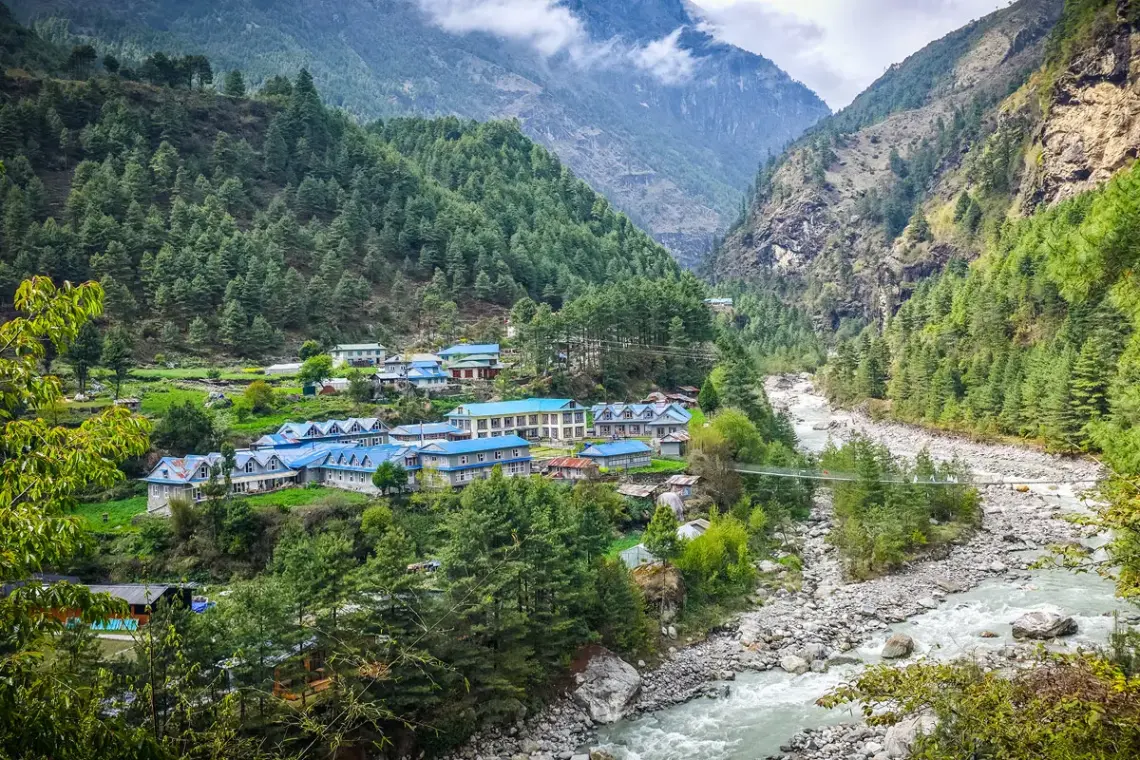
Phakding Village and Surrounds: A Complete Guide for Everest Trekkers

Everest Base Camp trek is usually related with the names of Lukla, Namchi Bazaar, Tengboche, Everest Base Camp and Kala Patthar. However, before you arrive at these iconic places, there is a serene Himalayan village that your journey begins.
The village is called Phakding. Phakding is one of the most significant trekking villages on the Everest trek that lies next to the Dudh Koshi River in the Khumbu region of Nepal. Lukla is the first place for an overnight stay for the majority of trekkers who leave Kathmandu for Lukla by air.
The village is located at about 2610 m and provides a nice introduction to the Everest region. It is a green landscape, the river flows next to the trail, prayer flags flutter with the breeze of the mountain and traditional houses and tea houses add a sense of a Himalayan town.
Nepal Tourism Board also lists Phakding and Monjo as popular first day stops from Lukla to Everest Base Camp.
Phakding is not just a place to put down your head and eat dinner before you climb to Namche. The village and the surrounding areas provide scenic river walks, monasteries, suspension bridges, forests, traditional settlements and of course Sherpa culture.
However, if you look around carefully, you too can make the most out of your time in Phakding on your Everest trip.
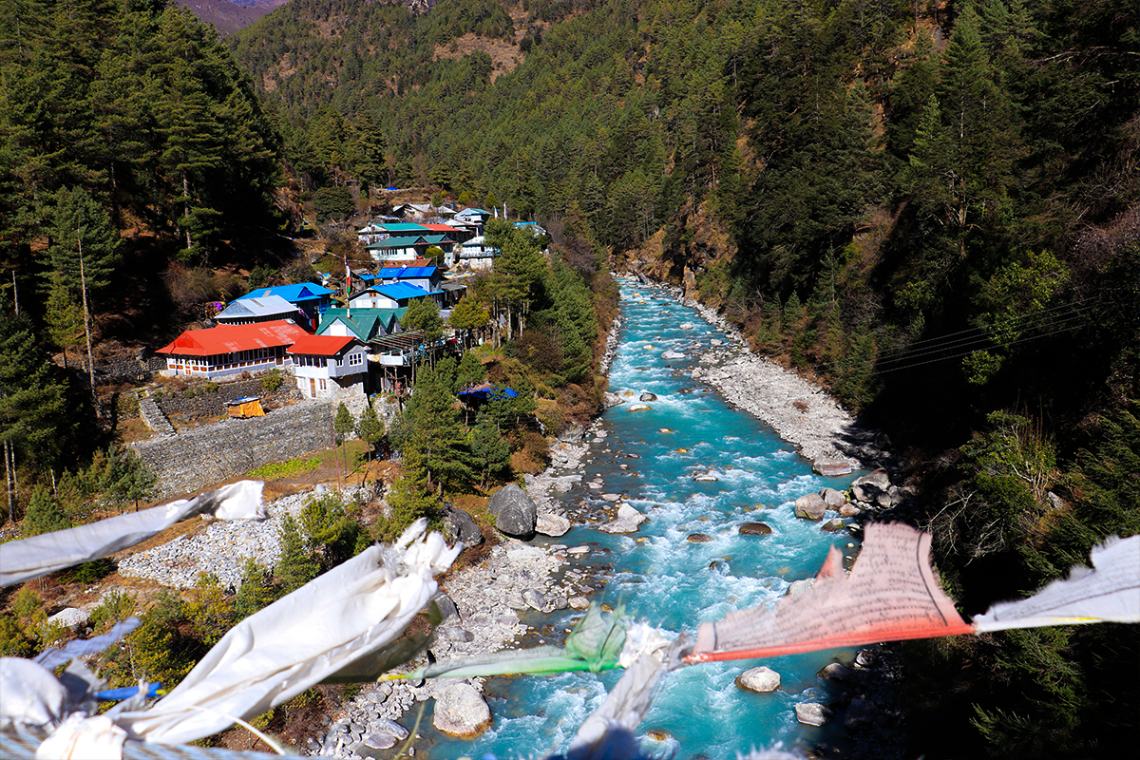
Where Is Phakding Village?
Phakding is situated in Khumbu area, Dudh Koshi River in Solukhumbu District. It is located in between Lukla and Namche Bazaar and it acts as a place of convenient rest for trekkers heading towards Everest Base Camp.
The majority of trekkers arrive in Phakding after flying from Kathmandu to Tenzing Hillary Airport (Lukla) and starting their hike from there.
This trek from Lukla to Phakding is a fairly easy walk in comparison with the strenuous stretches ahead. This path winds through forests, farmlands, small villages, suspension bridges and traditional mountain villages along the Dudh Koshi valley.
Phakding is located at approximately 2610m above sea level (lower than Lukla at between 2840m and 2860m).
This will mean that on your first day on trek you will do some descent after landing in Lukla.
Phakding at a Glance
Location: Khumbu region, Solukhumbu, Nepal
Altitude: Approximately 2,610 meters
River: Dudh Koshi
Nearest major trekking hub: Lukla
Next major destination: Namche Bazaar
Main trekking route: Everest Base Camp Trek
Main community: Sherpa
Typical stay: One night
Main attractions: Dudh Koshi River, monasteries, suspension bridges, forests, Sherpa settlements and mountain scenery
Why Is Phakding Important on the Everest Base Camp Trek?
Phakding is the first time many people get to experience the Everest region.
The trip to Lukla is already an adventure. However, as soon as you're outside the airport and on your feet, things change rapidly.
The streets and traffic noises fade away.
Rather, you hear the river.
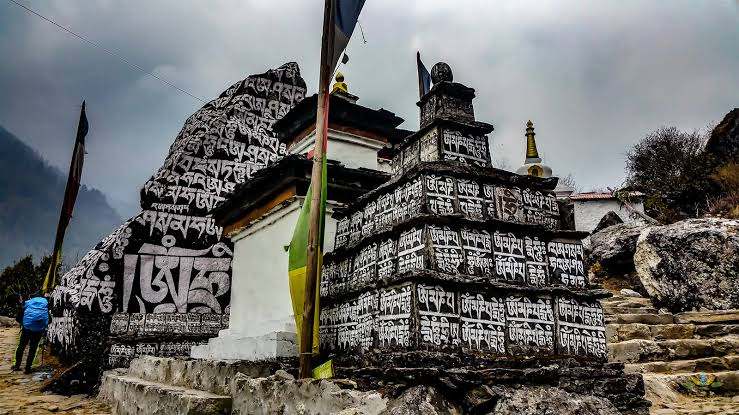
The stone walls, mani stones, prayer wheels and small mountain settlements are passed. You traverse suspension bridges adorned with prayer flags. Trails are used by porters and trekkers and locals go about their business.
This is where the trekking pace starts in the Himalayas.
The first night in Phakding is also helpful prior to the more strenuous ascent towards Namche Bazaar. The next day's hike is quite an uphill one, and Namche is located at about 3,440m.
This is why it isn't always essential to rush through Phakding.
If you can, have a leisurely first day after your flight, allowing time to recover, get to a good dinner, drink plenty of water and get ready for the ascent to come.
Lukla to Phakding Trek
It takes about 3 to 4 hours to walk from Lukla to Phakding depending on your speed, weather conditions, trail conditions, and stops and luggage.The distance is typically estimated at approximately 8 km, and may vary depending on the trail and the method of measuring the distance. The trail starts at Lukla and winds through a few small villages before reaching Phakding.
There's something interesting about this first trekking day, it doesn't feel like it's an uphill climb all the way. Rather you have a combination of some ups and downs as you follow the Dudh Koshi valley.
You will pass:
- Traditional mountain homes
- Stone walls
- Terraced farmland
- Pine and rhododendron vegetation.
- Mani stones
- Prayer wheels
- Suspension bridges
- Small tea houses
- Local settlements
This is an excellent introduction to trekking in Nepal for those who are new to this experience.
The Dudh Koshi River: The Soul of Phakding
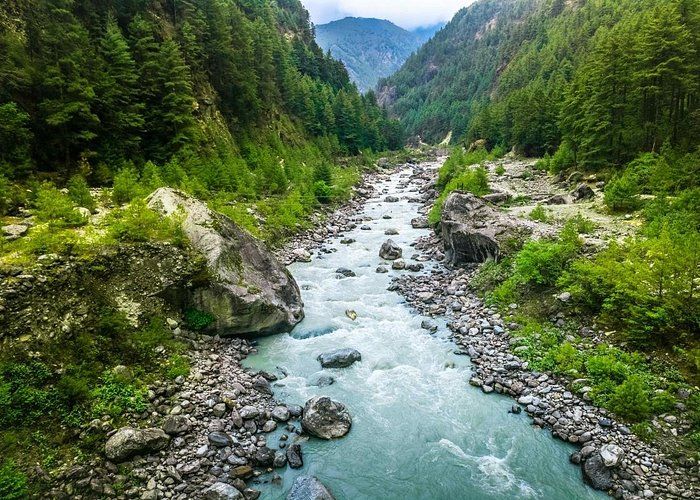
The Dudh Koshi River is one of the most beautiful in Phakding. The valley is crossed by the river and follows the trek along the lower route of Everest by much of the way.
The name of Dudh Koshi in English means “Milk River.”
The rushing of the water between rocks can be heard as you walk along the river. The sound is integrated into the trekking experience.
The river seems placid and tame in some places. In others, it races swiftly down narrow stretches of the valley.
The river also forms a beautiful contrast with the forests and stone houses and Himalayan landscape. When you reach Phakding, don't just rush your way to your tea house, but take some time to check out the river and the surrounding area.
Sit next to the river.
Take in the sound of the water.
Pay attention to the prayer flags.
Allow yourself to know you are in the Everest region.
Phakding Monastery and Rimijung Monastery
The Buddhist monastery, known as Rimijung or Rimishung Monastery is one of the cultural highlights around Phakding. The monastery offers a serene spot outside of the trekking route.
The Khumbu region is associated with the Tibetan Buddhist traditions and monasteries are an integral part of the life of the region.
Along this trekking route, prayer flags and prayer wheels, mani stones and Buddhist symbols can be seen everywhere.When you visit the monastery in the vicinity of Phakding, you are able to gain insight into the spiritual aspect of the Everest region and not just a place for adventure.
The monastery is sometimes claimed to be the connection with the Nyingma school of Tibetan Buddhism.
On visiting be reminded that a monastery is a place of worship first, a tourist resort second.
Wear appropriate clothing, use subdued language and request permission before taking pictures of individuals or religious proceedings.
Suspension Bridges Around Phakding
One of the most iconic structures on the trail to Everest Base Camp is the suspension bridge.
There are a number of bridges in the Phakding area which cross the river Dudh Koshi and its tributaries.
Setting foot on a suspension bridge across the Himalayas is one of the most thrilling experiences for many inexperienced trekkers.
People may move the bridge a little when they walk.
Prayer flags are waving above you.
The river is far below where the water rushes.
The valley is surrounded by mountains.
This is a straightforward experience, and one that you will likely remember for a long time after you get home.
The bridges are a growing feature of the walk as you head up to Namche.
After Phakding, the trail goes via Monjo and Jorsale, and up to Namche Bazaar.
Exploring the Villages Around Phakding
One of the best ways to experience Phakding is to look beyond the main village.
The Everest trail is not simply a line connecting major destinations. It passes through numerous small settlements, each with its own atmosphere.
Toktok
The village of Toktok is located on the way between Phakding and Namche.
The trail around this goes through forests and along the Dudh Koshi River.
It's a good reminder that the Everest region isn't just composed of popular trekking destinations, but of several small communities.
Bengkar
There are also Bengkar, another village on the way to Namche.
The surrounding area becomes more wooded and the Dudh Koshi leads trekkers further into the Khumbu area.
Monjo
Monjo is significant for its connection with one of the entrances to Sagarmatha National Park.
Trekking permits are issued at the park checkpoint at Jorsale, past Monjo, before heading further into the Everest region.
Another chance to experience local mountain life is at Monjo, before the start of the big ascent towards Namche.
Jorsale
Jorsale is outside the park checkpoint, and one of the last stops before the steep trek to Namche Bazaar.
This is a good place to summit, eat and rest for the trek.
Phakding and Sherpa Culture
Phakding is also a cultural trek. The Sherpa people have had close ties with the mountains and a strong association with the Khumbu region, whose history, traditions and knowledge are deeply intertwined with the mountains.
There are traces of this culture throughout the village-:
- Review the traditional houses.
- Take note of the prayer flags.
- Turn the prayer wheels.
- Pass by manishtones.
- Watch the operation of tea houses and lodges by local families.
- Discuss village living with guide or local residents.
These little moments can be more significant than just clicking pictures of the mountain.
It's one of the most convenient ways to experience this aspect of Phakding by staying in a family owned tea house.
What Is It Like to Stay in a Phakding Tea House?
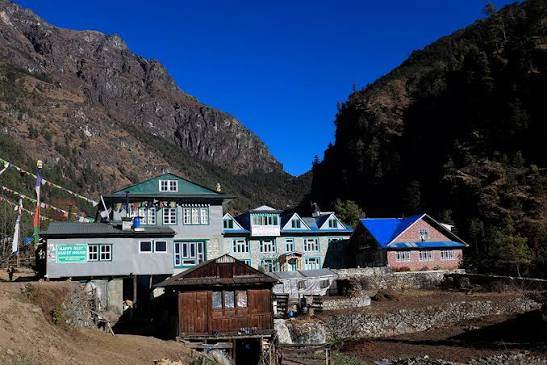
There are some trekking lodges and tea houses in Phakding.
Accommodation is simple but comfortable enough to allow a trekking stay.
You can expect:
- Basic private or shared rooms available.
- Beds and blankets
- Accommodation is in a shared or attached bathroom.
- Dining rooms
- Hot meals
- Tea and coffee
- Charging facilities in several hotels
- A few internet-accessible areas.
Hotels may be different, particularly in the different seasons, weather and lodge.
The dining room can be the focal point of the evening.
Trekkers from various countries sit around tables and share their experiences of their first day on the trek and chat about the route to come.
Someone might be walking towards the base camp of Everest.
A fellow traveller could be walking to Gokyo Lakes.
Someone else is making their first time on the mountains.
A communal ambiance is one of the reasons tea-house trekking in Nepal is unique.
Food to Try in Phakding
Once you get through your first day of trekking, food is no longer just food.
You need energy.
Plus, you’d like something warm.
All through Phakding, there are tea houses serving meals that cater to trekkers.
The most popular dishes are:
Dal Bhat: Consists of rice, lentils, vegetables and sometimes curry. It is the most dependable trekking meal.
Sherpa stew: A typical warm dish that is more enjoyable in cold weather.
Thukpa: A noodle soup that feels good after a long trek.
Momo: A dish of famous Nepalese dumplings is also found on the trekking route.
Tibetan bread: This is a good breakfast or snack item.
Porridge and eggs: Generic options for breakfast before trekking.
And of course, tea is included.
Sipping hot tea while enjoying great views of mountains proves to be really fulfilling after walking for hours.
Things to Do in Phakding
Phakding would require only a day’s visit.
Many activities can be experienced without spending time trekking.
- Stroll Along the Dudh Koshi River
- There is nothing like taking a walk near the river that flows nearby.
- This can be very pleasant to do as you will finish checking into your lodge.
- Visit a Temple
- If you can spare just a little more time, be sure to visit the monastery nearby and get a chance to know the traditions of local monks better.
- Explore the Village
- Take a stroll around the village and observe the architecture as well as the daily life of locals.
- Cross the Suspension Bridges
- Bridges are an important part of Everest trekking, offering stunning sights.
- Enjoy Taking Pictures
- The picturesque beauty of Phakding will give a lot of ideas for capturing great shots.
Phakding to Namche Bazaar
The segment from Phakding to Namche Bazaar is another significant part of this trek.
This is when the hike along the Everest Base Camp trek becomes more difficult.
The way goes next to Dudh Koshi River, known for the streams flowing around forests and villages.
Once trekkers reach Monjo and Sagarmatha National Park, they move forward to Jorsale and cross suspension bridges to rise steeply to Namche.
Namche is situated at a height of 3440 meters and getting there can be hard as the trek starts from Phakding.
The traveling distance between Phakding and Namche can be about 10 - 12 kilometers depending on the route taken, hence the distance traveled taking 5 - 7 hours. (Places Nepal)
- Don’t rush.
- Take rests.
- Drink.
- Eat.
- Walk at your rhythm.
You don’t need to be the first to arrive at Namche, but to get there in the best condition and ready for the further journey.
Sagarmatha National Park Near Phakding
After departing from Phakding, the path leads to further points which are Monjo and Jorsale as the Sagarmatha National Park is discovered.
This park is among the prominent conservation areas in Nepal.
The area is rich in forests, water sources, wildlife, and breathtaking sights.
It’s important to notice how the scene transforms as we rise in the mountains.
Whereas the lower regions of Phakding are full of greenery, the tree line can be seen as the altitude increases.
What to Pack for Phakding
You do not need a completely different packing list just for Phakding.
However, remember that this is the beginning of a high-altitude trek, so prepare for changing temperatures.
Essential items include:
- Comfortable trekking boots
- Warm layers
- Waterproof jacket
- Trekking trousers
- Warm socks
- Gloves
- Sun hat
- Sunglasses
- Sunscreen
- Water bottle
- Headlamp
- Trekking poles
- Basic first-aid supplies
- Personal medicines
- Power bank
- Sleeping bag
- Small daypack
Do not overpack.
A lighter bag makes the trek much more comfortable, especially once you begin climbing toward Namche and beyond.
Is Phakding Difficult to Trek?
The Lukla to Phakding trek is one of the easier sections of the Everest Base Camp trek for most people that have a reasonable fitness level.
Though there is a bit of uphill and downhill, the trail is not as steep as the one to the Namche.
But, there is an important thing to keep in mind.
You have just arrived in the Himalayas.
Although Phakding is not a very arduous trek, you are getting used to the altitude.
Don't assume that it's an easy first day and take it too easy.
Take your time.
Drink enough water.
Eat properly.
But listen to what your body is telling you!
Phakding Altitude and Acclimatization
The cost of acclimatization and stay in Phakding is about USD 35.00 per person.
The elevation of Phakding is about 2,610m above sea level.
Spending the first night here can serve as a gradual start to the trek, as it is below Lukla.
But the more you ascend to Namche, Tengboche, Dingboche and EBC the more important it becomes to acclimatise to the altitude.
Don't ignore symptoms like:
Headache
Nausea
Dizziness
Unusual tiredness
Difficulty breathing
Loss of appetite
If symptoms get worse or are severe, let your guide know right away.
Altitude is no competition!
Photography Around Phakding
Phakding is a lovely place for photos as it is a diverse place.
You can photograph:
- The Dudh Koshi River: Especially beautiful with the surrounding forest and mountains.
- Suspension Bridges: Prayer flags against the Himalayan landscape are classic everest trail photographs.
- Local life is reflected in Traditional Houses, stone walls and wooden windows and mountain architecture.
- Prayer Flags: These are colorful flags that fly in the wind in the foreground, creating a beautiful effect.
- Rhododendron Forests: Exceptionally attractive in spring.
- Local Life: Tea houses, porters, trekking and village scenes bring to life the human story of the Everest trail.
- Avoid taking photographs of people without their consent, especially in private residences or places of worship.
Another Slow Evening in Phakding
It's a special evening in Phakding. Once past the noise and activity of the trail, the village itself turns to a more subdued environment. The guests can enjoy tea in a tea house while sitting in a warm tea-house. The Dudh Koshi is still in a state of flow outside.
The temperature drops.
Winds blow prayer flags.
The trekkers talk about the next day's hike.
There are some people looking at their cameras.
There are some who write in journals.
Others are lying still.
Namche Bazaar tomorrow.
The next day will be a much tougher hike.
The night, however, is in the town of Phakding.Sometimes, the quietest moments are the ones that stick with you.
Phakding Village for First-Time Trekkers
If it is your first trek up to the Himalayas, then Phakding can help you to understand what the next several days will be like.
- Understands the tea-house system.
- You become accustomed to carrying your backpack.
- Learning to eat mountain food.
- You get to experience first-hand how fast the weather can turn.
- Suspension Bridges are felt.
- You begin to feel the effects of altitude.
- You start to realize how valuable slow walking is.
- Most important of all, you're not thinking of the ride as a destination any more.
The trek to Everest Base Camp is not all about getting to the base camp. It's all about the villages on the way. One of the villages is Phakding.
Phakding Village and Surrounds: Why You Should Not Rush Through
It's easy to view Phakding as nothing more than a transit point between Lukla and Namche.
However, this would be missing out on a lot of what is special about the place.
A mix of nature, culture and trekking life in a small Himalayan setting is Phakding.
- The Dudh Koshi River runs through the valley.
- The traditional settlements are nestled in forests and farmlands.
- The spiritual traditions of the Khumbu are reflected in monasteries.
- The trail is linked together with suspension bridges.
- There are tea houses to keep you warm and fed.
- Meanwhile, local families go about their daily routine and thousands of trekkers flock through each season.
- Phakding might not be as glamorous as Everest base camp or as crowded as Namche Bazaar, but it still has its appeal.
- It has a twist to it though.
- It has quietness.
- It has simplicity.
- It also offers your first glimpse into life in the Everest region.
Final Thoughts
While Phakding is just the first step on the Everest trek, the beginning counts.
It's where the excitement of the Lukla flight becomes the slower pace of walking.
It's where you listen to the sound of Dudh Koshi, your companion.
It is where you first experience tea-house life, suspension bridges, prayer flags and Sherpa hospitality.
It is where the big journey begins to reality: towards the base camp of Everest.
So, when you reach Phakding, don't just go and lie down in your accommodation and wait until tomorrow.
Stroll by the river.
Explore the village.
Visit a monastery.
Talk to your hosts.
Take photographs.
Just take a quick glance around.
The Everest Base Camp trek is not just a climb to the foot of the world's tallest mountain.
In addition, it is about the small villages in the Himalayas that take you there.
You can enjoy the Everest region beyond the regular tour to explore Nepal with DM Happy Mountain Nepal and enjoy Himalayan hiking adventures with us.