
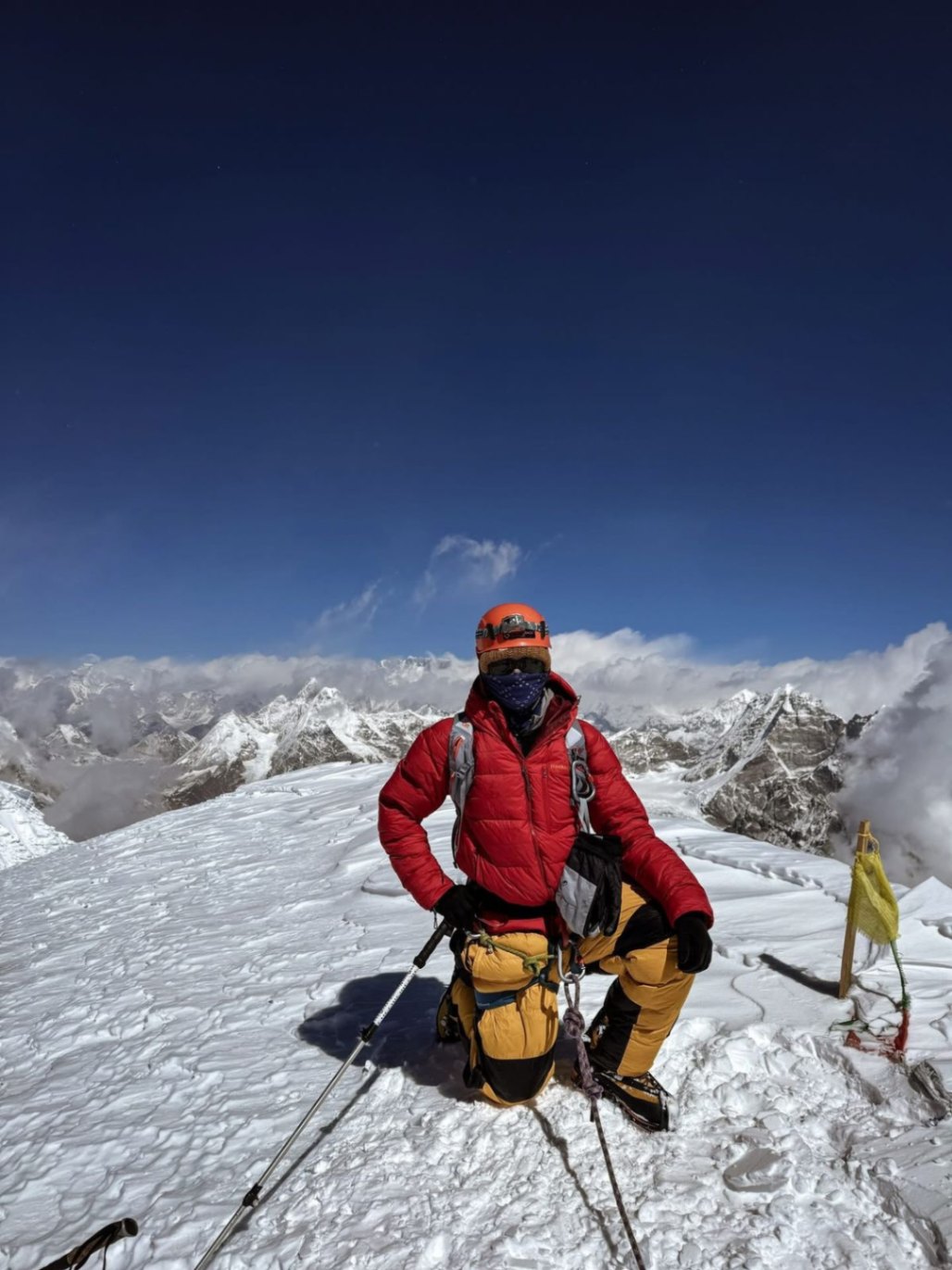
Mera Peak Climbing: Complete Guide for an Unforgettable Himalayan Adventure
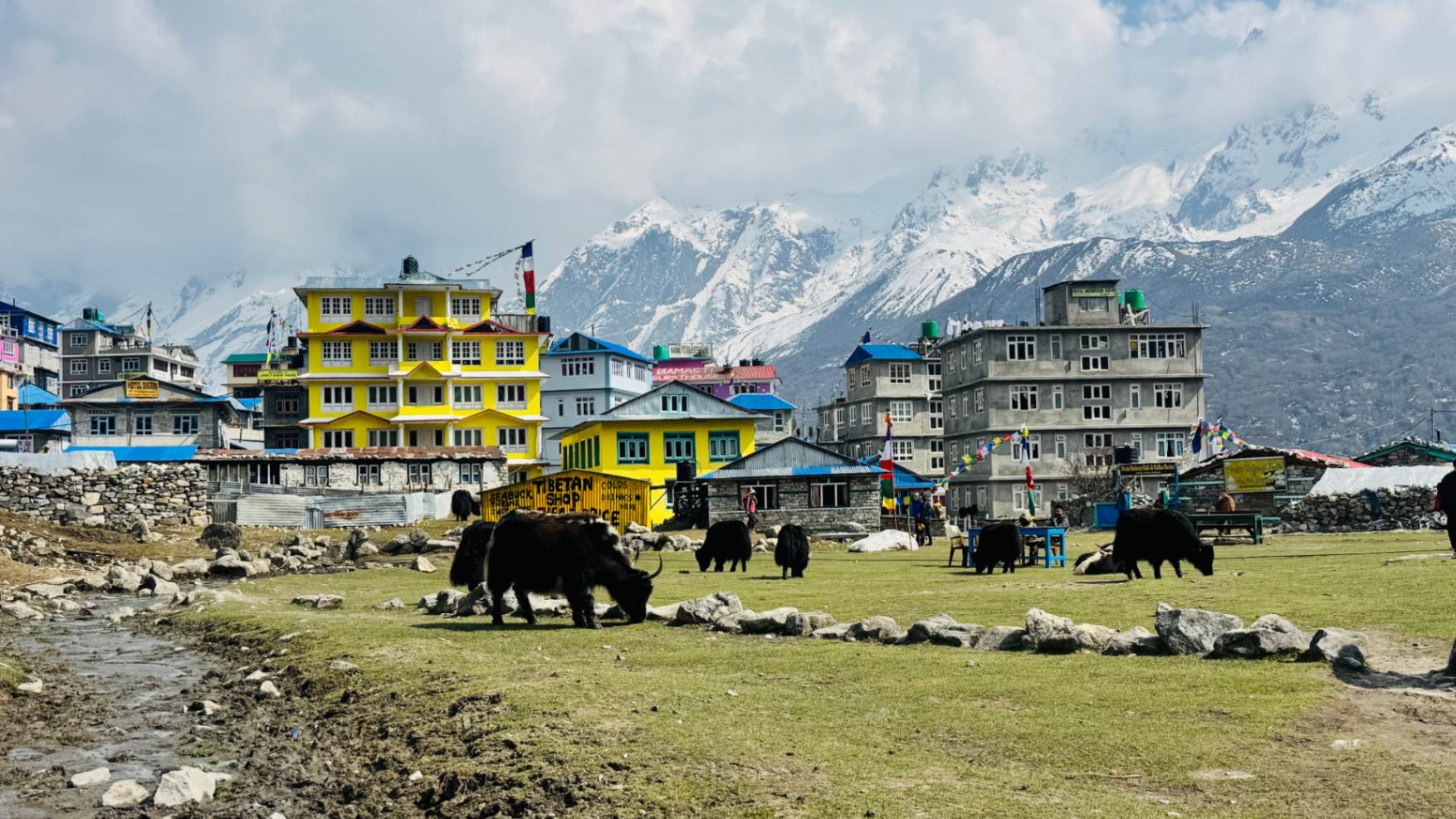
Mera Peak climbing is among the most thrilling and high adventure trekking in Nepal. At 6,476m (21,246ft), Mera Peak is considered one of the easier among 6,000+m climbing peaks in Nepal. Accessible does not mean easy! It is important to be well prepared for the altitude, cold, lengthy summit day and chances in the mountain conditions, which are glacier terrain.
Though Mera Peak is situated in the far off region of Hinku Valley, it is a peak with an experience different from the crowded trail of Everest Base Camp. The ride through the forests, traditional villages, alpine landscapes, glaciers and high Himalayan region to reach the summit is the highlight of the ride.
On clear days, the climbers get to see some of the highest peaks in the world, including Mount Everest, Lhotse, Makalu, Cho Oyu and Kangchenjunga from the top.
Mera Peak is an amazing goal for those aspiring to their first 6,000+m summit in the Himalayas through proper training, acclimatization, equipment, and professional mountaineer support.
This is a comprehensive Mera peak climbing guide which contains all the information you would need to plan your trip.
What Is Mera Peak?
Mera Peak (6,476m metres) is a peak in the eastern side of the main Khumbu trekking route of Nepal in the Mahalangur section of the Himalayas. The mountain reaches the height of about 6,476 m above sea level.
The normal climbing route passes through the beautiful Hinku Valley. The route to the Mera Peak is less crowded than the path to the Base Camp Everest trek route, and it is more secluded.
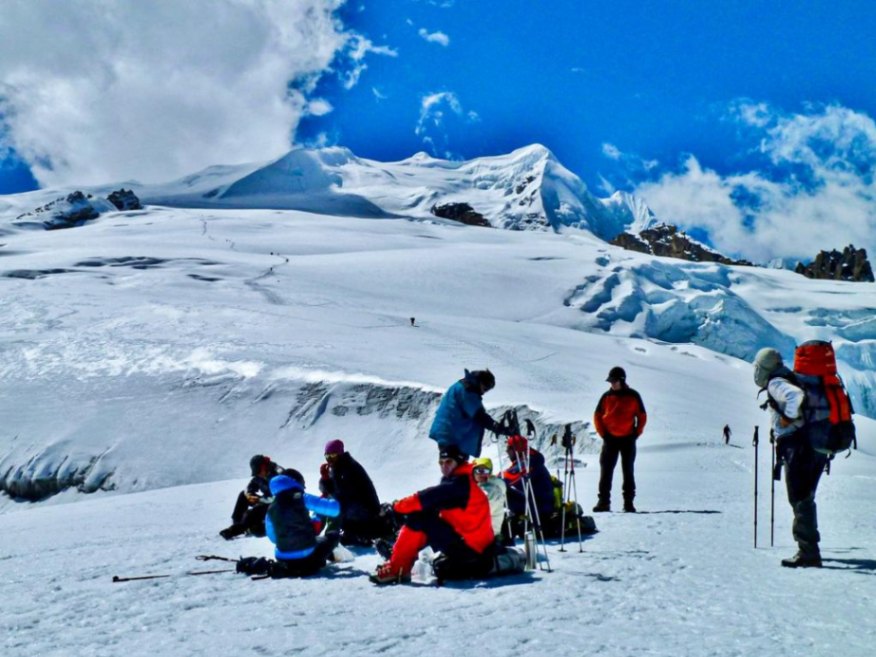
The hike involves a mixture of trekking and mountain climbing. It is a long day trek to reach Khare. The terrain above Khare passes to rocky moraine, snowfields and glacier terrain.
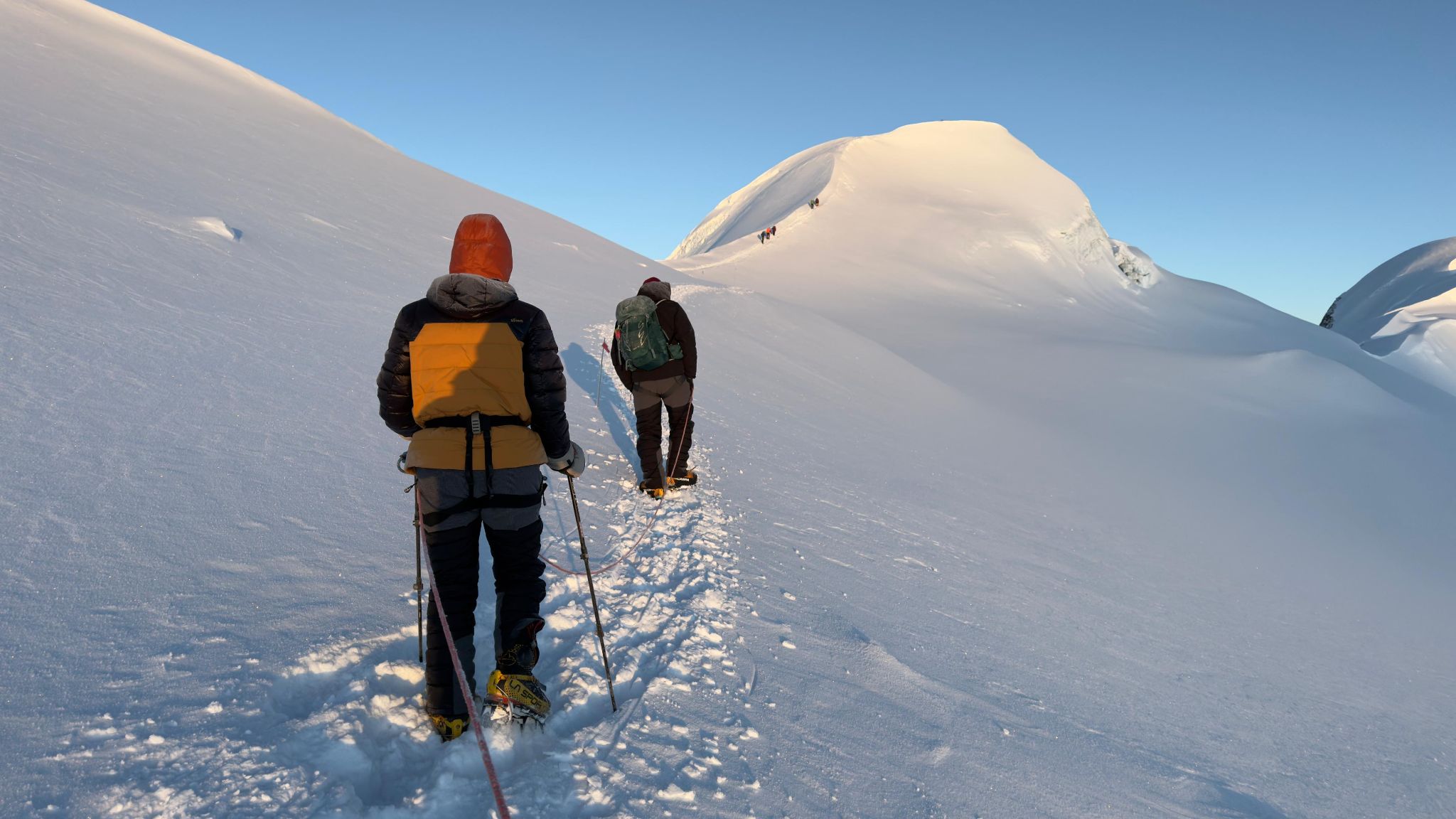
The last section is a mountaineering section and appropriate climbing skills are required. Climbers may use technical equipment, such as crampons, harnesses, ropes and ice axes as necessary.
This duo makes Mera Peak particularly alluring to trekkers who have no fear of heights and have never tried their luck at climbing in the Himalayas.
Why Climb Mera Peak?
There are many reasons why climbers choose Mera Peak. It is one of the main attractions due to its height. Climbing to 6,000 metres is a big achievement in the Himalayas.
An unrivaled panoramic backdrop is also offered by the mountain. Views open up from higher reaches towards some of the most famous Himalayan peaks.
The trip is another draw.
It's not possible to just reach a mountain and begin climbing. After days of hiking through the Hinku Valley, you will pass by forests, rivers, villages, suspension bridges, alpine landscape and more and more rugged terrain.
The slowly varying topography makes the expedition a full Himalayan experience.
In addition, Mera Peak is a popular route for those wishing to gain experience with climbing on glaciers, crampons, ropes, ice axes and high altitude peaks before tackling more difficult climbs in the Himalayas.
Where Is Mera Peak Located?
Mera Peak lies in the eastern part of Nepal in the Hinku Valley in close proximity to the Everest region.
Normally the first step is a flight to Lukla from Kathmandu. The trail from Lukla leads to the Hinku Valley and then passes through Kothe, Thangnak and Khare.
Khare is a significant acclimatization/preparation camp prior to the start of the climbing.
It then heads towards Mera La, Mera Base Camp and Mera High Camp prior to the summit.
Mera Peak Height
The height of Mera Peak is about:
Elevation: 6,476 meters / 21,246 feet
The most difficult aspect of the climb is not always the technical climbing itself at this altitude. Even simple terrain can be extremely difficult with the thin air, cold temperatures, fatigue, wind and altitude issues.
This is the main reason why acclimatization is essential to an expedition to Mera peak.
Mera Peak Climbing Difficulty
So, is Mera Peak difficult?
Yes, but it's not as difficult as going up a highly technical Himalayan peak.
The normal route is usually deemed technically feasible for climbers who are trained and given proper instruction. But the high altitude makes the journey tough on the body. The challenge is increased by glacier travel, cold weather, steep snow sections, long summit hours and altitude.
The top day can be hard at times.
Most hikes start at about 2:00 AM from High Camp. Climbers hike across the glacial and snow-covered landscape until they reach the top and then they head back down to Khare. The time required for the whole summit day is about 10 to 14 hours depending on the weather, conditions, and the speed of the person.
Because of this, Mera Peak should not be confused to be a normal trekking adventure.
Who Can Climb Mera Peak?
Mera Peak is a feasible trek for experienced trekkers and for those who want to become mountaineers and have good health and are ready to face the high-altitude conditions.
It is advisable to have previous experience at altitude. Crampons, harness and ropes and ice axe experience is also advantageous.
But don't think that none of your climbing experience means none of your preparation is needed.
Mera Peak can be prepared by a beginner with sufficient fitness with proper training, acclimatisation and with an experienced climbing guide. During the expedition, the basics of mountaineering can be acquired, especially at Khare.
The key is to know your own boundaries and respect the mountain.
Best Time for Mera Peak Climbing
Spring (March-May) and Autumn (September-October) are considered to be the best seasons for Mera Peak climbing.
Spring Season
It blooms in the spring (March-May).
Climbing conditions are mostly good and visibility excellent. Also lower down in the landscape, rhododendrons and other flowers start to come into bloom, making the landscape more colourful.
The months of April and May are especially favored for jumping on the slopes of the Himalayas.
Autumn Season
September to November is typically a fall season.
The weather can be brilliant after the monsoon and the mountain views often magnificent. October and November are particularly the best months for Nepal trekking and climbing.
Winter Season
The winter season brings far colder weather and can mean heavy snow and bad weather.
For those who are more advanced climbers, winter climbing on Mera Peak can still happen, but it requires a bit more preparation and a careful evaluation of the weather.
Monsoon Season
The summer season (June-August) is the monsoon season in Nepal.
The approach to the mountain may be impacted by thunderstorm activity, rain, cloud and flight disruptions. The higher mountain can also be a rapidly-changing environment.
Spring and Autumn are the most sensible seasons to plan a Mera Peak mountaineering expedition.
Mera Peak Climbing Route
The regular Mera Peak trek starts from Kathmandu and heads towards Lukla.
The typical route is as follows:
This route from Kathmandu to Lukla has no lodge to lodge service and involves a strenuous trek between Chutanga/Paiya and Hinku Valley.
There are some slight variations in itineraries and approaches used by different operators. There are some options that intersect Zatrwa La and other longer ones that go into the Hinku Valley via other trails.
Kathmandu to Lukla
Typically, your journey to Mera Peak starts in Kathmandu.
Following preparations, you head out on a flight towards Lukla. The short mountain flight offers great sight of the scenery and also gets you to the gateway of the Everest and Hinku Valley trekking areas.
Consideration must be given to mountain weather when drawing up flight schedules and having a buffer day is strongly recommended.
Lukla to the Hinku Valley
The trail slowly moves away from the more popular trekking trails and into a quieter country of the mountain.
The route may take you through villages and wooded areas and finally into the Hinku Valley, depending on the route you select.
This part of the trek is important because it allows your body to gradually adjust to increasing altitude.
Kothe
Kothe is an essential stopover on the way.
The path meanders along the Hinku Valley and then slowly into the mountain scenery.
The scenery at this point starts to display more of an alpine feel with less tree cover and more and more dramatic mountain views.
Thangnak
Another important acclimatization point is called Thangnak (Tangnang/Thaknak) in various itineraries.
The elevation has increased a lot so the speed is reduced.
Many climbers stay here for a rest period and a preparation for the trek towards Khare.
Khare
The Khare area is one of the most significant areas on the route to Mera Peak.
The main stage station for the climb is at approximately 5,000m.
The perfect spot for the climber to spend time acclimating and practicing basic mountaineering skills.
You may practice:
- Wearing crampons
- Using an ice axe
- Rope techniques
- Harness use
- Ascender techniques
- Glacier walking
- The ability to move around safely on snow and ice.
- If you're looking for a rest and training day before heading up a level, don't miss it at Khare.
Khare to Mera High Camp
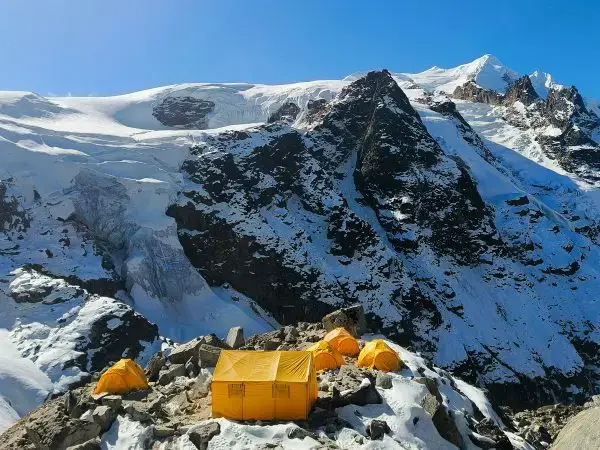
The acclimatization is done at Khare where the trail passes toward the glacier and higher camps.The trail goes through rocky and glacial areas and then arrives at Mera La and eventually High Camp area. The exact location of the camp varies depending on the conditions, but Mera High Camp is at approximately 5,800m.
This is quite different from the lower trek route. Facilities are reduced, temperatures plummet and the altitude plays a major role.The night is usually spent preparing for the summit push.
Mera Peak Summit Day
The day of the summit is the day that every climber has been looking for.
The day usually starts in the middle of the night.
Normally a departure from High Camp takes place around 2:00 AM but this time will depend on route, conditions, weather and the choice of the expedition leader and the climbing plan.
The ascent is made in the dark.
Headlamps to light the way on the glacier ahead and climbers crawling along in a slow motion manner. With the coming of daylight those surrounding peaks of the Himalayas start showing themselves. The end climb is in snow and glacial terrain, with fixed ropes used on steeper sections as necessary and conditions permit. Several hours may be needed to get to the top.
The feeling is like you're standing at 6,476 metres.
The view from the top on a clear day is a spectacular vista of the Himalayas toward Everest, Lhotse, Makalu, Cho Oyu, Kangchenjunga, Baruntse and other summits.
However, making it to the top is only half the task.
The descent is a significant one as well.
Once they have made pictures and enjoyed the peak, they carefully proceed on to High Camp and then back down to lower elevations. The most common itinerary is to come back to Khare the same day.
How Many Days Does Mera Peak Climbing Take?
A full Mera Peak trek typically lasts for 15-18 days, depending on the route, acclimatization plan, weather padding and itinerary.
Here's a sample schedule:
- Day 1: we arrive in Kathmandu.
- Day 2: Prep & briefing in Kathmandu
- Day 3: Fly to Lukla & trek to the first en route stop
- Day 4: march upwards to higher settlements.
- Day 5: head towards Kothe.
- Day 6:Thisday from Kothe to Thangnak is observed as a public holiday.
- Day 7:Travel to and around Thangnak.
- Day 8: Thangnak to Khare
- Day 9: acclimatisation and training for climbing at Khare.
- Day 10: Khare to Mera Base Camp/High Camp area.
- Day 11: We are preparing for High Camp.
- Day 12: Hike up to the summit of Mera Peak and then head down.
- Day 13: Head down to Kothe
- Day 14: the trek heads towards Thuli Kharka.
- Day 15: Lukla Again!
- Day 16:To fly into Kathmandu from Lhasa .
- Day 17: This is weather day and/or a contingency day.
- Day 18: Departure
The exact route will always be modified depending on the weather, acclimatization, route conditions and the climbing team's recommendations.
Mera Peak Acclimatization
Going through Acclimatization properly is the essential part of climbing Mera peak.You do not rush from 6,476 meters to low.
A proper itinerary ascends in sleeping elevation and avoids constant ascending, which leads into acclimatization days.
Khare is especially crucial because it allows climbers to acclimatize by sleeping at over 5,000 meters but also trains them for the technical climbing segment.
The basic way is simple:
- Go gradually-Sleep lower when appropriate. Stay hydrated. Listen to your body. Act immediately in case of altitude illness symptoms.
- Notify your guide immediately- if you experience severe altitude symptoms. Pushing on in spite of increasingly severe symptoms is a recipe for disaster.
- Mera Peak Climbing Training- You do not have to be a pro athlete before you climb Mera Peak, but you also shouldn’t arrive without any fitness beforehand.
- If you can do so, start training a few months earlier than the expedition.
- Cardio fitness, endurance, leg strength/core strength and long hiking.
Useful training activities include:
- Hiking
- Stair climbing
- Running
- Cycling
- Squats
- Lunges
- Step-ups
- Core exercises
- Long-distance walking with a backpack
- One very helpful suggestion is to walk uphill whilst carrying some load.
It also means learning to be on your feet for long days.
Trekking And Climbing Equipment
Your climbing operator will typically offer or rent some of the technical equipment but do check what is included in advance of departure.

Important personal equipment includes:
Clothing
- Thermal base layers
- Fleece jacket
- Down jacket
- Waterproof jacket
- Waterproof trousers
- Trekking trousers
- Warm hat
- Gloves
- Inner gloves
- Neck warmer
- Wool or thermal socks
Footwear
- Good trekking boots
- Mountaineering boots suitable for crampons
- Gaiters
- Camp shoes
Climbing Equipment
Depending on the expedition arrangement:
- Crampons
- Ice axe
- Climbing harness
- Helmet
- Ascender
- Carabiners
- Climbing rope
- Prusik equipment
- Headlamp
Your guide or climbing company should explain the exact equipment required for the current route and conditions.
Personal Items
Also carry:
- Sleeping bag suitable for very cold temperatures
- Sunglasses
- Goggles
- Sunscreen
- Lip balm
- Water bottles
- Water purification tablets or filtration system
- Trekking poles
- Backpack
- Duffel bag
- First-aid supplies
- Personal medication
- Power bank
- Headlamp batteries
Do not wait until Lukla to discover that you forgot an important item.
Food and Accommodation During Mera Peak Climbing
Accommodations along the lower reaches of the trekking route are usually teahouses or lodges. Expect simple rooms with shared bathrooms in many places, and simple but hearty meals. Typical dishes might be dal bhat, noodles, pasta, rice, soup, potatoes, eggs, bread, and Tibetan fare.
As you ascend to High Camp and beyond, the facilities are more primitive.
Your accommodation might be in a tent, and can be extremely cold and sparse. You will also need to make sure you are eating plenty of food, as your body needs this for energy and to counteract the cold and altitude. Dal bhat is always popular, as it's high in carbohydrates and protein, but bring some snacks such as chocolate, energy bars, nuts, dried fruit, and whatever else you enjoy.
Mera Peak Climbing Cost
The cost of Mera Peak climbing varies depending on the length of the trip, route, season, group size, operator, guide and porter support, accommodation, transportation, permits, climbing equipment, food, and services included.
A budget package may look very different from a fully organized private expedition.
When comparing packages, do not look only at the advertised price.
Check whether the package includes:
- Airport transfers
- Kathmandu accommodation
- Lukla flights
- Trekking guide
- Climbing guide
- Porter
- Meals
- Teahouse accommodation
- Camping equipment
- Climbing equipment
- Permits
- Insurance requirements
- Emergency arrangements
- Staff wages and insurance
- Kathmandu preparation days
- Contingency days
A very cheap package may exclude services that you later need to pay for separately.
Mera Peak Permits
Guide to Mera Peak Climbing Mera is a registered climbing peak, so we require all Mera Peak climbing climbers to have climber permits and the approvals you need. Climbing permits and fees are subject to change and you should confirm the requirements with your registered trekking or expedition operator prior to departure. The other important point to remember is that there is a lot more to an expedition than just your permit.
Make sure that you also have a suitable travel & evacuation insurance which covers high-altitude climbing.
Mera Peak Climbing Safety
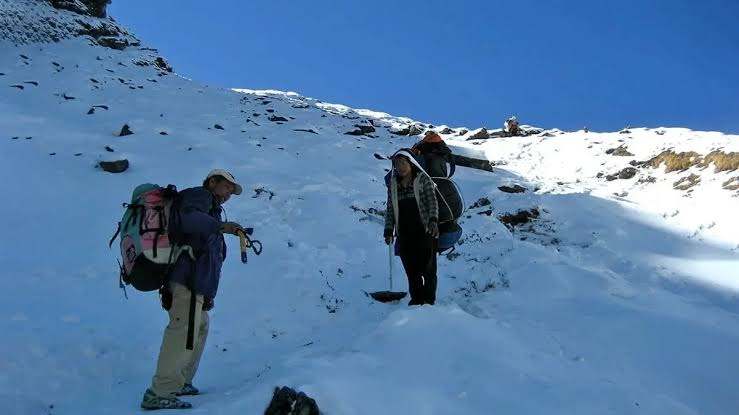
Prioritize safety above summit achievement! Summit attempts can be very hazardous:
1) Altitude sickness - characterized by symptoms that include headache, nausea, dizziness, weakness, and lack of appetite.
2) Extreme cold- weather at camps can be incredibly cold.
3) Glacier hazards- crevasses and snow bridges can be dangerous.
4) Weather- weather in the mountains can change quickly.
5) Fatigue- the long summit days can leave anybody worn out.
6) Delayed flights- flights from Lukla are weather-dependent, so it is advisable to have spare days.
Above all, the safety of climbers must be given priority over summits; if a guide suggests returning from the mountain, the climbers should obey the advice.
Mera Peak vs Everest Base Camp
Mera Peak is a very different kind of trip than Everest Base Camp. Everest Base Camp is mainly a trek in high altitude, while Mera Peak is a combination of trekking at high altitude and climbing the mountain summit itself. While at Everest Base Camp you will be at the bottom of Mount Everest, Mera Peak will put you at its 6,476m high summit. As a result, climbing Mera Peak will require more preparation and equipment than climbing to the Everest Base Camp. If you are interested in high altitude trekking and seeing Mount Everest and don’t want to do any serious climbs, it is advisable to choose the Everest base camp adventure. In case your goal is to go to Himalayan summit above 6000m, Mera Peak should be your choice.
Mera Peak vs Island Peak
These are popular trekking peaks. The first one is higher and has its elevation equal to around 6,476 meters. The second one’s elevation is equal to about 6,189 meters. Besides, these two peaks offer different climbing experiences. Mera Peak ascent is relatively long and with glaciated parts, while Island peak has more technically demanding sections. Your trip choice will depend on your current climbing experience
Tips for a Successful Mera Peak Climb
- Start training early.
- Do not underestimate altitude.
- Choose an itinerary with enough acclimatization days.
- Keep your pace slow and steady.
- Drink plenty of fluids.
- Eat regularly even when your appetite is low.
- Carry quality sunglasses and sunscreen.
- Keep your sleeping bag and clothes dry.
- Break in your climbing boots before the expedition.
- Practice using your climbing equipment before summit day.
- Keep a buffer day for weather.
- Listen to your guide.
- And most importantly, do not make the summit your only measure of success.
- Sometimes the safest decision on a mountain is to turn around.
Is Mera Peak Worth It?
For those who like Himalayan climbing, Mera Peak gives a unique combination of hiking, climbing, wilderness, glacial crossings, and high-altitude adventure.
The passage through Hinku Valley is an adventure itself.
After that, you will go through the transformation from verdant woods to jagged mountains, continue through ice, snow, and the gigantic Himalayan views.
Finally, after many days of preparation, one finds himself at the; 6476 meters and witnesses the remarkable Himalayan scenery.
It is for this reason that Mera Peak is distinguished as mere summit.
It is about preparing for it, being patient during the acknowledgement of mountains’ skills, and being able to endure and appreciate the mountains.
Conclusion
Ascending Mera Peak is more than simply making it to a height of 6,476 meters. It is about traveling from crowded roads to the middle of the Himalayas, spending nights in sleepy towns, acquiring skills for walking on ice and snow, waking up early for the trip to the summit, and discovering how much persistence is needed.
In order to have a memorable Mera Peak climbing experience, a person has to be well prepared through good training and scheduling, selecting experienced personnel, and acquiring all the needed equipment and spending necessary time for altitude acclimatization.
If a person is interested in going on an expedition to one of the most spectacular places in Nepal, they have to choose climbing Mera Peak. Contact Happy Mountain Nepal for excellent organization of the trip
FAQ Mera Peak Climbing
What is the height of Mera Peak?
Mera Peak's height is approximately 6,476 meters (21,246 feet).
Is Mera Peak suitable for beginners?
With adequate fitness, acclimatization, and the knowledge of basic climbing skills, novice climbers can summit Mera Peak.
How long will it take to climb Mera Peak?
Depending on the exact itinerary, the overall expedition usually takes around 15 to 18 days.
What is the best time to climb Mera Peak?
The most recommended months for climbing Mera Peak are April, May, October, and November. Moreover, spring and autumn are considered the main climbing seasons.
Do you need experience to climb Mera Peak?
Climbing experience is an advantage, however, it is not essential. You should be in shape and acquire basic climbing skills before you start your ascent.
Is climbing Mera Peak difficult?
Generally, the normal route of climbing Mera Peak is not considered one of the hardest climbs in the Himalayas, but high altitude, glacier conditions, cold weather, and long summit day make it a challenging one.