
Kala Patthar View Point: The Ultimate Everest Viewpoint in Nepal
Kala Patthar View Point is one of the most popular and rewarding places in the Everest region of Nepal. Kala Patthar is situated above Gorak Shep in the Khumbu region, is most famous for its breathtaking up-close experience of the mountains, including the majestic Mt Everest. When you are making the Everest base camp trek, you may finally be getting to Kala Patthar, which is one of the most memorable moments of your trip.
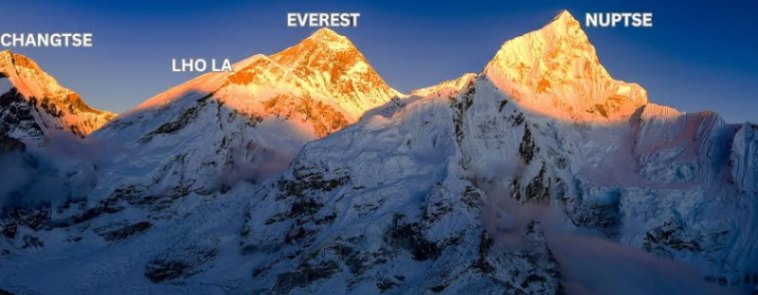
Despite Everest Base Camp being the primary focus for many trekkers, the summit of Mount Everest is not easily visible from Everest Base Camp due to surrounding mountains. Kala Patthar is a much better vantage point to see Everest. Trekkers will have a chance to see Everest, Nuptse, Lhotse, Pumori, Ama Dablam, the Khumbu glacier and much more, from the rocky ridge.
The panorama is from the height of approximately 5,545 m where the air is sparse and the temperatures can be very low. This is a demanding hike due to the steep trail, early morning darkness, high altitude and strong winds.
The reward, however, is fantastic. The main aim of this trek is to see the first light on Mount Everest from above Gorak Shep is something that lingers in trekkers' minds for a lifetime.
Where Is Kala Patthar Located?
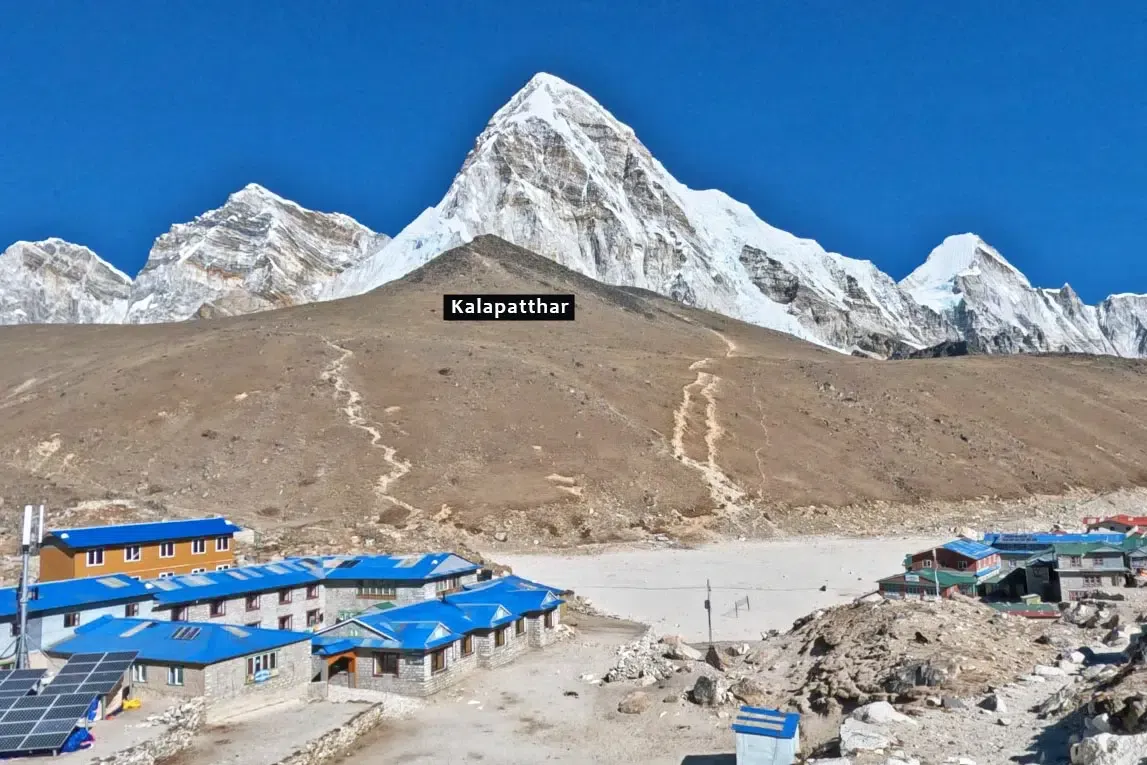
Kala Patthar is situated in the Khumbu area of north-eastern Nepal within the boundary of Sagarmatha National Park. It is situated in close proximity to Gorak Shep and Everest Base Camp, and plays a crucial role in the classic Everest Base Camp trek.
Gorak Shep is normally taken as the starting point for a hike to Kala Patthar. Typically, trekkers stay overnight at Gorak Shep, rising very early the next morning to head up to the viewpoint. The trail descends through a rocky and barren area of the Himalayas before getting steeper towards the viewing point at Gorak Shep.
One of the key reasons for the superb views around Kala Patthar is its location. The position is raised, and offers an open vista towards Everest and other peaks. The scenery is very different from the green valleys and forests that are seen in the lower stages of the Everest trek.
How High Is Kala Patthar?
The height of Kala Patthar is about 5,545 m or 18,192 ft. above the sea level. The climate is drastically different from the lower regions of the Everest region at this height. Oxygen levels are significantly reduced, temperatures fluctuate greatly and even light activity has to be much harder.
The difficulty level of Kala Patthar hike is one of the greatest and that is its height. Being physically fit and having a good physical condition does not necessarily mean a Trekker is mentally ready, as the body takes time to acclimatize to lower levels of oxygen. This is why it is important to acclimatize yourself before attempting the climb.
Kala Patthar is just a few hundred metres higher than Gorak Shep at this extreme height. The walkers need to take regular breaks, walk slowly, drink plenty of water and pay attention to their bodies. Due to its altitude, Kala Patthar is a high altitude trekking site and should not be approached as a normal viewpoint.
Why Is Kala Patthar Famous?
Kala Patthar is popular mostly due to its one of the best accessible sites to view Mount Everest. Everest Base Camp offers trekkers the opportunity to be at the base of the world's highest climbing route of Everest, but Kala Patthar offers a much better view of Everest.
The view point is strategically located to see Everest from the backdrop. From a clear morning an everest trekker may be able to see the peak behind the remarkable ridges of the Everest massif. The vista is even more dramatic with the surrounding mountains.
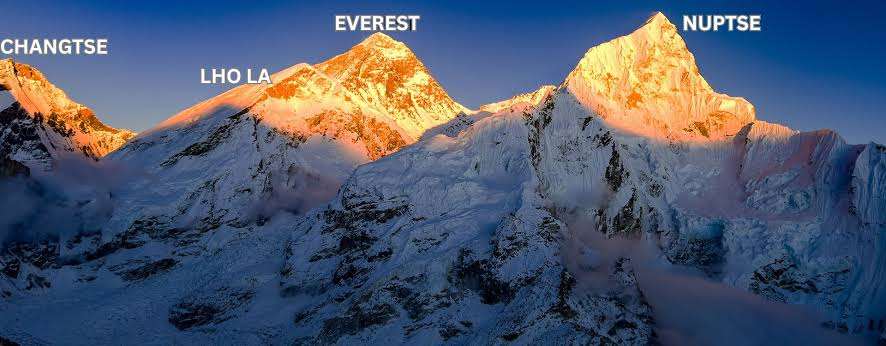
“Kala Patthar” is also a popular tourist attraction for its sunrise. Trekkers tend to leave Gorak Shep early in the morning to get to the viewpoint before sunrise. The most beautiful thing in the Everest region is to see the mountains slowly transforming from the dark silhouette to golden peaks.
Kala Patthar and Mount Everest View
Most trekkers go to climb Kala Patthar so that they can view Mount Everest. From the viewpoint, Everest is very visible as compared to Everest Base Camp. The Himalayan panorama has its centerpiece at the height of 8,848.86 m of Mount Everest. Depending on weather and visibility, trekkers can also view surrounding peaks and ridges that make up the Everest massif.
It is especially beautiful on clear mornings. It can be a deep blue sky, and the sun slowly creeps to the highest peaks of the mountain. In the vicinity of the upper slopes of Everest, strong winds can sometimes produce plumes of snow that can be seen flowing from the summit, further enhancing the dramatic setting.
Many feel that the view of Everest from Kala Patthar makes the hike worthwhile.
Mountains You Can See From Kala Patthar
From the top of Kala Patthar there are views of several well known mountains in the Himalayas. Of course, the focus is on Mount Everest, but the surrounding peaks make the overall scene even more stunning.
The Pumori is highly visible as it is situated near Kala Patthar. It is unique in shape and the snow on its slopes makes for a dramatic foreground. It is also possible to see two other summits in the immense cliff that surrounds Everest, namely the Nuptse and Lhotse.
Depending on the direction and weather, Ama Dablam might be seen as well. It is one of the most easily recognized mountains in the Everest region because of its distinctive pyramid shape.
Everest, Lhotse, Nuptse, Pumori, Ama Dablam, glaciers and rocky ridges create the panoramic Himalayan scene when you see it for yourself, it is hard to describe.
Kala Patthar Sunrise Experience
The golden sunrise at Kala Patthar is undoubtedly one of the most popular experiences at the viewpoint. Trekkers typically start their journey to Gorak Shep at night and trek to the viewpoint with headlamps on. It may be difficult getting up to get ready in the morning. It's really cold, rocky and the thin air makes every step feel more difficult. But the air is also very serene. The mountains around are dark silhouettes and the sky starts to lighten up gradually.
The highest peaks on the horizon first see the sun as it rises to the sky. Little by little, the color of Everest and surrounding peaks morph into shades of pink, orange, gold, and white.
It is not just about the photographs, but the experience itself.
Many trekkers stand in silence for several minutes, gazing at the changing scene of the mountains in front of them. This tranquil moment can be one of the most memorable of the entire Everest trek after days of trekking.
Why Sunrise Is the Best Time to Visit Kala Patthar
The best time to climb Kala Patthar is usually during the dawn hours in the morning as the mountains tend to be more dramatic in the early morning. The atmosphere may also be clearer before the clouds and weather systems develop later in the day.
The dawn of the fourth day brings the darkness, and an additional layer to the experience. The climb starts with just your headlamp providing any light on the rocky trail. As the sky gets lighter, the surrounding peaks gradually start to appear.
At long last, when the light of the sun falls on Everest, the mountain can be seen to shine with the light of day.
However, weather is unpredictable in the Himalayas. If you do arrive at the right time at the correct viewpoint, the mountains might still be obscured by cloud. This is perfectly normal and trekkers should expect to adapt to the changing conditions.
Kala Patthar vs Everest Base Camp
Everest Base Camp and Kala Patthar is frequently used together, but each offers a distinct experience.
Everest Base Camp is all about reaching this popular place which is where the mountaineering expedition starts preparing to climb up Everest. The Khumbu Glacier, colorful prayer flags, climbing structures during the climbing season and the surrounding of the Base Camp give you a tremendous sense of achievement.
On the other hand, Kala Patthar is mostly a viewing experience. The view from Kala Patthar is much more open towards Everest and other Himalayan peaks. This aspect is especially interesting to anyone who photographs or travels to visit Mount Everest.
Because of this, there is a lot of trekking that takes place at either one or both. Everest Base Camp offers you the sense of accomplishment in reaching this well-known spot, and Kala Patthar offers you one of the best views of the mountain itself.
How to Reach Kala Patthar
The most common route to Kala Patthar is through the trekking route to Everest Base Camp. Trekking typically starts with a flight from Kathmandu to Lukla, before going on foot through the Khumbu area.
The trek includes some well-known villages like Phakding, Namche Bazaar, Tengboche, Dingboche and the last one is Lobuche before reaching Gorak Shep.
Trekkers can hike up to Everest Base Camp from here and back down to Gorak Shep. The climb to Kala Patthar is done either early in the morning or as per the route planed by the trekking guide.
A typical trek, then, would go in the direction of Kathmandu, Lukla, Phakding, Namche bazar, Tengboche, Dingboche, Lobuche, Gorak Shep, EBC and Kala Patthar.
The exact route and number of days may change depending on the acclimatisation requirement, weather, fitness and the type of trekking package chosen.
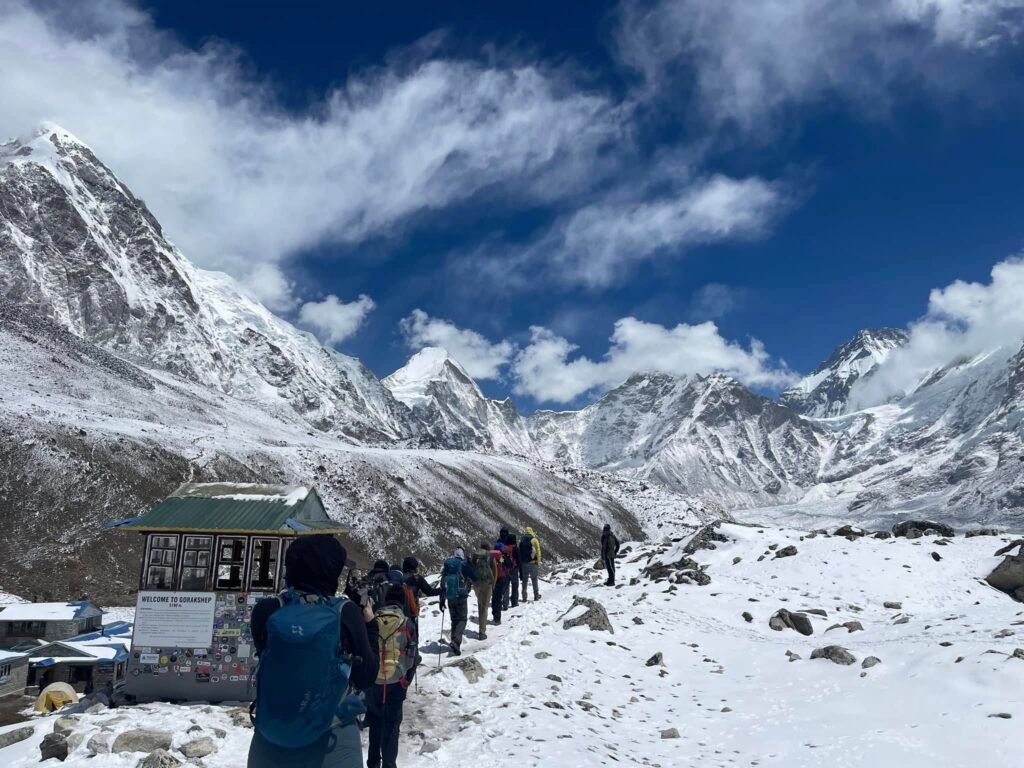
Gorak Shep to Kala Patthar
The walk from Gorak Shep to Kala Patthar is short but tough due to the altitude. Gorak Shep is located at about 5,164m and Kala Patthar is at about 5,545m.
The path starts out fairly level then steepens. The terrain becomes more rocky and barren as one goes up further. Little vegetation is found at this elevation.
The most important thing is to maintain a slow and comfortable pace.
There may be other members of the trekking party who are moving faster, but that's no reason to try to out do them. Taking breaks often is the safest way to travel at high altitude when traveling slowly.
Acclimatizing, weather and pace permitting, the viewpoint can be reached in 2-3 hours.
How Difficult Is the Kala Patthar Hike?
Generally, the Kala Patthar hike is seen as either moderate or tough. Although the trekking itself does not call for technical climbing abilities, the height makes the journey much more difficult than one would expect from the distance to be covered.
The main problem is the lack of oxygen. Breathing becomes harder, heart beating increases, legs are tiring even at a measured pace.
Temperature in the early morning is another problem as it can get really low especially in wintertime. Strong winds can add even more to the chilliness of the conditions outside.
The steep final part of the hike requires having patience. You should not rush to the top; take small steps and rest when necessary.
Do You Need to Acclimatize for Kala Patthar?
True acclimatization is necessary before attempting to reach Kala Patthar. You should never go up from low lands directly to more than 5500 meters without giving your body time to adapt.
Altitude sickness can affect anyone, regardless of age or physical fitness. Symptoms may include headache, nausea, dizziness, unusual tiredness, loss of appetite, and difficulty sleeping.
If you develop serious or worsening symptoms, you should inform your guide immediately. Continuing upward despite severe altitude symptoms can be dangerous.
The goal of the trek is not simply to reach the highest possible point. It is to reach the destination safely and return safely.
Best Time to Visit Kala Patthar
Spring and autumn are typically the best times to trek if you want good weather and visibility on Kala Patthar, although this can never be guaranteed.
Spring runs from March roughly to May. This period experiences warmer climatic conditions at lower altitude and its trekking days are generally easy and comfortable enough. The mountain scenery can be breathtaking as well, especially in the Everest region that is sometimes crowded during trekking season.
Another very popular time is Autumn (Oct and Nov). Post-monsoon is also clearance in sky and good visuals of mountains. Winter will descend with much colder temperatures and potential snow and ice covered trail but a clear winter morning allows for some amazing mountain viewing.
Monsoon (June- August): The monsoon season is less preferred as rain, clouds and weather related travel disruption can spoil the journey.
Kala Patthar in Spring
Spring is one of the ideal seasons for Everest Base Camp and Kala Patthar trek. The heat is now less oppressive than it was in winter, but the higher peaks remain snow.
The landscape gets increasingly dramatic as the higher elevations loom. Blooming rhododendrons and other vegetation can be seen in the lower sections of your trek as well.
March is still a cold time up high
Kala Patthar in Autumn
These might be all the best seasons to visit Kala Patthar but another amazing season for it is autumn. Monsoon season has mostly finished, and mountain views can become astoundingly clear.
The trek season itself is pretty popular in October as the trekking temperature is simply comfortable and high visibility create good conditions.
It can get quite cold in November, especially early morning, but if the skies clear up it gives jaw dropping views of Everest.
The main drawback of autumn is the amount of trekkers on the path. You'll need to keep in mind that popular villages and teahouses can get crowded, especially during the busy times.
Kala Patthar in Winter
But in winter Everest region becomes a much colder and harsher land. Parts of the trail may still be covered with snow and ice, and temperatures in Gorak Shep and Kala Patthar can drop dramatically.
Alternatively, winter can also offer exquisite blue sky and less crowd on the trail.
If you are going for a winter Kala Patthar trek, hence the reason to get adequate warmth with cold fork gear, good boots, gloves and trekking equipment.
Winter is generally favorable for experienced trekkers who know how to deal with high-altitude conditions and are able to handle cold weather.
Kala Patthar During Monsoon
Kala Patthar is not normally in the season bucket list during this time [monsoon]. Precipitation can be problematic in the lower parts of the journey, whilst clouds are capable of obscuring mountains.
Weather conditions also mean delays or cancellation of flights to Lukla.
The Everest area does not suffer as much rain as many of the lower parts of Nepal; yet, it still has its monsoon-type conditions that create problems for trekkers.
So if you travel in this period, try to have a flexible itinerary and be prepared for changes.
Items to Carry for your Trip to Kala Patthar
Kala Patthar is highly cold & at an elevation and hence packing properly becomes very important. Based on the weather and your environment, put importance on outerwear, proper footwear, water and safety items.
A good insulation jacket is recommended in this type of weather, which will prove to be very useful for the first hours of ascent. The lack of heat can also be counteracted by combining thermal base layers, fleece, a windproof outer layer coat top torso area, warm trousers, gloves, hat and neck warmer.
Headlamp: The sunrise hike starts before the sun comes up!! You should also bring some water and a few portable snacks to meal refreshment.

A sturdy pair of trekking boots with a good grip are necessary since the trail is rocky and uneven. A trekking pole can also offer more piece of mind during the uphill and downhill.
Is Kala Patthar Suitable for Beginners?
Kala Patthar may be a good site for those who are well-acclimatized and physically ready to hike. Previously learned climbing skills are not required as the main path is not a technical one.
Though beginners may not forget that this is still a high-altitude trek. Just being able to walk at sea level doesn’t guarantee that you will cope with an altitude of 5,500 meters.
A gradual itinerary with acclimatization days, slow walking, staying hydrated, and following your guide's directions is a must.
Any beginner should feel free about taking many breaks. At such an altitude, you must make slow progress.
Food and Water During the Trek
Food becomes uncomplicated when trekking towards Gorak Shep and Kala Patthar, although there are a variety of food options at the teahouses.
- The food variety includes dal bhat, noodles, fried rice, soup, pasta, eggs, potatoes, porridge, bread, and hot drinks.Among these foods, dal bhat is more prevalent since it serves as an energy-giving food that consists of rice, lentils, vegetables, and curry. It is important to eat well on the trek due to energy loss at high altitude.
- Hydration is also important and trekkers must drink enough water throughout their trek and not just rely on bottled water, as there are various sources for filtered or purified water along the trekking route.
- You should carry a reusable bottle and use proper purification methods.
Accommodation Near Kala Patthar
There is not a proper hotel facility at the top of Kala Patthar. Most trekkers stay at Gorak Shep before heading up to the viewpoint.
Accommodation found at Gorak Shep is quite basic compared to hotels found in Kathmandu or Pokhara. The teahouses provide basic facilities like rooms, beds, blankets, and dining area.
Facilities become rarer as you go up for the trek. Hot showers, electricity, internet access, and charging facilities are
Safety Tips for Kala Patthar
Understanding the importance of safety when climbing Mount Kala Patthar is crucial. Once again, at these heights a greater risk occurs due to the changes in the body's reaction to the altitude.
- The golden rule of climbing is high and slow, and that way you will avoid hits of exhaustion. Be sure to drink plenty of water and eat a proper diet. Be adequately dressed as there is likely to be a very sudden drop in temperature just before sunrise.
- It's also important to remember to consult the weather predictions and general information about the trail on the way from Gorak Shep. If the weather looks bad it's not worth climbing.
- First of all, it is important to know how to identify severe altitude sickness symptoms. If you have a severe headache, disorientation, movement difficulties or difficulty breathing, tell the guide immediately.
- The most common errors are to rush to the point of view and to wear inappropriate clothing for the hike of Mt Kala Pathar. Although we all want to get to dawn, this is not the best way to get to the summit.
- You've also gotten some trekkers to forget water, snacks, or sunglasses, the cell phone no digital connection; a headlamp. Those may appear trivial, but on a hike in the mountains early in the morning, it becomes quite relevant.
- One of the biggest mistakes you could make would be to ignore altitude symptoms. There is no medal or summit that is worth risking your health for.
- Responsible Tourism at Kala Patthar
- Everest is a fragile ecosystem, and its environment is an essential element of the culture of its people. With the influx of tourists comes the necessity for responsible tourism.
- Trekkers cannot leave plastic, food packaging, batteries or waste along their trek. Keep hold of your rubbish until you can dispose of it properly.
- Honor local Sherpa communities & lifestyle. It is our request that while you pray, do respect prayer flags, mani walls, monasteries, chortens and other religious structures and things.
- Another way travelers can give back to the local economy is by aiding in their support of local teahouses, guides, porters and businesses.
- Aim to leave the Himalayas as beautiful as you found them.
Final Thoughts
The Kala Patthar viewpoint is undoubtedly a unique site in the Everest region of Nepal. While climbing to the peak takes a lot of effort, it is really worthwhile since you will be able to enjoy breathtaking views of Mount Everest and other surrounding mountains.
Reaching the peak is not the only advantage of your trip. You will also watch the color of the mountains change at sunrise, feel the tranquility of the Himalayas, and acknowledge your insignificance in front of the mighty mountains.
If you’re planning to trek to Everest Base Camp, you definitely must visit the Kala Patthar viewpoint. Provided the necessary acclimatization, gear, a comfortable pace of walking, as well as consideration of the weather and elevation factors, the voyage will prove to be one of the most unique experiences in Nepal.
FAQs
Where is Kala Patthar located?
Kala Patthar is located in the Khumbu region of Nepal, inside Sagarmatha National Park, above Gorak Shep and close to Everest Base Camp.
How high is Kala Patthar?
Kala Patthar is usually taken as the height of 5545 m or 18192 ft above sea level.
Do you know that you can see Mount Everest from Kala Patthar?
Yes, Kala Patthar offers one of the most popular Everest Base Camp trek views of the Mount Everest.
Which one is higher Kala Patthar or EBC?
Yes, The height of Kala Patthar is higher than Everest Base Camp. This is one of the reasons why this view is so spectacular of the surrounding Himalayan landscape.
What is the time taken from Gorak Shep to Kala Patthar?
It is a fairly steep climb and it generally takes about 2-3 hours depending on your speed, fitness, acclimatisation, weather and trail conditions.
What is the best time to visit Kala Patthar?
Spring and Autumn are normally the best seasons. It's best to start early in the morning for a sunrise, to enjoy your hike.
Is Kala Patthar hard?
Kala Patthar is physically challenging mainly because of its extreme altitude. The trail does not normally require technical climbing skills, but proper acclimatization and preparation are essential.