
Permit Fees for Nepal Trip: Complete Guide for Travelers and Trekkers
Traveling to Nepal is an adventure. Perhaps you've already envisioned mountain vistas, tranquil villages, historic temples, jungle safaris, and long trails meandering through the Himalayas. However, before you set off on your travels, there is one practical matter of Nepal travel to understand which is permits and entry fees.
Trekking Permits, TIMS cards, National Park entry permit, conservation area entry permit, or special permit for restricted areas may be required depending on the region of travel.
The fee varies according to nationality, destination, trekking route, season and time of stay. Other popular trekking areas charge between USD22 and USD 500, whereas for areas like Upper Mustang and for Upper Dolpa, special permits are more costly and will cost you tens of thousands of dollars.
This Nepal Permit Fees Guide will provide you information about the important permits and entry fees you might require on your trip to Nepal. It also describes who needs them and where they are needed, their cost, and what one should do before leaving Kathmandu.
Note: Fees for permits may vary depending on government decisions. The fees below are based on the current information published by the Nepal Tourism Board and Department of Immigration. Please check the most up-to-date fee with your trekking agency or with the local government department before traveling.
Why Do You Need Permits in Nepal?
Permits and entry fees are used to control tourist flows in sensitive areas, to conserve natural and cultural heritage, to sustain the trekking infrastructure and to record the tourist visits in Nepal. Permit also assists the authorities and trekking agencies with keeping information of trekkers, which is useful for trekking activities. This may be crucial in rescue and emergency situations. The requirements are not the same for every destination.
For instance, tourists who go to Kathmandu do not require a trekking permit. A TIMS card and national park entry permit may be required by someone visiting EBC. An entry permit to Upper Mustang is also a restricted area trekking permit, along with the appropriate conservation area entry permit.
The first step is thus to determine where you are going and what trekking you will undertake.
Note: For now TIMS Card is not mandatory for some time, when this permit resume we will update this to our readers
Main Types of Permits and Fees in Nepal
Below are some of the key areas to be aware of for most travelers.
- TIMS card
- An entrance permit for the national park.
- An entry permit for a conservation area.
- Restricted area trekking permit
- Cost of admission to a wildlife reserve.
- The entry fee for hunting on the reserve.
- Some of the Heritage site entrance fees are included in the cost of the tours.
- Mountaineer's permits, royalties to climbing expeditions
- All these do not apply to everyone who travels.
- The specific needs you'll have will rely on your travels.
TIMS Card Fees in Nepal
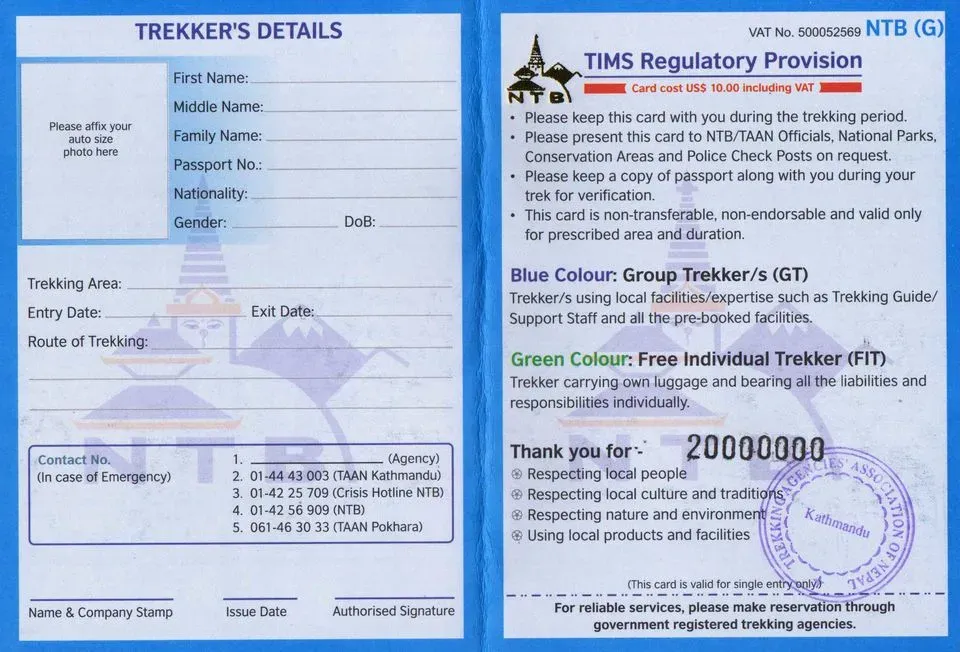
Trekkers' Information Management System is called TIMS. It's among the most vital trekking associated needs in Nepal.
According to the Nepal Tourism Board, TIMS card is required on several popular trekking routes and must be obtained from a trekking guide and agency. These include the popular Everest, Annapurna, Manaslu, Langtang, Mustang, Kanchenjunga, Makalu, Dolpo and also a number of the trekking regions.
The Nepal Tourism Board publishes the current fees of TIMS as follows:
| Traveler category | TIMS fee |
| SAARC citizens | NPR 1,000 |
| Other foreign travelers | NPR 2,000 |
The TIMS system is currently processed online through registered trekking agencies.
Do You Need a Guide?
Numerous trekking routes involve trekking with a registered government trekking guide and getting a TIMS card from a trekking agency.
This includes popular routes such as:
- Everest Base Camp
- Gokyo Trek
- Three Passes Trek
- Annapurna Circuit
- Mardi Himal
- Poon Hill and ABC
- Manaslu Circuit
- Tsum Valley
- Langtang
- Kanchenjunga
- Upper Mustang
- Upper and Lower Dolpo
- Mera Peak
A number of high pass and remote area roads
It will depend on the journey, so please refer to your itinerary before booking your trek.
National Park Entry Fees in Nepal
Nepal's popular trekking and wildlife destinations are all within national parks.
When you enter the national park, usually a park entrance fee will have to be paid.
The Nepal Tourism Board has the following fees for foreign visitors.
Sagarmatha National Park
The Everest Region is under the protection of Sagarmatha National Park and it has been recognized as a UNESCO World Heritage Site.
The cost of the foreign visitor's entry is NPR 3,000 per person.
The current admission fee for SAARC visitors is NPR 1500 and for the citizens of Nepal it is NPR 100.
Kids under 10 years are entered as "free.
This is one of the major expenses you will need to budget for when trekking up to Everest Base Camp.
Langtang National Park
Langtang National Park encompasses areas around Gosaikunda and popular trekking areas like Langtang valley.
Entry fees for foreign visitors: NPR 3,000 per person per entry
SAARC visitors can be charged NPR 1500 and the Nepalese can be charged NPR 100.
Shey Phoksundo National Park
This protected area encompasses the spectacular landscapes of Dolpo, such as Phoksundo Lake.
Foreign visitors: NPR 3,000 per person per entry
The admission fee for the visitors from SAARC countries is NPR 1,500.
It is important to note that sometimes a separate restricted area trekking permit is required for travelers entering restricted areas of Dolpo.
Makalu Barun National Park
If you are staying in the Makalu area:
Visitors from abroad will have to pay NPR 3,000 for each entry.
The entry fee for visitors from the SAARC countries is NPR 1,500.
Rara National Park
Rara is renowned for its stunning alpine lake and its remote setting in the Himalayas.
Entry fee for foreigners: NPR 3,000 per person per entry
Visitors to the SAARC get NPR 1500.
Khaptad National Park
On behalf of Khaptad National Park:
Entry fee for foreigners: NPR 3,000 per person per entry
The entrance fee for visitors to SAARC is NPR 1,500.
Chitwan National Park
Chitwan is one of the most wildlife experience hotspot in Nepal.
Foreign visitors pay an entry fee of:
For each person entering the contest, you must pay NPR 2,000.
The entry fee to the SAARC visitors is NPR 1,000.
This fee is for entry into the protected area. Safari, Transport, Accommodation, Guides and other activities will be separate charges.
Bardia National Park
The other great wildlife site is Bardia National Park.
The Knowledge Committee of Nepal pays an entry fee of NPR 1,500 per person per entry for foreign visitors.
For the visitors from SAARC, the ticket is NPR 750.
Conservation Area Entry Fees
Some of Nepal's most famous trekking destinations are located inside conservation areas rather than national parks.
These areas also have their own entry fees.
Annapurna Conservation Area
The Annapurna region is a popular trekking area in Nepal.
Entry fee for foreign visitors: NPR 3,000 per person/entry.
There is a NPR 1,000 entry fee for SAARC visitors.
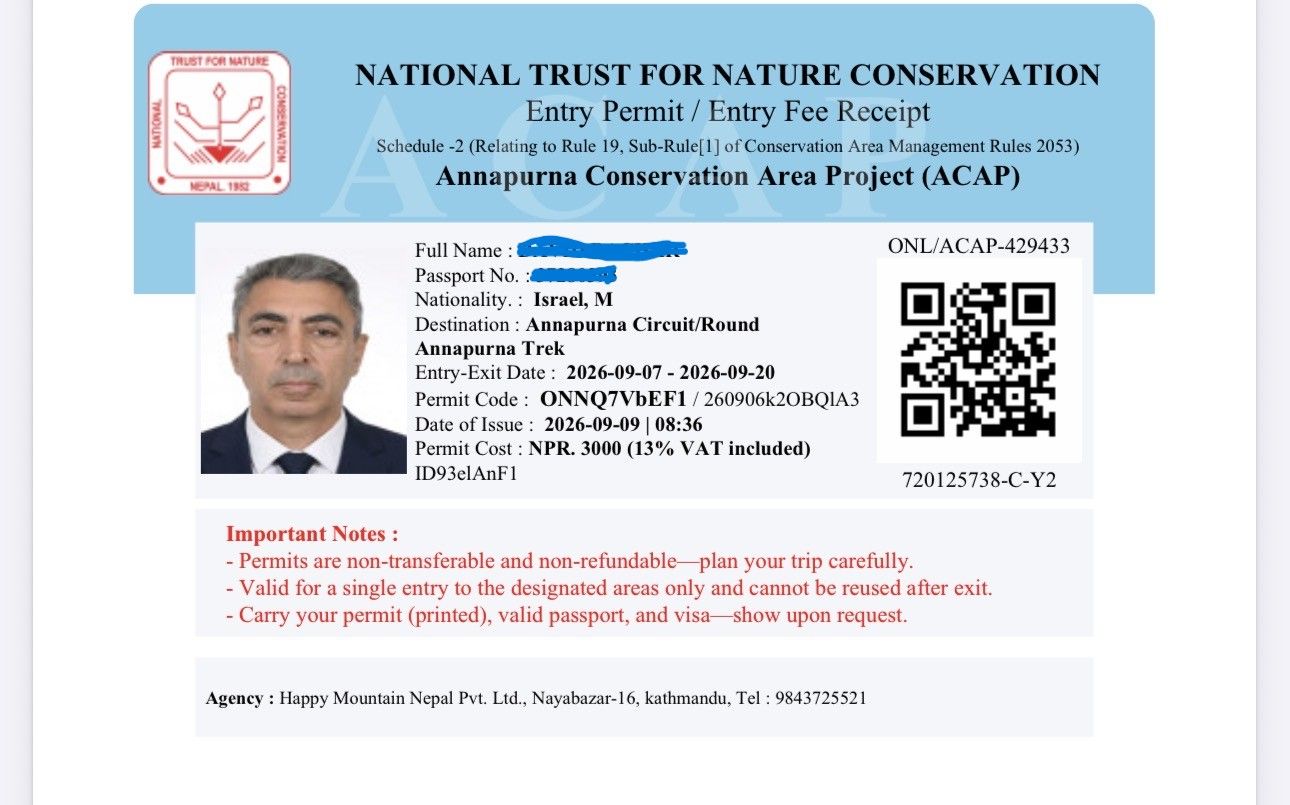
Annapura Circuit Trekking Permit
This is applicable to trekking destinations like that of Annapurna Circuit, Annapurna Base Camp, Poon Hill, Mardi Himal and others depending on the location.
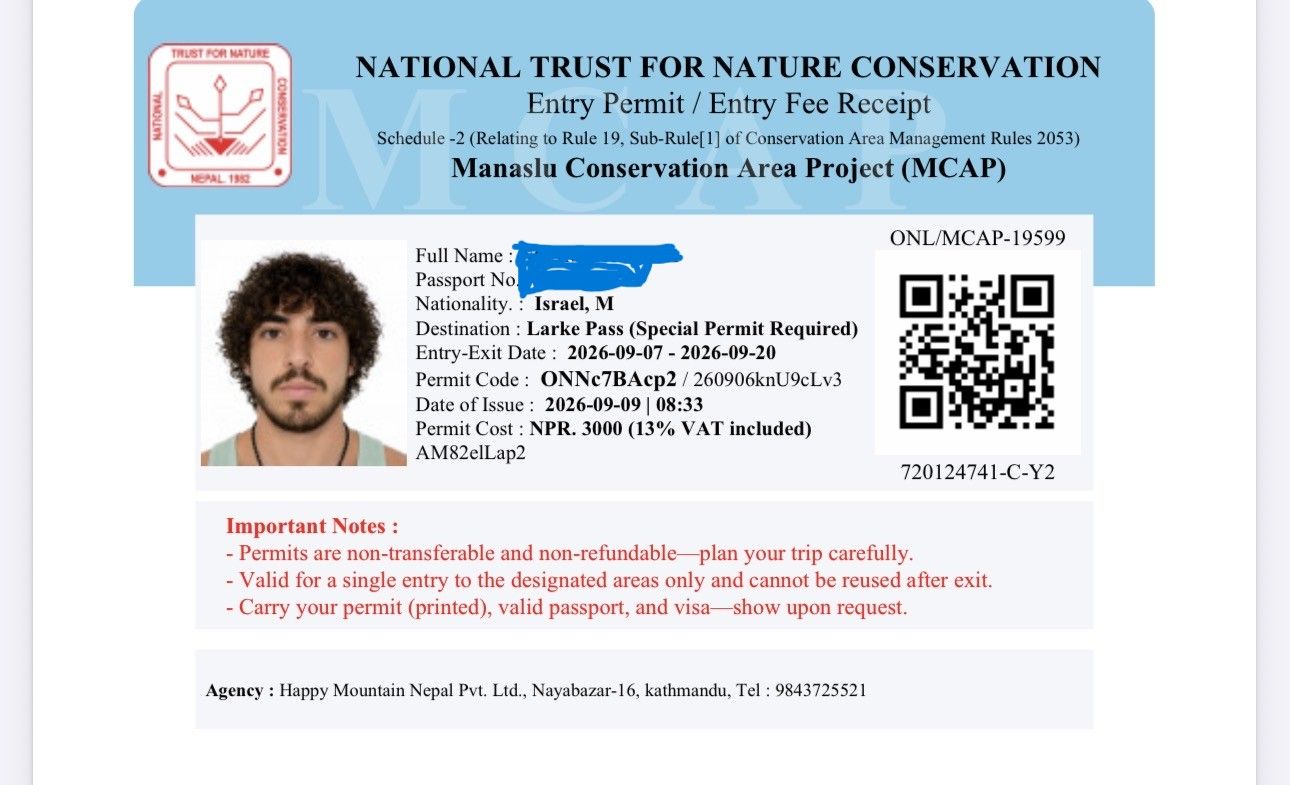
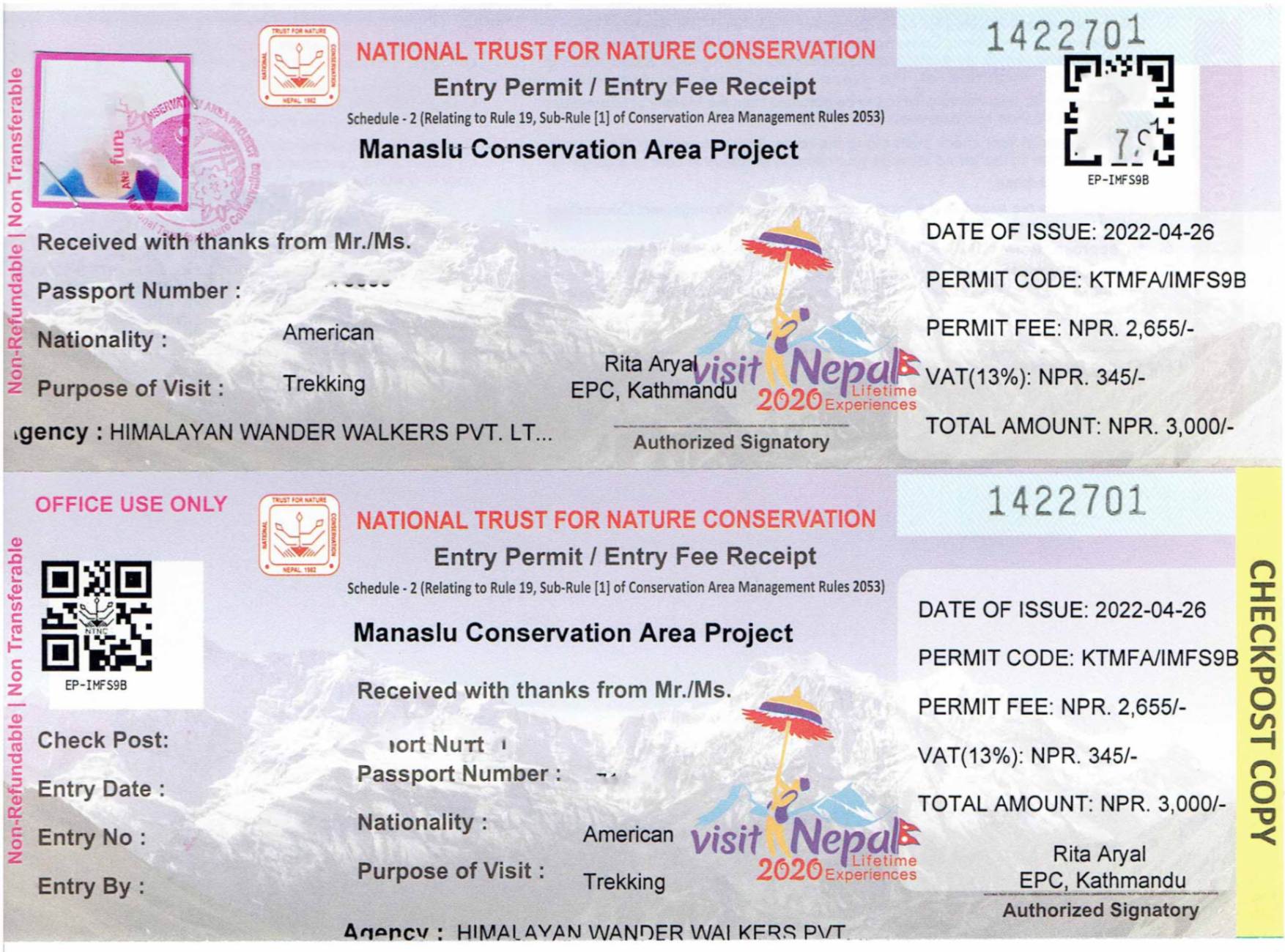
Manaslu Conservation Area
In the Manaslu area:
Foreign entry fee: USD 100 per person per entry
The price of a ticket for SAARC visitors is NPR 1,000.
Keep in mind the Manaslu region also has a restricted area which needs a separate trekking permit.
Gaurishankar Conservation Area
The foreign tourist's charge is:
Participants enter 2 at a time to score a total of NPR 3,000.
The entry fee for the visitors to SAARC is NPR 1,000.
Kanchenjunga Conservation Area
Foreign visitor fee: NPR 2000/- per person per entry
The visitors from SAARC pay NPR 500.
Api Nampa Conservation Area
For Api Nampa:
Entry fee for visitors from abroad: NPR 2,000/- per visitor
SAARC visitors pay NPR 500.
Restricted Area Trekking Permit (RAP)Fees
It is here that the Nepal trekking permits become more complicated.
Some parts of Nepal are restricted areas or controlled areas. A special permission from the Immigration Department is required for foreign trekkers to enter these regions.
This permit is required for the hike and will likely be requested by immigration officers or the police at any point during the hike.
The price is quite different in various areas and seasons.
Upper Mustang Permit Fee
Upper Mustang is one of Nepal's most famous restricted trekking destinations.
The current Department of Immigration information lists:
USD 50 per person per day
For the limited area of the Upper Mustang.

Upper Mustang Trek Permit
For the Upper Mustang and Upper Dolpa premium restricted permits, however, the Department of Immigration's citizen charter specifies that the cost is USD 50/day/per person.
The fee is now displayed in various formats on official government sites, so travelers should ask their registered trekking agency for clarification on which format they need to use when paying the fee.
The restricted area includes certain regions of Lomanthang, Lo Gekar Damodarkunda and Baragung Muktichhetra Rural Municipality.
Upper Dolpa Permit Fee
The trekking region of Upper Dolpa is also a very restricted and remote area.
The Department of Immigration currently indicates the premium restricted permit is:
USD 50/day/per person.
Unlike many popular trekking areas, the price of the permits for Upper Dolpa should be considered when budgeting.
Manaslu Restricted Area Permit
Manaslu is an excellent example of why travelers should check both the season and route.
For the restricted area of Manaslu, the current Department of Immigration information lists:
September to November
USD 100 per person per week
Additional days are charged at USD 15 per person per day.
December to August
USD 75 per person per week
Additional days are charged at USD 10 per person per day.
On top of the restricted area permit, trekkers may also need the Manaslu Conservation Area entry permit and TIMS.
This is why a Manaslu trek budget should not be calculated using only one permit.
Tsum Valley Permit Fee
Tsum Valley is located in the Manaslu region and has its own restricted area permit structure.
September to November:
USD 40 per person per week
Additional days cost USD 7 per day.
December to August:
USD 30 per person per week
Additional days cost USD 7 per day.
If you are combining Tsum Valley with the Manaslu Circuit, your trekking agency should calculate the permits according to the exact itinerary.
Humla Permit Fee
For restricted parts of Humla:
USD 50 per person per week
Additional days are charged at USD 10 per day according to the current Department of Immigration listing.
Humla is a remote region, so travelers should plan permits, transportation, accommodation, guides, insurance, and emergency arrangements well in advance.
Lower Dolpa Permit Fee
Lower Dolpa has a different permit structure from Upper Dolpa.
The current fee is:
USD 20 per person per week
Additional days cost USD 5 per day.
However, travelers entering the wider Dolpo region should check their exact route because park entry and other permits may apply as well.
Restricted Area Permit Fees
The Department of Immigration currently lists several other controlled trekking areas.
| Region | Current restricted area fee |
| Upper Mustang | USD 50 per person per day |
| Upper Dolpa | USD 500 first 10 days, then USD 50 per day |
| Manaslu | USD 100/week Sep to Nov; USD 75/week Dec to Aug, with additional daily fees |
| Humla | USD 50/week, then USD 10/day |
| Tsum Valley | USD 40/week Sep to Nov; USD 30/week Dec to Aug |
| Lower Dolpa | USD 20/week, then USD 5/day |
| Dolakha | USD 20/week |
| Taplejung | USD 20/week for first four weeks, then USD 25/week |
| Sankhuwasabha | USD 20/week for first four weeks, then USD 25/week |
| Solukhumbu restricted area | USD 20/week for first four weeks, then USD 25/week |
| Rasuwa | USD 20/week |
| Manang restricted area | USD 100/week Sep to Nov; USD 75/week Dec to Aug |
| Bajhang | USD 90 for first week, then USD 15/day |
| Mugu | USD 100/week, then USD 15/day |
| Darchula | USD 90 for first week, then USD 15/day |
These figures are based on the current Department of Immigration restricted area information.
Do You Need Both TIMS and a Trekking Permit?
Sometimes, yes.
It's a different set of requirements.
TIMS card is a system of trekking knowledge and protection. A restricted area trekking permit is a permission to enter into a controlled trekking area. Another separate requirement is a national park/conservation area entry permit. It could be, for instance, a trek in the Manaslu region, that includes:
The entry permit for TIMS is combined with the restricted area permit for Manaslu along with the entry permit to the Manaslu Conservation Area.
Similarly, a trek in Upper Mustang can involve:
The following permits are required for entry into the Upper Mustang restricted area: TIMS, an Upper Mustang restricted area permit, and Annapurna Conservation Area entry fee.
The exact mix will vary based on your route.
Permit Fees for Everest Base Camp
One of the most popular trekking routes in Nepal is Everest Base Camp.
Before starting the trek, travelers should budget for the relevant trekking and protected area requirements.
A significant expense may be:
- TIMS card
- Sagarmatha National Park entry fee
- The cost of local government or route related charges, as applicable
- Guide and agency services
- Transportation
- Accommodation
- Food
- Travel insurance
Foreign visitors have to pay NPR 3,000 at the entry point of the Sagarmatha National Park.
The Nepal Tourism Board also mentions the route to Everest Base Camp as one of the routes where a guide and agency issued TIMS card is required.
Permit Fees for Annapurna Trekking
There are various trekking routes in the Annapurna region.
These include:
- Annapurna Circuit
- Annapurna Base Camp
- Mardi Himal
- Poon Hill
- Khopra Ridge
- Nar Phu
The high altitude routes of Tilicho and others.
The current entry fee for foreign tourists to the Annapurna Conservation Area is NPR 3,000 per person.
Many of the Annapurna routes are also TIMS. The Nepal Tourism Board has Annapurna Circuit, Nar Phu, Poon Hill and ABC, Khopra, Mardi Himal and other routes listed on the current guide and TIMS.
Permit Fees for Langtang Trek
Langtang is reasonably easily accessible from Kathmandu, but still requires an entry fee for the protected area.
Langtang National Park foreign visitor fee is:
NPR 3,000 per each entry per person.
In addition, TIMS and other local permissions may be required on the route depending upon the route.
Permit Fees for Manaslu Trek
The Manaslu Circuit is more difficult to plan than other popular treks, and runs in a restricted and conservation area.
Some of the following items could be part of your permit budget:
- Manaslu restricted area permit
- Manaslu Conservation Area entry fee
- TIMS
- Other potentially applicable route charges depending on route.
- For foreign tourists, the current entry fee for Manaslu Conservation Area is NPR 3,000.
- The fee for the restricted area varies from season to season, with the time of travel playing a significant role.
Permit Fees for Upper Mustang Trek
The region of Upper Mustang is quite different from the normal trekking spots.
Special restrictions apply to the area and a special area trekking permit is needed.
Plan on the following expenses:
- Upper Mustang restricted area permit
- Entry fee for Annapurna Conservation Area.Annapurna Conservation Area Entry Fee.
- TIMS
- These are services that guide and registered with the agency.
- The cost of the Upper Mustang permit can also vary greatly depending on the number of days spent within the designated area, since the permit is based on the number of days spent trekking.
Do You Need a Permit for Kathmandu?
For those who are just visiting Kathmandu city, it is not obligatory to obtain a trekking permit.
But entry fees apply to individual heritage sites.
Entrance fees may apply to popular attractions such as:
- Kathmandu Durbar Square
- Patan Durbar Square
- Bhaktapur Durbar Square
- Swayambhunath
- Boudhanath
- Pashupatinath
- Changu Narayan
- Cultural centers and other museums
These are entrance tickets not trekking permits.
The Nepal Tourism Board says that entrance fees are charged in major heritage sites, museums, Lumbini and other places.
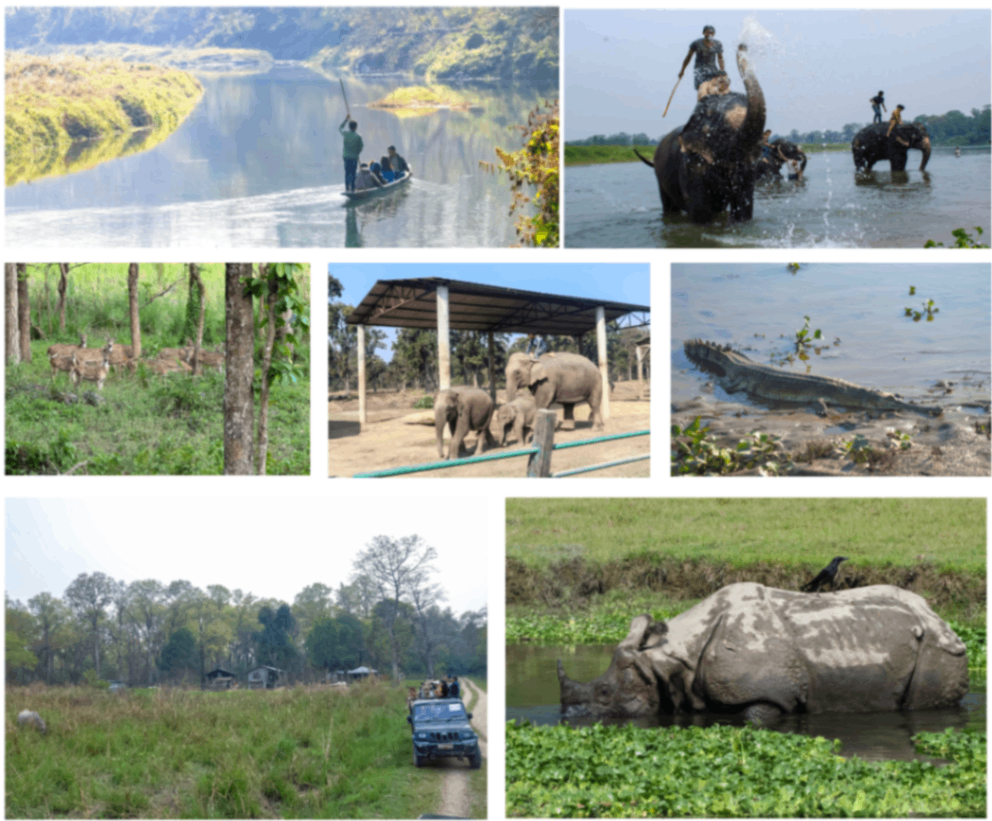
Do You Need a Permit for Chitwan?
A national park entry permit is required to enter Chitwan National Park.
The fee for entry to the site by foreign visitors is:
NPR 2,000 per person entry.
But this is not the same as a package to undertake a jungle safari in the park.
Should you wish to hire a jeep safari, a canoe trip, a nature walk, a place to stay, a guide or transportation, all these are separate costs.
Do You Need a Separate Permit for Every National Park?
Yes, According to the Department of National Parks and Wildlife Conservation (NPC) information on the Internet, an entry permit is needed for each national park. Therefore multiple park visits must be planned for entry permits, which will be applicable.
For instance, if you're traveling to Nepal and are going to visit Chitwan National Park and Bardia National Park, then you need to plan the entry fees of both the parks.
Where Can You Get Nepal Trekking Permits?
It is possible to take restricted area trekking permits, which are run by the Department of Immigration in Kathmandu.
Nepal Tourism Board says special trekking permits for restricted areas to be obtained from the Department of Immigration at Kalikasthan, Kathmandu.
On many trekking routes, a registered trekking agency can arrange the necessary documents and permits for the travelers.
This is particularly relevant in the restricted areas as permit applications might require the submission of documents like:
- Passport details
- Valid visa
- Trekking itinerary
- Agency documents
- Insurance documents
The documents required for the registration of trekking agencies.Registration documents for trekking agencies.
Payment records
Trekker details
The requirements set out by the Department of Immigration are published and include documentation to be provided by both the trekkers and registered trekking agencies for restricted area permits.
Is it possible to trek without a permit?
Do not enter a destination area for which a permit is required without obtaining one.
Nepal Tourism Board says that if someone treks beyond the restricted area or route mentioned in a restricted area permit it can be counted as violation of the rules. Trekkers must also have with them their permit and present it to Immigration or Police officials as necessary.
That's why it's crucial when you create your itinerary for your trekking agent.
What Documents Should You Carry?
When trekking in Nepal, keep digital and physical copies of important documents.
Carry:
- Passport
- Valid Nepal visa
- Trekking permits
- TIMS card
- National park or conservation area permits
- Travel insurance
- Emergency contact information
- Trekking itinerary
- Passport size photographs where required
For remote trekking areas, it is particularly useful to keep copies on your phone and cloud storage.
How Much Should You Budget for Nepal Permits?
Permit budgets for a trip to Nepal are not fixed. It may just be the Kathmandu cultural holiday package which includes nothing more than entrance fees to the attractions.
You may have to pay a National park entry fee for a wildlife safari in Chitwan.
TIMS along with a protected area entry fee may be needed for a typical Himalayan trek.
For a restricted trek like Manaslu, Upper Mustang, Upper Dolpa or Tsum Valley, a few different permits may be required.
When planning your budget:
Total permits cost = TIMS + protected area fee + restricted area permit + any other local/attraction fees.
Permit fees are NOT the same as trekking costs.
Accommodation, food, guide/porter services, transportation, flights, insurance, equipment and emergency expenses are not included.
Tips for Saving Time and Avoiding Permit Problems
Check Your Exact Route
Don't just take the trek name as your guide.
Permit requirements may differ for two different routes in the same overall area.
The way and villages you pass through are important, particularly in the areas where you will be limited.
Check the Season
Seasonal pricing is an option for some restricted area permits.
For instance, Manaslu and Tsum Valley have varying rates for September to November period and from December to August period respectively.
Always use a Registered Trekking Agency (RTA).
If guides and agency issued TIMS cards are required, always travel with a government registered trekking agency when hiking in routes down to that requirement.
This also simplifies the permit process since the agency can draft the necessary paperwork and plan the trip.
Please have your permit in your possession.
Never leave your permit in the hotel or with other people.
Permits for restricted areas should be included in the trekking permit and presented when necessary in front of an agent of authority.
Budget for Multiple Fees
One of the most common planning mistakes is assuming that one permit covers everything.
A conservation area fee does not replace a restricted area permit.
A TIMS card does not replace a national park entry permit.
Your itinerary may require several different payments.
Conclusion
It's important to know the permit fees in Nepal before you travel, so you know what to expect.
There is a possibility that for a regular Himalayan trekking, a TIMS card and a protected area entry permit may be enough. The process is more complex and fees may be much larger for restricted areas.
What's critical is to review your specific tour route, travel dates, nationality and days spent within restricted areas.
Please also check the permit fees if you are thinking about visiting Everest Base Camp, Annapurna, Manaslu, Langtang, Upper Mustang, Tsum Valley, Dolpo or other places in the Himalayas before making your budget.
Nepal's mountains are not just for the arrival. The route runs through traditional villages, conservation areas, culturally important landscapes and protected forests. These permits and entrance fees help to support a system for managing and protecting these destinations.
When you're looking for support, clear itineraries and the right permits with which to explore Nepal, contact DM Happy Mountain Nepal. We will help you make your plan for the Himalayan tour on your basis as per your itinerary, budget, travelling dates and interests.
FAQs
How much is a Nepal trekking permit?
The price of a trekking permit depends on the type of trek. TIMS is currently priced to NPR 1000 for SAARC citizens and NPR 2000 for others for foreign travellers, while the prices range from USD 20 per week in some areas to USD 500 for the first 10 days in the premium restricted areas.
What is the cost of a permit to Everest Base Camp?
For Everest Base Camp trekking, all applicable trekking requirements, such as TIMS and Sagarmatha National Park entry should be fulfilled. Foreign visitors are charged entry fee of NPR 3,000 for current Sagarmatha National park.
What will the price of the Annapurna permit be?
Foreign visitors are currently charged NPR 3,000 for each entry into the Annapurna Conservation Area. Other route specific requirements may apply, such as TIMS.
Is TIMS required in Nepal?
The Nepal Tourism Board has implemented regulations that require the use of TIMS and a licensed guide on certain popular trekking routes. It will vary according to the route.
Is Upper Mustang expensive?
Compared to many popular trekking routes, the restricted area permit for Upper Mustang is rather high. The Department of Immigration has a current rate USD 50 for each day, and another current list from the government refers to USD 50 per person per day. Tourists should verify the calculation that will be used before paying.