
Mani Rimdu Festival in Nepal: Complete Travel and Cultural Guide
Nepal is well known for its mountains, trekking trails, temples, monasteries, and various cultures. However, when you want to know the country beyond its signature landscape, you can have one of the best experiences by experiencing a local festival. Mani Rimdu Festival is one festival among many festivals celebrated in Nepal that has a special place in the Himalayan region.
It is celebrated mainly by the Sherpa community, Mani Rimdu is a major Buddhist festival held at Tengboche Monastery in the Everest region. It is a blend of religious prayer, meditation, ritual, sacred dances, music, offerings and community gatherings. The festival is a great blessing to travelers who want to enjoy the spiritual part of the Himalayas. You don't just pass through Tengboche as part of an Everest Base Camp trek; you have the opportunity to learn about its significance to the local people and the significance of the landscape.
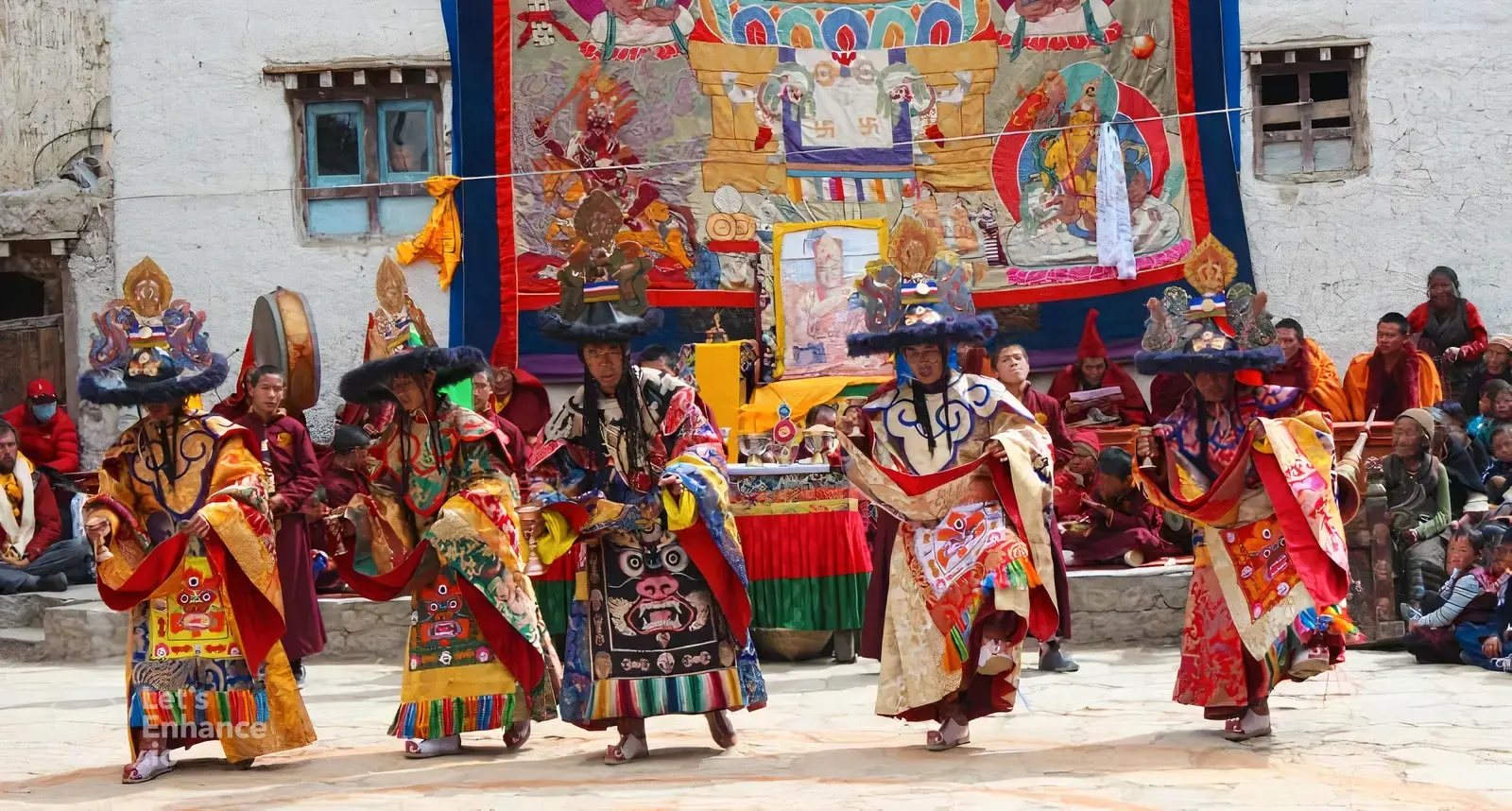
One of the most popular features of the festival is the colorful masked dance of the Buddhist monks. They are not just cultural dances to view initially, but have religious significance.
Each movement, costume, mask, sound and ritual is part of a larger Buddhist tradition.
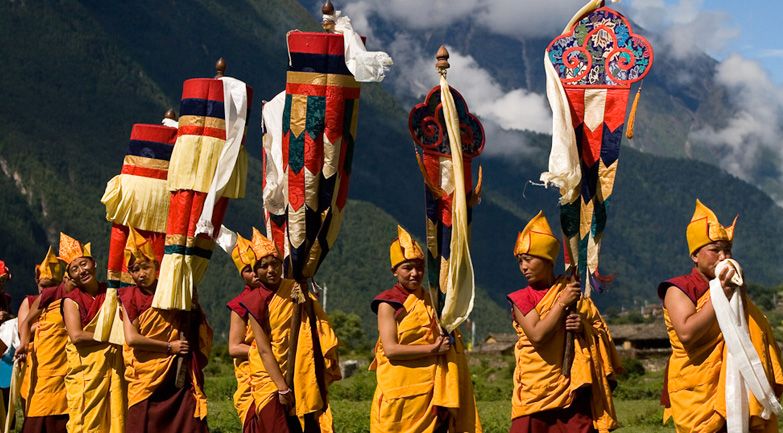
After several days trekking in the Khumbu region imagine, you reached Tengboche. The air is light and frigid. Mountains are covered with snow all around you. Prayer flags are carried by the wind in the Himalayas. The monks are preparing for the festival in the monastery, chanting prayers inside.
After that, the courtyard of the monastery is filled with music, colorful masks and religious dances, as well as elaborate costumes.
This is what makes Mani Rimdu so unique.
What Is the Mani Rimdu Festival?
Mani Rimdu is a traditional Buddhist festival of Sherpa community in the Everest region.
The festival is in the tradition of Tibetan Buddhism, particularly Nyingma. Tengboche Monastery is the most popular destination in Nepal where the festival is celebrated. The festival is not a one-off thing that occurs in one afternoon. This is a religious ritual which is celebrated over a number of days. The monks chant prayers and recite rituals, make a sacred mandala, engage in meditation and purification, dance in masks, and give blessings during the festival.
Due to the nature of Mani Rimdu being based on the Tibetan lunar calendar, it is possible for the date to vary from one year to the next. This is significant for travellers. For those who are specifically travelling to attend Mani Rimdu, you should check the dates for the respective year instead of assuming the dates are the same as the previous year's. It is a religious and a communal festival.
It is a gathering of monks, Sherpa families, the local community, pilgrims, trekkers and others. But it is mainly for religious purposes and not tourism.
Why Is Mani Rimdu Important?
In order to grasp Mani Rimdu, it is important to grasp the role of Buddhism in the Sherpa communities of the Khumbu region.
- Tibetan Buddhist traditions have long been intertwined in the everyday life of the Tibetan villages in the Himalayas.
- Monasteries aren't just places people go to pray. They are important cultural and spiritual centers.
- Monasteries provide blessings, religious ceremonies, teachings, and significant community events.
- Mani Rimdu is a time that allows for these traditions to be practiced together.
- Prayers for peace, protection, spiritual cleanliness and averting obstacles are associated with the festival.
- It is also a celebration of the Buddhist teachings and the triumph of positive spiritual forces over negative forces.
Thus, for the local community Mani Rimdu is more than a spectacle. A time for practice, connection, reflection, celebration.
Where Is Mani Rimdu Celebrated?
Tengboche Monastery in the Khumbu region of Nepal is the most popular Mani Rimdu celebration in Nepal.
The village of Tengboche is located at an altitude of about 3,860 m above sea level.
It is one of the reasons for the festival to be so memorable for visitors.
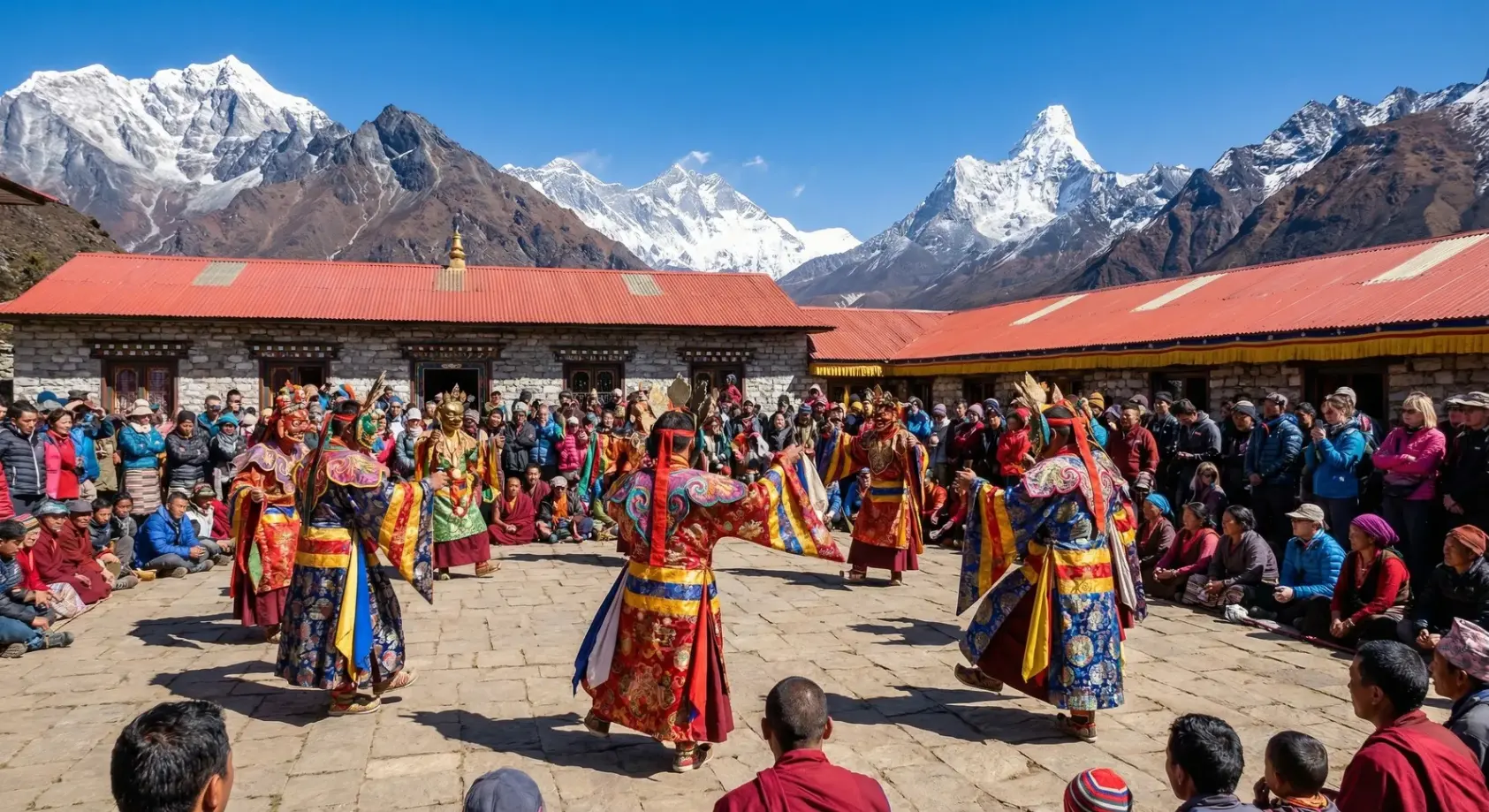
The monastery is surrounded by some of the most impressive landscapes in the Himalayas in Nepal.
On clear days, visitors can enjoy a view of mountains, including:
- Mount Everest
- Ama Dablam
- Lhotse
- Nuptse
- Thamserku
- Kongde
Buddhist architecture, prayer flags, forests, mountain trails and huge Himalayan peaks combine to form a scene that's more like the few other places on earth for festivals.
You don't just show up at the festival site and begin your festivities.
It is located at the highest altitudes of the Himalayas.
Tengboche Monastery and Its Importance
Tengboche Monastery is one of the most important Buddhist monasteries in the Everest region. It has become a spiritual landmark for both the local Sherpa community and trekkers traveling through the Khumbu. The monastery is surrounded by mountains and forests, making the setting particularly peaceful. For trekkers heading toward Everest Base Camp, Tengboche is often one of the most memorable stops along the route. During Mani Rimdu, however, the monastery becomes even more significant. Monks gather for extended religious practices, while local community members come to participate in the festival. The monastery courtyard becomes the main setting for the famous masked dances. This is why many travelers intentionally plan their Everest trek around the Mani Rimdu dates.
The History and Buddhist Background of Mani Rimdu
Mani Rimdu is associated with the propagation of Tibetan Buddhism in the Himalayas. The festival has close association with Himalayan Buddhism's important figure Guru Rinpoche (Padmasambhava). Guru Rinpoche is believed to be the one who introduced and established Buddhism in Tibet and around the Himalayas. The ceremonies at Mani Rimdu are the symbols of compassion, wisdom, cleansing and combating evil forces in line with the Buddhist doctrines. Mani Rimdu has also firmly associated himself with Nyingma Buddhism.
In the course of time Mani Rimdu has become an integral part of religious and cultural existence of the Sherpas in the Everest region. Teneboche has continued to draw crowds of both locals and tourists. Though for those who visit, it looks as if colorful dances are the main aspect of the event, Mani Rimdu has a much deeper meaning associated with spirituality.
The meaning of the name Mani Rimdu.
Mani Rimdu is associated with Buddhism.
According to the famous Buddhist mantra, the term Mani is derived from:
Om Mani Padme Hum.
The mantra is closely related to the bodhisattva Avalokiteshvara (also known as Chenrezig in Tibetan Buddhism) who is venerated as the personification of compassion.
The term Rimdu relates to the religious rituals and ceremonies performed during the festival.
The name therefore reflects the spiritual character of the celebration rather than simply describing a cultural event.
The Main Stages of Mani Rimdu
The exact sequence of events may change, but there are some key phases to Mani Rimdu. The festival may be said to have three noteworthy stages: Preparation and making of the Mandala
Prayer and instruction in religion. Street processions and parades with masks, and public festivities. A knowledge of the stages makes it easier for travelers to appreciate the length of the festival. The well known dances in the costuming are just a part of the full festival.
The Sacred Mandala
The Mandala is one of the most intriguing aspects of Mani Rimdu.
The monks create a complex mandala from coloured sand.
To make a sand mandala, one must be patient, focused and be familiar with Buddhist symbolism.
The mandala symbolizes a sacred spiritual universe.
Symbols are different shapes, colors, figures and patterns that convey meaning.
The action of the process itself is regarded as a spiritual practice.
It is not the same to observe the mandala's creation as to observe the colorful dances for visitors.
It's a gentler environment.
Focus and attention.
The monks take great care and patience in doing what they're doing, which can take hours, and end up making something very detailed by using colored sand, which is in very small grains.
The mandala also provides a lesson in Buddhism.
The mandala is then deconstructed after the religious ceremonies are over.
The sand is then scattered or utilized in a ritual manner.
An object that has been intentionally broken down after being made over an extended period of time. This is an expression of the impermanence of the material world.
Buddhist Prayers and Rituals
Prayer is at the heart of Mani Rimdu. At this festival, monks engage in long religious ceremonies that may involve chanting, meditation, offerings, music and ritual. The sound of chanting can be particularly powerful in the mountain environment. Peaceful from the outside, but very different on the inside, is the monastery. The monks assemble while they are engaged in rituals.
The prayers are accompanied by traditional instrumentals. Butter lamps are permissible to be lit.
The room may be filled with incense. Religious items and gifts are listed and organized.
It is an opportunity for the traveller to see a living faith instead of one that's kept for museums.
The Famous Masked Dances
- The most famous aspect of Mani Rimdu is the masked dances.
- These are the performances when the Buddhist monks dress in elaborate masks and costumes of various religious figures and symbolic characters.
- Ritual sounds, chanting and the traditional instruments accompany the dances.
- The movement may be dramatic and mysterious.
- Masks sometimes show a peaceful face, others can be fierce or intimidating.
- However, these characters should not be taken in the Western notion of good and evil characters.
- Fierce figures can be seen as strong forces in the Himalayan Buddhist traditions, which are able to overcome negative influences, obstacles, and ignorance.
- So the dances convey the religious message through movements and symbols.
What Do the Masked Dances Symbolize?
The masked dances are a symbol of triumph of wisdom and positive spiritual energies over negative energy. The performances represent the breaking of barriers, the warding-off of evil spirits, the cleansing and the victory of Buddhism. The meaning of each dance. The monks do not just put on a show. They are doing a religious ceremony. It is different to travelers and it is significant.
When attending Mani Rimdu, try to not think of the masked dance as a regular stage show.
When you can see their spiritual purpose, it makes it so much more meaningful to watch them!
The Meaning of the Masks
- The masks worn in Mani Rimdu are very symbolic.
- Some depict Buddhist roles in peaceful situations.
- Others are the powerful or wrathful deities.
- Being extremely ugly doesn't necessarily imply badness.
- A wrathful figure in Buddhist symbolism symbolizes the strength required to overcome ignorance, negative emotions, and spiritual barriers.
- The masks thus convey ideas via pictorial imagery.
- The dances are also visually spectacular, as they are brightly colored and have dramatic expressions.
For this reason, Mani Rimdu has been an attraction to cultural photographers and travelers.
Traditional Costumes
- Costumes are also important during Mani Rimdu.
- Monks put on the colours, ornaments, masks etc. of ritual attire.
- The costumes of the characters vary.
- The clothes denote the religion of the dancers during the dances.
- The costumes, masks and traditional music combine to create a highly symbolic religious space in the courtyard.
- The costumes offer a tremendous visual opportunity to the photographer.
- Always, though, visitors must be mindful that the costumes are a part of a religious ritual.
- Photography should never interfere with the rituals.
Traditional Music During Mani Rimdu
Music is an integral part of the festival.
In the Buddhist prayer and dance, traditional instruments are played.
These may include:
- Drums
- Cymbals
- Bells
- Long horns
- Ritual horns
- Other traditional monastery instruments
These sounds can be particularly potent in the high Himalayan setting.
The music played by the horns and drums and the chanting makes for a very different kind of day from a normal trek day.
Music may be one of the things you remember from a Himalayan Buddhist festival if you've never been to one before.
When Is Mani Rimdu Celebrated?
Mani Rimdu is a Tibetan lunar festival, which is transacted on different dates each year.
The festival takes place in the fall months.
It is also a favorite time for trekking in the Everest region as the weather is favourable for trekking in the mountains.
But travellers shouldn't expect it to occur on the same Gregorian calendar dates each year.
For those who are booking their trip to Nepal around the festival of Mani Rimdu, confirm the dates for the festival first before making a trip plan.
Also, give a few more days as mountain travel may be impacted by weather and transportation.
Mani Rimdu Festival 2026
Please note that the official dates for the Mani Rimdu Festival 2026 have yet to be confirmed and should be taken with a pinch of doubt.
The Tibetan lunar calendar implies that the dates change on an annual basis.
It is important for you to be aware of that, too, that this is a festival of religious activities that last for several days.
Those who only visit for the most famous dance performance may not get a chance to experience some of the cultural aspects of the visit.
It is better to get to the Tengboche area early- before the main public ceremony.
This will allow you to get used to the altitude, visit the monastery and learn the atmosphere of the festival.
How to Reach Tengboche
The trip of most foreign tourists starts in Kathmandu.
A common route is: Kathmandu ---- Lukla ---- Phakding---- Namche Bazaar ---- Tengboche
Phakding is a lovely village where you can find lodging.The next place to stay in Kathmandu is Phakding, a beautiful village in which you can get lodging.
The Lukla flight is a route by which trekkers usually enter the Everest region trek.
Then walk towards the village of Khumbu from Lukla.
The trail runs through forests, suspension bridges, Buddhist monuments and traditional Sherpa settlements.
From here, you will arrive at Namche Bazaar.
The trail starts from Namche, where they get used to the altitude, and leads to Tengboche.
A part of the experience of coming to Mani Rimdu is the journey itself, which is the most beautiful part.
The trek from Lukla to Tengboche is a popular route.
The trek from Lukla to Tengboche normally takes several days.
It will vary depending on your rate of walking, acclimatization plans, and weather conditions, as well as stops.
The usual trip consists of:
Lukla
Lukla is one of the main gateways to the Everest region.
Upon arrival, trekkers typically start their trek for Phakding.
Phakding
A popular initial overnight destination is Phakding.
The trail is along the Dudh Koshi River and through several small towns.
Namche Bazaar
Namche is one of the main towns in the Khumbu.
It is a big trade center and an acclimatisation area.
Many trekkers spend an additional day before going on to the higher ground.
Tengboche
Namche is the starting point of the trail, which runs through a beautiful mountainous landscape, towards Tengboche.
The initial sight of the monastery and the surrounding peaks may be a memorable moment.
Why You Should Spend Extra Time in Tengboche
When travelling for Mani Rimdu, don't take Tengboche as just an overnight stop.
- The festival deserves to be given some time.
- If you can stay an extra night or two, you will have the opportunity to experience more of the religious activities and environment.
- A little time to acclimatize your body to the altitude, too.
- Don't be in a rush and enjoy the monastery and the village.
- This is especially crucial because it is the atmosphere rather than the main dance what makes Mani Rimdu really beautiful.
- This is an Everest Base Camp trek combined with Mani Rimdu.It is a trek to Everest Base Camp and Mani Rimdu.
- Mani Rimdu is one of the best experiences in combination with the EBC trek.
- Tengboche is already on the traditional route to the base of the Everest.
- You do not have to make a separate trip to go to the festival.
- But there's a point that you need to change your plans.
- The usual Everest Base Camp trek doesn't necessarily allow you to stay in Tengboche for the main ceremonies.
- If Mani Rimdu is a major attraction for you in your trip, plan your tour around the festival instead of arranging your tour around the festival.
What Is the Experience Like for a Traveler?
It is so different from regular sightseeing to participate in Mani Rimdu.
After days of walking you arrive.
- Mountains all around you.
- A cold, rarefied air.
- There are prayer flags flying above the monastery.
- Local residents gather.
- Monks get ready for ceremonies.
- The drums along with horns, cymbals and chanting then start.
- People enter the courtyard of the monastery.
- The masked dancers are on the scene.
- As an observer, it can be an emotional experience as the place and the ceremony are intertwined.
- It's not a festival in a city square you're seeing.
- You're seeing an ancient religion in an isolated Himalayan village.
What Should Travelers Wear?
Tengboche is at a very high elevation, warm clothing is a must.
- Don't go with a single very thick jacket.
- Consider a good combination of:
- Thermal base layer
- Fleece jacket
- Down or insulated jacket
- Waterproof jacket
- Trekking trousers
- Thermal trousers
- Warm socks
- Gloves
- Warm hat
There are also some rules of modesty that must be observed during a visit to the monastery.
Don't wear revealing clothing.
Keep in mind that you are in a sacred religious setting.
Photography During Mani Rimdu
Visually, Mani Rimdu is amazing. The monastery, mountains, prayer flags, masks, costumes and rituals make for numerous photo opportunities.But there's a fine art in photography; being sensitive.
- If there are monastery directions always obey them.
- If there is no permission to take pictures within an area, refrain from taking pictures.
- Take close-up shots of people, but ask first!
- Don't use flash at ceremonies unless it is specifically allowed.
- Don't break a ritual to take a picture.
- A great travel photographer should not be an intruder.
Best Photography Opportunities
These are some of the best subjects to write about:
- Tengboche Monastery
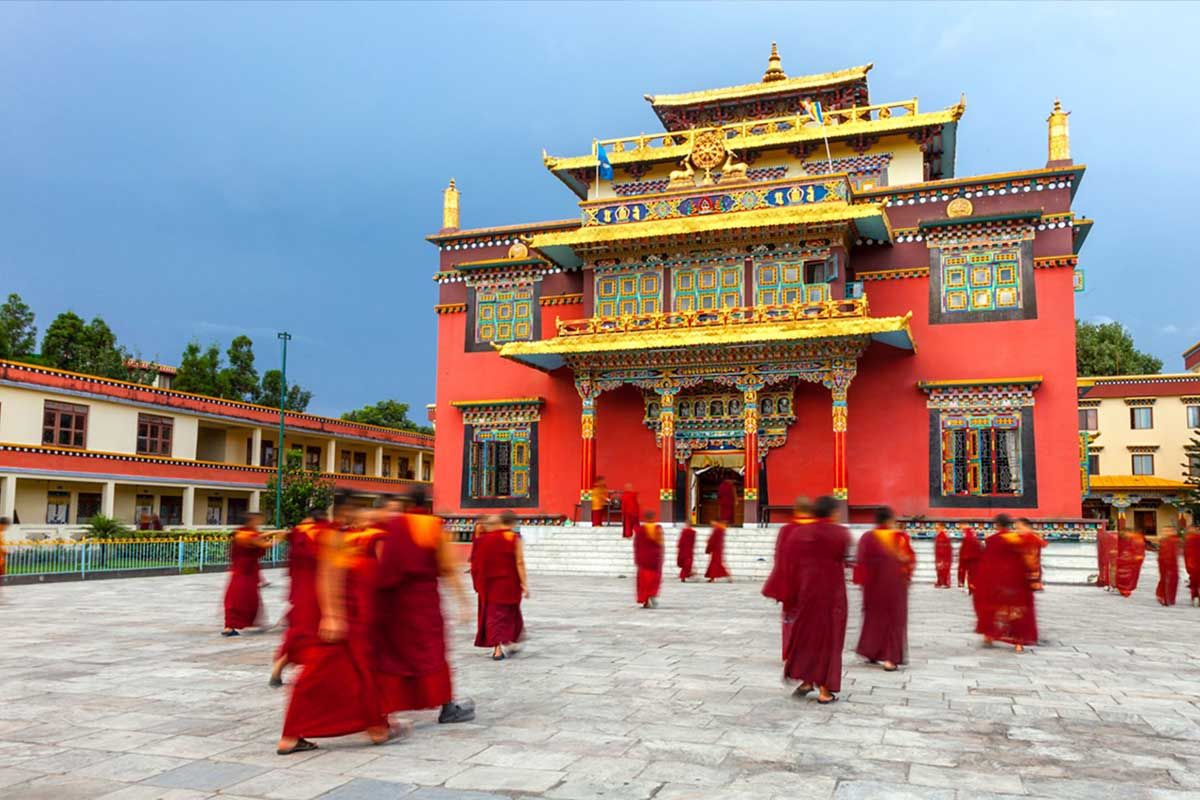
The monastery itself is a beautiful architectural theme.
Himalayan Background
Dramatic backgrounds can be created with Ama Dablam and other peaks.
- Prayer Flags
Colorful foregrounds can be provided by prayer flags in the mountain wind.
- Festival Costumes
Some of the most striking scenes are the masked dancers.
Prior to the ceremonies, monks prepare themselves.
Preparing for the festival could provide more natural photos than the actual show.
- Local Life
Capturing the larger picture of the festival scene can also help to create a more comprehensive visual narrative.
- Cultural Etiquette
The most important thing to remember is respect.
Check the person's permission before taking their picture
In particular, for close-up portraits.
- Do Not Touch Religious Objects
- Don't take a touch of statues, ritual items, offerings, prayer objects or monastery property without permission.
- Be quiet when you pray.
- Do not talk loudly while ceremonies are taking place.
- Take a clockwise tour of religious buildings.
- When walking around Buddhist religious structures like stupas, mani walls etc., walk in the local clockwise direction.
- Respect Restricted Areas
- Visitors may not be able to visit all parts of the monastery.
- Don't copy religious rituals as a joke!
- Don't dismiss anything that seems strange as insignificant.
- You are about to observe a significant religious ritual.
Food During a Mani Rimdu Trek
The food is usually basic, substantial and geared towards the trekker in the Everest region.
Commonly found:
- Dal bhat
- Momos
- Noodles
- Soups
- Potatoes
- Tibetan bread
- Rice dishes
- Sherpa-style stews
- Tea
- Local communities can also cook special foods for their festivals.
But don't presume Mani Rimdu is going to be like a big food festival.
Emphasis is on religious and cultural.
Accommodation During Mani Rimdu
The accommodation is limited at Tengboche as compared to Kathmandu or Pokhara.
The area mainly consists of trekking lodges and teahouses.
Facilities are typically very simple.
You may have:
- Simple rooms
- Shared bathrooms
- Dining areas
- Limited hot water
- Electricity
- Basic heating
- Wi-Fi and/or internet facilities (as available)
- Mani Rimdu is a popular place to stay, so may be crowded.
If you are travelling in the festival, arrange accommodation prior to your trip as far as possible.
How Much Does a Mani Rimdu Trip Cost?
The cost of attending Mani Rimdu depends on how you organize your Everest region trip.
There is no single cost for the festival experience.
Your main expenses may include:
- Kathmandu accommodation
- Flights or transportation to the Everest region
- Trekking permits
- Accommodation
- Food
- Guide
- Porter
- Travel insurance
- Trekking equipment
- Internet and charging
- Emergency expenses
A traveler who is already planning an Everest Base Camp trek may only need to modify the itinerary and add extra nights.
A traveler coming specifically for Mani Rimdu should budget for the entire Himalayan journey.
Is Mani Rimdu Free to Attend?
The public component of the festival may not function the same as a commercial event that sells a common admission ticket.
But, it's important to plan for the total cost of your trip.
It is also possible that you will find chances to make the proper donations to monasteries or religious activities.
If you want to contribute, please do it with respect and following local customs.
Best Time to Visit
The festival dates are the main criteria determining the best time to experience Mani Rimdu.
Generally, the festival happens in the fall trekking season.
It is popular in autumn as generally good conditions prevail for trekking and good mountain views are possible.
But it's also a hectic time of year.
Routes, flights and lodges may become overcrowded.
If you have come to visit for Mani Rimdu, it is best to give culture a priority.
Final Thoughts
One of the best ways to explore the cultural and spiritual side of Nepal's Everest region is by attending the Mani Rimdu Festival.
Tengboche, and the journey to it, is an experience in itself unique in the Himalaya. This takes you through Sherpa villages, across suspension bridges, past prayer wheels and mani walls as you penetrate further into the mountains.
Then you arrive at Tengboche.
Rather than just checking out the monastery and moving on to Everest Base Camp, you actually get a glimpse into what has been a centuries-old Buddhist tradition.
You hear the chanting.
You see the colorful masks.
You then hear monks do sacred dances.
You see local families gathering.
You hear the sounds of classical instruments.
And above you, all around are the monoliths of the Khumbu.
This combination seams to make Mani Rimdu unique.
However, do keep in mind that while attending, the best experience comes from being respectful and curious towards the festival.
Sirf scheme ki photos se kam nahi chalega.
Udah tau kan di liat gitu aja sampe ngerti.
Listen to the prayers.
Observe the rituals.
Talk respectfully with local people.
Learn about Sherpa culture.
And take the time to soak in the ambience, without hurrying.
A unique chance for any traveller wanting to see past the typical Everest trekking to experience the living spiritual culture of the Himalaya, Mani Rimdu Festival offers far more.
FAQs
What is Mani Rimdu Festival?
Quick Description: Mani Rimdu is a significant Buddhist festival, primarily for Sherpa communities in the Everest region of Nepal. It comprises prayers, rituals, meditation, religious instruction, the creation of a mandala and masked dances.
Where is Mani Rimdu held?
ArgumentTengboche Monastery in the Khumbu region hosts Nepal's most famous Mani Rimdu celebration.
When is Mani Rimdu celebrated?
The dates vary year to year, as the festival follows the Tibetan lunar calendar. It usually takes place in the fall.
It is an ancient and sacred festival of traditional Buddhist religion performed by the people of Nechung Chu valley which it goes on for 19 days.
- What is the main attraction of Mani Rimdu?
The colourful masked dances the Buddhist Lamas perform are perhaps a unique expression worldwide of this festival, but the folk traditions are only one element in the broader picture of religious celebration.
- Can foreigners attend Mani Rimdu?
While the festival will open up to public aspects there may be restrictions on religious elements, which visitors can generally take part too. Travelers should follow monastery instructions