
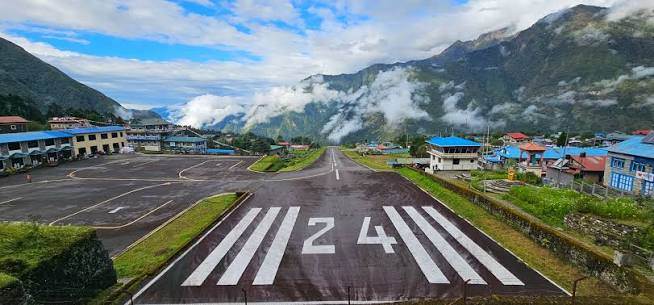
Lukla Airport: The Gateway to Mount Everest
To many people, a trip to Nepal is a dream and seeing the world's highest mountain is something they hope to do at least once in their lifetime. Many people start their trek to Mt.Everest with an adventurous flight to Lukla Airport, which is one of the world's most popular mountain airports.
Lukla Airport is situated in the Solukhumbu district of northeastern Nepal, and is the primary airport for those travelling to Everest Base Camp and other areas in the Khumbu region. Enclosed by green hills, deep valleys, traditional Sherpa settlements and towering peaks of the Himalayas, Lukla is the first sight to visitors to this place of wonder.
Lukla Airport is officially named Tenzing-Hillary Airport and is much more than an aircraft landing and taking-off site. It's the beginning of an awesome Himalayan trek. Lukla is where many trekkers' dreams of visiting Everest finally come true.
For those who are planning an Everest Base Camp Trek, interested in the Khumbu region's culture, or simply curious about one of the world's most amazing airports, knowing a little about Lukla Airport will go a long way towards helping you appreciate its role in Nepal's tourism industry.
Where Is Lukla Airport Located?
Lukla, a small village in the Solukhumbu district of Koshi Province, Nepal, is home to Lukla Airport. It is located at an altitude of about 2860 m (9383 ft) above sea level.
The airport is located in the eastern part of the Himalayas, flanked by high mountains, valleys and rocky landscapes. It is of great importance as a transport link between Kathmandu and the remote communities of the Everest region.
Lukla Airport is a smaller airport that primarily caters to the tourists, trekkers, local residents and people who make their living from the tourism industry, and unlike other major international airports, doesn't have many passengers.
The town of Lukla is also a significant location for those heading toward Namche Bazaar, Tengboche, Dingboche, Gorak Shep and Everest Base Camp. Once the landing is done, trekkers generally have time to get settled and get to know their guides and porters, at the same time as they prepare for the day in question.
Being located on a mountain is part of the charm of this airport. Incoming planes offer green hills, deep valleys and a spectacular view of the terrain of the Himalayas.
Lukla is beautiful, however, the same geographical features that make Lukla beautiful make operating flights difficult. The flight planning and aviation crews must be experienced and be able to plan flights accordingly, because of the mountainous areas, the varying weather conditions, and the limited space to operate at.
Why Is Lukla Airport Called the Gateway to Mount Everest?
For this reason Lukla is a popular airport and is also referred to as the gateway to Mount Everest as it provides easy access to the Khumbu region where most popular trekking routes of the Everest region start.
It's not directly at Everest Base Camp but it does help cut down the time needed to get to the starting point of the trek.
If there was no air route, the travellers would normally have to take a few more days to get to the Everest region by road and foot. Flights to Lukla enable trekkers to start their adventure much nearer to the classic trekking route.
The typical Everest Base Camp Trek from Lukla passes through Phakding, Namche Bazaar, Tengboche, Dingboche, Lobuche and Gorak Shep en route to EBC. Climbers typically add acclimatisation days into their tour to help their body acclimate to the rising elevations.
The airport also offers other adventures in the region like Gokyo Lakes Trek, Three Passes Trek and trekking to the viewpoints of Kala Patthar.
Although trekking is not the only way of transport, Lukla Airport plays an important role in the local economy. It facilitates the movement of people, supplies and necessary materials to communities that are not easily accessible by road. It is also a source of support for tourism activities such as hotels, teahouses, guides, porters and trekking agencies.
The Lukla Airport is thus crucial to the connectivity of Nepal's Himalayan population.
Tenzing-Hillary Airport: The Official Name of Lukla Airport
The official name of Lukla Airport is Tenzing-Hillary Airport. It is named in honor of two legendary mountaineers; Tenzing Norgay Sherpa and Sir Edmund Hillary who were the first confirmed climbers to reach the summit of Mount Everest on 29th May, 1953.
In 1964 the airport was opened with the help of Edmund Hillary's Himalayan Trust. It facilitated access to the inaccessible Khumbu region and contributed to the development of tourism and the mountaineering ventures in the area.
Lukla is now closely linked to the expeditions to Everest and trekking trips over the decades. The airport is among the most well-known airport destinations in Nepal, with thousands of travelers passing through during the main trekking seasons.
The Tenzing-Hillary Airport was named after the mountaineering legacy of Nepal and the international fame it created for those who helped make Everest well known in the world.
The airport continues to play a significant role in the promotion of adventure and the increasing connectivity between tourism, the community and mountain exploration today.
What Makes Lukla Airport One of the Most Remarkable Airports in the World?
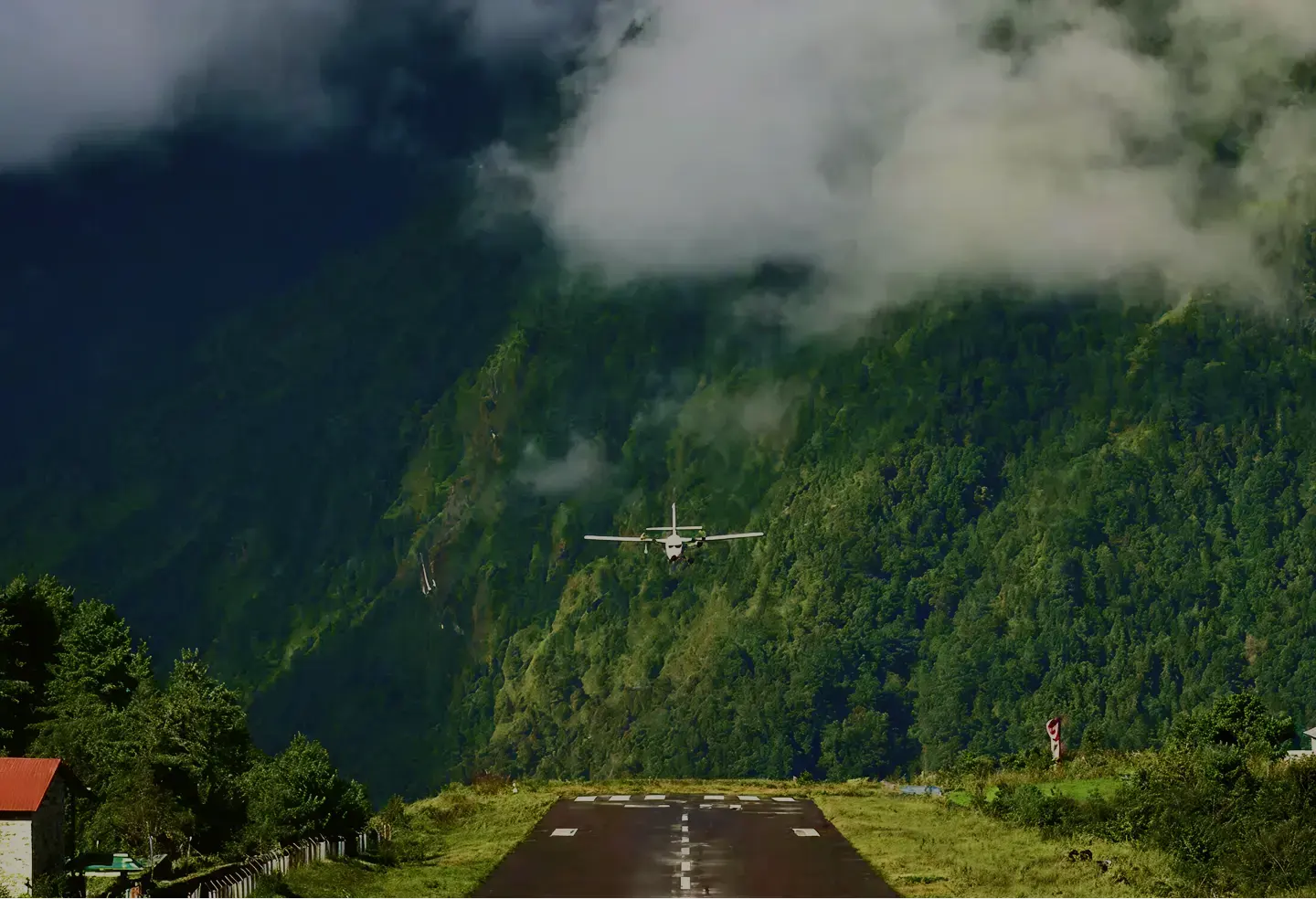
Lukla Airport is famous for its challenging operating conditions and spectacular mountain setting. It is often described as one of the world's most challenging airports for pilots because of its short runway, steep terrain, and weather-dependent flight operations.
Several features make the airport different from conventional airports.
1. A Short Mountain Runway
Lukla Airport's most notable characteristic is its tiny runway.
The length of the runway is about 527m and its width is 20m. This is covered with paving and is constructed on a slope, which enables aircraft to land and take off within the limits of the mountainous terrain.
Because of the short length of the runway, an aircraft must be appropriate for the airport. It is subject to the aviation requirements and may only be operated by authorized aircraft and qualified crews.
The lack of space at the airport makes Lukla a very bad place to be.There's not much room for mistakes in Lukla. It is important for pilots to handle their approach, landing and take-off carefully.
One of the primary factors that makes Lukla Airport well known is its design.
2. Steep Mountainous Terrain
The area around the airport is hilly and has a number of valleys. The area in which it is located poses special conditions for aircraft landing on and taking off from the runway.
Factors pilots must take into account are terrain, wind, visibility, and available flight paths. The topography around Lukla does not allow the planes to approach from multiple angles as is done at many airports.
Such conditions require special training, planning and operational procedures.
3. Changing Weather Conditions
Another important consideration for flights to Lukla is weather.
Sudden change in cloud cover, visibility, wind, and precipitation are possible in the Himalayan environment. Fog and low clouds will hinder aircraft landing safely and heavy winds could affect scheduled flights.
Even if the weather is clear in Kathmandu, it could not be clear around Lukla so it could be unsuitable to fly.
This means there are not many days when flights are canceled or delayed, especially in times of inclement weather.
People who are interested in going to Everest should be aware of the fact that flights to Lukla are not only depending on the published schedule but also on the actual operating conditions.
4. Spectacular Himalayan Views
In spite of its difficult conditions Lukla Airport provides a memorable arrival experience.
When visibility is good, passengers can see green hills, traditional villages, winding mountain trails and distant peaks of Himalayas.
From the point of view of a trekker, the flight can be one of the best parts of the trip. It gives an aerial tour of what they will encounter on land during the upcoming days.
Both the arrival to Kathmandu, the busy city, from Lukla, the peaceful mountain, are very exciting.
5. A Small Airport With a Big Role
Lukla Airport is a relatively small airport, but it also has a great significance for much more than its size.
It is home to one of the most well-known trekking routes in Nepal and accesses communities with logistical challenges.
The tourism sector in the Everest region relies on a complex system of people and services, such as pilots, airport employees, trekking guides, porters, or lodge owners, rescue teams, and suppliers of local goods.
Lukla Airport helps to link these people and services to the region's tourism economy and an overall support of livelihoods throughout the Khumbu.
Flights to Lukla: How to Reach the Gateway to Everest
Most tourists who travel to Lukla start their trip from Kathmandu, the capital of Nepal.
The first stop of a traveler is Tribhuvan International Airport before taking a domestic flight or making other arrangements for travelling to the Everest region.
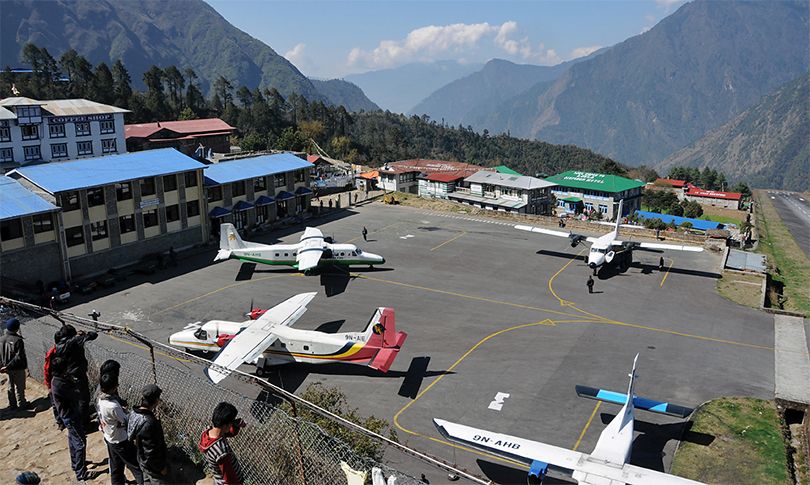
Lukla is serviced by airlines with permission to operate there. The aircraft used are usually smaller, appropriate for mountain operations in the region with less number of passengers than commercial jet aircraft.
The flight time from Kathmandu to Lukla is about 30-40 minutes, depending on the weather and the operating conditions.
Sometimes flights will be arranged from Ramechhap Airport during peak trekking seasons instead of Kathmandu. During periods when the airport of Lukla is in charge of operating flights, it is used for the Lukla services.
Generally, it is necessary for the travelers from Ramechhap to make the road transportation of their vehicles from Kathmandu to Ramechhap airport. Driving time will vary according to traffic and road conditions and may take several hours.
Airline timings and operating are subject to change and aviator's or the trekking agency's attention should be sought prior to travel to confirm the departure airport.
What Is the Flight to Lukla Like?
The flight to Lukla is brief but it provides an exciting introduction to mountain travel.
The aircraft crosses over the foothills of the Himalayas and the mountainous regions of the northeastern part of Nepal after departing Kathmandu or Ramechhap.
Passengers might encounter terraced hillsides, forests, rivers and some small communities dotted throughout the mountains as the aircraft approaches Lukla.
The last approach is especially significant because the airport is located in a narrow mountain valley.
But it is important to travelers to keep in mind that this isn't a sight seeing flight, but rather a routine flight under special circumstances. Weather and visibility conditions will affect views, and the safety of the flight will always be the highest priority.
Knowing that weather-related delays are a normal part of flying in the mountains and hearing the crew's instructions can help you be psychologically prepared for flying.
Best Time to Fly to Lukla
Choosing the right season is important when planning a trip to Lukla and the Everest region.
Although flights operate throughout much of the year, weather conditions and visibility can significantly affect their reliability.
Spring Season: March to May
One of the most sought after time to trek through the Everest region is the spring season.
The weather is generally conducive to trekking, hills turn green and rhododendrons bloom throughout the Himalayas.
April and May are busy months as climbers and trekkers come to the area during the peak mountaineering season in the spring.
During this time flights to Lukla may be in high demand. Plan ahead and leave some flexibility in your travel plans.
Autumn Season: September to November
Autumn is also a great time to visit the Everest region.
The monsoon generally brings clearer weather, with mountain vistas often being amazing after the monsoon. October and November are particularly popular months for trekking as conditions are generally good.
But when in high demand, it may be difficult to make a flight and a booking. Generally, however, travel plans can be made without fear of weather interruption.
Monsoon Season: June to August
Monsoon has caused rain, cloudiness and low visibility in many regions of Nepal.
Weather conditions can affect flights to Lukla and trekking routes can become muddy or slippery. Alternative transportation needs may also be impacted by landslides and hard-to-navigate roadways.
There are still some seasoned travelers who visit the region during the monsoon season, but they do need to be well prepared and mindful of what to expect.
Winter Season: December to February
In the winter, there are colder temperatures, especially in higher elevations.
This time, the Everest region can be less crowded, providing an alternate experience for those who prefer less hustle and bustle. The weather, however, can interfere with plans and may change, due to snow, low temperatures.
Not all winter days are bad for flying – flight availability may vary and trekking conditions may be not so straightforward.
Please note: Flights to Lukla are not guaranteed during any season. Always verify flight plans and weather before leaving.
What Happens If Your Flight to Lukla Is Cancelled?
One of the most frequent worries for the visitors of the Everest region is also flight cancellation.
Flights rely on weather and visibility, so while passengers may be at the airport a flight can be delayed or cancelled.
The first place to begin looking if your flight is canceled is the airline or trekking agency. They can offer a choice on which other flights are available to rebook on or make other arrangements where possible.
When the trekking season is in full swing, the next available flight will not be necessarily the next flight. This impacts on hotel reservations, trekking permits, guide arrangements and international departure plans.
Therefore, it is a good idea to have one or two days in your schedule that are flexible. If you have a definite date for your international departure, you might need to book extra days because of the delays, especially if you're traveling back from Lukla at the end of your trip.
Helicopter transfers are sometimes an option for travelers. A helicopter flight, however, is subject to weather conditions, and is available, subject to cost, at a limited number of passengers and under certain weather conditions.
Never assume that a helicopter will be able to fly when a scheduled airplane is unable to fly.
Depending on the terms and conditions of the policy, the travel insurance may be helpful, if it covers the relevant trip interruption.
One of the most useful preparations to be making before you travel to Lukla is to have a flexible itinerary.
Is Lukla Airport Safe?
Lukla Airport is located in a challenging mountain environment, hence the reputation of tough flying conditions.
It has a short runway, surrounding terrain and changing weather conditions which necessitate special aircraft, trained pilots, careful operational planning and strict attention to safety procedures.
The airport has also had serious aviation accidents in the past. The history of this is an important reminder that at smaller airports, there are risks to flying in the mountains which are different from those at bigger airports.
But, at the same time, the challenging operating environment does not imply that every flight is unsafe. Flights are flown in accordance with applicable aviation rules and operating restrictions and conditions are evaluated prior to operations.
There are a number of practical steps that can be taken to prepare:
- Book flights through established airlines or reputable trekking agencies.
- Follow all instructions from airline and airport staff.
- Avoid pressuring operators to fly when conditions are unsuitable.
- Keep extra days in your itinerary for possible delays.
- Check your travel insurance for coverage related to flight disruptions.
- Consider your personal health and fitness before beginning a high-altitude trek.
The most important point is to respect the mountain environment and allow safety considerations to guide your travel plans.
What to Expect When You Arrive at Lukla Airport
Lukla is a great place to arrive at the start of the first trek in the Himalayas.
The airport isn't that big compared to Kathmandu's international airport and there is a significant change in the surrounding area. Rather than the hustle and bustle of urban areas, visitors find themselves in the scenic beauty of the mountains, small businesses, and lodging facilities, as well as the presence of trekkers getting ready for their trip.
Once they have landed, passengers pick up their luggage and link up with their trekking guides or other transportation.
Your guide and/or representative should be able to help with the subsequent arrangements if you have arranged an organized trek.
Before starting the walk, many trekkers take some time to inspect their gear, buy any needed items and pack their bags.
There are also guesthouses, restaurants, tea houses and trekking shops at Lukla where one can rest, eat or get basic stuff.
The town is a significant tourist destination, but it is still a mountain town with not as many amenities as larger cities. It will make your stay more comfortable if you bring your own items and plan ahead.
For the many visitors, this is where the adventure really starts.
Starting the Everest Base Camp Trek From Lukla
Everest Base Camp trek is one of the popular trekking tours in Nepal, and Lukla is the starting point for the classic route.
The journey features stunning mountain views, a chance to learn about Sherpa culture, and the opportunity to visit the Buddhist monasteries and towns that have sprung up around the Himalayan trade, climbing and tourism.
The total length of time for a typical itinerary from the Everest region is about 12 to 14 days from arrival to return journey, depending on the route followed, acclimatization program, weather conditions and walking speed.

Lukla to Phakding
The first walk is typically from Lukla to Phakding.
The trail goes through small villages, forests and suspension bridges across the Dudh Koshi River.
The hike is relatively easy but should be done at a leisurely pace and not rushed up at the start of the hike.
Phakding to Namche Bazaar
The next phase leads trekkers to the primary trading and tourist hub of the Khumbu region — Namche Bazaar.
The path is traversed by suspension bridges, passes through woods and then leads to Namche.
This last stretch uphill may be a challenge due to the altitude gain. Some tours offer an extra day in Namche for acclimatisation.
Namche Bazaar to Tengboche
The road then heads up through beautiful mountain scenery to Tengboche from Namche.
The monastery and spectacular views of the surrounding mountains make Tengboche a popular destination. When conditions are right, Ama Dablam can be seen from the monastery.
It's a part of the walk with a blend of cultural and mountain views.
Tengboche to Dingboche
The route continues through villages and alpine landscapes toward Dingboche.
As trekkers gain elevation, the vegetation gradually becomes more sparse, and the terrain takes on a distinctly high-mountain character.
An acclimatization day is commonly included around Dingboche or another suitable settlement.
Dingboche to Lobuche and Gorak Shep
The trail continues toward Lobuche before reaching Gorak Shep, one of the final settlements used by trekkers approaching Everest Base Camp.
At these elevations, walking becomes more physically demanding because the air contains less available oxygen.
A slow pace, proper hydration, adequate rest, and a carefully planned itinerary are essential.
Reaching Everest Base Camp
From Gorak Shep, trekkers go to Everest Base Camp which is the well-known place linked with the expeditions trying to climb Mount Everest.
The experience allows close up access to the glacial world, and the mountaineering environment of the world's tallest mountain.
The route and conditions change seasonally and EBC itself won't offer a view of the summit like some of the nearby viewpoints.
Many treks also feature a climb up to Kala Patthar in the morning for spectacular vistas of the peaks and Everest.
On the completion of the hike, visitors take the way back to Lukla or another path that is part of the programme.
Beyond Everest Base Camp: Other Treks From Lukla
Although Lukla is most closely associated with Everest Base Camp, it also provides access to several other trekking adventures.
Gokyo Lakes Trek
The Gokyo Lakes Trek is a journey through stunning high mountain scenery to a succession of turquoise glacial lakes.
Mountain views are excellent along this route, and, though still popular, it is a great way to see a more scenic alternative to the main route up to EBC.
Trekkers can also hike to Gokyo Ri for excellent views of the surrounding peaks of the Himalayas.
Everest Three Passes Trek
Everest Three Passes Trek is a tough trek for the advanced trekkers who want to travel a more challenging route in the Himalayas.
It passes through Kongma La, Cho La and Renjo La linking various parts of the Khumbu region.
The journey involves proper acclimatisation, fitness, proper equipment and weather awareness.
The trek up to Tengboche and Namche Bazaar.
There are also options for travelers with less time to spend that can visit the lower region of the
Everest Base Camp.
A shorter hike to Namche Bazaar and Tengboche provides the chance to see Sherpa culture, visit monasteries and enjoy the Himalayan scenery.
This choice may be good for those who want a mountain experience but can't take on a more extended trip.
The most suitable choice is based on the time available, level of trekking, fitness, budget and interest in the mountains and/or culture.
The Cultural Importance of the Khumbu Region
- Lukla Airport is not only a gateway to the mountain trails, but also to the cultural heritage of the Khumbu region.
- The region is also inhabited by Sherpa communities, whose way of life, religious beliefs, and understanding of the environment of the Himalayas have left their mark on the region.
- Along the trekking routes, visitors can see monasteries, prayer flags, mani walls, chortens and traditional settlements.
- Namche Bazaar is a crucial commercial hub and the Tengboche Monastery is an area of great spiritual significance.
- Trekking provides an opportunity to learn about the relationship between the local communities and the mountains, how mountaineering and tourism works in the local economy.
- As a responsible traveller, respect religious sites, ask permission before taking images of individuals, observe local customs and do not disturb cultural or natural landmarks.
- Tourism that supports local businesses (lodges, guides, and goods), including hiring local guides who are qualified to operate in the region, and buying locally-made goods can help bring advantages to the communities that make the Everest region so special.
Practical Travel Tips for Lukla Airport

A little preparation can make your journey to Lukla much easier.
Book Your Flight in Advance
Flights may fill up at full capacity in both spring and autumn. If you have the dates set for a trekking, it is especially important to book your flight in advance.
Double check your ticket before leaving Kathmandu and your departure airport.
Make your schedule flexible.
Weather in the mountains can vary from hour to hour. If flights are likely to be delayed or cancelled, then allow additional days.
Don't book an overseas flight right after your return flight from Lukla.
Pack Light
Flights by small aircraft may have limited capacity for passengers and for bags/luggage.
Be aware of the current airline's baggage policy and only bring what you will need for your hike.
Prepare for Altitude
The elevation of Lukla is about 2860 m as a pretty high place for people coming from lower elevations.
Slowly proceed, set aside proper acclimatisation days and look out for signs of headaches, nausea, dizziness or unusual fatigue.
Urgent medical attention and descent are indicated for severe symptoms particularly confusion or difficulty in walking.
Carry Essential Items
Have essential personal items, warm clothes, important papers, etc. readily available.
A small daypack is handy for carrying water, snacks, rain jacket, sun screen and all other trekking necessaries.
Check Trekking Requirements
Prior to departure, check permits and other requirements for the route you have selected. Conditions may vary, please check with an authorised trekking agency or the concerned authorities in Nepal.
Respect Local Communities
Respect local traditions, dispose of trash properly, and don't leave plastic or other trash on the path.
Responsible behaviour contributes to the protection of the natural environment and in this regard to sustainable tourism in the Everest region.
The Role of Lukla Airport in Nepal Tourism
Nepal is known for its mountains and trekking, mountaineering, and its rich cultural and linguistic diversity. Lukla Airport is one of the key components for bringing international people and domestic visitors to the Everest region.
The airport links tourists to local businesses and communities that rely on a part of tourism as a livelihood, every trekking season.
Thai tour operators, equipment stores, food vendors, porters, teahouses, and hotels all rely on the tourism industry.
The airport also serves as a vital transport hub for people living in the Khumbu region, where conditions on land are often difficult.
Meanwhile, tourism development comes with obligations. As the number of visitors grows, there is a need to manage and properly dispose of the waste, the protection of the environment, safe aviation operation, and sustainable development.
Consumers can help by selecting responsible tour operators, respecting local communities, minimizing waste, and adhering to guidelines for trekking.
Thus, the adventure of travelling from Lukla Airport can not only be an experience for the traveller but also for the people and the places that make the mountain tourism possible in Nepal.
Conclusion: Where the Everest Adventure Begins
Lukla Airport is so much more than a small mountain airstrip. It is the entry point to one of the most amazing trekking areas in the world, and also a great link between the Khumbu region and the rest of Nepal.
Whether it's the short slope of the staircase or the dramatic backdrop of the Himalayas, everything about Lukla has a story to tell about the challenges and beauty of traveling in the mountains.
If you are climbing towards Everest Base Camp then the arrival in Lukla is the first of many days of stunning mountain scenery, quaint Sherpa villages, Buddhist temples, suspension bridges and memorable experiences of Himalayan culture.
The airport also reminds travelers that adventure in the mountains calls for patience and preparation, and for respect of nature. There can be weather delays, you shouldn't take anything for granted about altitude, and flexibility is a must.
Lukla Airport is the starting point for many incredible journeys, whether it's the trekking route to Everest Base Camp, the hiking trail to the Gokyo Lakes or the cultural experience of the Khumbu region.
For those who are thinking of travelling the Himalayas, let the mountains inspire, prepare adequately and enjoy the spectacular beauty of Nepal.
Looking to get in touch with the Everest region? Happy Mountain Nepal can arrange your trip to the Himalayas with an appropriate itinerary and provide you with local travel tips. Reach out and begin to plan your trip to the gateway of Mt. Everest.