
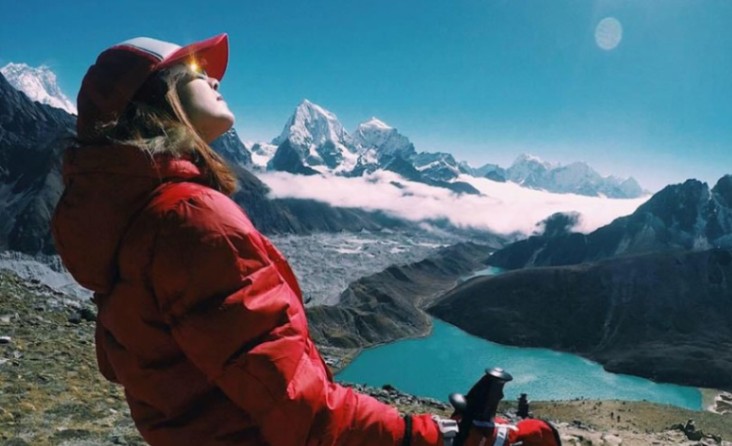
I Woke Up at 4 AM to Watch the Sunrise from Gokyo Ri. Was It Really Worth It?
I was in a deep sleep. And, my phone started beeping. I tried to ignore, but It got louder. Immediately I felt, I missed the gokyo’s sunrise. I panicked and woke up.
It was very cold outside, in the Himalayan night. They were so cold that I thought it was a bad idea to leave the sleeping bag behind. All the others were sleeping or picking up their headlamps and down jackets quietly.
I can recall what I asked myself: one simple question.
Is that the effort that's required for a sunrise?
Two hours later, at the top of Gokyo Ri with golden light coming from Mt Everest, I knew the answer.
Yes.
And here's why.
The vast majority of pictures taken during trips are just a shot from the final viewpoint at Gokyo Ri. But what they don't depict is the night's ascent, the bitter wind, the pounding of boots on ice-covered ground, or the thrill as the sky gradually shifts color. The climb up to the top is as memorable as the sunrise.
So, if you're thinking of losing sleep for one of the most popular viewpoints in Nepal, allow me to take you through our morning, from waking up at 4 AM until the first rays of golden sun lit up Everest, Lhotse, Makalu and Cho Oyu in gold.
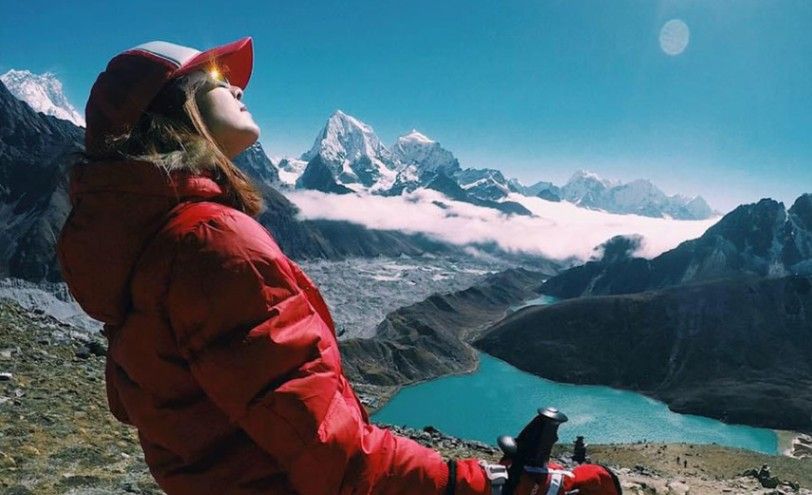
Our 4 AM Journey to Gokyo Ri
There are times when adventures start exciting. The first of these started with a shiver.
The entire Gokyo village was quiet at 4 AM. The sky was beyond belief outside, with the stars so close they seemed like you could touch them. It was extremely cold, and each breath was like breathing a cloud of white mist. We hurriedly threw on our coats, picked up a cup of hot tea from the tea house and turned on our headlamps and went into the darkness.
There were no crowds.
No conversations.
There were only very faint lights crawling up the mountain.
It was not a starting of a hike, but a journey towards something special, a quiet parade.
The Morning's history.
My morning Time was nothing more than a dream. This is all I get to experience.
4:00 AM: Alarm rings. We emerge from the warm sleeping bag.
4:20 AM: We depart Gokyo village, with hot tea, final layers, headlamps on.
4:45 AM: Steep ascent starts. There is only the sound of footsteps and deep breathing.
5:20 AM: It's at a high elevation so we take short breaks every couple of minutes. In retrospect, Gokyo Lake shines as stars.
5:45 AM: The east sky begins to tint purple and orange. Everyone becomes quiet.
6:00 AM: The golden rays of the sun first land on Everest, then Lhotse and Makalu. Cameras pop out but many people just stand around and watch.
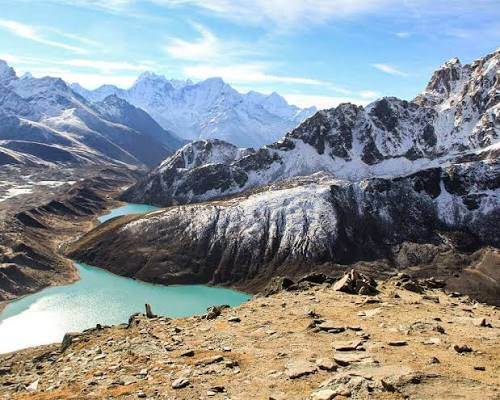
6:20 AM: The Gokyo Lakes are turquoise under full sunlight, and the massive Ngozumpa glacier below.
The Weather Changed Everything
The one thing I discovered was that Gokyo Ri is totally weather dependent. The view is so unrealistic that it seems like a perfect morning on a clear day. It offers a breathtaking view of four of the world's highest peaks, with all of them clearly visible across the horizon.
However, when clouds come in, the same perspective can turn into a sheet of white.
We were fortunate to get almost perfect conditions:
- Crystal-clear skies
- Barely any wind
- Excellent visibility
- Temperatures around -10°C before sunrise
- In fact the cold was the least of the worries.
- To wait and watch till the sun rose was.
- My fingers became numb even in gloves, in minutes.
The climb was harder than I'd thought!
Gokyo Ri is most often referred to as a "short hike.
Technically, they're right.
It is just 2-3 hours from Gokyo village.
However, at an altitude of 5,357m nothing is short.
The steep incline and the thin air in the high Himalayas make each step seem like two steps. I was in one instance, stopped after 15 steps with tired legs, and I stopped because my lungs needed more oxygen.
The mountain imparts an important lesson in no time:
Slow is fast at high altitudes.
The Best Photos Happened When We Stopped Chasing Them
Many trekkers, including me, err on the side of taking pictures every couple of minutes.
In retrospect, the best moments were not the ones that were captured on camera.
| Time | Best Photo Opportunity |
| 4:30 AM | Star-filled Himalayan sky |
| 5:00 AM | Headlamps going up the trail |
| 5:40 AM | Blue hour at Gokyo Lake. |
| 5:55 AM | A pink glow behind Everest. |
| 6:05 AM | Golden sunrise light on Everest, Lhotse, Makalu, and Cho Oyu |
| 6:20 AM | Lakes and Ngozumpa glacier are bright turquoise. |
The funny thing?
I don't even have a picture of that.
It's just when I took the camera out of my hands and just watched.
What Surprised Me the Most
There was a terrible hush.
No traffic.
No phones ringing.
No crowds shouting.
The wind and the noises of boots on frozen rocks.
That wasn't the only moment of sunrise.
I thought that the sun would be coming out, we would take some pictures, and it would be time.
Rather, the whole mountain range turned color for nearly an hour.
Every 5 minutes was entirely different.
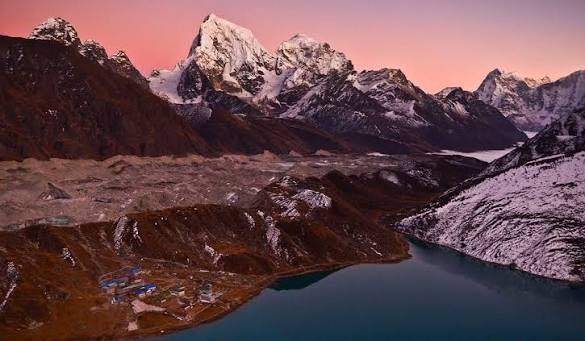
Everest wasn't the only star.
I was expecting to be on Everest all the time.
Rather, I was gazing as much at the turquoise lakes below and the massive Ngozumpa Glacier that faded away into the distance.
Everything was surreal.
The final verdict on the book is available here: Would I Wake Up at 4 AM Again?
Without hesitation.
If I was asked to do it again tomorrow, I would complain when I woke up but still do it!
Because Gokyo Ri isn't just about watching the sunrise.
It's the work that comes from a commitment.
It is about walking through the darkness of the Himalayas when the whole world is sleeping. It's about watching the night fade out and the morning fade in, a mountain at a time. It's about knowing that some things aren't shown on camera; they have to be felt.
I've seen many sunrises, but this one has stuck with me the most.
Was waking up at 4 am worthwhile?
Absolutely.
Not because it was the best photo that I took.
However, it provided me with one of the most memorable mornings of my life.