

Gokyo Lake Trek: Nepal’s Most Beautiful Himalayan Lake Adventure
The Gokyo Lakes Trek offers a breathtaking adventure through Nepal's beautiful, majestic mountains in the Himalayas. You will see the towering mountains, the culture and customs of the Sherpa nation that lives here, peaceful valleys, and incredible glaciers (and glacial lakes) in the Gokyo area. You will travel through Sagarmatha National Park, in the Everest region of Nepal, and the Gokyo Lakes Trek is considered a more scenic (and less travelled) route to get to Everest Base Camp.
The Gokyo Lakes Trek includes forests, river valleys, glacial valleys (with suspension bridge crossings), numerous towns and villages, and many of the highest mountains in the world. The final destination of your trek will be Gokyo Valley with its worldwide famous glacial lakes which are important to the Nepalese people, and also it is an equally important place to observe the view from the summit of Gokyo Ri.
This exciting Gokyo Lakes Trek can provide you with adventures filled with natural and cultured beauty of the Sherpa people.Introduction to the Gokyo Lake Trek
Introduction
The Gokyo Lakes Trek is in the Khumbu, which is an area of northeastern Nepal, close to the border with Tibet. The adventure begins with a breathtaking flight from Kathmandu to Lukla, which is one of the most famous mountain airports on earth.
As you leave Lukla, you'll walk through some of the most picturesque Sherpa villages including:
- Phakding
- Namche Bazaar
- Dole
- Machhermo
- Gokyo
One of the many reasons why this trekking route has gained such popularity is that it is the perfect marriage between adventurous travel and extraordinary biological diversity. It is incredible to see how within a week, you will see a number of different landscapes, from lush green pine forests to very alpine areas.
The Gokyo Lakes: An Amazing Natural Feature
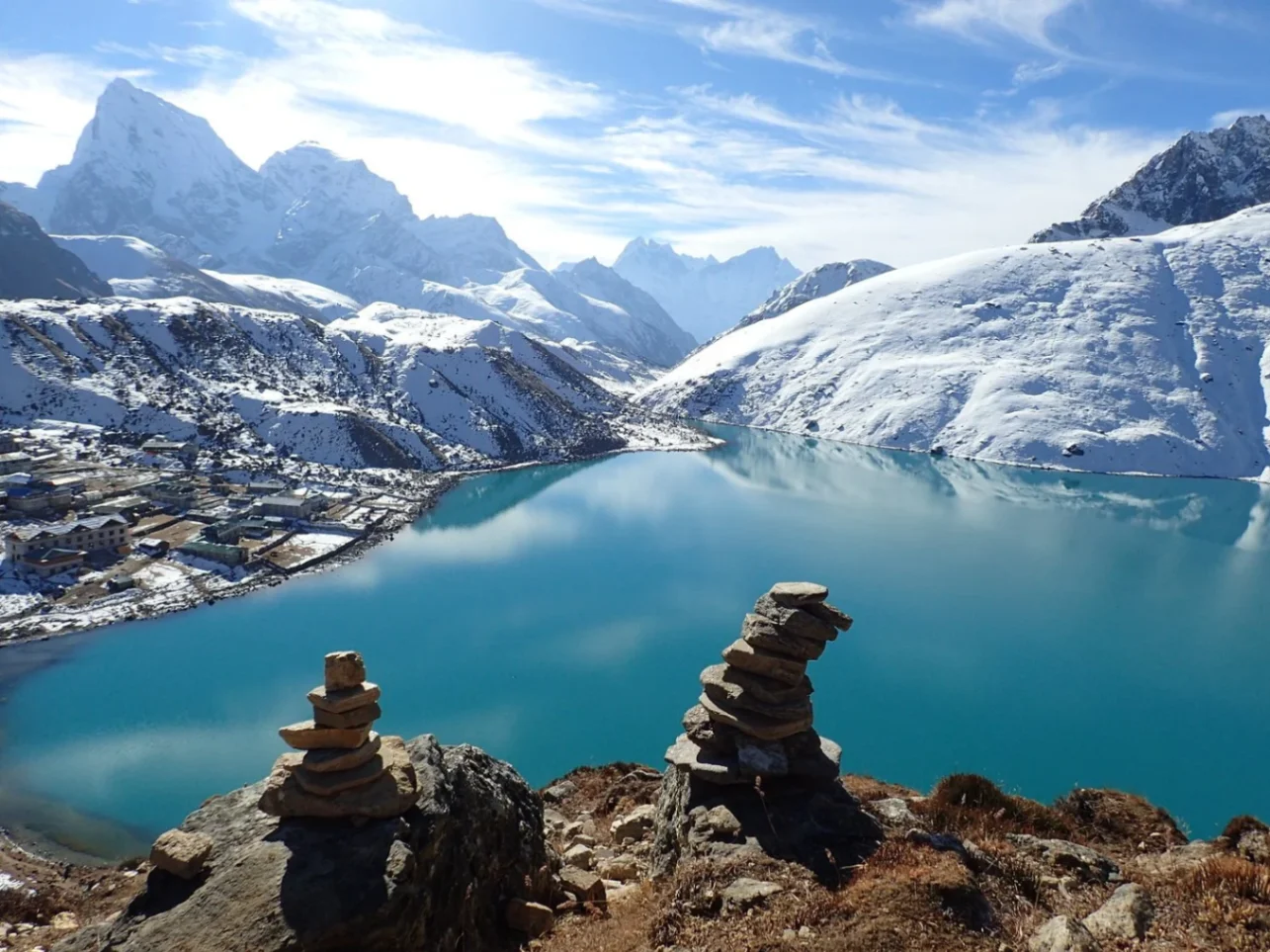
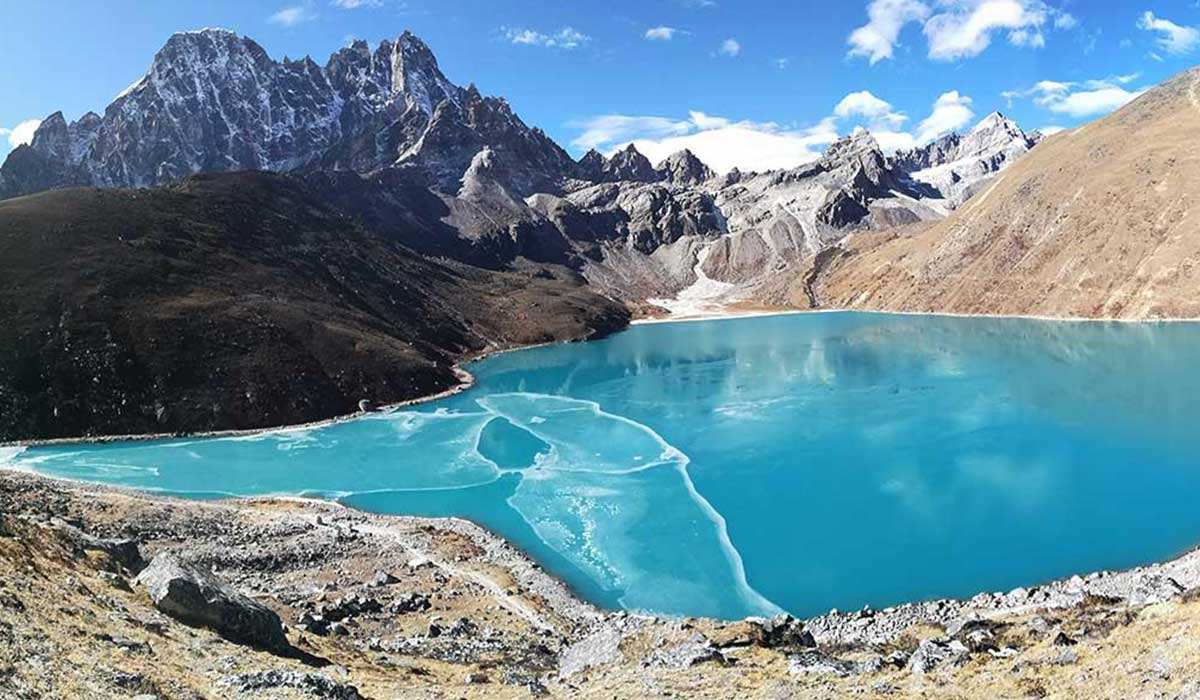
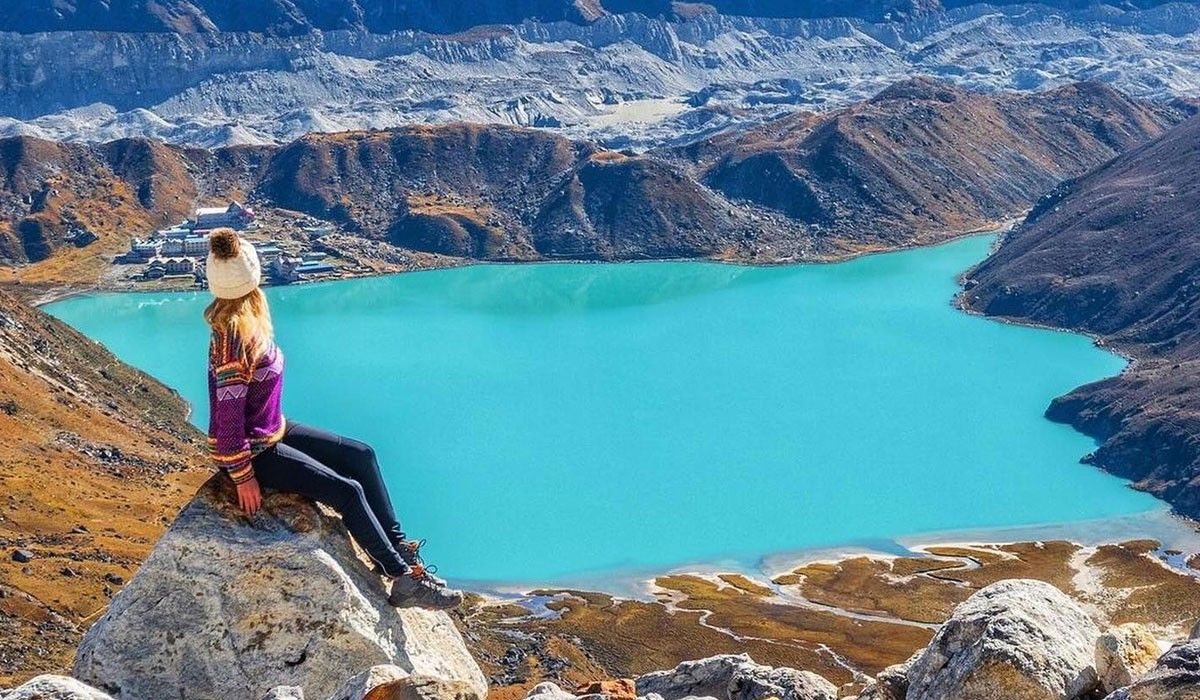
Without a doubt, a highlight of the Gokyo Lake Trek are the extraordinary Gokyo Lakes. The Gokyo Lakes are some of the highest freshwater (glacial) lakes in the world, and hold great cultural/religious significance for both Hindus and Buddhists.
The Gokyo Lakes sit peacefully at the foot of the mighty Himalayan Mountains and receive their brilliant turquoise and emerald colors from the glacial runoff that fills them.
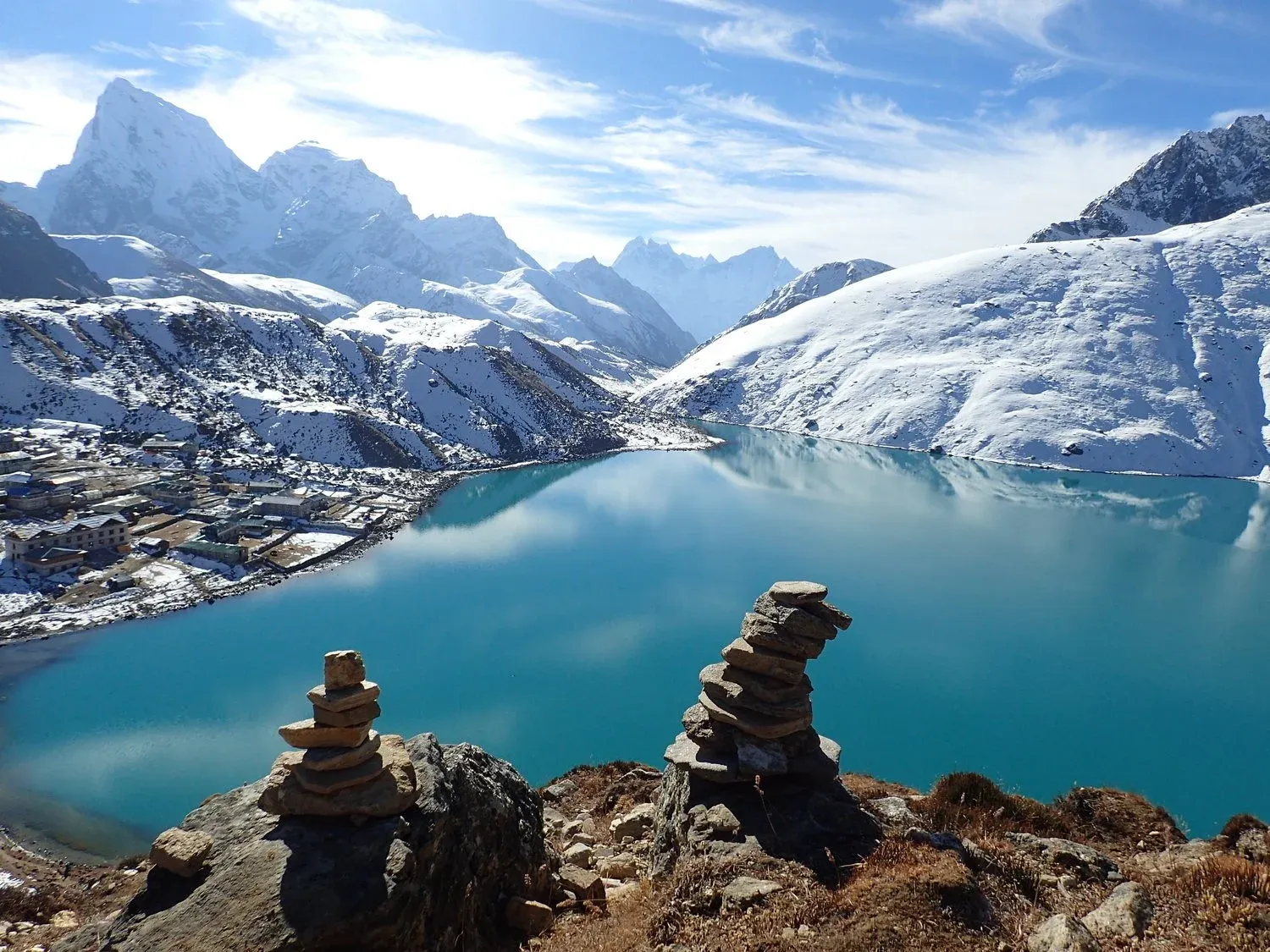
The peaceful setting around the lakes has an ethereal quality, with prayer flags fluttering in the wind and white-capped peaks mirrored in the still surface of the lakes. At dawn, the lakes take on a golden glow as a result of the sunlight shining on them, creating one of Nepal's most stunning natural settings.
The Six Major Gokyo Lakes
1: Longpongo
The first lake that trekkers see heading in towards Gokyo Valley; however, it is not very large & therefore does not have an incredible reflection of the mountain tops, but it does set the stage for the other amazing Lake (Gokyo) cluster.
2: Taujung Cho
The second large lake, on sunny days, will appear a brighter blue than the other lakes and has a much more ruggedly rocky mountainous terrain. A great resting area as it is quiet & peaceful.
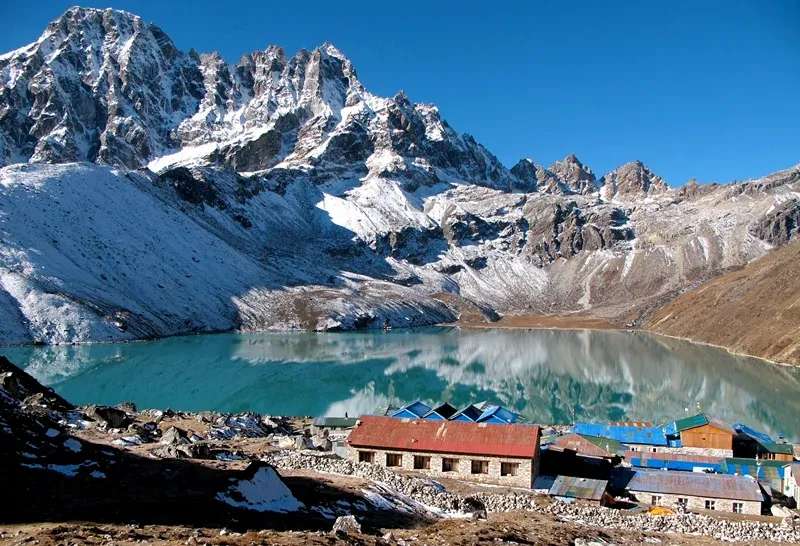
3: Dudh Pokhari
The largest lake adjacent to Gokyo Village and where the tea houses are located, providing trekkers with amazing views in the early morning sun.
4: Thonak Cho
The largest of the Gokyo Lakes, surrounded by dramatic landscapes - to be found anywhere else in Nepal, this lake is a true example of wild and the beauty of nature.
5: Ngozumpa Cho
It is located near the enormous Ngozumpa Glacier, provides amazing views of the glacial formations and the ice-capped peaks of the Himalayas.
6: Gyazumpa Cho
The last lake in this series, located in the Gokyo Valley.
The Incredible View from Gokyo Ri
All hikers are excited to make this climb to Gokyo Ri, which will be one of the highlights of the entire trek. At an elevation of 5,357 meters, Gokyo Ri is a renowned lookout point that provides one of the most incredible mountain views in all of the Himalayas.
Most trekkers start their hike up Gokyo Ri before dawn because they know that it is long and steep and exhausting, especially since they are at such high altitudes; however, the effort will totally be worth it once they reach the top.
Once at the top, you will see:
- Mount Everest
- Lhotse
- Makalu
- Cho Oyu
- Ama Dablam
There are glaciers, frozen valleys, turquoise lakes, and an unending expanse of snow-covered mountains stretching out as far as the eyes can see from the top.
In the opinion of some trekkers, the view from Gokyo Ri is more spectacular than the world-famous Kala Patthar viewpoint because it shows both Mount Everest and the stunning Gokyo Lakes.
A vitally important aspect of the trek is having a chance to learn about the Sherpa culture and lifestyle in the Himalayas. The Sherpa people are known worldwide for their exceptional mountaineering ability, warmth and hospitality, and their deep connection with the Himalayas. Throughout the entire trek, trekkers will encounter numerous communities and villages, all of which have beautiful:
- Stone structures
- Buddhist temples
- Prayer flags
- Mani walls
- Chortens
- Yaks with their caravan.
Namche Bazaar: The Heart of the Everest Region
Namche has the highest altitude marketplace located at the base of Everest as well as a vibrant culture found in America’s small towns.
This means hikers often choose to take an additional day (out of their itinerary) to acclimatize or adjust to the altitude. During this time, you can:
- Visit local bakeries and cafés
- Visit museums
- Buy trekking clothing and gear
- Look at the views of the mountains
- Learn about the history of the Sherpa people
With this unique combination of trekking tourism and traditional Himalayan culture, Namche has become a popular epicenter/cultural hub for trekkers visiting this region.
Walking Along the Ngozumpa Glacier
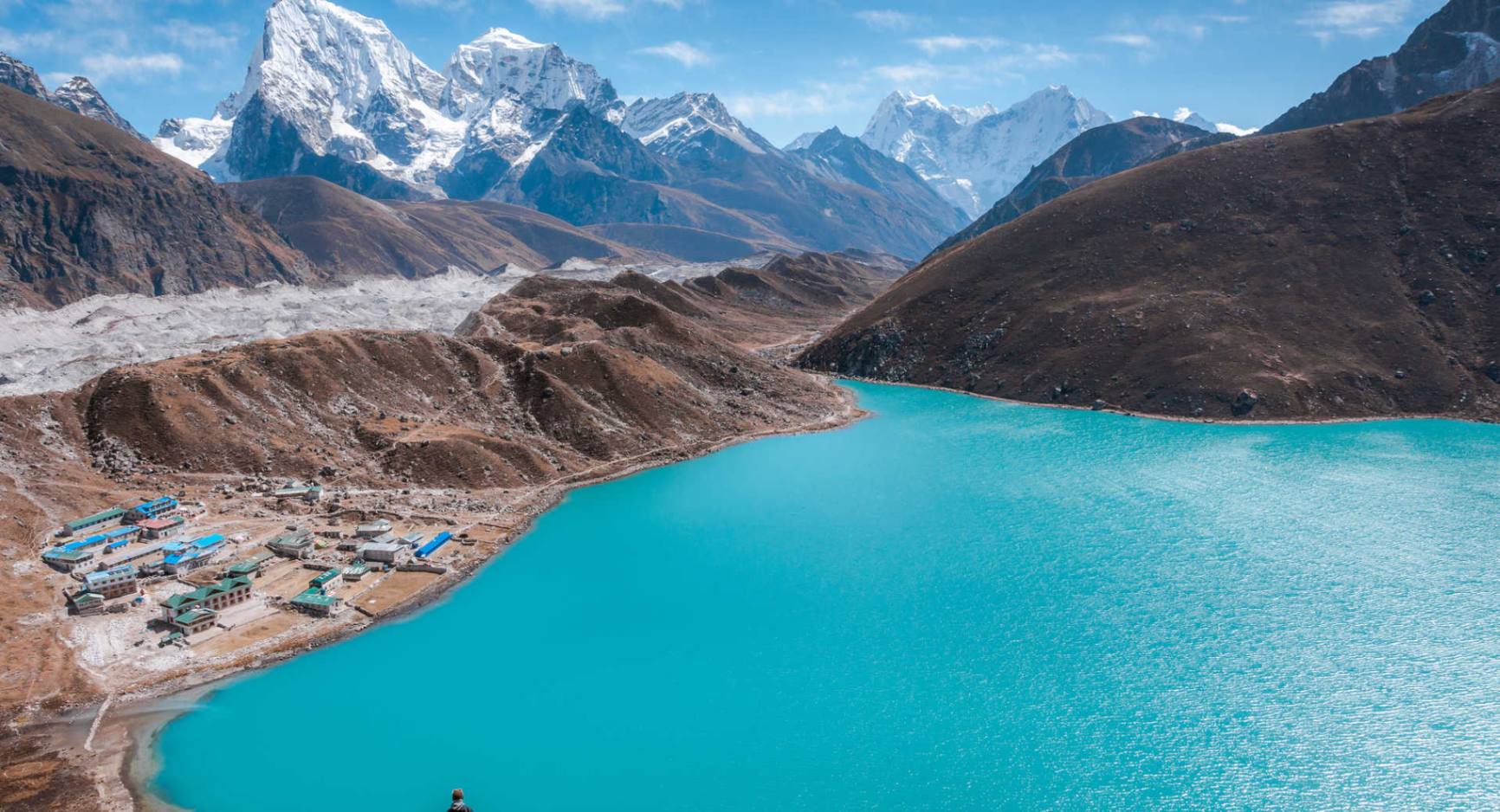
The Ngozumpa Glacier is not only the largest glacier in Nepal but also one of the largest glaciers in all of the Himalayas.
It covers an entire valley and provides an amazing display of glaciers, ancient moraines, and glacial lakes.
Attempting to walk to it is like stepping into another dimension due to the complete silence, coolness of the air, and sharp peaks surrounding you — it really does give you an incredible wilderness experience at such a high altitude.
In addition, having an actual glacier on your route offers many more unique opportunities for variety than trekking on other Himalayan trails.
Day 1: Kathmandu to Lukla and Trek to Phakding
The first fun experience on the Gokyo Lake Trek is taking a mountain flight to Lukla Airport from Kathmandu, where trekkers can see the many spectacular views of the snow-capped peaks of the Himalayas, deepest valleys, and traditional hilltop villages during their flight. After arriving in Lukla, the adventure officially begins as they take a leisurely hike along the gentle sloping paths through pine trees, prayer flags, and the Sherpa community along the way. The route continues to follow the Dudh Koshi River and cross a number of small suspension bridges along the way, ending with an overnight stay at Phakding, a serene riverside village that will provide everyone with a good night’s rest for the next day’s trek.
Day 2: from Phakding to Namche Bazaar
will be one of the Toughest and most Crucial Days on this trip. One will experience the diversity of landscapes trekked and will pass many forests, through many small villages and cross many suspension bridges over the Dudh Koshi River in just one day. This section of the trek also enters the world-famous Sagarmatha National Park (UNESCO World Heritage Site), which showcases the vast beautiful mountain scenery and wildlife. The highlight of the day will be walking across the Hillary Suspension Bridge, which is built high above the river valley. As you ascend the steep trail to Namche, you will be exhausted, but will soon see the incredible mountain scenery and your first view of Mount Everest in the distance, which will make the energy spent well worth it.
Day 3: Acclimatization in Namche Bazaar
Day 3 serves as a day for acclimatization so that trekkers can adjust to the high elevation. While resting, most people will hike short distances to nearby view points or neighboring villages that are around Namche Bazaar. Many trekkers usually go to the Everest View Hotel which has fabulous views of Mount Everest, Ama Dablam and other yaks and peak of mountains.
Namche Bazaar is a very lively Sherpa community with many cafes, bakeries, shops that sell trekking equipment and other local market items. You are an incredible opportunity to learn about Sherpa culture, the history of the mountains, and the history of climbing Mount Everestwhen you stay here.
Day 4 :Hike to Dole
On day 4 the trail breaks from the heavily used base camp route for Everest and will head to the quieter Gokyo valley. You will walk among beautiful trees (Rhododendron), wide open hillsides and very quiet mountains with very spectacular views of the Himalayas along the way. The further up in elevation you walk the more alpine the terrain will be and the cooler and thinner the air will be. You will have incredible views of some of the most recognizable peaks in the world i.e. Ama Dablam and Thamserku. Your hike will end at Dole, a small mountain village located among some gorgeous scenery with many grazing yaks.
Day 5: Dole to Machhermo
When you trek from Dole village to Machhermo village, you are going deeper into the Himalayas and experiencing a variety of different terrains: open valleys where yaks graze, rocky terrain littered with boulders and beautiful vistas of various snow capped peaks. As you ascend towards the Himalayas, the trek becomes more rugged and remote compared to previous hikes at lower elevations. You will see many different birds and animals that are native to the Himalayan Region throughout your entire journey. You will find Machhermo a very quiet village with several stunning panoramic views of the surrounding mountains.
Day 6 : Machhermo to Gokyo:
Many people say today’s trek is the most breathtaking of the entire trek. Your trek will take you to the beautiful Gokyo Lakes located at the base of Nepal’s largest glacier (Ngozumpa) where you will view both the glacial fed turquoise lakes surrounded by enormous white mountains. As you arrive in Gokyo (located next to the peaceful Dudh Pokhari lake), you will have amazing panoramic views of the Dudh Pokhari lake, experience the peacefulness of the area and this memory will last you a lifetime.
Day 7: Hike to Gokyo Ri
Before the sun rises, trekkers will leave for Gokyo Ri (Gokyo Peak) to view the sight of Everest. Climbing to Gokyo Ri can be an extremely difficult hike due to the slope and the altitude; plus, you will be using up your remaining energy from 10 days of hiking.
From Gokyo Ri’s summit, the view of nearby peaks, including Mount Everest, Lhotse, Makalu, Cho Oyu, and many others will stretch across your entire field of view, as well as stunningly beautiful turquoise-blue Gokyo Lakes and massive Ngozmpa Glacier.
The trekker will take pictures of the surrounding landscape, and (after a long time admiring the great view of the Himalayas) will descend to Gokyo Village to rest.
Day 8-10: Hours of Trekking Back to Lukla
Trekking back to Lukla will use the same trekking route (from Lukla to Gokyo) that the trekkers have already taken. While trekking downhill can be an easier experience from the perspective of going to a lower elevation and receiving a greater amount of oxygen. The trekkers will pass through Namche Bazar as well as some beautiful forests and suspension bridges.
Best Seasons for the Trek
- Spring (March–May)
The Gokyo Lake Trek is extremely popular in spring because of its comfortable weather, flowers, and good visibility of the mountains.
In spring, large colorful rhododendron trees grow at lower elevations.
- (September to November)
This is a great time to go trekking, as the weather is stable and the mountains are very clear to see.
The clean, clear air after the monsoon produces stunningly clear views of the mountains in the Himalayas. This makes this period the best time of year for trekking.
Level of difficulty and associated hazards of the Gokyo Lake Trek
The Gokyo Lake trek is of medium level of difficulty for trekkers with no climbing, but there are physical challenges associated with trekking at altitudes. There are several different physical challenges associated to hiking such as;
- Lots of walking
- Thin air
- Cold temperatures
- Steep climbs uphill
- High altitude (more than 5,000 m)
Altitude sickness is commonly found in the Everest region, thus it is essential for trekkers to acclimatize, drink plenty of water and take their time when hiking to remain healthy when in the mountains.
Food and Accommodation During the Trek
Along the route, simple, but comfortable locations exist that serve as 'tea houses'—those that offer warmth with properly fitted sleeping bags.
Common meals offered at tea houses include:
- Dal Bhat
- Tibetan bread
- Fried noodles
- Pasta
- Soup
- Pancakes
- Tea & coffee
Dal Bhat is an especially popular dish for trekkers because it provides energy and it is frequently offered with unlimited refills at many tea houses.
Essential Items Required for Gokyo Lake Trek
Type of Clothing
- One down jacket
- Thermal wear/under garments
- Waterproof jackets (top & bottom)
- Trekking boots (well fitted)
- Gloves & wooly hat
Type of Equipment
- Trekking poles
- Sleeping bag
- Headlamp
- Sunglasses or goggles
- Backpack
Health Items
- Sunscreen
- Purification tablets for drinking water
- Personal medications
- First aid kit
- Lip balm
Reasons to Choose the Gokyo Lake Trek over the Everest Base Camp Trek include:
- Trail less known and traveled than Everest base camp
- Variety in scenery (i.e., more diversity in landforms) along the trek
- Lakes along trail provide a unique visual experience
- Outstanding views are present at Gokyo Ri
- General feelings of tranquility exist along this trek when compared to that of the Everest base camp trek
- Ideal for travelers wanting both a Himalayan adventure and a desire for natural peace.
Conclusion
The Gokyo Lake Trek is one of Nepal’s most rewarding trekking adventures. From sacred turquoise lakes and giant glaciers to Sherpa villages and panoramic Himalayan viewpoints, every day of the journey offers unforgettable experiences.
For trekkers wanting a quieter yet equally spectacular alternative to Everest Base Camp, the Gokyo Lake Trek stands as one of the finest journeys in the Himalayas.