
Ghatasthapana: The Day Behind the Overall Preparation of Dashain and Its Relevance
Introduction
Among all the festivals that are celebrated in Nepal, Dashain is one of the most important. It is a time when families gather, homes are filled with activity, and people make preparations for days of worship and blessings, food, travel, and celebration. Many people tend to think of Dashain primarily by its name tika and Jamara, but it all starts much earlier.
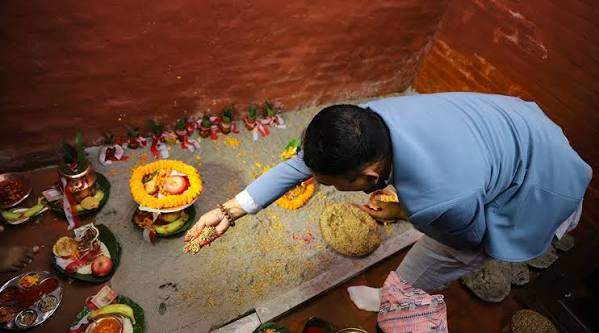
The first day of Dashain is called Ghatasthapana. It is an auspicious and symbolic beginning of the fifteen-day long Dashain festival. This is not just the first day, it is the day on which preparations for the major celebrations are started.
This day is marked by the creation of a sacred Ghada or Kalash, sowing of seeds for Jamara, cleaning, and decorating of houses, and initiation of spiritual preparation for the festival. The rituals carried out during Ghatasthapana are still followed to bring the families closer to the traditions throughout Dashain.
Ghatasthapana is a beautiful experience for those who want to know more about the deeper meaning of Dashain when they visit Nepal during the festive season. This isn't just a celebration. It's about faith, family, renewal, prosperity and preparation.
What Is Ghatasthapana?
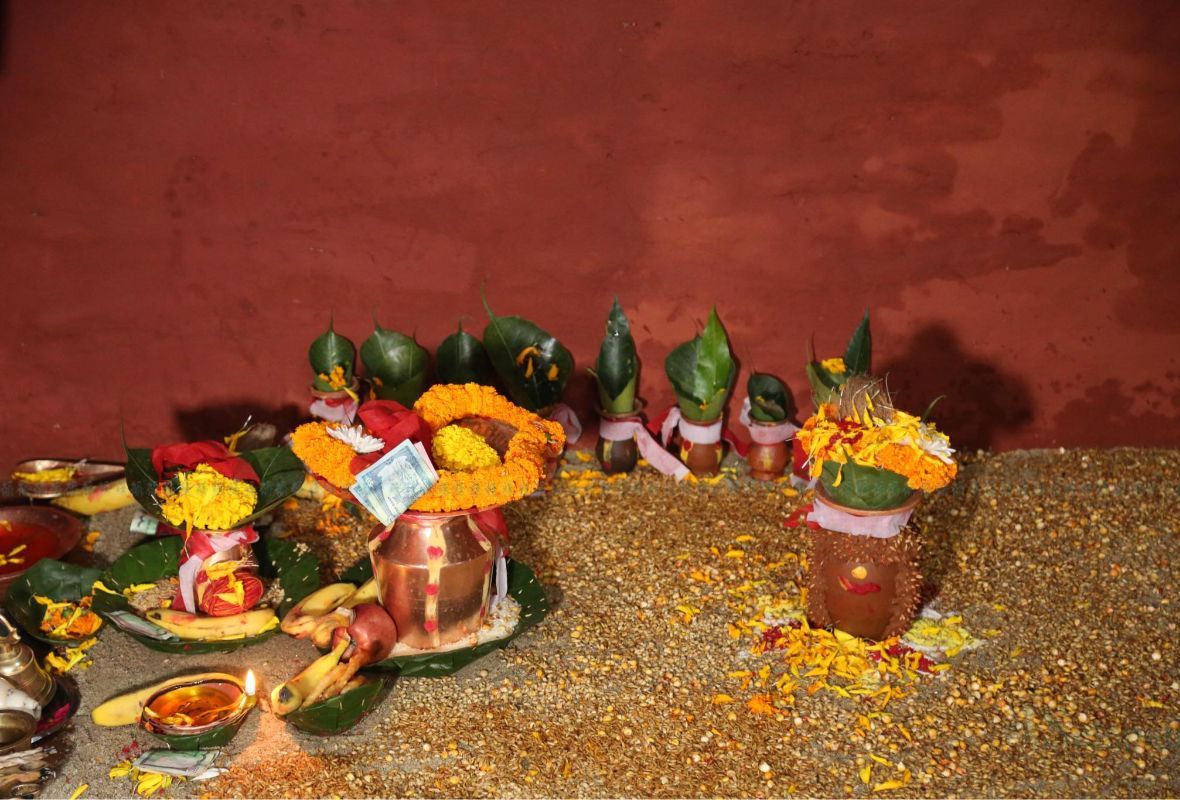
Ghatasthapana is literally "establishment of the Ghata or sacred vessel. It is celebrated on the first day of the bright half of the lunar month Ashwin from Nepali Calendar.
The day is the first day of Dashain and is the beginning of the time to worship Goddess Durga and her forms.
The main to-do on Ghatasthapana is sowing of the seeds which will grow into Jamara. Traditionally, barley seeds are used, but sometimes other grains can be added as well based on family and community customs.
The seeds are sown in a well-prepared field, which is typically located in a dark and clean environment. The seeds develop into yellowish-green Jamara which is subsequently utilized over the next few days during the Dashain tika ceremony.
Thus, Ghatasthapana is closely linked to the making of one of the most popular symbols of Dashain.
When Is Ghatasthapana Celebrated?
Ghatasthapana is the first day and beginning of Dashain. It is the lunar calendar which dictates the date each year as it is an annual event.
The day is normally in September or October in the Gregorian calendar.
The most significant ritual is done during a period of time called Shubha Sait or auspicious time. The right time to set up the sacred vessel and to commence the Jamara-sowing ritual is followed by families and temples.
Different families, communities and regions have different customs, which can cause variations in the rituals and timing.
The Beginning of Dashain Preparation
Ghatasthapana may be interpreted as the beginning of the whole Dashain festival.
Family members start preparing spiritually and physically before tika arrives on the doorstep, and also when they come to bless, to eat and drink and to celebrate. Cleaning of the houses is done, preparation of the puja (पूजा) room is done, collection of puja materials is done and preparations are made for the next few days.
This is not like the other more visibly festive days of dashain.
Generally, the ambiance is more laid back. Rather than holding large gatherings and festivities, it is all about getting the festival started correctly.
Thus, Ghatasthapana is the preparation for the celebration.
The Ritual of Establishing the Ghata
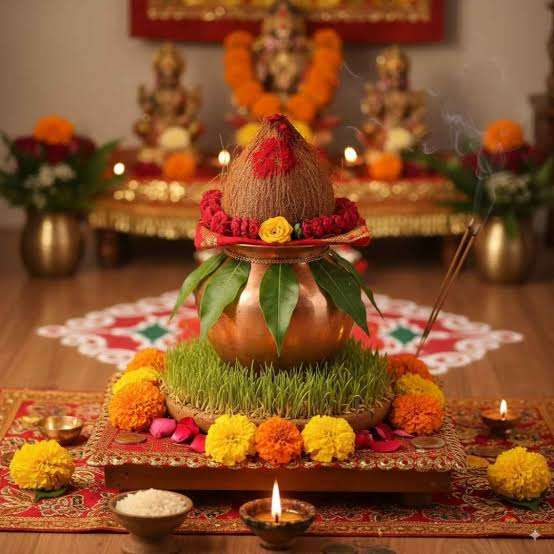
The main ritual of Ghatasthapana is creating the sacred Ghata/Kalash.
Water is poured into a clean vessel and the vessel is traditionally adorned with decorations according to family or community traditions. It is set out in a special preparation worship space.
The ritual space is thoroughly cleaned prior to the setting up of the Ghata. Sand or soil is prepared for sowing the seeds that will eventually become Jamara.
Prayers and offerings are held to seek God's blessings and to establish a sacred atmosphere for the onset of Dashain.
Throughout the festival, the Ghata is still an essential component of the worship.
Why Is Jamara Sown on Ghatasthapana?
In one of the most interesting aspects of Ghatasthapana, Jamara is sown.
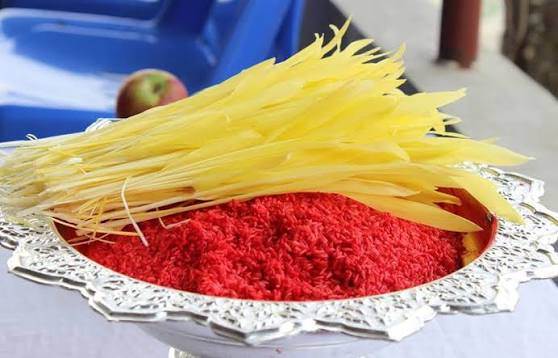
Barley seeds are sown in soil or sand and carefully watered. The container is normally shielded from direct sunlight. The seeds develop into long pale yellowish-green shoots over the course of several days. The shoots are known as Jamara.
Later, Jamara is placed with the red tika and given as a blessing when people give a tika during the Dashain tika ceremony.
Jamara's growth is symbolic, too. The seed starts to grow under the ground and slowly develops into a healthy plant. This natural process can be connected to expansion, success, life, growth and plenty.
Why Is Ghatasthapana Important in Dashain?
The significance of Ghatasthapana is that it establishes the spiritual ambiance for the rest of the festival. Dashain is known as a festival of victory of good over evil. The festival is related to Goddess Durga and her victory over the destructive forces.
This is the time when worship is commenced with Ghatasthapana.
It is a reminder that the celebration is not just about eating good food, buying new clothes, travelling or getting tika. Dashain is essentially a spiritual and cultural festival.
The day is meant for people to start out the festival in a devout, clean and disciplined manner and with positive intentions.
Ghatasthapana and Goddess Durga
Goddess Durga is closely associated with Dashain, which symbolises the Goddess Durga and all that is feminine, protective, strong and victorious over evil.
In the first few days of Dashain, different forms of Goddess Durga are worshipped following the traditional rituals.
The ghatasthapana is thus a religious ritual that begins a time of worship intended to bring blessings and protection to the devotees from the goddess.
These practices are significant for many Nepalese families to preserve the continuity with their ancestors' customs.
The role of cleanliness in Ghatasthapana Ceremony
Another important aspect of Dashain preparations is cleaning. Families usually clean their home, worship space, kitchen, courtyard and environs before the Ghatasthapana. Some old stuff could be arranged, sorted and discarded, and houses are ready to receive relatives and guests.
This "physical" cleaning is also symbolic.
The clean home makes for a suitable environment for worship and celebration. It is the concept of having a fresh and positive approach when starting the festival.
One such reason is that this tradition is why Dashain is known to be a time of renewal and a new beginning.
Ghatasthapana as a Family Tradition
Dashain is so interwoven with the family that Ghatasthapana is the starting point of the family preparation. Family members can help to clean, set-up worship space, gather ritual tools and sow Jamara. Children can learn such practices through observation of parents and grandparents in the home.
This is an important means of passing on the culture from generation to generation and this is known as ghatasthapana. Families may go on doing these because they help to bridge the gap to their roots even after their lifestyles have changed.
The Cultural relevance of Ghatasthapana
Ghatasthapana is significant not just for religious purposes.
Nepal is a culturally diverse country and Dashain is observed in various manner throughout the country. Variations in customs are possible between ethnic, regional and family groups.
However, for many Nepalis, Ghatasthapana is an important symbol of the start of Dashain.
It provides a common cultural experience.
Ghatasthapana is the starting of the festival season in many families of Nepal irrespective of their locations, whether they reside in Kathmandu, Pokhara, Biratnagar, Nepalgunj, Mustang, Terai, hills or outside Nepal.
Ghatasthapana and the Agricultural Connection
The linkage between Ghatasthapana and agricultural traditions of Nepal is also strong.
The festival is tied to the natural cycle of cultivation and harvest, as seen in the use of seeds for planting and the harvest of Jamara.
Agriculture has always been the mainstay of Nepali people's lives. Therefore, festivals sometimes had connotations relating to abundance, fertility, prosperity and food.
The growing Jamara can be viewed as a reminder of the importance of nature and agricultural life.
It also represents the historic link between the land and the communities of Nepal.
Ghatasthapana and Nepalese Identity
As festivals are one of the vital components of cultural identity, Ghatasthapana is related to the cultural identity of many Nepalis.
Dashain can evoke a sense of longing for non-residents. Jamara, the smells of traditional foods, family and the sounds of festive activity can evoke childhood and family memories.
Ghatasthapana starts that emotional journey.
It is a reminder to people that Dashain is not just a date on the calendar. It is a body of memory, relationship, rituals and traditions handed down from generation to generation.
Ghatasthapana of Travelers visiting Nepal
If you are traveling to Nepal, you may want to take advantage of the opportunity to experience an important aspect of Nepali culture during Dashain.
But it is important to note that Dashain is a family and religious festival. There is a need to respect local customs.
You might observe the preparations for the Jamara, people cleaning their houses, going to the shops for the festival, visiting temples and heading back to their hometowns.
The ambiance can be even more fascinating as Ghatasthapana is the first step towards turning the normal life into the festive one.
Respecting local traditions during this time can enhance the experience for travellers.
Why Ghatasthapana Matters Today
The relevance of Ghatasthapana can be understood through several important ideas.
It encourages family connection by bringing people together around shared traditions.
It promotes cultural preservation by passing rituals from older generations to younger ones.
It represents new beginnings through cleaning, preparation, planting, and prayer.
It reflects respect for nature through the cultivation of Jamara.
It encourages spiritual reflection before the more celebratory days of Dashain.
Most importantly, it reminds people that celebration becomes more meaningful when it is connected with culture and values.
Ghatasthapana Is More Than the First Day of Dashain
It is easy to think of Dashain as beginning with tika. In reality, the festival begins with Ghatasthapana.
Tika and Jamara are the visible symbols that many people remember. But behind them are days of preparation, worship, family involvement, and cultural practices.
Ghatasthapana is therefore the quiet beginning behind the grand celebration.
It is the day when the seeds are planted, the sacred space is prepared, and the journey toward Dashain begins.
Conclusion
Ghatasthapana is the foundation of Dashain. It marks the beginning of the festival and starts the preparation for the days that follow.
The establishment of the sacred Ghata, sowing of Jamara, cleaning of homes, worship of Goddess Durga, and gathering of families all contribute to its significance.
For Nepalis, Ghatasthapana is a reminder of culture, family, faith, nature, and renewal. For travelers, it provides a chance to understand Dashain beyond its famous tika and celebrations.
As the Jamara slowly grows from tiny seeds into green shoots, the excitement of Dashain also grows. That is what makes Ghatasthapana so special. It is not the loudest day of Dashain, but it is the day that quietly makes the entire celebration possible.
Ghatasthapana is where Dashain begins, where preparation becomes tradition, and where the spirit of the festival starts to grow.