
Dashain & Tihar Festival in Nepal: Come & Celebrate With Us
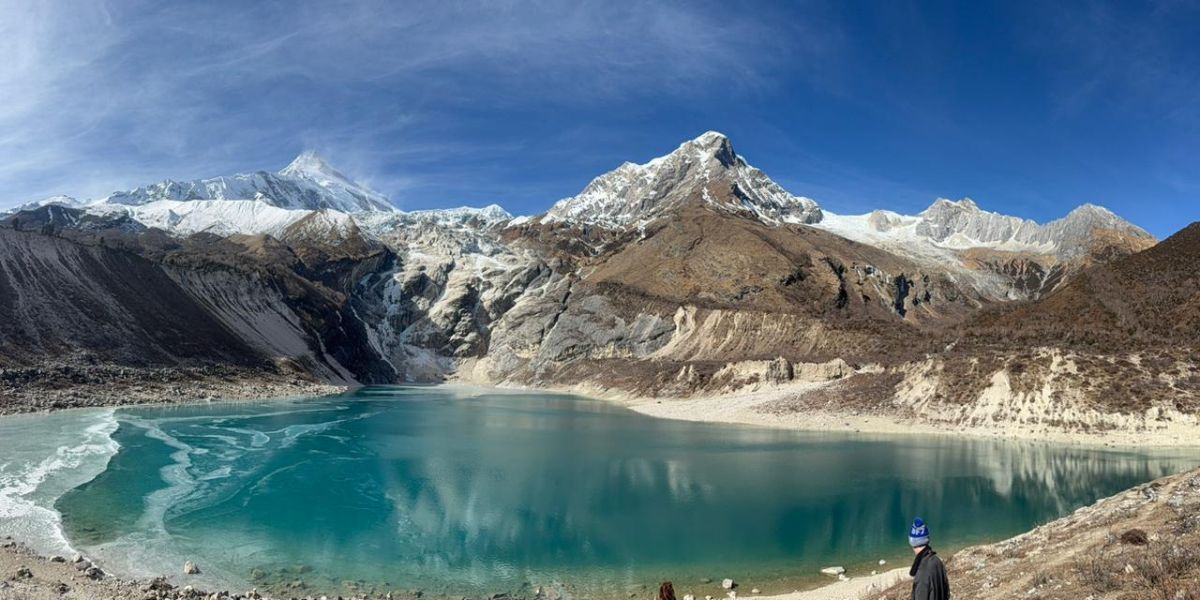
Nepal is beautiful in every season, but indeed very special during the Dashain and Tihar season.Street life begins. The houses are cleaned and dusted: Houses are adorned. People from all over the country gather in families. The market is crowded with people. In the blue autumn sky, children are flying kites. Families have traditional foods in their kitchens. Temples start to move. Later thousands of oil lamps and colours light houses and street in Tihar.
Festivals like Dashain and Tihar are not only occasions to witness from the outside for tourists. They are an opportunity to experience the warmth & hospitality, their traditions, food, music, family life and culture of Nepal.
So if you are travelling to Nepal in the festive season then be with us to celebrate DASHAIN and TIHAR. Travel outside the tourist route and meet and talk to the people and traditions in Nepal.
At Happy Mountain Nepal, we think that the best things to see are those not usually part of a typical trip.
There are numerous such moments during the festivals of And Dashain and Tihar.
What Are Dashain and Tihar?
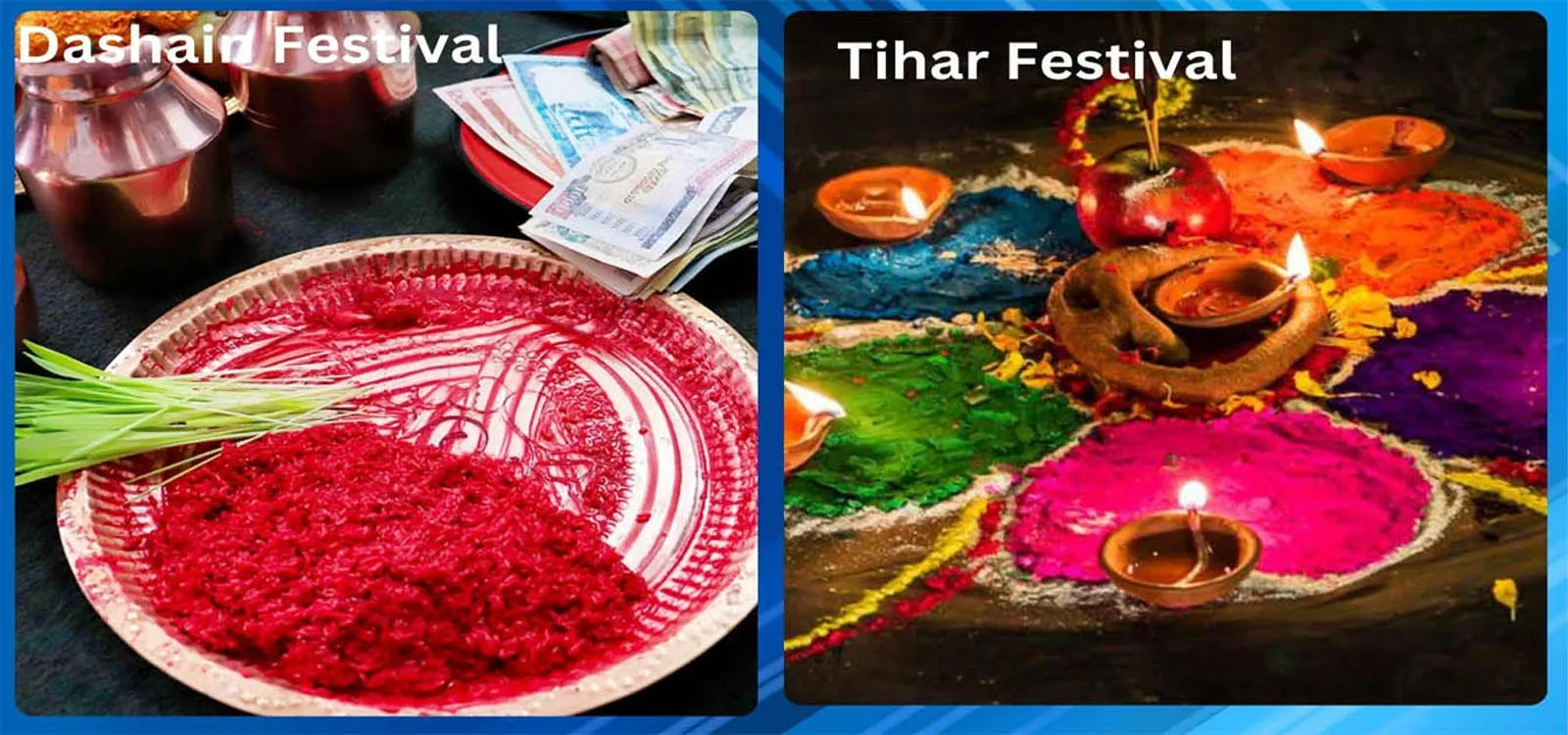
Some of the most important festivals in Nepal are Dashain and Tihar. Dashain is the longest festival and one of the most popular festivals in Nepal. It is linked with family gatherings, blessings, victory, religious observances, feasting, new clothing, tika, jamara and happy gatherings.
The festival of lights is Tihar, which comes after Dashain. It is celebrated for several days including worshiping crows, dogs, cows, Goddess Lakshmi, brothers and sisters. Oil lamps, candles, flowers and colorful rangoli are kept to decorate the homes.
The festivals have religious and cultural significance but also can be understood in terms of day-to-day Nepali life.
Dashain in Nepal: The Festival of Family and Blessings
Dashain is said to be the biggest festival in Nepal. The festival is celebrated over several days with each day having its own religious and cultural significance. The overall mood is of celebration, togetherness, family, and blessings, though this may differ from community to community and family to family.
For the majority of the Nepalis, ‘Dashain’ is synonymous with 'home'.
Residents of Kathmandu move out to their villages and hometowns. After months of separation, families sit down at the same table.
This is also a people movement which is an integral part of Dashain.
Buses can be seen with passengers going out of Kathmandu. People start to purchase clothes, gifts, fruits, meat and other festival goods at the local market.
A special aura hangs in the air.
There's something big everyone's getting ready for.
How We Celebrate Dashain in Nepal
Dashain is more than just a festival in Nepal. It is a time when families get together, households become alive and people take a break from their hectic lives. The celebration lasts for a few days, each with its own religious and cultural significance.
Ghatasthapana: The Beginning of Dashain
The festival of Dashain starts with Ghatasthapana, the first day of the festival. Families tidy-up and set out a special area of the house for worship. A sacred pot called Ghata is placed and worshipped. Barley seeds are also sown for making a yellow green shoot called Jamara which is a crucial component of Dashain.
It's the time when the spirit of the holidays really gets into the family for many families in Nepal.
Fulpati: Bringing Auspiciousness Home
Dashtida is called Fulpati on the seventh day. The traditional celebration on this day involves people entering their homes with auspicious flowers, plants, leaves, and other sacred items into their households.
In Kathmandu, Fulpati is also connected to a special ceremony at Hanuman Dhoka which is an important cultural event for visitors to celebrate the traditional Dashain celebrations.
Maha Ashtami and Maha Navami
The 8th and 9th days are one of the most significant days of Dashain. Families make a pilgrimage to the temples and pray to Goddess Durga the goddess of strength and the triumph of good over evil.
These days, animal sacrifices are also made in some communities and temples. But, the practices differ from family to family/ community to community and some people celebrate with prayers and offerings without giving up anything.
Vijaya Dashami: Receiving Tika and Blessings
Vijaya Dashami (10th day) is the main day for the family celebration.
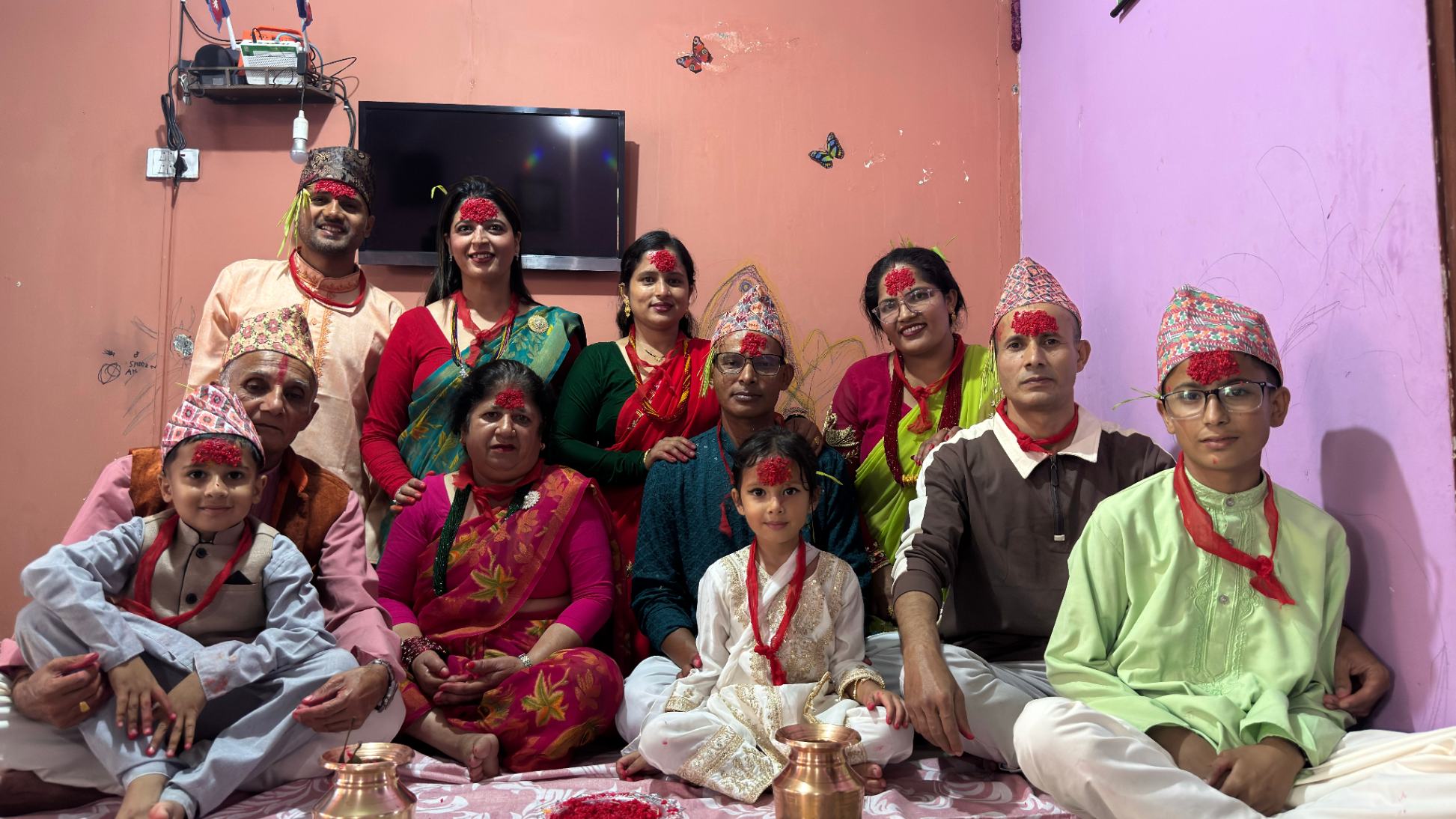
This will be the time for families to go to their elders to get Dashain Tika and Jamara. Elders then put tika on the forehead of the younger members of their families and bless them for happiness, health, success and prosperity. Many elders also bestow Dakshina, typically in the form of money, as a blessing.
This is one of the beautiful parts of Dashain as it joins generations together.During the main tika day, the elders bless the younger members of the family by putting a tika on their forehead and giving them jamara. People give blessings, good wishes and sometimes gifts or money are exchanged among family members.
The specific traditions may vary from family to family and community to community.
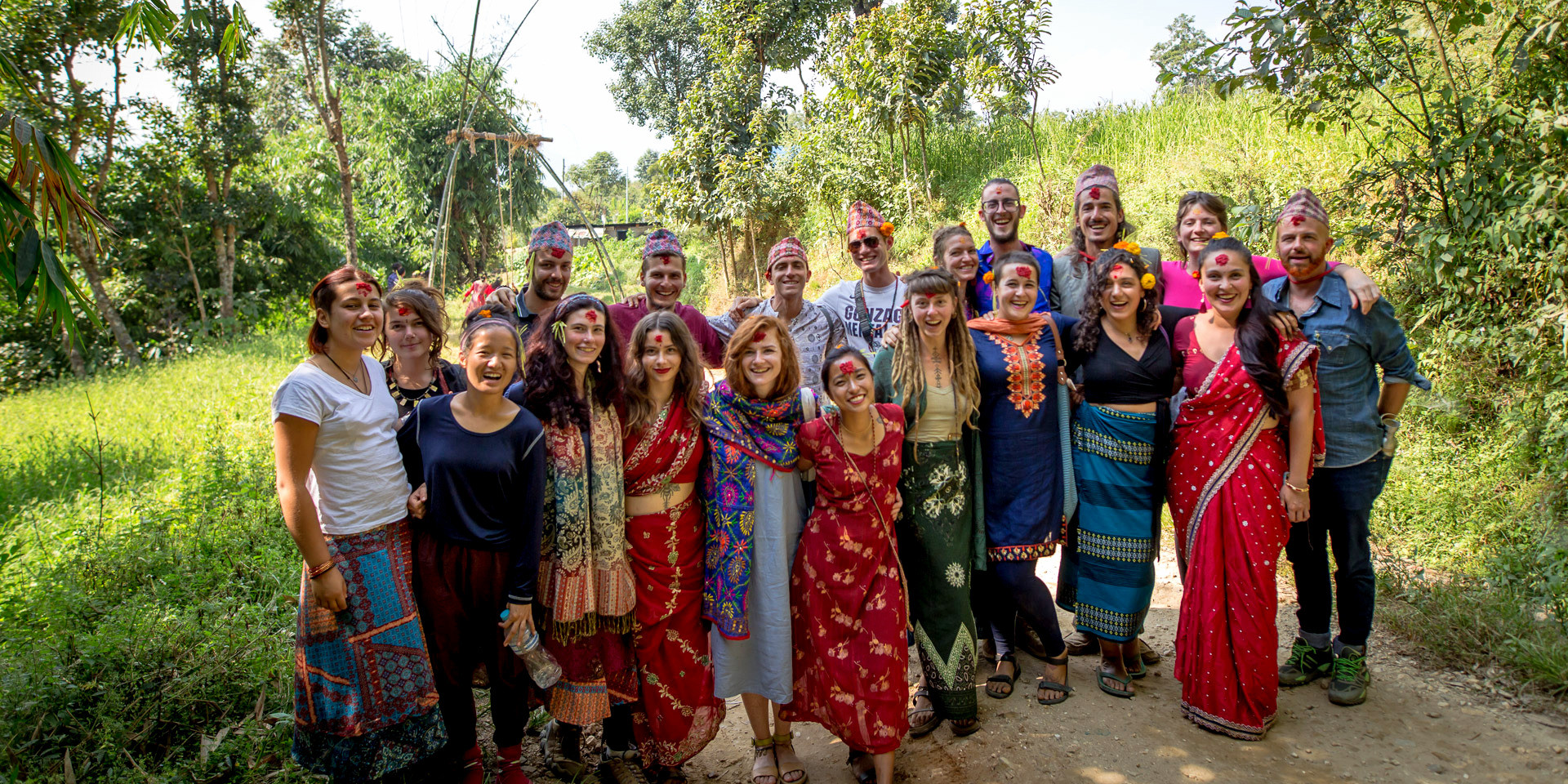
It's important to remember that for the visitor, tikas are a meaningful cultural and religious tradition. If accepted by a Nepali family you can accept the blessing respectfully.
This could be one of the most unforgettable moments in your Nepal tour.
Imagine sitting around a Nepali family, with laughter, traditional food, colorful clothes, and generations of family members together.
That's the kind of experience that sticks with you long after you're done with your trip.
Visiting Family and Relatives
Many people have to make a trip back to their villages and hometowns from the cities and towns during Dashain. Roads and airports are filled with traffic as people head home to celebrate with their loved ones.
Visits to relatives, to old friends, exchange of blessings, meals and time together. Elders have the opportunity to give children money and the children can play games, talk and laugh with their families.
Games of Ping and Traditional Games.
The much famous view in Dashain is the making of the traditional Bamboo swing, which is also called Ping. Children and adults have fun on the swings at the festival.
There are also occasions when people congregate outside, play cards and fly kites, as well as other leisure pursuits. These are basic traditions which bring some of the happiest moments of Dashain.
How Tourists Can Experience Dashain
During this festival, it is not only about sightseeing but also about learning Nepali culture. Local temples are open, traditional areas can be visited, festive decorations can be seen, Nepali food can be enjoyed and the significance of the tika and Jamara can be learnt.
The most valuable experience is to be able to spend time with locals and witness the other families and communities celebrate the festival in different ways.
Ultimately Dashain is a celebration of togetherness. It's about going home, honoring elders, keeping traditions alive, sharing food, accepting blessings and making memories with those we love. Dashain is an opportunity for a visitor to witness the family-oriented and warm culture of Nepal.
Dashain Food in Nepal
Food is an integral part of any Nepalese festival.
Dashain is the time during which the family gets together to cook special food and feast.
The food items served at the festive meal can vary by family and community and can include:
- Traditional meat dishes such as Mutton
- Dal bhat
- Various vegetable curries
- Pickles
- Sel roti
- Homemade sweets
- Seasonal or fruit dishes
- Traditional snacks
Eating is not enough during the Dashain period. It's not about sitting side by side, it's about sitting together. It's sharing, sharing, sharing.
It's all about cooking special meals that can be served only on special days.
If you're a foodie and a culture enthusiast, you can find more meaning in eating traditional Nepali dishes during the festival of Dashain.
Traveling in Nepal During Dashain
It is helpful to have an understanding that Dashain is a big holiday period if you're planning a trip to Nepal during this time.
Many Nepalis visit their hometowns, others are on family holidays.
Certain businesses and services may be running at different hours during the festival.
On the other hand, the festival time can be a great opportunity to experience Nepal.
It might be different in Kathmandu.
Villages can be more lively with family get-togethers.
Festival shoppers can be found in local markets.
The elevation of temples may be more active.
And houses can be decorated for festivities.
You don't have to be just a tourist in Nepal, but rather a cultural tourist.
Tihar: Nepal's Festival of Lights
The second beautiful festival after Dashain is Tihar.
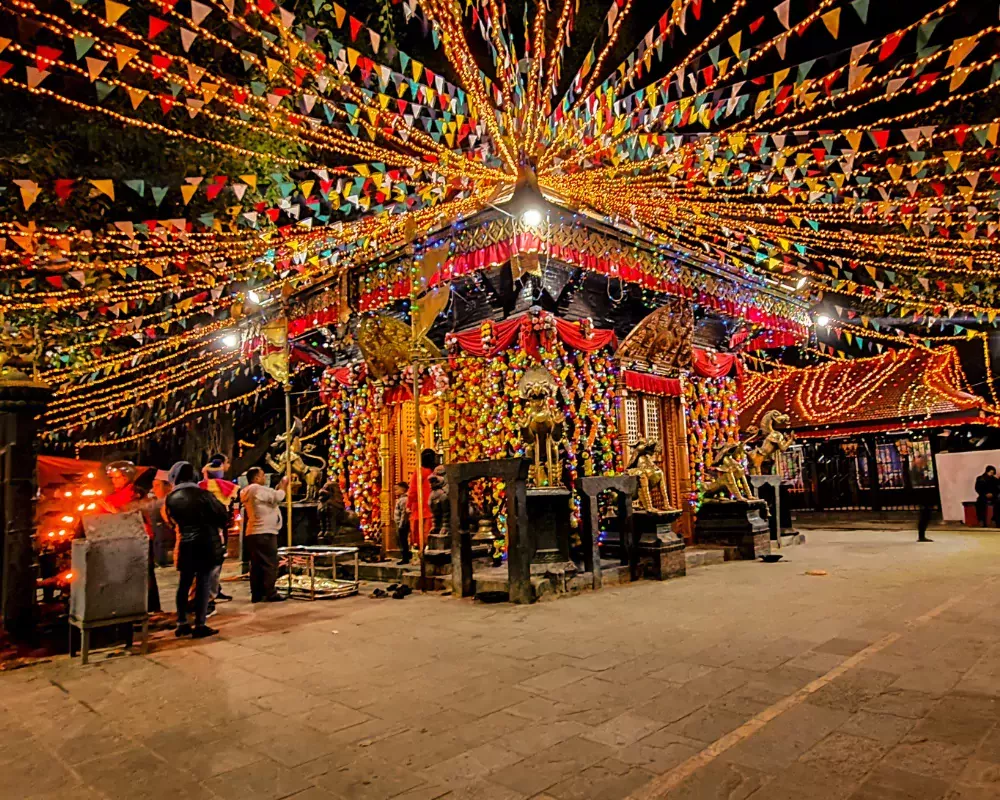
With lights and brightly coloured lights adorning homes, shops, temples and streets, Tihar is also known as the festival of lights.
However, Tihar is not just for looks.
It's a celebration of the various human-animal, human-nature, human-wealth and human-family relationships.
The atmosphere changes as the festival begins.
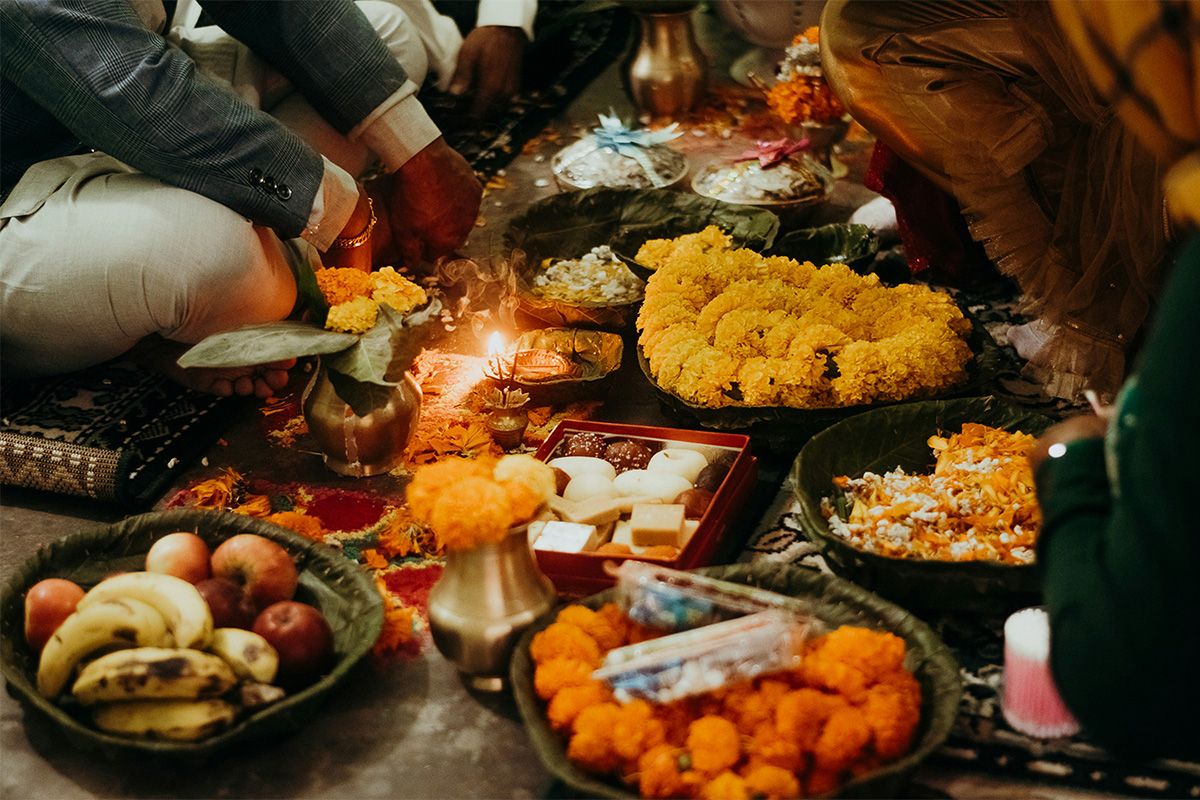
Marigold garlands may be seen hanging on doors.
Colourful rangoli designs can be seen outside the houses.
Windows and courtyards are lit by oil lamps.
Children come together to sing traditional songs.
The evenings are filled with music and laughter.
Tihar is one of the most colorful and vibrant days of Nepali culture.
The Five Days of Tihar
Tihar is celebrated over several days with each day having its own tradition.
Traditions can differ from community to community, but the festival usually features festivities honouring crows, dogs, cows, Goddess Lakshmi and brothers and sisters.
Let's get in-depth with it.
Kag Tihar: The Day of Crows
The first day is dubbed as Kag Tihar.
Crows are a symbol of messages and are thought to be honored by giving them food.
It's an unusual experience, at first, to visitors.
But that's what makes Tihar cool.
Visitors might not experience such a cultural connection with nature and animals while watching Nepali festivals.
Kukur Tihar: The Day of Dogs
Kukur Tihar is one of the most popular and extremely visible days in Tihar, that is dedicated to the day of the dog.
Dogs are embellished with colourful garlands and tika.
They are fed and treated lovingly.
What could be a better way to experience the beauty of Nepal than by walking through the streets of its villages during Kukur Tihar?
It's possible to observe pet dogs openly sporting marigold garlands.
Street dogs are also a part of the celebration in many locations.
It's a lovely reminder of the respect and love of animals during the festival.
For animal lovers, the sight of Kukur Tihar is a special cultural event to see.
Gai Tihar and Lakshmi Puja.
The next significant day of Tihar is also about cows and the Hindu goddess of wealth and prosperity, Goddess Lakshmi.
Preparation of homes for Lakshmi Puja.Cleaning and decoration of the homes for the celebration of Lakshmi Puja.
Beautiful rangoli designs are made at the entrances of people.
Oil lamps and candles are lit around the house.
The path is traditionally made by many families, symbolically bringing Goddess Lakshmi into the house.
This is beautiful!
In the evening, Kathmandu and other places in Nepal light up.
This is Nepal that can only be captured in pictures from the other side of the world.
It's a matter of walking the streets and seeing for oneself.
Bhai Tika.
The celebration of brothers and sisters.
Bhai Tika is the most emotional day in Tihar.
Sisters place tika on their brothers and give them blessings for their health and happiness on this day. Gifts are given to sisters by brothers as well.
Families come together and exchange foods, gifts, laughter and memories!
Bhai Tika is an expression of brother-sister relationship for many Nepalese families.
When travelling with your family during Tihar, you can make your own family memories in Nepal.

Deusi Bhailo: Music, Dance and Celebration
Deusi Bhailo is one of the most interesting aspects of Tihar.
In Tihar, people (particularly youth) go door to door to sing their festive songs.
They dance.
They play music.
They make jokes.
Households feed them, give them money or other donations.
The streets can be very crowded.
Groups are singing out in the evening in the neighborhood.
Young people and children are actively involved.
If you are travelling then you could have fun as a spectator of the Deusi Bhailo or be a part of the proceedings in the same.
Rangoli and Tihar Decorations
Visit a Nepali neighbourhood during Tihar and notice the entrance to houses.
Colors will be seen in the designs of ‘rangoli'.
Rangoli is a technique of decorating with different colours and materials to form patterns.
Flowers are also commonly used, particularly marigolds.
At home, they decorate their homes with:
- Oil lamps
- Candles
- Electric lights
- Marigold garlands
- Rangoli
- Decorative items
- Traditional designs
The mix of flowers, lights, music and family comes together in a way that can't be described until you're there.
Why is it so important to celebrate Dashain and Tihar in Nepal?
There are numerous beautiful places to visit in Nepal.
It's possible to hike through the Himalayas.
The ancient city can be visited.
Temples and monasteries can be visited.
Wildlife can be seen in the Terai.
However festivals give you a chance to experience something different.
They give you a chance to learn about the everyday culture of Nepal.
You can partake in the following during Dashain and Tihar:
Family traditions
Discover how the families of Nepal unite during the biggest festive season of the year.
Traditional food
Eat family friendly and home cooked foods and dishes that are linked to traditions.
Local celebrations
Enjoy music, dancing, lighting and decorations, and gathering with friends and family.
Nepali hospitality
Get to know the locals and their warm-hearted nature, which is a hallmark of Nepal.
Cultural traditions
Discover rituals, beliefs, relationships and celebrations that have been handed down from one generation to the next.
Authentic experiences
Step beyond the traditional tourist destinations and enjoy Nepal in one of its most significant cultural festivals.
Experience Nepalese Hospitality During Dashain and Tihar
One of the most beautiful parts of traveling in Nepal during the festival season is hospitality.
Nepali families often place great importance on welcoming guests.
During Dashain and Tihar, this feeling can become even stronger.
A simple invitation for tea can turn into a long conversation.
A visit to a local home can become a shared meal.
A cultural activity can become a friendship.
This is why festival travel can feel different from ordinary sightseeing.
You are not only looking at Nepal.
You are experiencing it.
What Should Tourists Know Before Visiting Nepal During Dashain and Tihar?
When you are going to Nepal during Dashain and Tihar, there is a little preparation that you can do to make your trip easier.
- When booking, please make sure to reserve your trip in advance.
- Festival seasons may be hectic as many people from Nepal go back to their hometowns.
- Buses, flights, hotels and popular tourist services can get crowded.
- It's a good idea to book up important parts of your trip early.
- Be Respectful to Local Customs
- Dashain and Tihar are of religious and cultural significance.
- When visiting temples, or the local celebrations, dress appropriately.
- When asked to join a ritual, do as you are directed by your host or guide.
- Ask Before Taking Photos
- Not all rituals and family moments need to be captured.
- Be polite, ask before taking close up photos of people, especially during religious activities.
- Please note that Opening Hours are subject to change.
- Opening times may be varied during major festivals for some shops, offices, restaurants or other services.
- It's helpful to have a flexible plan.
- Remember to go with a relaxed itinerary.
- Festivals are the most unpredictable in the best manner.
- You might find a local event you weren't aware of.
- Have some break time in your schedule to savor these opportunities.
What do you wear for Dasain and Tihar?
There is no such dress code during the festivals.
For most sightseeing, comfortable clothing is appropriate.
Modest and respectful clothing is suggested, however, when visiting a temple, religious site or individual's home.
For a family function you may want to wear something that reminds you of Nepali traditional clothes as well.
Women can wear a sari, kurta or other traditional attire.
For males, it really is possible to wear a kurta suruwal or some other traditional Nepali attire that's beautiful.
There is no requirement to have traditional dress for participation.
It is important to have a respectful attitude.
A Different Kind of Nepal Travel Experience
There are many who visit Nepal for trekking.
Some visit for the mountains, others visit for temples, others visit for wildlife, others visit for adventure, and some visit for photography.
However, Nepal is more than just its landscapes.
Nepal is also the people of Nepal.
- It is Grandma in the kitchen preparing food.
- It's children who fly kites from the roof tops.
- It's brothers and sisters getting ready for the Bhai tika.
- It's a dog proudly wearing a marigold garland.
- It's a family burning lights in front of their house.
- In the neighbourhood young people are singing Deusi Bhailo.
- The bus is full and it is going towards a village as someone is returning for Dashain.
- These are the little moments that have created the story of Nepal.
- And festivals give the travellers the opportunity of experiencing that story.
We at Happy Mountain Nepal, want you to enjoy your Nepal tour beyond making the list of tourist sites.
We want you to feel the country!
We know Nepal not only as a travel destination, but also as a place full of traditions, communities, stories, food, festivals and everyday life.
Your festival trip doesn't have to be just a sightseeing and adventure experience with the right local planning, you can also have some cultural elements.
Depending on your interests, your Nepal holiday can be a blend of:
- Kathmandu cultural sightseeing
- Traditional Newari communities
- Festival experiences
- Local food experiences
- Heritage sites
- Himalayan views
- Short hikes
- Village visits
- Trekking
- Wildlife experiences
- Cultural interactions
- Family-friendly activities
From the first time to the second visit of Nepal, we can help you enjoy the festive season to your style.
Come Celebrate Nepal With Us
Suppose you are in Kathmandu during Dashain. It's a different feeling across the city. People discuss what they will do during the festival.
Markets are busy.
Families are preparing to travel.
Kites fill the sky.
Dishes using traditional ingredients are being cooked.
Then comes Tihar some days later.
The city starts to shine.
The houses are adorned with marigold flowers.
The rangoli is seen outside doorways.
Tikas and garlands are given to dogs.
The evening is filled with music.
The gathering of the young people takes place for Deusi Bhailo.
And families gather together for Bhai Tika. It's the winter season in Nepal, and it's extra vibrant. It is colorful. It is warm. It is personal.
And it's a thing that you should try at least once.
Book your trip to Nepal for Tihar & Dashain.
If you are thinking of planning a trip to Nepal during Dashain and Tihar, we would be very happy to help you plan a meaningful trip.
You can do a combination trip to experience culture, see sights, eat, nature, adventure, or a relaxing holiday, while on a trekking tour.
Our goal is simple.
When you enter Nepal as a traveller, you leave with memories of people, places, food, traditions and experiences.
Nepal, then, if it has been in your travel itinerary, maybe it's the right time to visit!
- Visit the Himalayas!
- Traverse through the old town.
- Taste Nepali food.
- Meet local people.
- Fly the kites in Dashain.
- Taste tika and jamara.
- Enjoy the scintillating lights in Kathmandu during Tihar.
- Watch Deusi Bhailo.
- Celebrate in local communities.
- And find out why festivals are so important to life in Nepal.
- Join us in Come & Celebrate Dashain and Tihar!
Nepal is waiting.
If you wish to discover Nepal in the midst of Dashain and Tihar celebrations, then go ahead and let DM Happy Mountains Nepal help you plan your festive Nepal adventures.
Visit the mountains,
Breathe the culture,
Leave with memories.