
Experience Tihar in Nepal: Five Days of Culture, Tradition, and Celebration
Nepal is a country where people are united by festivals, culture, traditions, religion and celebration. Various festivals throughout the year provide year-round fun and enjoyment for visitors and give them a chance to experience the country's rich cultural heritage. Of all these celebrations, Tihar is one of the most beautiful and colourful festival in Nepal.
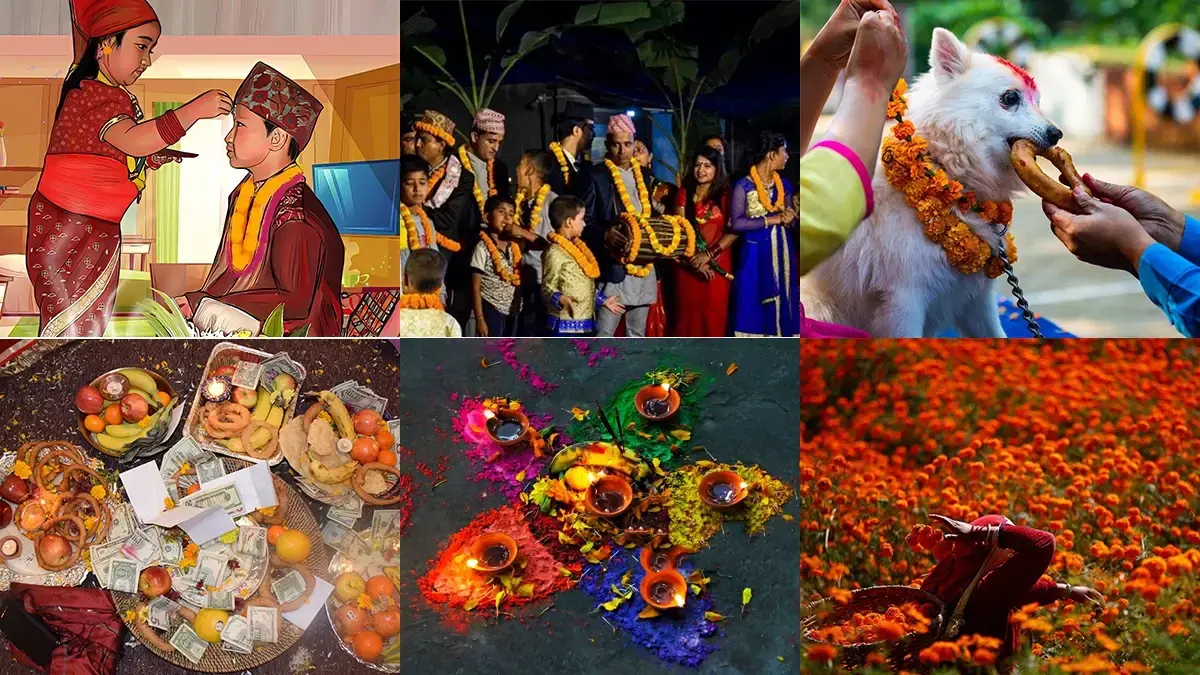
Tihar is the Festival of Lights which is celebrated for five days with lots of happiness and devotion. This festival is marked by decorating the house with colorful lights, oil lamps, flowers and beautiful rangoli designs. The streets glow; the neighbourhoods are filled with traditional songs, and families get together to celebrate.
One of the specialties of the festival of Tihar is that it is not only dedicated to the celebration of the lives of Buddha and the king of heaven, it is also the occasion for celebrating the relationship between humans, animals, nature and relatives. Each day of the festival, one of the animals mentioned above is singled out for special worship. Bhai Tika is the last day in which the special bond between brothers and sisters is celebrated.
Tihar is one of the best times to visit Nepal as a traveller, as it will offer them a chance to explore Nepal beyond mountains, trekking trails and historical monuments. It provides an insight into local customs, cultural beliefs, family life, traditional food and community festivals.
But, if you are going to Nepal during the festive time then the celebration of Tihar can be one of the most unforgettable moments of your entire trip.

What Is Tihar and Why Is It Celebrated in Nepal?
Tihar is one of the most significant Hindu festivals in Nepal. It generally takes place in October or November following Dashain (on the lunar calendar). Deepawali or Yamapanchak is also a name of the festival.
Tihar is closely related to five days of celebrations. There are religious meanings, rituals and traditions for each and every day. The festival celebrates different animals, worships goddess Laxmi, celebrates Govardhan Puja and fortifies the bond of brothers and sisters.
The celebration of prosperity, happiness and the relationship between humans and nature is one of the main ideas of Tihar. Goddess Laxmi, the goddess of wealth and prosperity is worshipped for good luck and success in the house and businesses.
Tihar is not just a religious celebration, however. It is also a time of family gatherings, exchanging gifts, enjoying traditional food, singing Deusi Bhailo and even decorating homes.
For overseas tourists, Tihar is a great way to learn about the linkage between religion, culture and life in Nepal.
The Five Days of Tihar: Understanding Every Celebration
Each of the five days of Tihar has a unique story and cultural significance. Although celebrations may differ slightly between communities, the traditional five-day festival is widely observed throughout Nepal.
Day 1: Kaag Tihar – Worshipping the Crows
Kaag Tihar is the first day of Tihar. On this day Crows are honored and fed.
In Hindu mythology and traditional beliefs, crows are messengers of the god of death, Yama. It is believed that crows can be fed to ward off bad news and to ensure peace and protection to families.
In the early morning people make rice and grains and other foodstuffs and lay them out on the roof tops or courtyards or in open areas for the crows.
The visit is interesting to the visitors to have a glimpse of the cultural beliefs of Nepal. Tihar starts with respecting the role of animals in religious and traditional life, whereas festivals are predominantly focussed on human celebrations.
The first day is the most peaceful one of the festivals, traditional foods and the involvement of the family makes it an important starting point.
Day 2: Kukur Tihar – Celebrating the Love and Loyalty of Dogs
The second day of Tihar is called Kukur Tihar, which is one of the most popular and highly loved days of Tihar festival.
Dogs are considered to be symbols of loyalty, friendship and protection. In Hindu mythology, dogs belong to the Lord of the dead, Yama, and are thought to protect the gates of the afterlife.
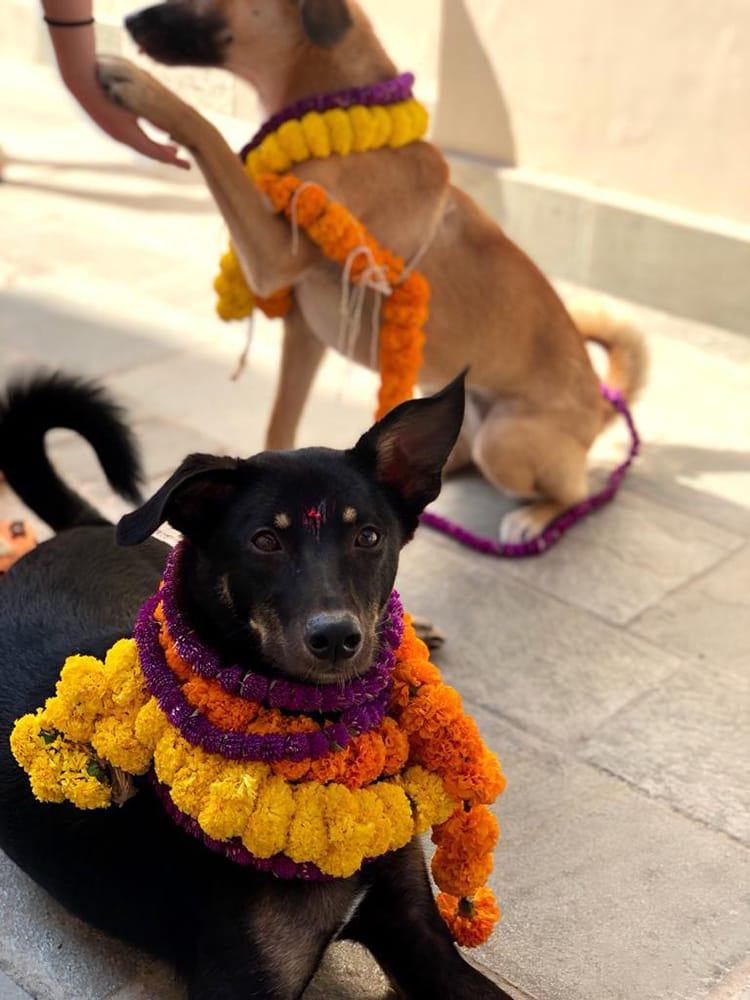
In this regard, people will decorate dogs with coloured garlands, apply tika on their forehead and give them tasty food. Pet owners celebrate their dogs and street dogs are also paid attention to, fed and loved.
The beautiful message of respecting and appreciating animals which Kukur Tihar gives is the reason which caught international attention.
The sighting of Kukur Tihar for tourists can be an unforgettable one. Dogs are often seen wearing marigold garland and red tika in the neighbourhood.
It's a celebration of an important aspect of Nepali culture: kindness and gratitude to fellow creatures who share our day-to-day lives.
Day 3: Gai Tihar and Laxmi Puja
The third day is considered one of the most important days of Tihar. It is celebrated as 'Gai Tihar' and 'Laxmi Puja'.
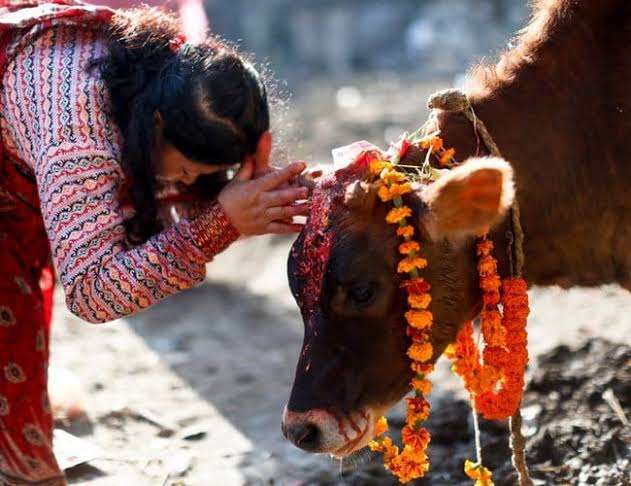
Cows are revered by the Hindu people in the morning. They signify good fortune, sustenance and maternity. People adorn the cows with flower garlands and do tika and feed the cows.
With the coming of night the celebration gets more colourful with Laxmi Puja.
On this day the goddess of wealth and prosperity, Goddess Laxmi, is worshipped. Families decorate their homes, shops, and offices and clean them for the goddess' arrival. Coloured powders, flowers, rice and other materials are used to make beautiful rangoli designs at their entrances.
One of the most interesting of these traditions is the making of a "pathway" from the entrance of the house to the prayer room. The small footprints are drawn to indicate the coming of Goddess Laxmi.
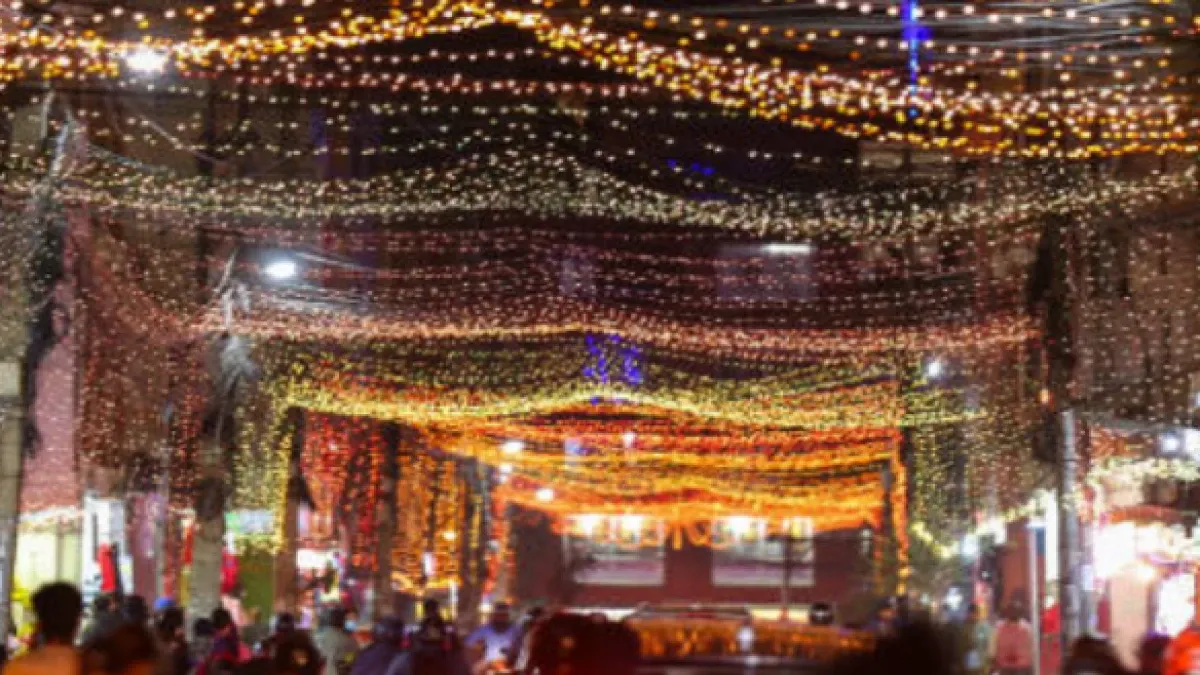
Oil lamps, candles and decorative electric lights light the homes and streets at night. Traditional prayers are said and families pray together.
Laxmi Puja is probably the most beautiful aspect of Tihar for travellers. Visitors can experience the lights of thousands of Nepal during the evening hours by walking through the traditional neighbourhoods.
It is worth noting the festive decorations, traditional architecture and local celebrations in Kathmandu, Bhaktapur, and Lalitpur.
Day 4: Govardhan Puja, Goru Tihar and Mha Puja
Tihar day 4 is a day with varying cultural and religious significance among the communities.
This day is celebrated in many Hindu houses as Govardhan Puja or Goru Tihar.
During Goru Tihar, oxen are worshipped for their important contribution to agriculture. Oxen have traditionally assisted farmers with ploughing fields and assisting farming activities. They are adorned with garlands, tika is applied and food is offered as a token of gratitude.
Govardhan Puja is related to Lord Krishna and the tale of Govardhan Hill. In the Hindu mythology, Lord Krishna lifted Govardhan Hill to alleviate the people of Vrindavan from heavy rainfall brought by Lord Indra.
In certain communities, cow dung is used to form a symbolic image of this Govardhan hill and religious ceremonies are conducted.
This day is also very important for Nepalese Newars as they celebrate Mha Puja.
Mha Puja is a particular tradition of Newari people who worship their body and soul. It stands for self-respect, purity, health and spiritual wellbeing.
At Mha Puja, family members gather and practice ritualistic activities such as mandalas, oil lamps, flowers and food offerings. This celebration is also designed to celebrate Newar New Year, Nepal Sambat.
The tourists can get a better understanding of Newari culture and customs when they experience Mha Puja in the Kathmandu Valley.
Day 5: Bhai Tika – Celebrating the Bond Between Brothers and Sisters
The fifth and last day of Tihar is called Bhai Tika. It is an emotional but at the same time important ritual of the festival.
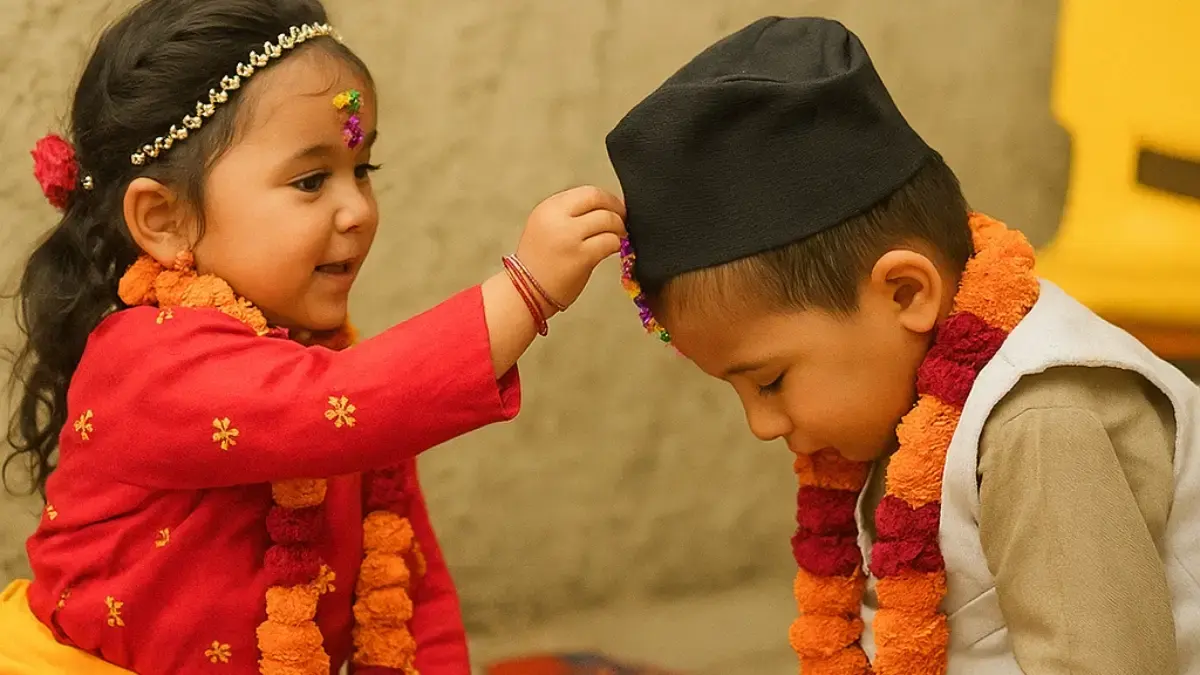
Bhai Tika celebrates the special relationship between brothers and sisters. On this day, tiktas are placed on the forehead of the brothers and prayers are made for their longevity, happiness, good health and prosperity.
The tika is typically created with a combination of colors, typically red, yellow, green, blue, and white. Sisters also arrange garlands of flowers around the neck of their brothers and give them sweets, fruits and other traditional foods.
Sisters, brothers give gifts and blessings to the sisters.
The drawing of a protective boundary, using oil and water around the brothers, is one of the important rituals in the ceremony. These rituals are thought to ensure protection and bond among siblings.
Families meet, cook a yummy meal, exchange gifts and celebrate the last day of Tihar.
Bhai Tika is a lovely moment for international visitors, who can learn about the significance of family relationships in Nepali society.
While it's a celebration of brothers and sisters, the message of love, protection, gratitude and togetherness can be felt by anyone.
Deusi Bhailo: The Musical Heart of Tihar
Deusi Bhailo is a must-eat at Tihar in Nepal.
Deusi Bhailo is an old cultural event that is performed by groups of people to visit various houses, sing old songs, dance and pass on festive wishes. One of the funniest events of the festival, particularly for young people and children.
Bhailo is normally practiced by the girls and women groups and Deusi by boys and men groups. Nowadays, however, people of all ages and genders are involved in the celebrations.
Visitation of neighbourhoods with musical instruments like madal and singing traditional verses by groups. They sing songs and dance, bless the families for happiness, prosperity and good fortune.
Homeowners, reciprocally, provide money, fruits, sweets and traditional food.
Tourists can participate or watch Deusi Bhailo to experience the culture. The music, happy singing and dancing adds to the lively ambiance in the Nepali neighbourhoods.
All visitors are asked to respect the customs of the local people and to always obtain permissions prior to recording performances or taking photographs of people.
Traditional Food to Enjoy During Tihar
Food plays a pivotal role in any Nepali festivals and Tihar is no exception. Each family cooks various traditional foods and sweets and shares them with their relatives, friends and guests.
Popular items of food and snacks during Tihar are:
Sel Roti: One of the most popular traditional Nepali foods, sel roti is a ring-shaped rice flour bread that is deep-fried until golden brown. It is often made for festivals, and drunk with tea, vegetables, or any other food.
Fini Roti: It's a traditional sweet pastry prepared with flour and ghee. It is especially used during special times of the year.
Anarsa: Traditional sweet made with rice flour and jaggery. It tastes a bit different and is used at the occasion of different celebrations.
Kheer: Sweet rice pudding made of milk, rice, sugar and dry fruits.
Sweets: During Tihar, different types of sweets are shared among family members and guests.Mithai: Different kinds of mithai are shared during Tihar.
Fruits and Nuts: Fruits and nuts like seasonal fruits, walnuts, cashews, almonds etc., are a common feature at family gatherings.
To experience the Nepali hospitality and know about the country's food culture, a traveler should try the traditional festive foods.
Best Places to Experience Tihar in Nepal
Although Tihar is celebrated throughout Nepal, some destinations offer particularly interesting cultural experiences. If you are visiting Nepal during the festival, exploring different cities and communities can make your journey more memorable.
Kathmandu: Experience Tihar in the Capital City
During Tihar, Kathmandu is quite a fun place to visit. Colourful lights and flowers are placed on the streets, in temples, housing areas and business places.
The city looks particularly beautiful during the time of Laxmi Puja, when homes and businesses are lit with candles.
The tourists can browse through the traditional areas, visit the temples, eat local food and watch Deusi Bhailo performances.
Ason, Indra Chowk, Basantapur and the surrounding old city are places of great cultural interest.
Bhaktapur: Discover Traditional Newari Celebrations
The traditional Newari festivals of Bhaktapur.
Bhaktapur is certainly one of the finest villages in Nepal to witness Nepal's traditional architecture and Newari culture.
The historic narrow streets and squares of Tihar provides a wonderful festive ambiance. There are traditional houses, temples, courtyards and local markets for visitors to see.
During this time, the Kathmandu Valley is interesting as it is celebrated with Mha Puja and Nepal Sambat.
The visitors can also taste the traditional food of the Newari people and witness their traditional practices, which have been passed on to them from generation to generation.
Patan: Explore Newari Heritage and Mha Puja
Another great place to go and experience Tihar is Patan (also called Lalitpur).
It is a beautiful cultural setting in Patan Durbar Square, traditional courtyards and historic neighbourhoods.
The Newar community celebrates Mha Puja with great devotion and hence it is a very interesting place for people who wish to learn about the Newari New Year and its traditions.
Pokhara: Enjoy Tihar Beside the Mountains
In Pokhara, the festive times are different. The city has mountains and beautiful lakes and is surrounded by it, while at the same time having cultural celebrations.
On the occasion of Tihar, hotels, restaurants and houses are lit with lights and placed with flowers.
Around Lakeside, visitors can experience the festive atmosphere, wander through local markets and enjoy traditional celebrations while enjoying views of the Annapurna Himalayan range.
Bandipur: Experience a Traditional Hill Town
Bandipur is a good place for those who prefer less of the tourist experience for a more general culture.
The traditional Newari Architecture, the stone paved streets and mountain view create peaceful atmosphere.
Visitors can walk around the town, get to know the locals and enjoy the hospitality of the locals during Tihar without much of the hustle and bustle of the city.
What Makes Tihar Special for International Tourists?
Nepal is well known for its trekking, mountains, wildlife and historical landmarks. But festivals like Tihar give a chance to the visitors to see another facet of the country.
For these reasons, it is advisable for international tourists to visit Nepal during the time of Tihar.
A one-of-a-kind cultural experience
Tihar is a chance to learn about Nepal's religious beliefs, traditions and values. Every day is a unique one, offering chances to explore the country's cultural diversity.
Colourful Streets and Beautiful Decorations
The marigold flowers, the rangoli, oil lamps and decorative lights are placed at the entrance of the house and in the streets during Tihar. The holiday season offers wonderful opportunities to take photos and learn about culture.
Traditional Music and Dance
Deusi Bhailo performances bring communities together. Traditional music, dancing and singing will be available for visitors to enjoy and there will be a happy atmosphere throughout the festival.
Warm Nepali Hospitality
This is the period of time when families invite relatives, friends, and guests into their homes – Tihar. The visitors can taste the warmth and generosity of the Nepalis by sharing the traditional food and culture.
The student is familiar with family and community values.
The festival celebrates human, animal and nature relationships and the relationship between families. These are significant as representative of the social and cultural values of Nepali society.
Travel Tips for Experiencing Tihar in Nepal
Planning your visit during Tihar requires a little preparation. Since the festival is one of Nepal's major celebrations, some businesses and services may operate on limited schedules.
Here are some useful tips for international travellers.
Make a travel schedule prior to your journey.
Reservations of lodging and bus tickets are advisable, especially for cities like Kathmandu, Bhaktapur, Pokhara and Bandipur.
Respect Local Traditions
Tihar is an important religious and cultural festival. Respectfully dress for visiting temples and religious activities.
Ask before taking pictures.
There are numerous festivities held within family residences and private courtyards. Ask others for permission before taking pictures or making videos of them.
Try Local foods
Experience the traditional Nepali cuisine. Don't forget to try sel roti, traditional sweets and local festive dishes.
Participate Respectfully
It's a special cultural experience, if you're asked to attend Deusi Bhailo or a family celebration. Respect local practices and adhere to the host's guidelines.
Check Transportation and Business Hours
Operating hours may have changed during the festival in some shops, restaurants or offices. Make sure you plan your activities accordingly.
Carry Some Cash
While digital payments are gaining traction in Nepal, it's good to have some cash to make payments at local markets or during traditional celebrations.
When Is Tihar Celebrated in Nepal?
Tihar is celebrated based on the Nepali lunar calendar, typically in October/November.
These specific dates will vary from year to year. The festival is held in the sequence of five days which starts with Kaag Tihar, Kukur Tihar, Gai Tihar and Laxmi Puja, Govardhan Puja and Mha Puja (in the relevant communities), and Bhai Tika.
This is a time of year that is especially suited for travelling in Nepal because of the pleasant autumn season. Overall weather conditions are good for sightseeing, cultural tours and trekking in many areas.
If you are interested in visiting Tihar, you should get acquainted with the festival calendar before your trip, as it is available every year.
Combine Tihar with Other Travel Experiences in Nepal
The best way to get to know Nepal is by experiencing the festivals accompanied by sightseeing and adventure activities.
For those who are travelling to Nepal during Tihar festival, you can continue your trip to explore some of the most popular spots of the country.
A cultural tour of the Kathmandu Valley can be initiated from Kathmandu Durbar Square, Bhaktapur Durbar Square, Patan Durbar Square and the UNESCO world heritage sites.
After that you can head to Pokhara and explore the Phewa lake, sunrise at Sarangkot and the beautiful Himalayas.
Bikers and adventurers have another good reason for heading outdoors in the fall: it is a great time to trek. Annapurna Base Camp Trek, Everest Base Camp Trek, Mardi Himal Trek, and Langtang Valley Trek are popular treks.
Other parks that are also worth visiting for wildlife enthusiasts are Chitwan National Park and Bardia National Park for jungle activities and wildlife experience.
The cultural experiences paired with adventure enable travellers to experience the various aspects of Nepal within a single memorable experience.
Conclusion
Tihar is more than just a festival of lights. It is a celebration of life, relationships, nature, prosperity and cultural identity. It has five days with different stories, combining religion, traditions and happiness.
Each tradition is a significant facet of Nepali culture, from feeding the crows and worshiping the dogs, to lighting the oil lamps and singing Deusi Bhailo and celebrating the brother-sister relation.
When you visit Tihar as a foreigner, it's more than just a normal sightseeing experience. It provides an opportunity to