
Buddha Jayanti in Nepal: A Complete Travel Guide for First-Time Visitors
Buddha Jayanti in Nepal cannot be achieved through just going to a handful of religious sites; rather, each location is rich with meaning, historical significance, and current practices. The energy associated with these locations becomes even more pronounced during this time of year. To experience the festival in true spirit, one must take their time at each of these sites.
This blog contains detailed and immersive descriptions of all of the places one should visit during the festival.
Lumbini
Lumbini is the spiritual centre of the festival; it is the main destination for Buddhist pilgrims from all over the world, and to visit it during the festival is a very different experience than at any other time of year. Such is the change that has occurred at Lumbini during Buddha Jayanti that the entire complex has become a global symbol of peace and a focal point for monks, pilgrims, and visitors to come and pay their respects to the Buddha through the act of contemplation.
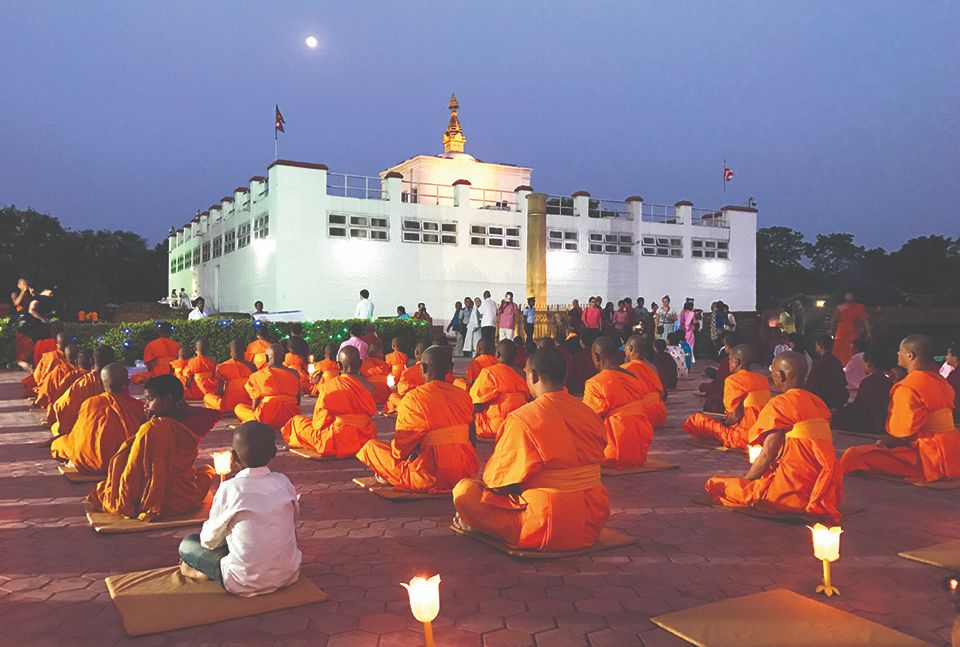
The Sacred Garden located in the middle of Lumbini is a place filled with monuments and ruins, serene meditation areas, and historical sites. There is no rush to proceed through these areas; visitors will take their time walking in a relaxed fashion many times without shoes. It makes you feel the presence of the positive energy that was so abundant in the location where the Buddha was born. The atmosphere is dominated by the sound of quiet chanting, ringing of bells, and the soft flicker of butter lamps.
The Maya Devi Temple, which marks the site of the birth of Siddhartha Gautama (Buddha), is one of the most important structures in Lumbini and a focal point for many rituals on the day of Buddha Jayanti. Here you can find the original marker stone believed to indicate where Queen Maya Devi delivered her son Siddhartha. Monks come to chant nonstop, and are lined with countless pilgrims offering flowers, candles and prayers.
Puskarini, the sacred pond adjacent to the temple, is where Queen Maya Devi is said to have bathed prior to giving birth. The reflection of prayer flags and temple lighting on the water during Buddha Jayanti create a blissful timelessness and serene atmosphere around the pond.
The monastic zone of Lumbini is divided into two parts: the eastern and western sides each representing Theravada and Mahayana Buddhism, respectively. Each side features multiple monasteries built by countries such as Thailand, Myanmar, Germany, China, and Japan. All built in their own unique architectural styles that reflect their traditions. Throughout the monastic zone, special prayers, meditations, and cultural programs are conducted at the monasteries during Buddha Jayanti providing visitors with a unique opportunity to see Buddhism from all over the world together in one location.
If you can spend an entire day, or even two days, in Lumbini, you will appreciate the serene presence of the area. There are times, including early mornings and evenings, when you will likely find it to be even more peaceful than during the busier times.
Bouddhanath
One of the most significant sites in Nepal and the center of Tibetan Buddhist culture is Bouddhanath Stupa. On Buddha Jayanti (the birthday of the Buddha), Bouddhanath earns even more respect. The stupa is very large and has a white dome, which represents the universe, and four eyes of the Buddha painted on the four sides of the stupa.
On Buddha Jayanti, thousands of devotees and tourists join together for the kora that takes place from early morning to late at night. The result is a rhythmic motion that becomes meditative especially for first-time visitors.
While visiting Bouddhanath during Buddha Jayanti, the lighting of butter lamps is one of the most beautiful sights because as it gets dark, there are hundreds of small flames illuminating the stupa with a warm golden hue, symbolizing enlightenment.
There are many different types of monasteries and small shops to purchase items such as prayer beads, thangkha paintings, and other traditional items, as well as a number of rooftop cafes, surrounding Boudhanath. You could find a quiet corner to drink tea and watch the many people that participate in the religious life of the area.
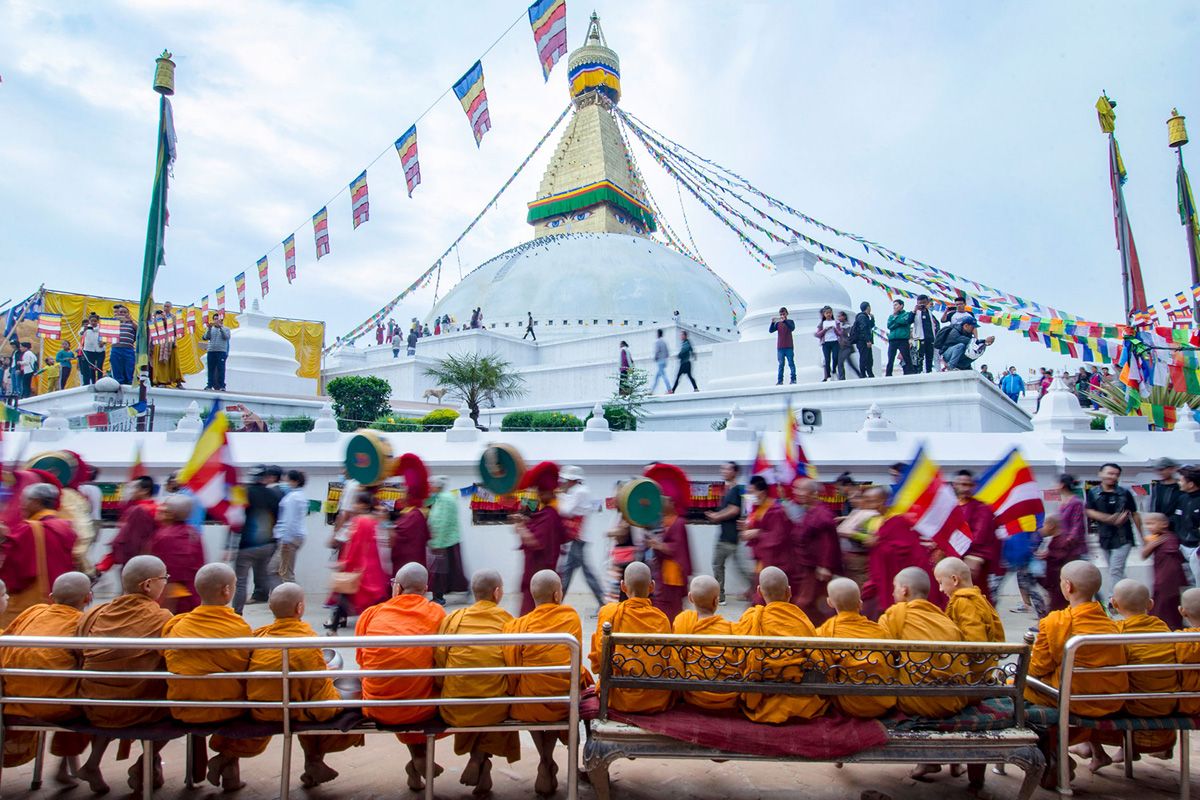
During Buddha Jayanti, many of the monasteries around Boudhanath are open for visitors to witness the prayer ceremonies from inside of the monastery. Hearing the deep voices of the monks chanting in the monastery is an incredible experience and one that is hard to forget.
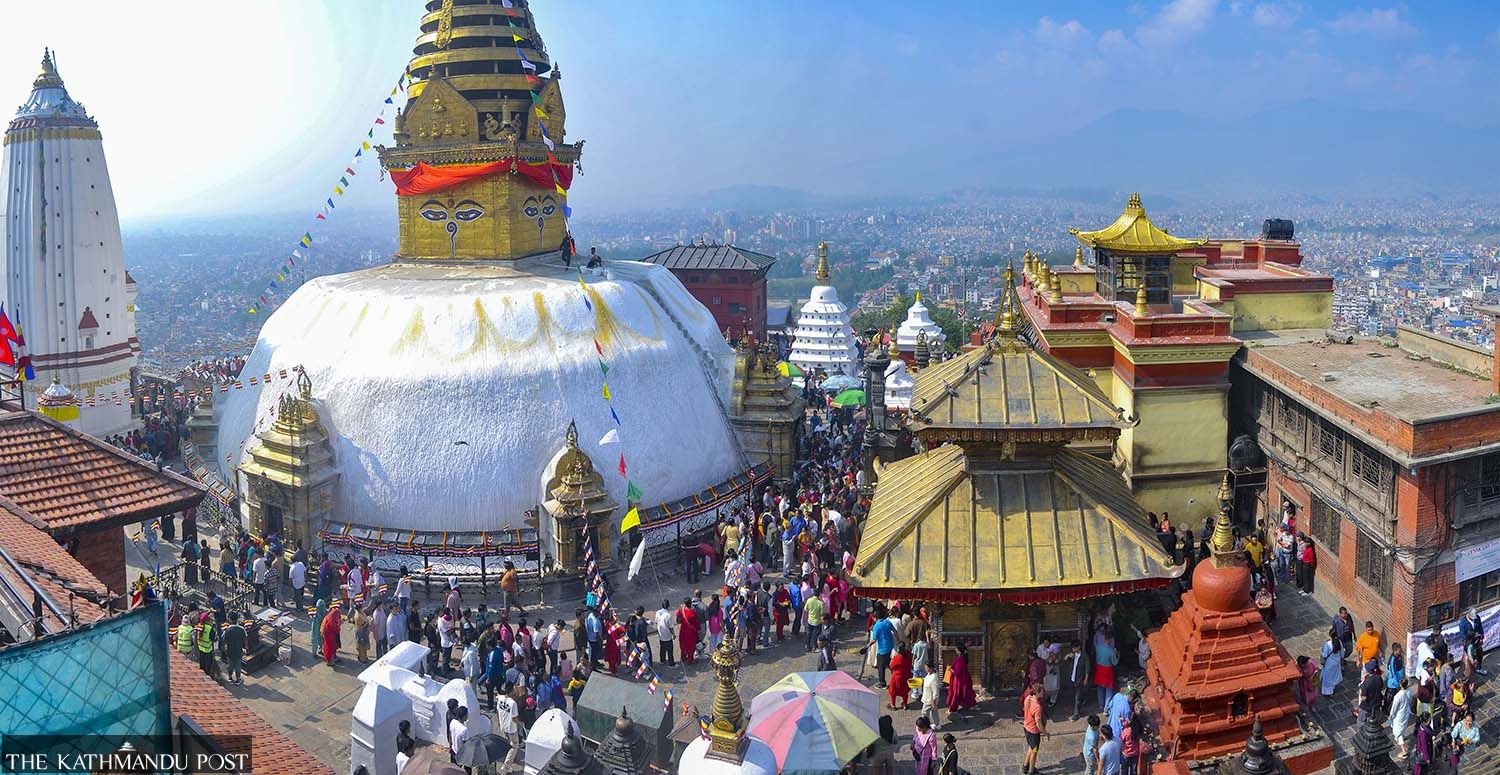
Swayambhunath Stupa
Swayambhunath is one of Nepal's oldest religious sites and is situated on a hilltop, giving it an air of mystique. The ascent of the long flights of stairs leading to the top of the stupa (which is part of the experience) can be especially rewarding when visiting during Buddha Jayanti.
As you make your way up to the stupa, you will see the many prayer flags fluttering in the breeze and the many monkeys roaming freely about the area. While the hike up to the top of the stupa is physically demanding, it adds to the sense of pilgrimage as a visitor.
At the very top is a site for taking panoramic views of Kathmandu Valley. The stupas will have decorations (i.e. lights and flags) for Buddha Jayanti, and many devotees will walk around spinning the prayer wheels and putting out butter lamps around its perimeter.
Swayambhunath is unique because of its blending of both Hindu and Buddhist traditions; there are small shrines and temples dedicated to both faiths within the same complex. This harmony between both religions is indicative of the cultural harmony found in Nepal as well as deepening the spiritual experience for visitors.
The atmosphere at Swayambhunath during Buddha Jayanti is a little less intense than at Boudhanath, yet just as spiritually fulfilling. One of the best times to visit Swayambhunath is early in the morning and witness the sunrise while the monks begin to offer prayers.
Although the stupa is the focal point of Swayambhunath, there are smaller temples and statues throughout the area in addition to many places to explore and with some reserve from the crowds.
Pashupatinath Temple
Pashupatinath Temple is not a Buddhist pilgrimage site, but rather an important piece to gain a better understanding of the spiritual landscape of Nepal during Buddha Jayanti. Pashupatinath Temple is located on the banks of the ceremonial Bagmati River and is the one of the holiest temples in all of Nepal representing the Hindu religion and dedicated to Lord Shiva.
Pashupatinath offers a condensed pairing of Hindu and Buddhist elements. On Buddha Jayanti, many locals visit both Hindu temples and Buddhist stupas/monasteries, exhibiting mutual respect for these two types of places of worship.
At Pashupatinath, you will see sadhus/priests, pilgrims performing religious rituals, and cremation on the ghats along the river. Although you may find some of the rituals associated with Hinduism such as cremation to be disturbing, they provide a very authentic view of the relationship between life, death, and spirituality.
There are several small shrines, courtyards where people gather for meditation, and numerous open spaces within the grounds surrounding the temple. Even though it may feel more crowded and chaotic than a Buddhist temple/stupa, you will sense the connectedness to this spirit of Buddha Jayanti within all of the many sacred places enclosed within Pashupatinath Temple.
Visiting Pashupatinath in conjunction with visiting a few of the Buddhist sites gives you a greater understanding of the unique cultural identity of Nepal as a nation where there is both continuity of culture and diversity of belief, thus reflecting one another throughout these different places.
Conclusion
Every place has its own uniqueness to how the Buddha Jayanti experience is felt. For example, Lumbini has the most connection historically to the Buddha and where he is connected to Tibet, etc.Boudhanath gives you a colorful experience of immersing yourself in that local culture. On the other hand, Swayambhunath has a good combination of history, views, and a nice quiet meditative area to relax. In addition, Pashupatinath has the connection to all the other locations thereby making it possible to have an overall view of the spiritual foundation of Nepal and the Buddha Jayanti experience.
If you have never been to the Buddha Jayanti experience before, just take your time. Be present in each location with respect and curiosity, and enjoy the experience of simply being present as you reflect on the experience. Buddha Jayanti is not simply about the fact that you will be visiting a list of places, but rather it is about experiencing a way of living that is characterized by being peaceful, being compassionate, and being aware.
Having respect and curiosity for the several locations you will visit for the Buddha Jayanti experience will give you an experience that will continue to have meaning long after you have completed your travels.