
7-Day Tibet Tour Package: The Perfect Introduction to the Roof of the World

Tibet is a unique destination for travellers, and a perfect destination for a 7 Day trip. The Tour takes you throughout Tibet’s capital, the city of Lhasa, and through some fantastic landscapes of the World’s Highest Mountains and turquoise lakes as well!
The 7-Day Tibet Tour also allows visitors to learn about and have experiential opportunities in Tibetan Buddhism. In addition to the exposure to different aspects of Tibetan culture and history, visitors will have an opportunity during the 7-Day Tibet Tour to acclimatize to their high-elevation environment (physically and mentally) when they arrive in Tibet.

For those who have previously visited Tibet, this seven-day tour will provide a good amount of time to revisit many of the famous sites located in the city of Lhasa as well as visit the areas around Lhasa, such as Yamdrok Lake, Gyantse and Shigatse, or to even visit one of the top sites in the country, Everest Base Camp, depending on the seven-day tour package you select.
This blog will give you all of the information you will need to make a reservation for a seven-day tour. Such as what to expect during your trip, itinerary highlights, best time of the year to travel, and travel permit requirements.
Possible Reasons for Booking a 7-Day Tibet Tour
1. Acclimatizing to High Altitude
Due to the extreme altitudes (4000m or over), it is necessary to allow yourself several days before performing any physical activity. If you take time & visit areas within Tibet by touring, you will not have the same rush, which is common with a one- or two-day stop before continuing onward.
You will spend seven days, at a very slow pace, visiting this area. The first few days will be spent in Lhasa which allows your body to acclimatise before venturing further into Tibet.
2. Explore Tibetan Culture
You will witness the scenery and spirituality via travel to Tibet. You will have the opportunity to see both the Cultural and Spiritual Sides of Tibet with visits to Potala Palace (the official residence of the Dalai Lama), monasteries, and Tibetan High Country landscape. As well as views of the majestic Himalayas and the bounty of life on the land. Plus, you will experience your participation in the rituals and customs of the local Monks while taking part in the debates of Philosophy amongst them.
3. Travel With No Issues due to the Required Permits to Enter Tibet
When people ask me what is the hardest thing about travelling to Tibet is, my answer is always the same "You can’t go as an independent traveller to Tibet". In order for visitors to be able to visit Tibet, all visitors must use an approved tour operator. Approved tour operators are a prerequisite for travelling to Tibet. Approved tour operators are required to:
- A Tibet Travel Permit
- Transportation
- Accommodation
- Entry Tickets
Therefore, all of your logistics will be arranged by the tour operator, allowing for smooth travel in a very remote and high-altitude area, with no additional stress.

Itinerary of Your 7 Days Tour in Tibet, Day by Day
Day 1: Lhasa Arrival
Your 7-day tour opens in Lhasa, the center of Tibetan culture. Most of the travelers will arrive at Lhasa Gonggar Airport, where you will enjoy the breathtaking scenery of the Himalayas. From the air or take a journey with one of the highest trains in the world, the famous Qinghai-Tibet Railway. Once you have arrived, you will meet with your Tibetan guide at the airport, and he/she will help you get to your hotel.
The first day of your tour will be mainly about acclimating yourself to the elevation of Lhasa, which is very high at approximately 3650m/12000ft. You may feel very energetic on day one but please make sure that you rest. This is an adjustment day for your body. Typical things that first-time visitors to Lhasa do on day one are:
- Relaxing at their hotel
- Drinking herbal tea or warm water
- Walking a little bit around your hotel or the surrounding streets
- Having a relaxing evening because of the mild, highland climate in Lhasa.
- Hotels in Lhasa are also very comfortable and start your experience of Buddhism by providing you with traditional Butter Teas and/or Sweet Milk Teas.
- The hotel ‘Lounge & Dining Area ' provides an inviting and friendly atmosphere to enjoy a warm cup of tea while overlooking the beautiful scenery of the Mountains.
Day 2: Visit the Potala Palace and Jokhang Temple to experience the spiritual basis of Tibet.
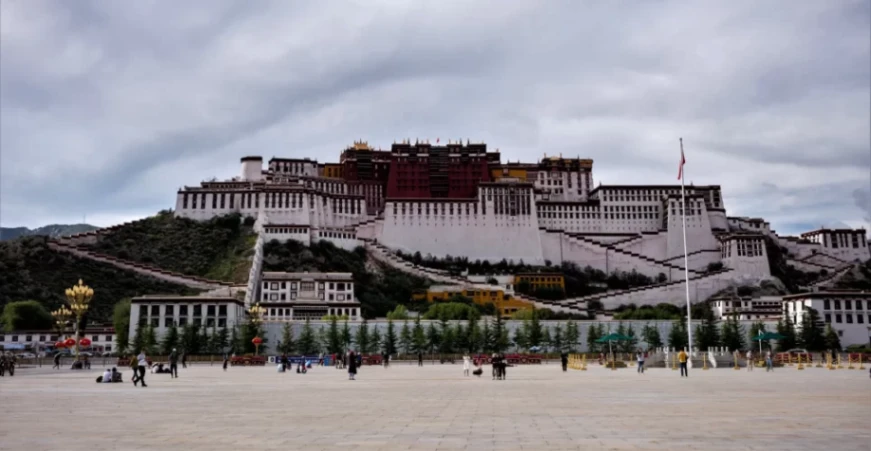
Your search for happiness and reverence begins on your second day with an amazing visit to the Potala Palace. The most recognizable image of the country. As you approach the Potala the huge red and White walls of the Potala Palace stand before you like a magical castle in the distance.
The Inside of the Potala Palace
The centuries of worshippers that have climbed the ancient stone staircases to gain entry have smoothed down the staircases.
- The Potala Palace is also home to a number of glittering golden Stupas along with impressive Murals, Historical relics and dozens of manifestations of both Buddhas and Bodhisattvas.
- The Red Palace is dedicated to Religious worship while the White Palace has been converted to serve as the Resident Quarters of the Dalai Lamas throughout History.
- Every room reflects the amazing stories of Kings and Monks, along with the vast amount of Knowledge of Buddhism that has accumulated through the years.
The Jokhang Temple
The Jokhang Temple is one of Tibet's most holy sites, with many other pilgrims practicing their religion. It is done by lighting butter lamps, chanting prayers, or performing full-body prostrations before a statue of Buddha. The candlelight surrounding the ancient statue of Jowo Shakyamuni lends to a spiritual connection while inside the temple.
After visiting the Jokhang Temple, we will take a stroll down Barkhor Street, which is a circular market route that runs throughout the Old Town of Lhasa. On Barkhor Street, you will find:
- Prayer flags
- Tibetan Jewelry
- Handmade wooden bowls
- Incense
- And Thangkas
The atmosphere created by the mix of shops on Barkhor Street in Lhasa makes the area a great place to visit while in Lhasa.

Day 3: Explore Drepung Monastery and Sera Monastery
Day three is going to be the time when we will visit Drepung and Sera monasteries, which will give us an even better insight and understanding of Nepalese Buddhism. It should be noted that Drepung Monastery is also the largest monastery on earth, being located at the foot of a mountain and laid out like a little village of totally white buildings.
You will be able to explore many different aspects of Drepung Monastery such as the:
- Kitchens where Monks prepared meals and ate their food that were created in large quantities.
- Courtyards that provided serenity for contemplation and study among the Monastic Community.
- Cadres for holding the Tibetan Buddhist Scriptures which contained written texts of wisdom and literature.
- Narrow Streets and Lanes where monks would study and live.
A journey into Tibetan Buddhism begins by learning about the historical significance of Tibetan Buddhism, along with a tour of the Drepung Monastery located near Lhasa; Sera Monastery also contains an innovative method of teaching through debate, where monks develop their understanding of Buddhism by arguing with one another while standing in the courtyards beneath trees.
Debate was utilized in the training of monks for several centuries and will pose a challenge for you. Still, it can be a tool to enhance your understanding of how Tibetan Buddhists educate one another, as well as a method of appreciation for the means by which education is imparted in Tibetan Buddhist culture.

Day 4: Scenic Drive from Lhasa to Yamdrok Lake and Gyantse
As you travel from Lhasa to the Tibetan countryside on your journey. You will explore nature's natural wonder, culture, and Spirit through a series of scenic Drive(s)/Views to different locations throughout Tibet.
When travelling to Yamdrok Lake, be sure to allow yourself time to take in and reflect upon the colours reflected off of the lake's surface blue, green, red, purple, etc. After driving to Yamdrok Lake, you will reach Kambala Pass (the highest point of Kambala Pass is 4700m). A point that is believed to hold a special relationship to the "protectors of the Tibetan people", where Yamdrok Lake is said to protect the "spirit of the Tibetan people" from contamination.
Along with Yamdrok, you will have other opportunities for exploration at Gyantse Castle and the surrounding areas.
- Capturing scenic pictures using panoramic photography
- Shopping at small authorized local stalls selling Tibetan crafts
- Take short walks around picturesque locations lined with prayer flags.
- Enjoying the breathtaking natural beauty of the mountain setting and being blessed with still - unspoiled - and stunning photography makes the location one of the best photographic spots in Tibet.
Tibetan Heritage Town- Gyantse
Your journey will end at Gyantse, a Basket of Tibetan Heritage, home to a rich History of Tibetan Culture, Religion, and Spirituality. Gyantse is an impressive place to explore. The Kumbum Stupa is one of the most beautiful and marvelously built stupas in all of Tibet.
When you go up the spiral staircase to arrive at the different levels of Kumbum, you will see many shrines on the various levels of Kumbum that contain Buddhist paintings and sculpted reliefs depicting all aspects (History and Spirituality) of Tibet's Buddhist tradition.
Gyantse is really like walking through a Piece of Ancient Tibet: with not too many distractions, you can see a great number of quiet streets and traditional homes along with the ruins of an ancient castle that represents a great sense of the past.

Day 5: From Gyantse to Shigatse (Panchen Lama's Home)
As you travel towards Shigatse, you'll see all kinds of wonderful mountain scenery. Many scenic agricultural lands where there are now large groups of yaks grazing. There are also many attractive agricultural land where Tibetan Farmers cultivate and harvest crops. There are also dry Valleys, Flat Land surrounded by the largest mountain ranges in the world, etc.
The most popular site for tourists in Shigatse is Tashilhunpo Monastery. The construction of Tashilhunpo Monastery began in the early 1400s and is the primary place for the Panchen Lama, who is the second "Most Recognized" individual in Tibetan Buddhism.
When you visit Tashilhunpo, you can do the following:
- The chapel that contains gold domes,
- Many prayer halls that each contain many beautifully crafted thangkas, and
- Monks praying in unison inside one of the assembly halls.
The Shigatse area also has many markets that visitors can browse through, where products are offered at the markets. Tibetan medicinal herbs/spices and handicrafts made by local artisans. In addition, many visitors purchase basic household items that the citizens of Shigatse use daily.
Day 6: Return to Lhasa or Continue to Everest Base Camp (Depending on Package)
You have two options for how to spend your final day:
The classic route back to Lhasa is the first option. This trip will require travellers to spend two weeks travelling from the source of the Yarlung Tsangpo River to Lhasa. There are many opportunities for photography during this beautiful trip, and most, if not all, of the travellers will want to return to Lhasa by early afternoon to spend time in the Barkhor Street area or take in some tea, and then return to their lodgings for the night.
The second option is to travel up to Everest Base Camp (EBC). This is one of the favorite stopping points on many of the seven-day tours for those looking for an adventure. The journey takes you through some of the highest mountain passes in Tibet, remote valleys, and outstanding views to Rongbuk Monastery. Your first view of Mount Everest, the highest mountain in the world, from the world’s highest monastery. The view is incredible! Most travelers will have one of the strongest experiences in their entire life at this location.
Depending on the weather, you can witness the following:
- A golden sunrise on Everest
- An amazing experience to see & feel the day end (sunset)
- The night skies over the Himalayas are breathtaking and will leave you in awe with every star you see.

Conclusion
When you finish your trip back to Lhasa, you may have a bit of "Lhasa Sadness" because of what happened. Your guide will help you determine which method of transportation would be best for you to go back home (train/air). All of the amazing things you have experienced and seen while in Lhasa from prayer wheels, incense, turquoise lakes, snow-capped mountains, and Buddhas. It will create a lasting impression upon you and give you a great sense of achievement in seeing so many places in just one week, and you can take those feelings with you forever.