
Holy Kailash Yatra from Nepal: A Sacred Journey to the Abode of Lord Shiva
Introduction
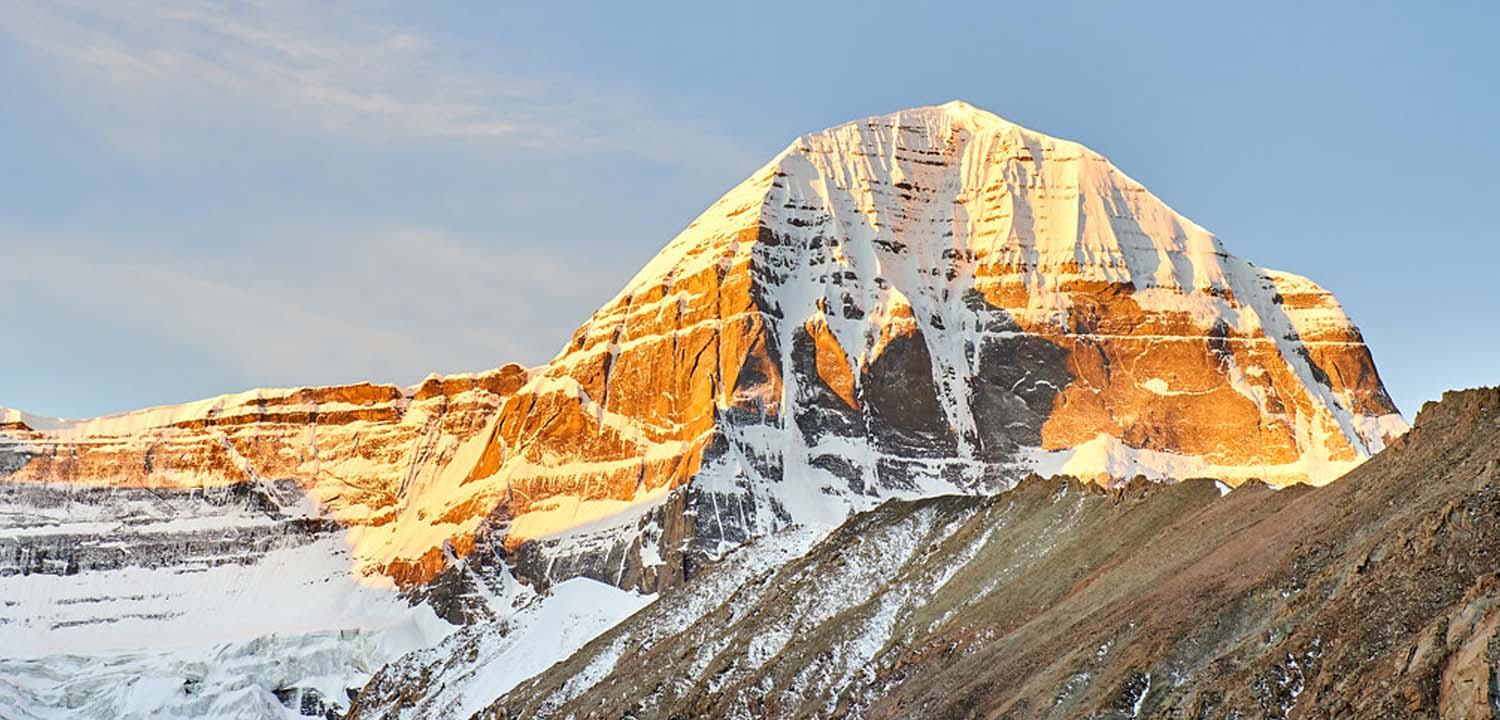
The Holy Yatra of Kailash to Nepal is an exceptional spiritual and life-altering pilgrimage that has millions of followers worldwide making it one of the largest religiously motivated travel destinations in history. Annually thousands of people of every religious affiliation (Hinduism, Buddhism, Jainism or Bon) travel to this Holy Land; seeking to witness the remarkable beauty of Mount Kailash and the Holy Lake of Mansarovar, which is thought to be the home of Lord Shiva himself. Towering above the isolated Tibetan Himalayas, Mount Kailash offers a place for those seeking peace, cleansing of their spirit through purification and the realisation of Spiritual Enlightenment.
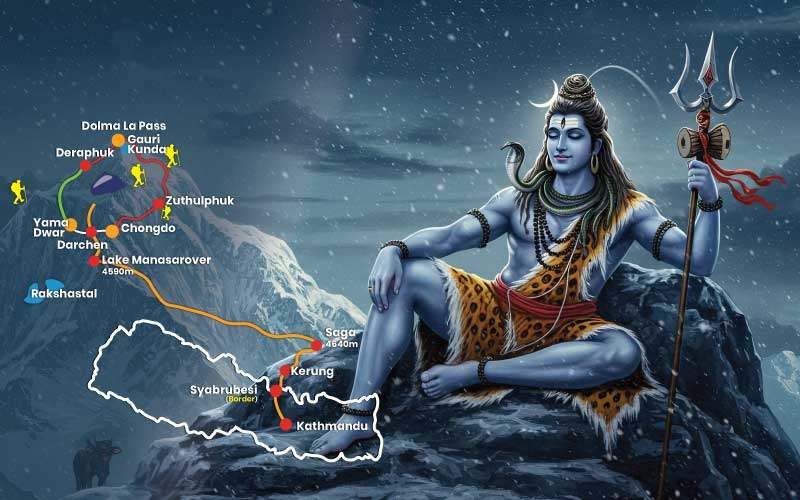
The route to Mount Kailash from Nepal offers the pilgrim both great ease of travel and culturally interesting sites. The journey from Kathmandu, through some of the most awe inspiring high altitude landscapes in the world, ancient monasteries, and Sacred Lakes to arrive at the Sacred Mountain of Shiva, is filled with adventure, devotion and appreciating the beauty of mother nature; and continues to be one of the most memorable spiritual experiences in Asia.
Why is Mount Kailash Sacred?
Mount Kailash has been worshipped as a holy place for over five thousand years by the following religions: Hinduism, Buddhism and Jainism. The belief held by Hindus is that this is the eternal home of Lord Shiva and his wife, Parvati. The Buddhist view of the area considers it to be the center of the universe as well as the location of the Buddha, Demchok. In addition, Jainism believes that this is the site where the first Tirthankara attained nirvana (freedom from the cycle of life and death).
As a result of the many different religions that place great value on Mount Kailash, it has never been climbed by anyone. What instead takes place is a spiritual act in that there is a kora (circumambulation) done around the mountain to clear away one's negative karma and earn merit. To do a kora around Mount Kailash is said to offer the one who does so a once in a lifetime blessing.
Travelling to Syabrubesi or Nepalgunj Kathmandu.
In order to prepare, you need to collect your travel documents (Visa, permits, health check) and attend your pre-departure briefing in Kathmandu. You have the option of driving to Syabrubesi, which is on the Nepal-Tibet border, or flying into Nepalgunj and taking a helicopter ride to view Kailash.
Entering Tibet.
After crossing the border into Tibetan Plateau at either Rasuwagadh or through Simikot-Hilsa, you will experience the beauty of the high elevation desert and the spectacular landscape and mountain ranges throughout your trip. This all contributes to the spiritual aspect of this pilgrimage to Kailash.
Mansarovar Lake.
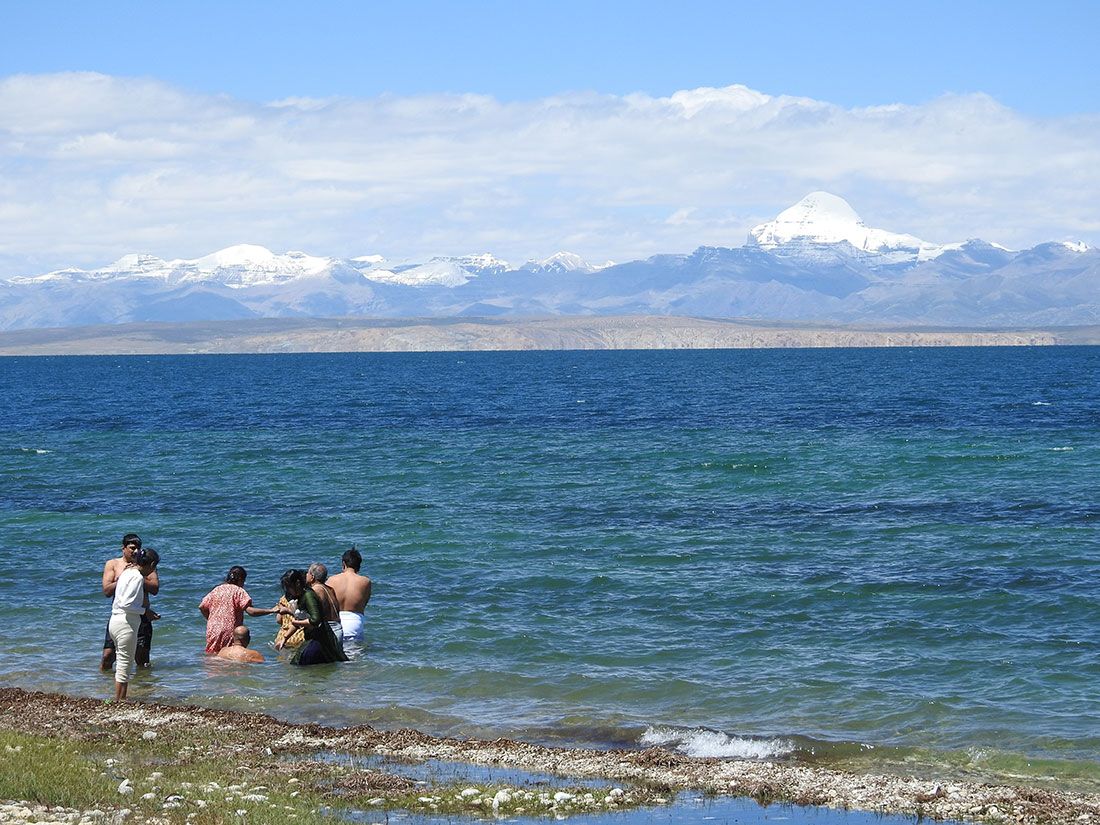
Lake Mansarovar is located at Mount Kailash. It is known to be the second couldn't lake in the world that is drinkable and fresh water. Many pilgrims believe that by bathing in Lake Mansarovar (or praying near) they can wash their souls free of their past sins.
Kailash Kora.
It will take approximately 3 days to complete the Kailash Kora (The circumambalation of Mount Kailash) which is a walk of approximately 52km in total. Most of your trekking will be through high mountain passes, rocky areas or remote valley areas that surround Mount Kailash.
Key Highlights of the Kailash Parikrama
Yam Dwar, the spiritual entry-way into Kailash
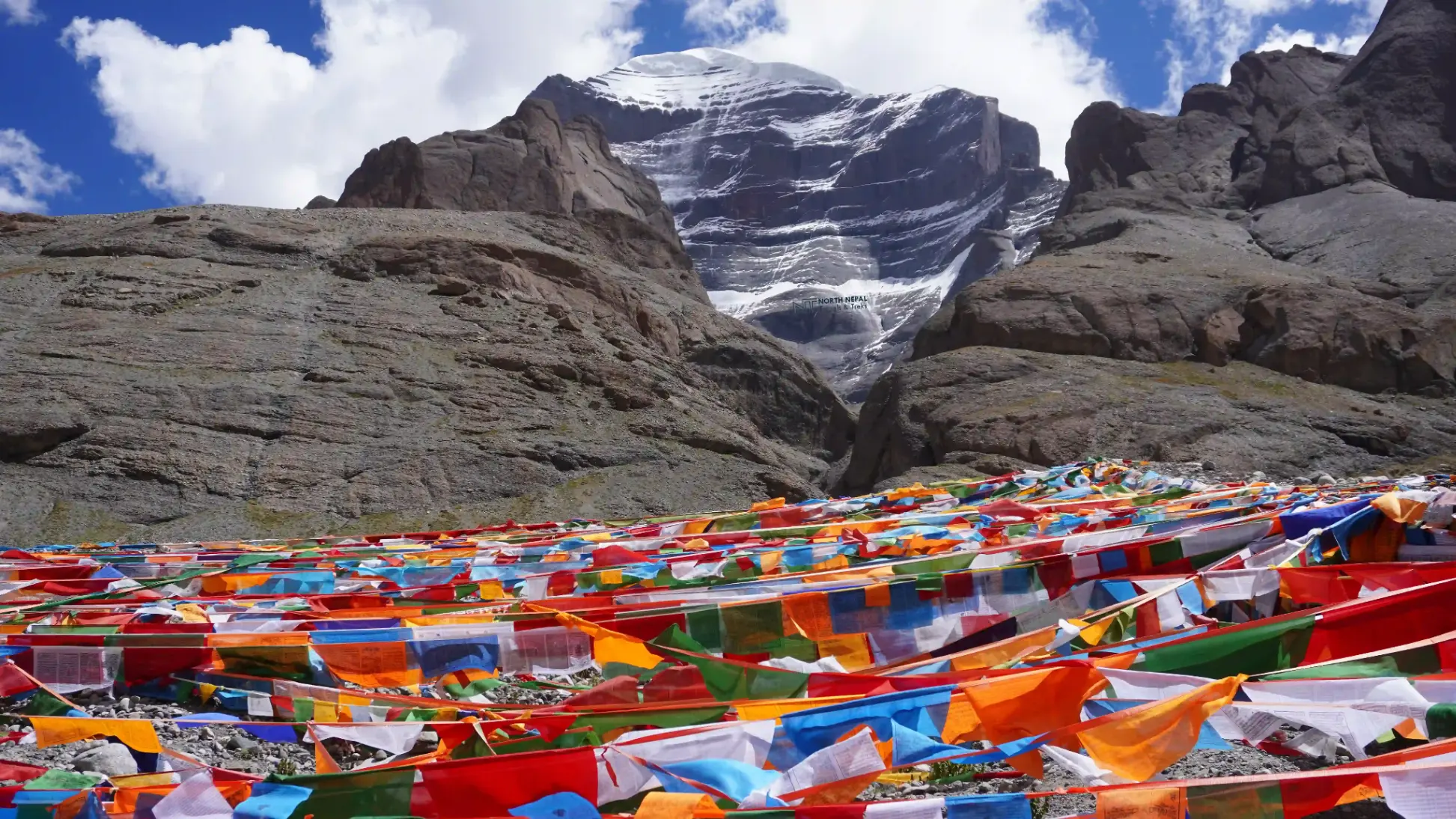
Yam Dwar is also known as the 'Gateway to the God of Death' and represents the beginning of the sacred kailash parikrama, or kora. When pilgrims walk through this gate, they think they have left behind their worldly attachments and are starting their spiritual journey towards spiritual purification/enlightenment. Surrounded by a sea of colourful prayer flags and spectacular views of the Himalayas, many devotees find themselves drawn to this holy site for a variety of religious purposes. In the days before starting their arduous journey around kailash, many pilgrims will offer prayers, sing mantras and seek blessings here before they embark on their journey.
Dirapuk Monastry
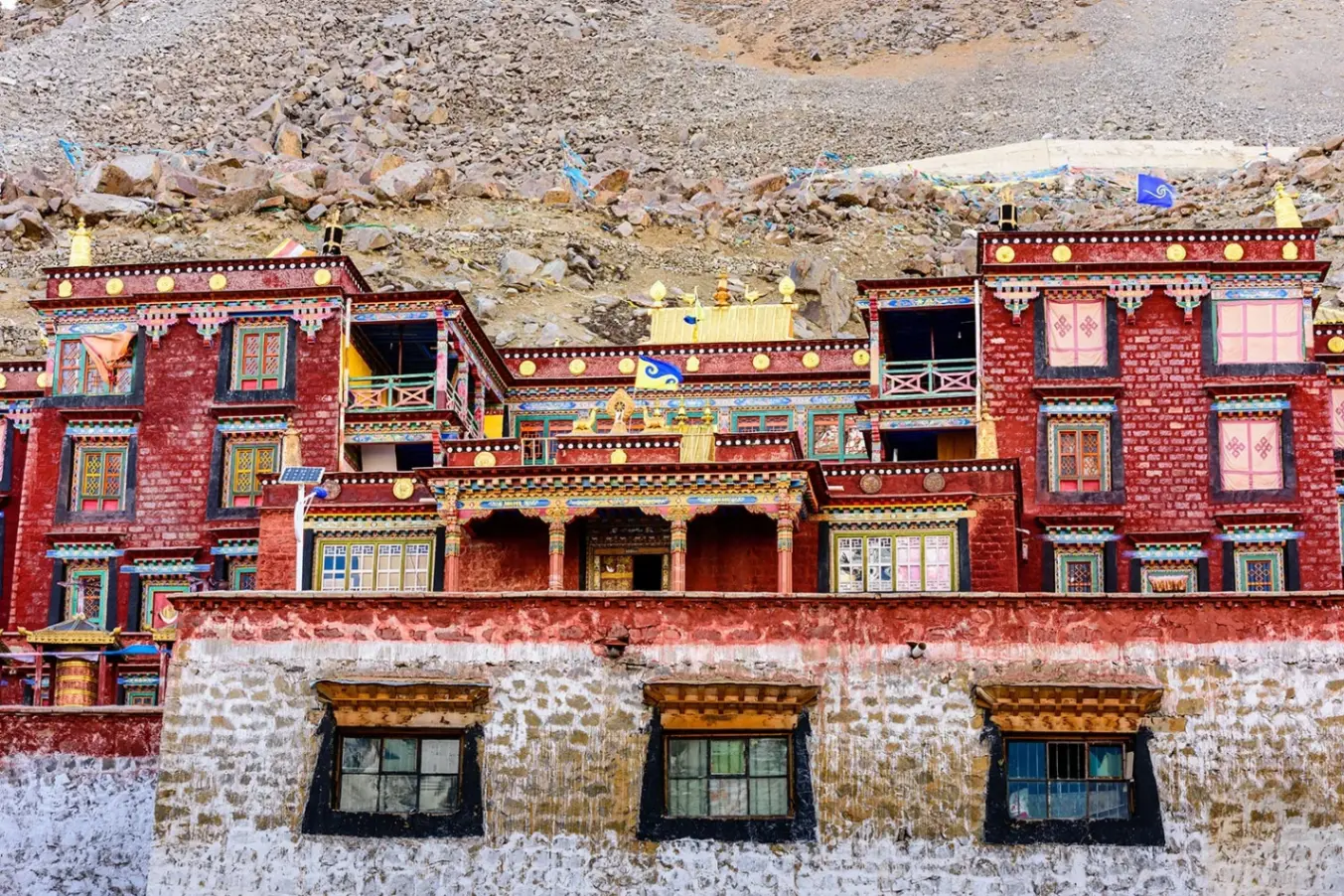
Dirapuk Monastry is a highlight of the kailash kora and has some of the closest and magnificant views of the north face of mount kailash. This monastry is situated at a high elevation well away from the hustle and bustle of everyday life and dreams up in a beautiful valley, surrounded by rugged mountains and ice fields. Pilgrims commonly choose to spend the night at dirapuk in order to experience both sunrise and sunset from the north face of this holy mound, with the mountain bathed in gold and silver. The serene surroundings and spirituality give the pilgrims an opportunity for reflection and prayer while searching for tranquillity and inner peace.
Dolma La Pass (5,630 Meters)
The highest and hardest part of the Kailash Parikrama is called Dolma La Pass; it is about 5,630 m away from sea level. The Dolma La Pass is named after the Tibetan goddess Dolma, representative of compassion and protection. In addition to being a place for physically challenging trekking due to thin air conditions and difficult rocks, the Dolma La Pass represents spiritual transformation and rebirth for those who pass it. Pilgrims believe that the act of stepping across the Dolma La Pass signifies that they have moved beyond their previous sin(s) and started a new life spiritually.
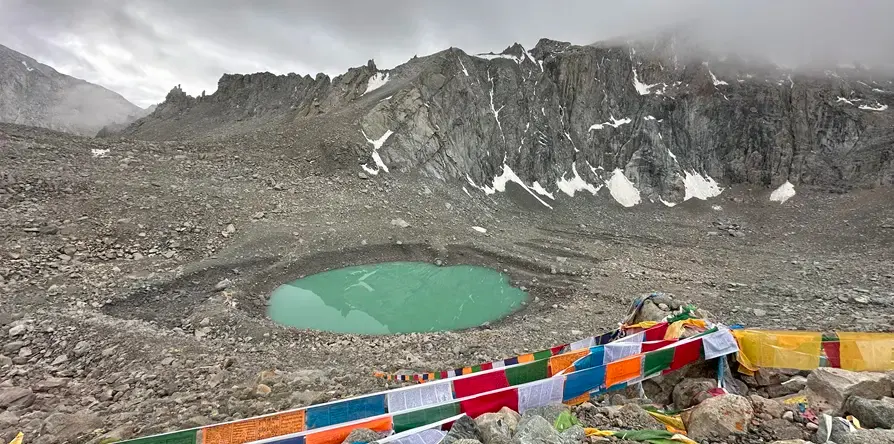
Gauri Kund is a Sacred Glacial Lake
Just a few short steps below the Dolma La Pass lies the beautiful sacred turquoise glacial lake of Gauri Kund, which is surrounded by rocky European Himalayan slopes. According to Hindu belief, the lake is a prominent site associated with the goddess of Parvati, who is known as Lord Shiva's consort. The legend says that Goddess Parvati bathed and meditated at this particular location. Although returning to the lake may be very difficult because of its steepness, a lot of pilgrims stop on their way to Gauri Kund from near the Pass and pray for the rest of their lives and admire visually the spiritual beauty of Gauri Kund from above. Gauri Kund, both for its peaceful landscape and spiritual importance, is a highly revered location on the way toMount Kailash.
Zuthulpuk Monastery and Meditation Caves
The Kailash Parikrama-Monastery Zuthulpuk is the last major stop on the circuit around Mount Kailash and has great historical significance and spiritual value. It is well-known for its meditation caves associated with the famous Tibetan saints and spiritual teachers, specifically Yogi Milarepa. Pilgrims come to this location to relax, meditate, and contemplate the life-altering journey they have completed thus far. The prayer flags decorating the valley and the dramatic rock formations that surround it create a highly spiritual environment, and many travelers describe their time at Zuthulpuk as a peaceful way to end their highly emotional and challenging Kailash Kora walk.
Finishing the Kailash Kora: A Journey of Faith and Willpower
Finishing the Kailash Parikrama is much more than just completing a mountain trek; it is regarded as a religious pilgrimage for devotees of the religion of Hinduism that incorporate physical strength, devotion to God and His people through faith, and spiritual confidence into one complete cycle of return. This has been accomplished by many people on many different climbing routes, and the experiences and events have tested their strength because of the difficult terrain, high altitudes, inclement weather, and challenging physical conditions they encounter while climbing, as well as the spiritual energy inherent in this region.
Many pilgrims believe that by completing one full Kora, they will rid themselves of their sins and be blessed, and most believe that the more times they complete a Kora, the more spiritual value they will accrue. The majority of people who experience Kailash report being extremely relaxed, thank you, and spiritually fufilled.
Best Time for Kailash Yatra from Nepal
May to September are considered the prime months for the Kailash Yatra as the weather is generally stable during that time, the access roads are also open and the temperatures are moderate enough to trek to Kailash.
- Spring (May/June) – Very pleasant weather and visibility is excellent for picture taking
- Monsoon/Summer (July/August) – Moderate temperatures in Tibet and rain in Nepal; lush greenery
- Early Autumn (September) – The weather and visibility are generally stable, and comfortable trekking conditions exist.
To visit Kailash, several official permits will be required because it is part of the Tibet Autonomous Region (TAR) of China.
Necessary travel documents:
- A valid passport
- A Chinese visa
- A Tibet travel permit
- Kailash region permits
- Two passport sized photos
- Travel insurance
Most travelers to Kailash secure their permits and other travel logistics by using one of the many registered tour operators in Nepal. If you go with a tour operator, you will have all the travel logistics lined up for you (permits, transportation, accommodations, etc.)
Kailash Yatra is at a high elevation most of the journey is taking place above the 4500-meter level (14500 feet). As the air is thinner and there is a decrease in oxygen, pilgrims may experience altitude sickness.
Commonly seen symptoms include feeling nauseous, headache, tiredness, and shortness of breath.
It is important for travelers to prepare themselves physically before embarking on their journey through regular walking, remaining hydrated, and checking with their physician if they have any pre-existing medical conditions. Acclimatization days during travel are extremely important.
Helicopter Kailash Yatra From Nepal
Those who don't have enough time or are unable to trek long distances can have a helicopter ride tour as a quick and user-friendly alternative for touring.
The helicopter route generally provides:
- The flight from Kathmandu to Nepalgunj
- The flight from Nepalgunj to Simikot
- Helicopter ride to the border of Hilsa
- Traveling overland into Tibet
This option provides the ability for pilgrims to travel faster and without as much strain physically while still being able to complete their sacred journey.
Cultural and Spiritual Aspects of the Kailash Yatra
While the Kailash Yatra is a religious pilgrimage, it is also a journey to explore culture. Pilgrims will experience Tibetan Buddhist traditions, colorful prayer flags, monasteries, yak caravans, and remote Himalayan villages during their journey on the yatra.
The serene environment, chanting monks, and untouched mountain scenery create a peaceful spiritual environment, like nowhere else in the world.
Packing List to take on the Kailash Yatra
- Clothing
- Warm jackets
- Thermals
- Waterproof trekking boots
- Gloves and woolen hats
- Health and Safety
- Personal medications
- Water purification tablets
- Sunscreen and sunglasses
- Oxygen cans if necessary
Travel Essentials
Important Documents that Must be Carried
- Passport copies
- Snacks and energy bars
- Trekking poles
- Power banks
If pilgrims pack properly, they can remain comfortable while trekking through the extreme weather of the Himalayan Mountains.
Tips for Successful Pilgrimage to Mount Kailash
- Train physically before your hike.
- Take your time walking at high elevation.
- Make sure you keep yourself hydrated with lots of fluids.
- Show respect for the traditions and customs of the local people as well as the religious sites you will visit.
- Be careful and follow the directions of the guide at all times.
- Wear warm clothing.
- Don't consume alcohol or smoke during your trip.
Preparing mentally is also essential since the Yatra is physically exhausting and can be emotionally demanding.
Conclusion
The Holy Kailash Yatra from Nepal is much more than simply hiking a big mountain; it is a spiritual awakening in the shadow of the grand Himalaya Mountains. The sacred waters from Lake Mansarovar and the spiritual presence of Mount Kailash, along with the majesty of the Himalayas, make each step of the pilgrimage a momentous religious experience for every pilgrim.
Whether you are looking for devotion, adventure, inner peace, or culture, you will leave this journey with memories that will last a lifetime. For many pilgrims, arriving at Kailash is not only about being at a specific location but rather discovering your path to spiritual growth. You can visit our website and package for the best package.