
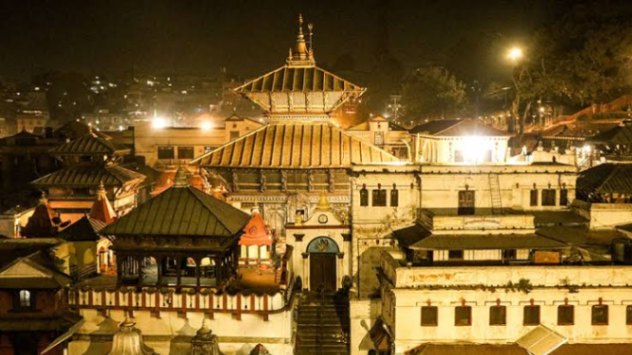
Pashupatinath Temple: The Spiritual Journey from Life to Liberation
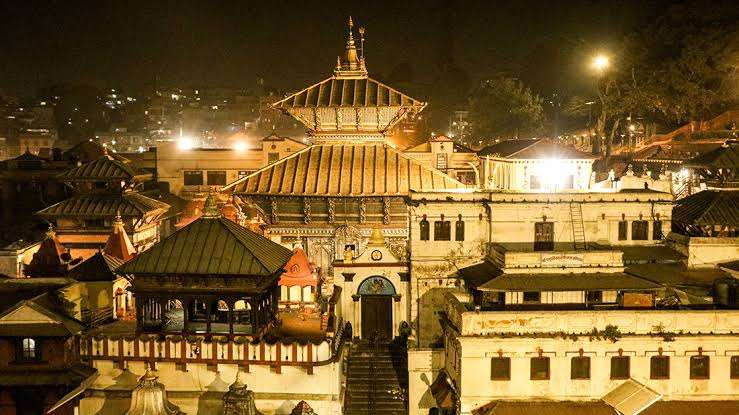
Pashupatinath Temple, nestled on the banks of the sacred Bagmati River in Kathmandu, is more than just a Hindu shrine. It is a spiritual sanctuary, a living monument of history, and an architectural marvel that draws millions of devotees and curious travelers each year. It is visited by people for a healthy life, happiness in their family, children, wealth, peace, and a good life. Concurrently, the banks of the Bagmati River by the temple are among the most important areas of Hindu cremation rituals in Nepal.
This gives a great contrast.
On the other side, the devotees light butter lamps, ring the temple bell, offer flowers and pray for Lord Shiva. Families could be carrying out the final rites for their loved ones on funeral pyres across the river from the Bagmati River.
Hence, the idea that Pashupatinath might be a place of birth and death.
Physical birth and physical death are not the only things. The more profound concept is the Hindu notion of samsara, the perpetual cycle of birth, death and rebirth, and the yearning for liberation from it, called moksha.
Therefore, Pashupatinath is a place where people celebrate, face death, remember impermanence and seek to establish a connection with God. The temple is located on the banks of the sacred Bagmati River, and is included in the Kathmandu Valley UNESCO World Heritage site. Pashupati is one of the religious monument zones of the valley recognized by UNESCO.

Where Is Pashupatinath Temple Located?
The Pashupatinath Temple is situated in the eastern part of Kathmandu next to the sacred Bagmati River. It is around 5 kms from the city center of Kathmandu and could be accessed by taxi, local buses, micro bus and three wheeled tempos.
The temple is not a stand-alone facility.
There are a large number of temples, shrines, monuments, ghats, forests, traditional settlements and sacred sites in the wider Pashupati area. It extends towards the area of Guhyeshwari and sites like the main Pashupatinath Temple, Guhyeshwari Temple, Vasuki Temple, Unmatta Bhairav Temple, etc. are important.
The Bagmati is of special significance as it links religious ritual with death.
This is the first experience in Nepal that many visitors have of being able to witness the connection between spirituality and everyday life and death rituals.
The History of Pashupatinath Temple
The exact origin of Pashupatinath is shrouded in mythology, archaeological records and historical tradition.
One popular myth is that a heavenly cow named Kamadhenu used to dip in a special place and pour milk over it. When they explored, they found the place had a sacred Shiva lingam under the ground. Later a temple was built here.
Due to historical evidences, it was found that Pashupati area has been a significant religious hub since centuries. The history of the site can be traced back to ancient times, with inscriptions dating back to the fifth century CE, and its development during the Licchavi and Malla periods.
The temple and the monument zone around the temple has undergone several renovations and reconstructions throughout the ages.
Pashupatinath has now been part of the Kathmandu Valley World Heritage property, inscribed by UNESCO in 1979.
So as you stroll around Pashupatinath you are not visiting a temple that is just a modern Nepal temple! You are entering a sacred landscape that has been formed by countless centuries of religious practice, religion architecture, mythology, pilgrimage and community life.
Pashupatinath and the Hindu Idea of Life
In order to understand the spiritual significance of Pashupatinath, one should understand the concept of life in the Hindu religion.To comprehend the spiritual significance of Pashupatinath one should have some understanding of the concept of life in the Hindu religion.
Life is not seen as a continuous journey from birth to death.
But in Hindu philosophy, existence is normally characterized in terms of samsara or 'the endless cycle of birth, death, and rebirth.
Someone is born, lives, dies and is believed to be reborn, on the basis of spiritual and karmic principles.
The ultimate goal is to attain moksha, liberation from this cycle. Pashupatinath is a symbol of this ideology in a manifested form. In the temple complex people pray for a good life; close by, the dead are carried to the Bagmati River for last rites. It's an emotionally charged experience for a traveller to see both sides of it.
The Bagmati River: The Sacred River Beside Pashupatinath
One of the most significant features in the landscape of Pashupatinath is the Bagmati River.
The river runs through Kathmandu Valley and is of great religious and cultural value.
The river is no longer just a geographical landmark in Pashupatinath.
It becomes a part of the religious ritual.
Pilgrims conduct rituals next to it. Its banks are the site of families' funeral rites. The faithful say prayers and light candles. The river is also a link between various sacred places of Pashupati.
Pashupati monument zone is a vast zone of pilgrimage for Hindu, UNESCO says, along both sides of Bagmati, with temples, shrines, bathing areas and cremation ghats.
In the Hindu religion water is a symbol of purity to many.
So the Bagmati has an important role in rituals relating to religious life and death.
Aryaghat: Where the Final Journey Begins
Aryaghat is one of the most powerful places near Pashupatinath. Aryaghat is a traditional cremation ground of the Bagmati river. Many people die in Kathmandu and the surrounding area and it is here that the Hindu funeral ritual is held. Aryaghat can be tough to grasp initially for visitors.
Families may be observed together. Priests (or other religious leaders) may be observed conducting rituals. Mourners wearing traditional attire may be seen.
There is a possibility of viewing a cremation along the river.
It may be emotional, but it's important to realize this isn't a show for tourists.
The funeral service is a personal, religious ritual for a family who is grieving the death of a loved one.
The area of Bagmati is recognized by the Nepal Tourism Board as a cremation ghat for the Hindus.
What Happens During a Hindu Cremation at Pashupatinath?
Practices of Hinduism in funeral ceremonies may vary as per family, community, tradition and circumstances.
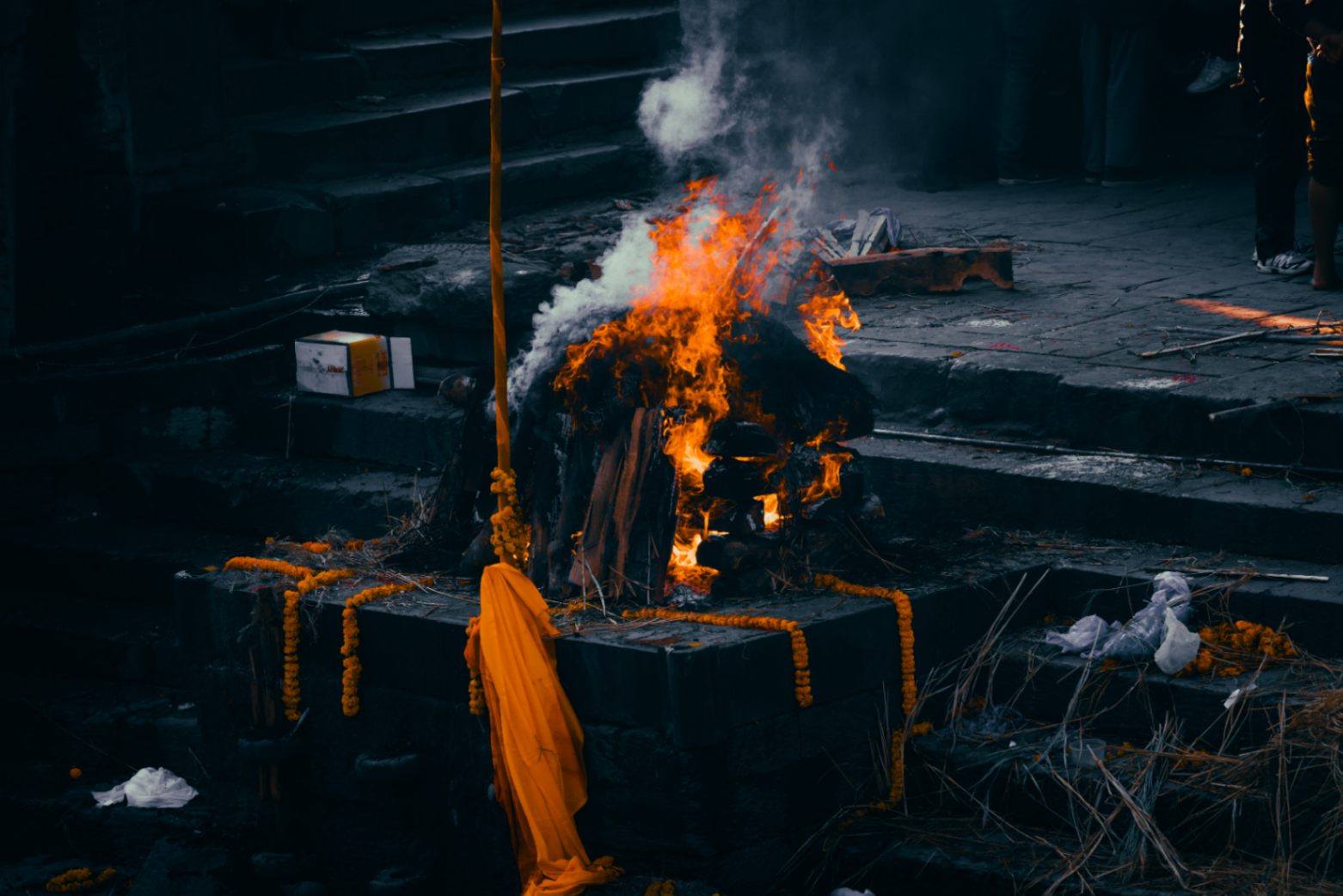
In general, the body is taken to the cremation site and laid on a funeral pyre. Members of the family conduct certain rituals with the direction of priests or other knowledgeable individuals.
This body is then cremated. In Hindu tradition, fire is a symbolic element that signifies transformation and purification. The physical body goes back to the elements that made it. The ceremony is then the final step in the physical pilgrimage.
However, on the spiritual level death is not always seen as complete annihilation.
Rather it is seen in a wider context of life.
This is one of the reasons why the cremation ghats at Pashupatinath are of great importance.
Brahma Naal: The Connection Between Life and Death
The interesting thing about the belief regarding Pashupatinath is Brahma Naal.
Water and liquids offered to the Shiva lingam are poured down to a stone slab next to the Bagmati River, called Brahma Naal, by the Nepal Tourism Board. According to religious beliefs, children of the deceased can be laid there so that the deceased may breathe his last breath at the feet of Lord Pashupatinath.
The belief is connected with the hope of attaining a better spiritual destiny or liberation.
This is very significant in the understanding of the concept that Pashupatinath is a place of crossroads between life and death, and the image of Brahma Naal is especially important.
Beginning and end of Physical life seem to be in the same sacred place.
Why Do Hindus Want to Die Near Pashupatinath?
The belief that one can achieve moksha (salvation) is one of the most powerful spiritual convictions of Pashupatinath.
Moksha is the liberation from the cycle of birth, death and rebirth.
For some Hindu devotees, death in a sacred place is auspicious which is related to Lord Shiva.
Pashupatinath belief is that death at this place brings the soul towards liberation.
Nepal Tourism Board also says that nearby cremation ghats are believed to grant liberation to a person who dies there.
But it should be noted that it is a belief and not a scientifically proven result.
The key is in the faith.
The prospect of spending one's last days near Pashupatinath may symbolize peace, devotion, and the hope for liberation for the devotee.
The Most Powerful Lesson: Life Is Temporary
The message that most clearly comes across to a visitor to Pashupatinath is the concept of impermanence.
In the temple precincts people pray for a long and prosperous life.Families conduct last rites outside for a deceased individual. It can be hard to not notice the contrast.
Bells, flowers, incense, devotees, priests, monkeys and pilgrims will accompany the person as they walk through the temple. After a few minutes, they can be found next to the Bagmati to see a cremation ceremony.
This experience can really change the mindset of travellers. It is life that is precious, just as Pashupatinath says, because it is fleeting.
- Birth is celebrated.
- Life is experienced.
- Death is accepted.
But spirituality helps in the understanding of the transition.
When considering the question, why is Pashupatinath so different from the other temples?
A great number of temples are primarily places of worship.
Pashupatinath is also a living religious scene.
Here, you may see:
- Daily worship
- Statue of a Hindu priest engaged in a ritualistic activity.
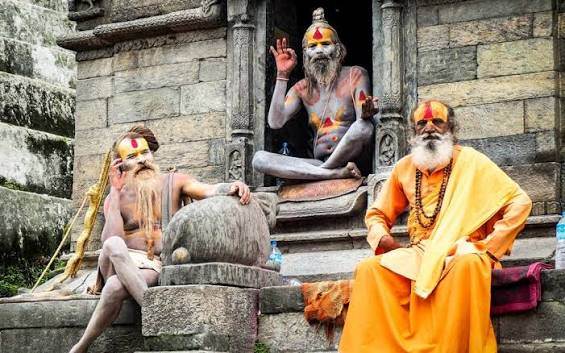
- Sadhus and ascetics
- Pilgrims making offerings
- For families who carry out religious ceremonies.For families who conduct religious services.
- Bagmati River rituals
- Cremation ceremonies
- Temple festivals
- Evening Aarati
- Traditional architecture
- Ancient shrines and monuments are located there.
- The outcome is a feeling of not being in a historical building, but in a spiritual world alive.
Pashupati is one of the significant religious complexes that make up the Kathmandu Valley World Heritage property as acknowledged by UNESCO.
The Main Pashupatinath Temple
Lord Pashupatinath is the central temple. The architectural form of the temple is pagoda-style, with elements that are rich in decoration. The sacred Shiva lingam is kept in the main shrine.
In addition, there are several small temples and shrines in the complex that are dedicated to various Hindu deities. The Nepal Tourism Board reports that the complex also houses temples like Vasuki and Unmatta Bhairav, and many more.
The architecture of the temple is just a small aspect of its importance.
What keeps the site alive each day are the rituals that are performed there.
Is it possible to get entry into Pashupatinath temple as tourists?
It is worth noting that the primary temple is accessible only to the Hindu people. People who are not Hindu are not allowed to enter the main temple.Non-Hindus can view the temple area from vantage points on the opposite side of the Bagmati River, however, and visit much of the surrounding Pashupati area.
It is important that visitors do not try to enter restricted areas, but respect the restrictions.
Photography is not allowed in the main temple complex either.
The rules are a part of respecting the religious importance of the site.
What Is the Best Time to Visit Pashupatinath Temple?
Pashupatinath can be toured all year round. But the experience varies according to time of year and religious year. Maha Shivaratri is one of the most important occasions at Pashupatinath.
On Shivaratri, thousands of devotees and pilgrims flock to the temple. There are also sadhus and ascetics who come from various places, establishing a very deep spiritual environment.
Another important occasion is the Teej, particularly for the members of the Hindu community who go to the temple to pray and conduct rituals.
If you are not looking for a festival experience, then you can enjoy the area without the crowds and enjoy the architecture and every day rituals.
Pashupatinath Bagmati Aarati
The other significant experience around Pashupatinath is the evening Bagmati Aarati.
With the sun setting, lamps are lit next to the river.
The atmosphere is peaceful with devotional music, chanting, bells and prayers.
It is a special ritual which is performed next to the same river that is linked to religious ceremonies and cremation.
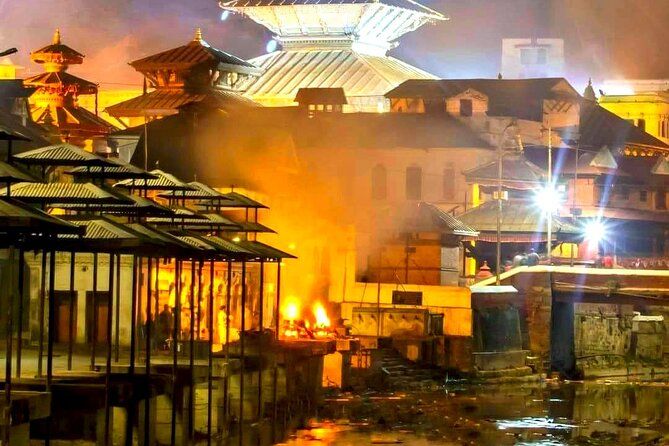
The lights of the evening and the cremations ghats make for a strong contrast when it comes to life and death.The Aarati for visitors could be one of the memorable experiences at Pashupatinath.
What Can Travelers See Around Pashupatinath?
It is not enough to visit Pashupatinath only at the main temple.
There are numerous extra sites to discover in the area.
Guhyeshwari Temple
Guhyeshwari is one of the important Shakti pilgrimage places adjacent to Pashupatinath.
It is related to Hindu legend of Sati and Shiva and is one of the sacred sites in Nepal.
Vasuki Temple
Vasuki Temple is dedicated to the Serpent God Vasuki and belongs to the larger Religious Tradition of the Pashupati. Nepal Tourism Board mentions its association with King Pratap Malla in history.
Shleshmantak Forest
There are also areas of forest in Pashupati which offer an alternative ambiance to the dense atmosphere of the temple.
According to the Nepal Tourism Board, Shleshmantak is a forest area which is opposite to the river, and has relation with the larger sacred landscape.
Bagmati River Ghats
The ghats are one of the most vital locations where Pashupatinath, life, death and Hindu spirituality are intertwined.
How Pashupatinath changes the way you look at death
To many travellers death is a private event. Death is seen at Pashupatinath.
It doesn't exist outside of daily existence.
Families gather.
Priests perform rituals.
Body is burned in a crematorium.
The ashes are ultimately deposited in the natural environment.
This can be a little uncomfortable for someone who comes from a culture where death is typically not discussed.
It's not intended to shock visitors, though. It is a religious belief, which sees death as a natural part of life.Pashupatinath promotes a direct gaze at something that many societies do not talk about. Life and death go hand in hand.
The Spiritual Meaning of Fire at Pashupatinath
The use of fire in Hindu cremation is very crucial.
Fire symbolically is a transformer of the physical body.
The body is no longer considered a constant identity.
Instead, it goes back to nature!
The concept is in keeping with a Hindu belief that the body is impermanent and that the soul or spiritual self lives on beyond any religious belief.
The cremation fire is then not only a destruction, but something more.
It represents transformation.
This is especially significant at a temple dedicated to Shiva, deity of change, destruction, renewal and spiritual liberation.
The significance of Pashupatinath beyond the tourist visa.
Pashupatinath is a tourist attraction in Kathmandu, but it is more than that. First and foremost, it is a sacred place of life. They are attracted here due to the faith in Lord Shiva.
Families come because they have to do important rituals. People visit because it is a holy place.
Some visit to be near the deity during their last days.
People who visit this environment are travelers.
That difference matters.
When you visit Pashupatinath, you are not just sightseeing, you are part of the family.
You're walking into a place where people are worshipping their God and going through one of the most crucial parts of their lives.
Respectful Travel Tips for Visiting Pashupatinath
Pashupatinath is an active religious and cremation platform, if you are a visitor in the role of a traveller, take note of that.
- Wear appropriate clothing and exhibit proper conduct.
- Avoid taking photos of people doing funerals.
- Do not take pictures in the main temple grounds.
- Try not to intrude on grieving families.
- Avoid commercializing cremation services.
- Obey the instructions of the temple officials and security personnel.
- Keep in mind that non-Hindus are not allowed inside the main temple.
- Do not take photos or enter an area unless you are sure of the policies and procedures regarding photography and access.
- Most importantly, do not intrude into the group by talking.
- It is sometimes best to watch Pashupatinath from afar.
The Deeper Message of Pashupatinath
The most significant teaching of Pashupatinath is not about death per se. It's about living well in the knowledge that life is fleeting. It is a reminder to visitors that wealth, status, beauty, youth, and strength are fleeting.
What is still significant is the way a person lives and treats others, their beliefs, and their understanding of their world.
Cremation Ghats is a manifestation of impermanence.
Devotion manifests itself in the temple.
The river symbolizes continuity.
The rituals link generations.
So, the faith in moksha provides spiritual value to the last phase.
This is the reason why Pashupatinath is such an important pilgrimage site for centuries.
Conclusion
After reading this you'll know Pashupatinath is a journey from Life to Liberation. Pashupatinath Temple is among the most extraordinary spot to visit in Nepal, in light of the fact that the pilgrims can see what is rarely experienced in the open.
Here, life and death are not considered as two worlds.
One side by the other.
The people pray inside the temple for life.
Loved ones of the family are bid farewell along the river.
Priests perform rituals.
Devotees light lamps.
The Bagmati is still running.
The spiritual path goes on and on as the Hindus believe.
Hence, Pashupatinath can be interpreted as a place of beginning and ending of life.