

Gosaikunda: Where Sins Wash Away

There are places in this world that feel larger than we are that blend faith and nature. In such a way that you have an experience that tells you, stop, breathe, think. Gosaikunda Lake, situated in the Langtang National Park of Nepal at 4,380 meters, is such a place. For Hindus, this shining alpine lake is sacred. Many, if not all, believe a submersion of Gosaikunda’s glacial lake waters at Janai Purnima. It is believed that it free from a lifetime of sins.

To me, the trek to Gosaikunda was not solely a mountain trek; it was a walk into stories and tradition, and an indication of how faith and nature can heal us in ways that are not always clear or immediate.
Walking the Way to Gosaikunda
Our walk commenced in the town of Dhunche (A village in Nepal), which is an appealing little town with an energetic vibe, where everyone is preparing for something: trekkers putting on boots; locals packing for the pilgrimage, and tea houses focusing on delivering food and warmth. The path begins gently through green foliage of rhododendrons, oaks, and pines before it morphs into a steep climb.
With each step I took, there was essentially a negotiation between my fatigued legs and my heart racing at the thrill of the beauty and peace all around me. As I gained altitude, I felt more solitude. I remember how many times I had to stop along the trail, not just to catch my breath but to take in the view. The villages turned to stone huts, forests turned to rocky ridgelines (line formed along the highest points of a mountain ridge), and the valleys turned to rushing rivers that muted the sound of towns. I will never forget how I would frequently stop to catch my breath and then pause to enjoy the view; glacier-capped peaks of the Langtang Himal and Ganesh Himal against forever clear, deep blue sky.
When I first caught sight of Gosaikunda, it was unreal. The lake, still and so very clear, felt as if it was holding deep and ancient passages to the stories of each pilgrim who has ever offered their reverence to the lake.
Touching the Sacred Water
The air was cold, and the water was even colder, but I was captivated and wondering as I sat watching a swath of pilgrims old, young, local, and out-of-towners meeting the lake in their own respective ways. Stepping in versus plunging into the lake was different for everyone. Some prayed silently, others mumbled quietly to themselves, some were weeping quietly, and some stood rigidly still. They and their beliefs were utterly unwavering.
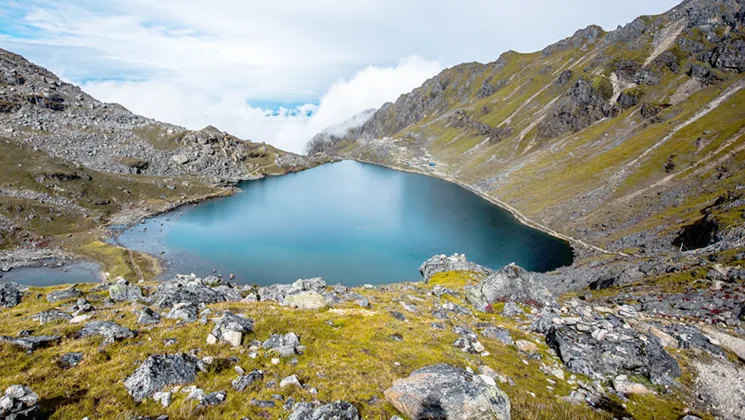
I did not jump like the others did; I just knelt down on the shoreline and wet my right hand in the freezing cold water. I felt the shock of the cold water creep up my body, but almost instantly I felt something strange come over me if It was not just cold water; it was clearly something bigger than that. It felt like a method of purging or letting go.
A local man told me, “Here sins are washed away by the water as well as by the journey”. He was making sense to me. The journey, the troubles, the altitude, all of it warranted the lake moment, and it was seemingly sacred.
Why People Believe in Gosaikunda
In myth, after drinking poison to save the world, Lord Shiva created the lake when he plunged his trident into the mountains. The water retains something of his blessings. Each year, thousands of pilgrims walk for days (sometimes barefoot) to take a dip in the lake on Janai Purnima. They believe it releases them from the burden of their past and gives them a clean slate.
Even if you aren’t very religious, there is no way not to feel something while you are there. Being by the lake will force you to think about what you’ve done, what you currently carry, and ultimately what you want to leave behind.
More Than a Pilgrimage
Certainly, Gosaikunda is not just a religious pilgrimage. It is also an adventure. Trekkers visit Gosaikunda specifically for the views of the Manaslu, Langtang Lirung, and Ganesh Himal, perhaps even catching a glimpse of Himalayan wildlife such as red panda or Himalayan thar, and experiencing the joy of tea houses along the way.
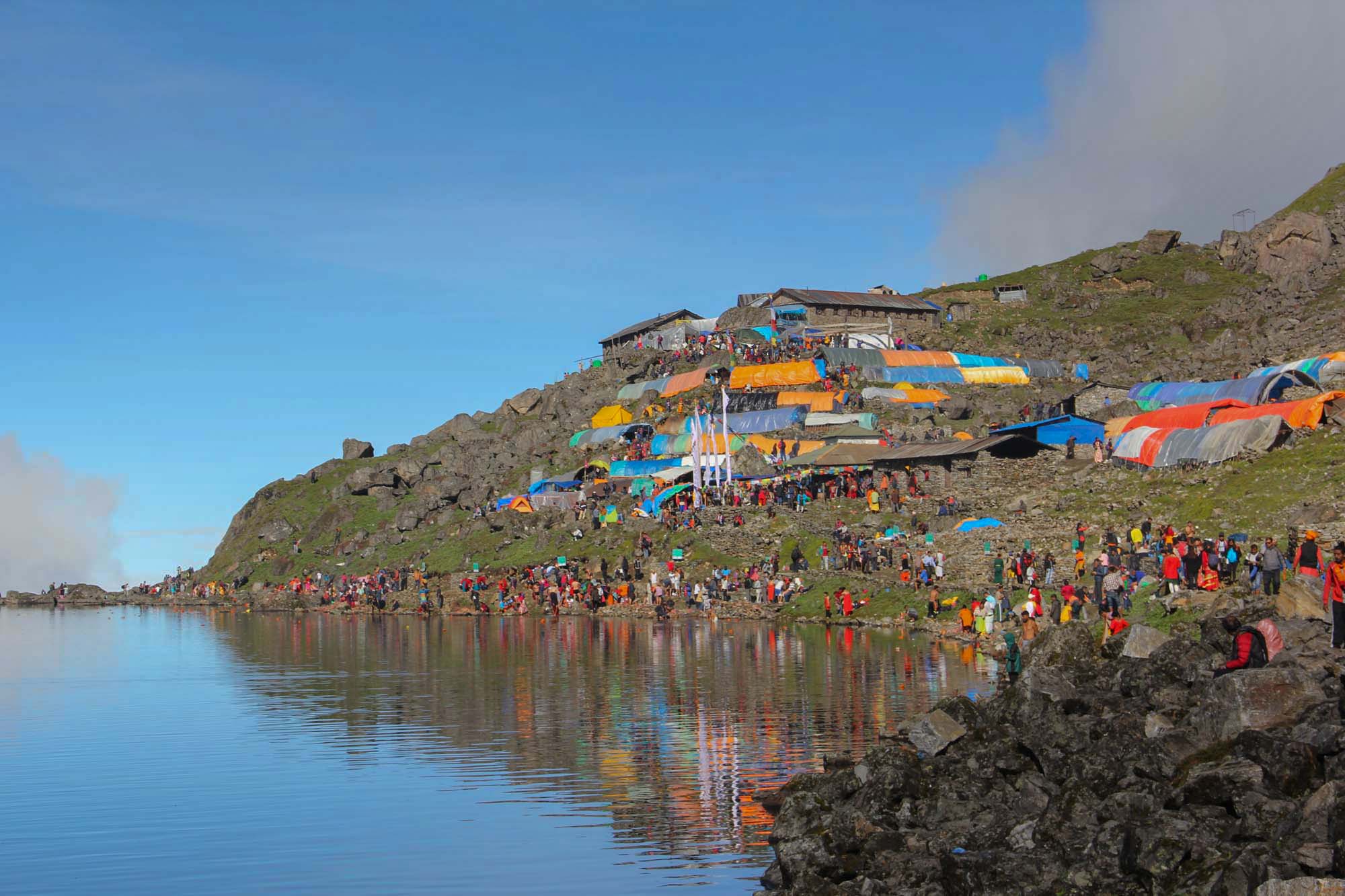
Hiking can be arduous, with long vertical climbs, chilly nights, and unpredictable weather; however, they all add to the experience. This is not just about walking to a lake; it is about walking into a spirituality with nature, experiencing nature in its rawest form.
What I Brought Back
When I departed Gosaikunda, it didn’t feel like I waved a magic wand and had my sins erased. But I felt lighter. The toll of the trail, the silence of the lake, and the collective faith of all those around me helped me see that the journey itself may sometimes be your purification.
Maybe that’s why they call Gosaikunda the place where sins are washed away. Not only what we dunk in the cold water, but what we shed on the climb up and what we return with on the way down.