
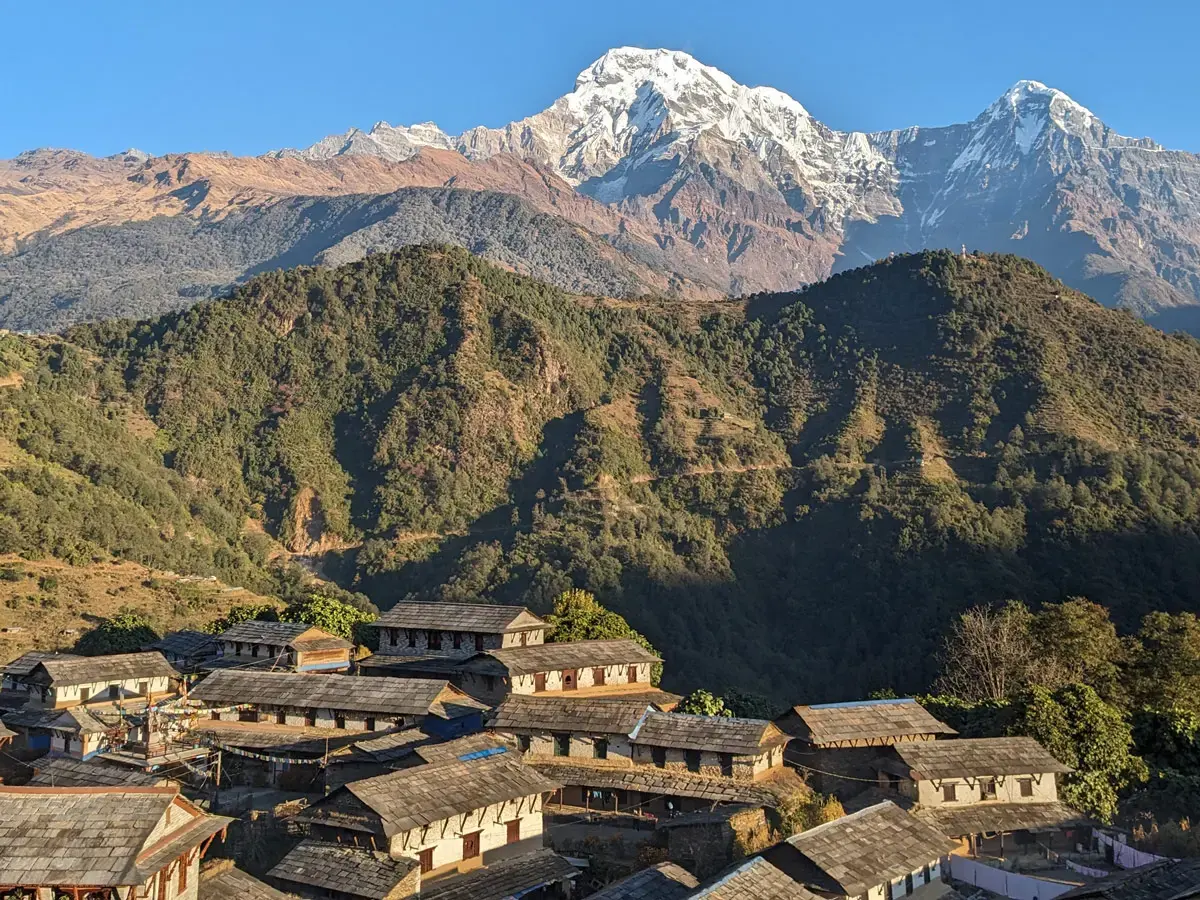
Traditional Villages in Nepal: Experiencing Rural Life

Nepal villages lie in the majestic Himalayas. Nepal villages offer a peek into the very heart of Nepal's rural culture. Each of these villages has a distinctive personality along with a distinctive culture, truly a taste of rural Nepal itself.
As you journey through these villages, you will observe old houses and a strong sense of community among the residents. These places will give you a feeling as if you have turned back the clock. You can observe the culture among rural Nepalese in these places.
While wandering around, you will receive a warm reception by the locals. You will experience the life of the locals and observe all the activities right from the morning chores and so on. You will then have the opportunity to be close to the earth and experience a sense of ‘belongness.’
Key Takeaways
- Uncover Nepal’s cultural heritage and experience country life in traditional Nepalese villages.
- Take part in the vibrant community living and get immersed into the traditions of rural life in Nepal.
- Discuss the unique architectural modes and common residential types of such Himalayan hill stations.
- Learn to appreciate the agricultural traditions and ways of sustainable living associated with Nepalese rural culture.

Understanding Nepal's Rural Heritage and Cultural Significance
The rural villages of Nepal are the heart of this region itself. All history and culture from the time of the independence of Nepal up until the present day is embedded within the villages that are set amidst the breathtaking beauties of the Himalayas, giving an example of how life is conducted within the contemporary world that is so linked with its roots.
The villages in Nepal are much more than just topographic features. The villages are composed of ancient knowledge, religious ceremonies, and staunch beliefs. It starts from the religios ceremonies in Nepal to their agricultural systems in the villages, in that everything has a rich cultural importance in Nepal. The villages have been through tough times but have retained their Nepalese culture in its entirety.
Nevertheless, a family relationship does exist at the base of the rural culture in Nepal. This relationship is the essence of everything that has bound these rural areas together. Each individual within the rural area plays a crucial role in the maintenance of the culture, which represents the entirety of the rural areas in question.
Geographic Distribution of Traditional Villages Nepal Rural Life
The rural villages of Nepal are the heart of this region itself. All history and culture from the time of the independence of Nepal up until the present day is embedded within the villages that are set amidst the breathtaking beauties of the Himalayas, giving an example of how life is conducted within the contemporary world that is so linked with its roots.
The villages in Nepal are much more than just topographic features. The villages are comprised of ancient knowledge, religious ceremonies, and staunch beliefs. It starts from the religios ceremonies in Nepal to their agricultural systems in the villages, in that everything has a rich cultural importance in Nepal. The villages have been through tough times but have retained their Nepalese culture in its entirety.
Nevertheless, a family relationship does exist at the base of the rural culture in Nepal. This relationship is the essence of everything that has bound these rural areas together. Each individual within the rural area plays a crucial role in the maintenance of the culture, which represents the entirety of the rural areas in question.
The use of mud, stone, and timber is a key feature of traditional Nepalese architecture. These materials provide strength and blend well with the landscape. The distinctive slanted roofs, adorned with carvings, efficiently shed snow and rain, ensuring the structures' durability.
The layout of Nepalese villages shows a community-centric approach to rural housing and village design. Homes are clustered together, fostering a sense of togetherness. Community structures, like temples and monasteries, are at the village's heart. They serve as gathering spaces, strengthening the social fabric.
Daily Life and Agricultural Practices
The daily village life of Nepal is directly associated with farming and agriculture. The early rising sun marks the beginning of their day as villagers continue with the work that has been done for generations. This work brings the community together.
A day's work starts with tending to the animals. The cows, goats, and buffaloes are fed and taken care of since they are a great source of milk and meat for the villagers. After that, the villagers head to the fields, where cultivation is done by using traditional methods in growing numerous crops.They plant rice, wheat, and millet, and harvest vegetables and fruits. Farming in the villages reflects the wisdom and abilities of the ancestors. The use of handmade tools and proper water management plays an important role in the life of rural Nepal.
Social Structure and Community Organization
The indigenous villages in rural Nepal are organized based on a unique social setup, which has survived through the centuries. Central to it is the hierarchy of the village, an elaborately articulated system defining function and responsibilities within the community.
They consider village elders as highly regarded and the wisest among them all for the experience and wisdom they acquire. They hold an important place in decision-making. They protect the rural social norms for maintaining tradition and guiding the society through difficult times.
Other important roles involve the religious leaders, healers, and artisans. They keep the spirit of the village going. All of these combined ensure the continuity of a strong community. Family ties are also one of the important elements here in the villages. A number of families stay together; this shows the strong bond within them. This helps in decision-making, resource sharing, and maintaining cultural traditions.
It is these villages that have been able to develop a strong social system. Moreover, it describes life in rural Nepal, adding to the lives of individuals in these places.
Handicrafts, Local Industry, & Products
Experience a step into the colorful villages of Nepal, where you will have the chance to experience the wonderful Nepalese crafts yourself. There is a close relation between the cultural heritage, and that is displayed through the handicrafts created by the villagers. Weaved fabrics, handicraft, and metal craft help the artistic heritage of the country stay alive while along with that, the economic status of the village improves as well.
The skilful weavers weave colorful tapestries and carpets. The skilful potters shape the clay into beautiful and useful things. These individuals use ancient skills to keep them alive, raise their families, and make their country of Nepal a colorful one.

Metal crafting in such villages is the religious heritage of Nepal, from small detailing of jewelry to religious articles. They go beyond being adopted as a token of love by the natives and are sought after by foreign nationals to be taken back as an element of this heritage.
By promoting Nepalese handicrafts, they support and add to the contributions made towards the economy of this small village. Furthermore, they also support and add towards maintaining traditions of a bygone era in Nepal.
Food Culture and Culinary Traditions
Nepal’s villages are heaven to those who want to discover culinary pleasures associated with Nepal. Nepal’s villages feel deeply in love with their kitchen ingredients and village recipes. Nepal’s villages have succeeded to hand down their recipes from their current generations to their next ones.
Such dietary practices in these villages are largely connected to nature itself. It is because the culinary practices of these people are indicative of where they belong because of the availability of seasonal foods. Every dish in this village tastes like it belongs here because of home garden spices or grain from within those lands.
Having meals in these villages is more than eating, although this seems to be the only visible aspect of this experience. These sessions involve the whole community coming together, and they get an opportunity to participate in the preparation and relishing of this particular traditional food, including the ancient ways of preparing momos and dal.

Challenges and Changes in Rural Nepal
Large challenges are imminent for Nepal's traditional villages amidst the country's rapid modernization. Rural development and urbanization have come to reform the phase of village life. Though some view new opportunities, many struggle to keep their culture and way of life.
Economic pressures are typical sources of village challenges. Young people are attracted to cities due to the possibilities for better jobs and earning money. Thus, the social structure and agrarian ways of a community are changed as younger people leave and the community is left with more of its older folk.
In this process, modernization establishes new technologies and amenities. All of these changes may lead to a loss in traditional knowledge or skills.The rural Nepali has to balance the change and continuity of their cultural identity. Rural development attempts to focus on meeting the needs of villages, but the pace of change is challenging to handle. This directly creates tension between old ways and new ones. Community-based initiatives to enhance local industries, encourage green farming, and pass on traditional culture to younger generations are afoot. These efforts make rural life strong while Nepal grows.
Tourism Impact on Village Life
The rural tourism that has developed in the context of Nepal has significantly impacted rural society. Although rural tourism has brought economic and cultural exchange, there are problems that exist as well pertaining to rural tourism, cultural exchange, and ecotourism.
However, there is a positive side to it. Tourism provides an exclusively earning avenue for the villagers. Now, these villagers can opt for homestays, sell their handicrafts, and accompany tourists as a guided tour participant. It significantly reduces their levels of poverty. Furthermore, locals and foreigners will be able to understand Nepal’s cultural exchange in a much clearer manner.
However, this increased rate of tourism also results in disruption to the rural way of life. Changes that come with modernization and other cultures introduced to this region result in an alteration of the lifestyle of those living there. This impacts the culture, architectural design, as well as agricultural practices of the villagers. During other instances, the best experience of a holiday visit may be missed when an adaptation to tourism culture is adopted.
However, there is hope for the future. Eco-tourism programs may assist in this regard. This project aims to mitigate any adverse impact that tourism has brought about in the village.
Preserving Traditional Village Heritage
The age-old Nepalese villages are facing a huge problem because of urbanization and modernization. The government and NGOs as well as people's efforts are doing wonders to preserve the villages. Their efforts are to preserve their cultural heritage for the future generations.
The preservation of cultures protects unique buildings, crafts, and agricultural practices of such villages. The rural conservation initiatives ensure that the natural beauty and ecosystems that sustain life in villages are maintained. The prime aim of rural conservation is preservation of heritages keeping Nepal’s rural heritage alive.

It’s very difficult to achieve both development and preservation. But it’s the need of the hour if such communities have to be kept alive and in touch with their roots. With proper support for sustainable tourism and the development of the villagers, Nepal can preserve its rural heritage. Thus, it will always be an integral part of Nepal.
Conclusion
On exploring rural Nepal, one can witness a world of wonder. The villages provide us with a glimpse of the beauty of Nepal’s heritage. They blend architecture with nature, thus preserving cultural traditions.
Many things have also been learned about the strength of Nepalese people. They were able to maintain their way of life despite major changes. This indicates the importance of their experience in Nepal, appreciation of village culture, and way of life. From these villages, we witness how important these villages actually are. The attempts to preserve these traditions illustrate Nepalese spirit. From living in rural Nepal, we learn from its past and manage to preserve its culture alive.
FAQ
What is distinctive about a traditional Nepalese village?
Traditional villages in Nepal demonstrate the rural culture of Nepal. They showcase the cultural richness of Nepal and the variations in Nepal’s architecture. Such villages are valuable for conservation.
In what ways can tourists experience rural life conditions in Nepal?
Visitors can experience rural life by visiting traditional villages. Here, they can witness rural lifestyle and interact with the people. In this manner, they will be able to learn the culture and traditions of the Nepalese people.
What is so important about Nepal's rural heritage?
The rural culture of Nepal holds immense importance in forming Nepal’s identity. The traditions and beliefs are maintained through these communities. These contribute to the cultural diversity of Nepal.
Where are some traditional villages to visit in Nepal?
Standard villages exist in the Terai, hill, and mountain areas of Nepal. Each of the places has its geographical and cultural settings.
What are the architectural features in Nepalese villages?
Architecture in Nepalese villages is maintained using traditional materials and designs. The houses and public amenities are a reflection of the environment and resources available in that region.
What may be some differences between living in a Nepalese village and living in a city?
The life in Nepal's rural area has a normal seasonal pattern. The people of rural Nepal have been practicing conventional farming. They also have domestic animals. Agriculture in Nepal is rich in tradition.
What are the traditional craft skills in Nepalese villages?
The villages are known for their weaving, pottery, and metalworking skills. Weaving, pottery, and metalworking are extremely important for the economy.