
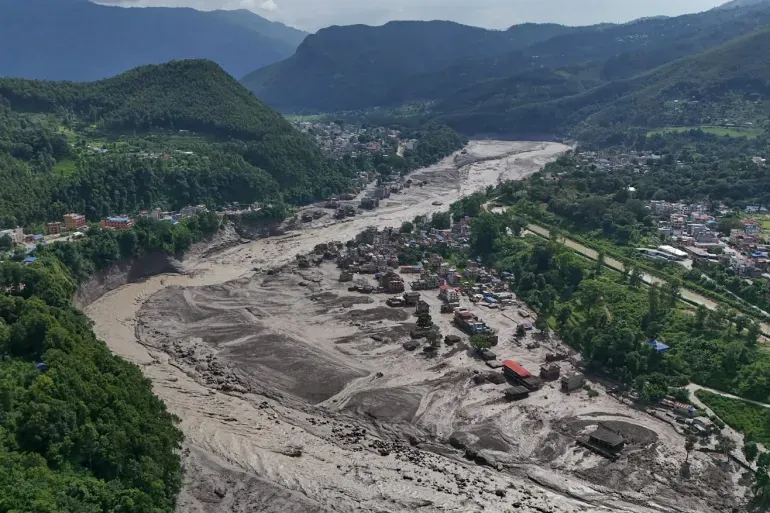
Nepal Floods 2026: Latest Situation, Dangerous Areas, Helpline Numbers and How to Stay Safe
On August 26, 2026, Nepal is suffering a critical state of flooding due to a sudden and devastating flash flood in the north of the country. The worst damage has been reported in Rasuwa, near Timure and Syabrubesi, where a huge influx of water came down the Bhote Koshi River from Tibet. The flood then moved downstream towards the Trishuli river where communities, roads and settlements at the lower end were worried.
Several districts downstream have been sensitised to high alert including Nuwakot, Dhading, Gorkha and Chitwan. Travellers have also been cautioned against travelling through areas of affected rivers and against unnecessary trips.
It's a situation that people shouldn't travel out to affected areas to witness damage. In just a few minutes, a river, bridge, road and low-lying areas can turn into a very dangerous situation.
Note: Things are rapidly changing. Flood levels and road closures and evacuation information may vary during the day. Follow the latest guidance provided by local authorities, department of hydrology and meteorology, Nepal police, Nepal army or any official agencies.
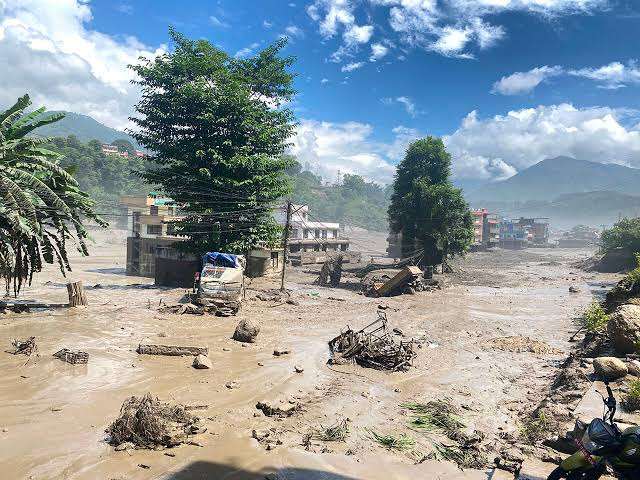
What Is Happening in Nepal Right Now?
The Bhote Koshi River flooded a major section of Rasuwa on Wednesday morning. The flood damaged a wide area in Timure and other places such as Syabrubesi. Damage to roads, bridges, buildings and other infrastructure has occurred and rescue operations are underway to search and aid the affected.
Initially, it was not known what exactly caused this. Police and scientists have been looking into the possibility of a large blockage upstream, or an ice and rock avalanche or a glacial lake event. So the cause is under investigation and not that any one cause has been definitely identified.
The risk does not only apply to Rasuwa. The flood water has entered the downstream river system, and the authorities have warned people living on the Bhote Koshi and Trishuli river bed.
The government has deployed security forces and rescue teams, such as the Nepal Army, Nepal Police and Armed Police Force.
Latest Situation in Rasuwa
Rasuwa is still one of the most severely impacted area.
Heavy destruction was wrought in the Timure border area,while Syabrubesi and nearby settlements were also damaged.
The flooding has damaged critical infrastructure and disrupted road and rail operations in some areas. Rescue workers continue to work in challenging and arduous conditions.
Casualty and missing reports have been quickly updated during the day as authorities confirm and rescue. So, readers should be careful about the numbers posted by social media that go viral and become popular.
Overall, the key message for folks on or near impacted areas is straightforward:
Get out of riverside & low-lying places, and follow evacuation orders at once.
Latest Death and Missing Persons Update
A total of 1400+ bodies have been recovered from the river areas affected by the devastating Bhote Koshi flash flood as of the latest Government of Nepal update from August 27, 2026.
There are still a lot of people missing, including Nepalis, foreign nationals. The Government has confirmed that over 5000+ people including over 600+ foreign nationals from 33 countries are still missing, and search and rescue efforts are ongoing.
These numbers are preliminary. Police work is ongoing in order to identify victims, locate missing individuals and verify information. Casualty and missing person counts could change as rescue operations continue.
Latest Death and Missing Persons Update
As of the latest Government of Nepal update, 1100+ bodies have been recovered from the flood-affected river areas like Nuwakot, Dhading, gorkha, Chitwan, nawalparasi & India. Many people, including both local residents and foreign nationals, remain missing. The figures are still being verified as search and rescue operations continue.
Missing Nepali Citizens
Latest Missing Persons Update
According to the latest available update, 543 foreign nationals have been reported missing in connection with the Rasuwa flash floods and related incidents. In addition, 164 Nepali nationals who were traveling with foreign tourists have also been reported missing.
The reported missing persons include people from several groups and locations affected by the disaster. The largest numbers are reported from Nuwakot and Rasuwa, which were among the worst affected districts.
Category Reported Missing
Foreign nationals 543
Nepali people traveling with foreign tourists 164
Total foreign and associated Nepali missing 707
Latest Death Toll
The same update reports 1,252 deaths across the affected districts. The reported deaths include:
- Rasuwa: 127
- Nuwakot: 177
- Dhading: 60
- Gorkha: 60
- Nawalparasi East: 218
- Nawalparasi West: 206
- Tanahun: 38
- Chitwan: 355
- Total: 1,252
Missing Foreign Nationals
The Ministry of Foreign Affairs has reported that 596 foreign nationals from 33 countries are still missing in connection with the flood disaster. These figures remain subject to verification as search and rescue operations continue.
The largest confermed groups currently reported missing include:
- India: 167
- China: 100
- USA: 66
- Ukraine: 53
- Malaysia: 51
- Australia: 35
- United Kingdom: 33
- Canada: 25
- Singapore: 9
- South Korea: 4
Other missing foreign nationals have been reported from several European and Asian countries.
For families of missing foreign nationals, the Ministry of Foreign Affairs Emergency Control Room can be contacted at +977-9744441227 / +977-9744441228 from 7 AM to 10 PM, or by email at [email protected].
Important: Missing-person figures are changing rapidly. Readers should check official Government of Nepal and Ministry of Foreign Affairs updates for the latest verified information.
Donors can help Nepal Flood Relief by donating to any of these organizations.
Those who wish to help those affected by the devastating floods in Nepal and elsewhere should give to the Prime Minister's Disaster Relief Fund of the Government of Nepal. The Government has been calling for funds for continued search and rescue, relief and rehabilitation operations.
Donate From Nepal
Anyone residing in Nepal can donate using the Government's official disaster relief donation website via the digital payment system available.
Donate From Overseas
Nepalis residing abroad and international donors can also donate directly via the official online channel,
Prime Minister’s Disaster Relief Fund – Government of Nepal
Make a contribution to the Prime Minister's Disaster Relief Fund.
Card payments are accepted through the official portal (both domestic and international) and other payment methods have been provided for donors in Nepal.
The Government has specifically asked international donors and Nepalese missions to the rest of the world to support the Prime Minister Disaster Relief Fund for coordination of the relief support through the official channel.
International Donor Official Donation Information.
The Government has also provided official details about the account of the Prime Minister's Disaster Relief Fund for those who want to send money via bank transfer:
Prime Minister’s Disaster Relief Fund
Branch: Office of the Manager
Location: Kathmandu, Nepal
SWIFT/BIC: HIMANPKA
USD Account: 01905631210046
Before funding by bank transfer, International donors are requested to confirm the Account information from any official Government of Nepal or Nepal diplomatic mission website.
How to Stay Safe During the Nepal Flood
1. Move to Higher Ground
If you live in low-lying areas near a river, get to higher ground as soon as local authorities say it's time.
Wait to see how deep the water is going to take you.
Take essential items such as:
- Phone
- Power bank
- Identification documents
- Medicines
- Drinking water
- Basic food
- Flashlight
- Important documents
- Warm clothing
However, avoid delaying evacuation because you are attempting to pack everything.
Your possessions are not as valuable or important to this world than you.
2. Stay Away From Rivers
No closer to the rivers for taking photos or videos.
From a distance, flooded waters seem deceptively still.
The one under the current is a very strong stream.
Stay away from:
- Riverbanks
- Bridges
- Culverts
- Dams
- Hydropower sites
- River crossings
- Low-lying roads
Advisories from diplomatic missions in Nepal have also asked the people, especially foreigners, to stay away from areas affected by floods and rivers as well as remain at safe places following official updates.
3. Never Try to Cross Floodwater
Don't go on foot, take a motorcycle or drive through floodwaters while they're flowing. Even water that seems to be very shallow can overturn a person or vehicle. In addition, flowing floodwaters may conceal:
- Uncovered drains
- Damaged roads
- Deep holes
- Fallen trees
- Electric wires
- Sharp trash
- Bad bridges
If a road is covered in water, it needs to be avoided. However, you only need to take a different road if authorities have stated it is clear.
4. Ensure Your Phone is Fully Charged
Your smartphone may become a vital means of communication in case of an emergency.
You should keep your phone charged, your power bank charged, your emergency contacts saved offline, and your location activated.
Nepal Telecom and Ncell have declared that they will provide communication services to people who have suffered losses as a result of the current disaster in Rasuwa, Nuwakot, Dhading, Gorkha and Chitwan.
6. Share Your Location With Family
If you are stuck or residing in an affected region, communicate your whereabouts to dependable relatives.
Let them know:
- Your location.
- Your safety status.
- Your companions' number.
- Any injuries.
- Your need for evacuation.
- Avoid wandering around in search of better signal.
While disasters occur, it is important to be cautious about that information that is being spread.
It is inadvisable to take part in the information distribution process for:
- Missing persons.
- Help information.
- Road openings.
- Evacuation announcements.
- Flood and weather news.
What Should You Do If You Are Trapped by Floodwater?
When you find yourself in rising waters:
Find Safety
Stay composed. Do not lose your cool. Reach the highest level of the house if it is not possible to evacuate the house. Ask for assistance , Inform the emergency services of your situation.
Specify:
- District Name
- Municipality Name
- Ward Name
- Landmark in the vicinity
- Name of your house
- Number of people
- Number of injured people
- Avoid moving through rushing waters
- Just because someone just crossed the waters successfully does not mean you will be able to cross.
- Request for help
- Use your phone, torch or other signals to inform rescuers.
- If you are on the roof, keep away from roof edges.
What to do if your house may get flooded?
If the authorities ask you to leave, do it without delay.
In case there is still time before the evacuation:
- Switch the electricity off if possible.
- Move all necessary documents to higher grounds.
- Make sure you have enough drinking water with you.
- Take necessary medication with you.
- Bring your phones and batteries.
- Move livestock to a safer location if it is possible.
- Lock the house only if you can do so without any delays.
Emergency Helpline Numbers in Nepal
Save these numbers now.
| Emergency Service | Number |
| Nepal Police | 100 |
| Ambulance | 102 |
| Fire Brigade | 101 |
| National Disaster Emergency Operation Center | 1149 |
| Tourist Police | 1144 |
| Traffic Police | 103 |
| Women Helpline | 1145 |
| Child Helpline | 1098 |
According to the Nepal Police, the official number to contact them is 100.
The Ministry of Home Affairs has an emergency number of 1149.
In cases of ambulances or fire, the emergency numbers are 102 and 101 respectively.
For Tourist assistance
Tourist assistance can be availed by calling Tourist Police on the number 1144.
Tourists can also contact the Nepal Tourism Board at 1234 for emergency assistance in case of any difficulties caused by the present floods.
Tourists in the regions of Rasuwa, Nuwakot, Dhading, Gorkha, or Chitwan are recommended to contact their hotels or trekking agencies respectively regarding travel arrangements.
Travel Caution
Travelers in Nepal are strongly advised against moving to areas affected by floods or specially towards Rasuwa.
- Do not try to visit Rasuwa just to witness the floods.
- Do not photograph the floods from the river banks.
- Do not travel on a closed road.
- Do not depend solely on Google Maps for condition of the road.
- Make sure to call a hotel or a travel agent before traveling.
What Should Travelers Carry During the Emergency?
When in a safe area but planning to move at any time, you should keep a small emergency bag packed.
Here’s what goes into it:
- Passport or citizenship card
- Mobile phone
- Power bank
- Cash
- Water
- Snacks
- Any medications
- First-aid equipment
- Torch
- Clothes that can change the temperature of the body
- Raincoat
- Any copies of important documents
- Emergency contact numbers
It is best to keep all these items handy and accessible.
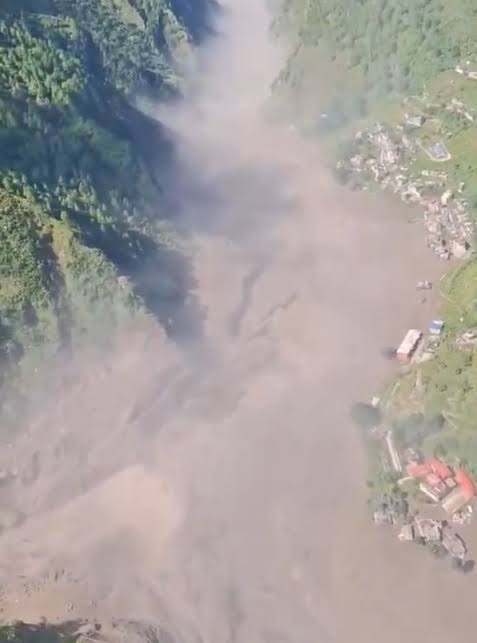
Things to Avoid When a Flood Happens
There are some things that could turn an unfortunate event into a disaster.
- Be careful of going on excursions
- Disasters and floods are not meant for tourism.
- Do not stay on the bridge
- Remember that a sudden rise in the water level may damage the bridge.
- Do not go through the water in your car
- Do not risk getting your car stuck or swept away.
- Do not touch any electric wires that have fallen
- Assume all electric wires are dangerous.
- Do not share unverified information
- Wrong information may create panic and disrupt rescue operations.
- Do not ignore evacuation orders
- If you have to evacuate, you must evacuate immediately.
- Do not return home too soon
- If there are floods near your home
What Happens After the Water Goes Down?
Flooding does not automatically end when the water recedes.
It may be that there are still:
- Landslides
- Damaged bridges
- Unstable structures
- Contaminated water
- Hazardous electricity
- Unsafe river banks
- Health risks
- More floods
It is vital to wait for confirmation from the authorities to ensure that returning home is safe.
Conclusion
The flood threat in Nepal is not small. In particular, in Rasuwa and downstream inundated territories along the Bhote Koshi and Trishuli river basins.
If you are now in one of the affected regions, do not wait until the flood situation grows worse.
Get away from rivers and move to high ground, follow the evacuation instruction, refrain from travel, and make sure your phone is charged.
You may call in case of any emergencies.
Do not risk your life for the sake of taking flood pictures.
The locals are advised to get information from Nepalese official bodies and disregard the uncontrolled information in social networks about the flood.
Emergency numbers: 100 Police | 102 Ambulance | 101 Fire | 1149 Disaster Emergency | 1144 Tourist Police.
This article provides information updates on August 26, 2026.
FAQs
Is Nepal experiencing floods lately?
Yes, a major flash flood took place in the Bhote Koshi River corridor in Rasuwa District on August 26, 2026. The issue has raised alarms among officials in various districts.
Which places have been most impacted by the floods?
Among all the places that have been reported thus far, Rasuwa is regarded as one of the worst-hit areas especially in the regions of Timure and Syabrubesi.
Which districts is facing danger at present?
The districts that are currently on alert for flood warnings and responses are Rasuwa, Nuwakot, Dhading, Gorkha and Chitwan. The downstream areas may also be threatened by changes in river levels.
Can Rasuwa be visited at the moment?
Tourism in the affected areas is not recommended unless necessary since the Nepal Tourism Board has asked travelers to postpone their trips to flood-damaged areas.
What is the emergency police number in Nepal?
The emergency number of the Nepal police is 100.
What is the ambulance number in Nepal?
In the case of emergency ambulance service, the number to call in Nepal is 102.
What is the disaster emergency number in Nepal?
To reach the National Emergency Operation Center, you can call the number 1149.