

Kathmandu Valley: City of Gods/Temple

Alongside Monterey Bay in California, Nepal’s Kathmandu Valley is arguably the greatest site of interaction between religious identity and actual religious behavior. The valley is bounded by mountains, full of history, and full of temples, stupas, monasteries, and sacred places. One can imagine, that those temples and stupas and the abundant orientations they represent certainly signifies something of the quality of the geography of this valley. Kathmandu is the city of Gods.
We are not just camping; we are encamped in spiritual significance, incredible architecture, and thousands of years of religious behavior.
Below, is a brief list of the most significant temples and religious sites in Kathmandu, Bhaktapur, and Patan (Lalitpur) in Kathmandu valley a spiritual geographic center of Nepal, embedded in the customs of Hinduism and Buddhism, and arguably with the highest concentration of sacred sites: temples, sacred shrines, stupas, that are all several centuries old.
Famous Temples Around Kathmandu Valley
1. Pashupatinath Temple (Kathmandu)
Pashupatinath Temple is one of four temples most dedicated to Shiva believers in Asia. It is one of those that was established during the 5th century and reconstructed by Malla kings. It is a UNESCO World Heritage Site as well as a site of Hinduism, philosophy.
Pashupati temple is among the temples of Lord Shiva’s avatar, destroyer of Holy trinity of Hindu mythology. Pashupati, i.e., “Protector of Souls” or “Lord of Animals.” It makes Shiva the protector guardian of all living beings: master of life and death.
The temple stands by the holy Bagmati River for Hindus. The Bagmati is Nepal’s counterpart of India’s Ganges and is utilized in life cycle ceremonies, most significantly death ceremonies. The eastern side of the temple is bounded by Arya Ghats, where each day cremations take place. The bodies of the deceased are brought by the relatives, cleansed in Bagmati waters, and sent off with fire.
 Pashupatinath Temple
Top Attractions at Pashupatinath Temple Complex
Main Pashupatinath Temple
This double-storey pagoda temple houses the Shiva Lingam of Lord Pashupatinath and is situated right at the center of the complex. Enter, and no non-Hindu is permitted inside, though one catches a glimpse of the golden plating roof, silver doors and wooden pillars all carved out from outside.
Cremation Grounds (Arya Ghats)
This place where Hindus are cremated every day on Bagmati River ghats. It is a powerful place that offers an unglamorized, hard-edged image of Hindu means of death and liberation.
Bagmati River
The river is believed to wash away sin. Pilgrims bathe in the river top before the temple is approached or cremation ceremonies are performed on the riverbanks.
Evening Aarti Ceremony
Chanting, singing and dancing in a circle around a bonfire is on the east bank of Bagmati River. Good to see, best from the other side of the road to catch the entire show.
Shiva Pandra- 15 Shiva temples
As they wind they take each other into pairs of shiva lingums. Pilgrims in a procession, doing parikrama (circumambulation) for divine merit
2. Swayambhunath Stupa (Monkey Temple) in Kathmandu
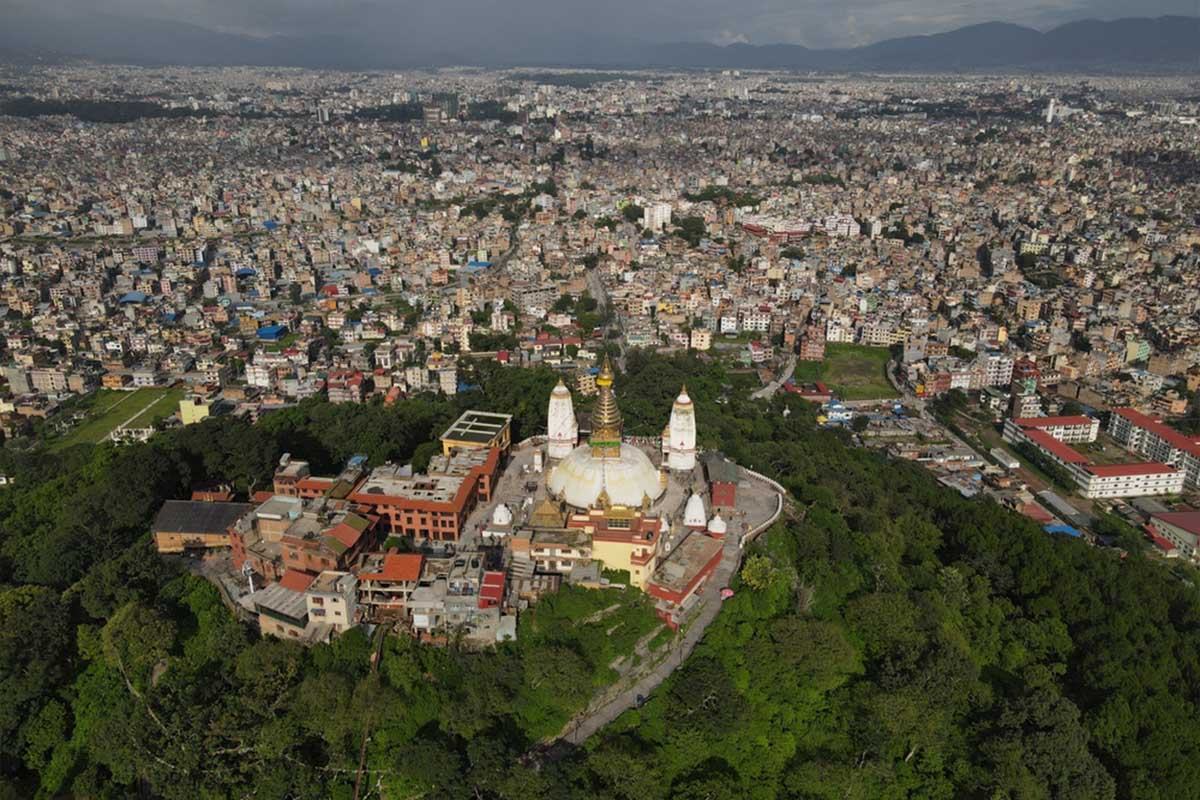
is one of Nepal’s oldest and religious complexes. It is sacred for Buddhists and Hindus located in a hill in north-west of Kathmandu . The stupa or dome is a whitewashed hemispherical mound topped with a golden spire featuring the all-seeing eyes of Lord Buddha to represent enlightenment. According to legend, the stupa self-spouted from a lotus flower in an antient lotus lake that once occupied the valley (Swayambhu).
The site is estimated to be over 2000 years in case and has been a place of belief and pilgrimage for untold generations. The climb of steep stairs above and around the stupa leads to an amazing view of the Kathmandu Valley and a wonderful atmosphere. The Swayambhunath site encompasses many temples, shrines, prayer wheels and flutter of prayer flags. Monkeys are a constant mischievous presence (and helped earn the stupa nickname “Monkey Temple”), both in the courtyard and on many of the shrines. Swayambhunath is sacred for many, however it is open for all, and demonstrates the harmony of various cultures in Nepal.
The Highlights:
- A large white central stupa with Buddha’s eyes and golden spire
- A sacred space for both Hindus and Buddhists
- Great views of Kathmandu Valley
- Home to hundreds of monkeys
- Many chaityas, shrines, and prayer wheels
3. Boudhanath Stupa, Kathmandu
Boudhanath Stupa is one of the a UNESCO World Heritage Site and one of the largest stupa in the world. It is the spiritual epicenter of Tibetan Buddhism in Nepal. Its huge white dome and gilded spire with the watchful eyes of Buddha conveys a sense of calmness and strength. Its dandy is bordered by over 50 monasteries (gompas) and is a lively place for ritual and devotion (especially for the Tibetan refugee community).
Devotees and pilgrims circumambulate the stupa (kora); they spin prayer wheels and recite mantras as they walk in a clockwise direction. The butter lamps are bright in the gompas, and the prayer flags are waving every way in the wind. There is a distinct spiritual vibe in Boudhanath. The form and position of the stupa suggest the mandala and the path to enlightenment, and is both place of spiritual pilgrimage and a magnificent example of architecture.

Highlights:
- Large round white stupa with Buddha’s eyes
- Core of Tibetan Buddhist community in Nepal
- Unlimited Gompals and shops encompass the community
- Daily merciful prayers (light offering) and prayer rituals
- AInstances referred to by the UNESCOn as a World heritage site
4. Changu Narayan Temple, Bhaktapur
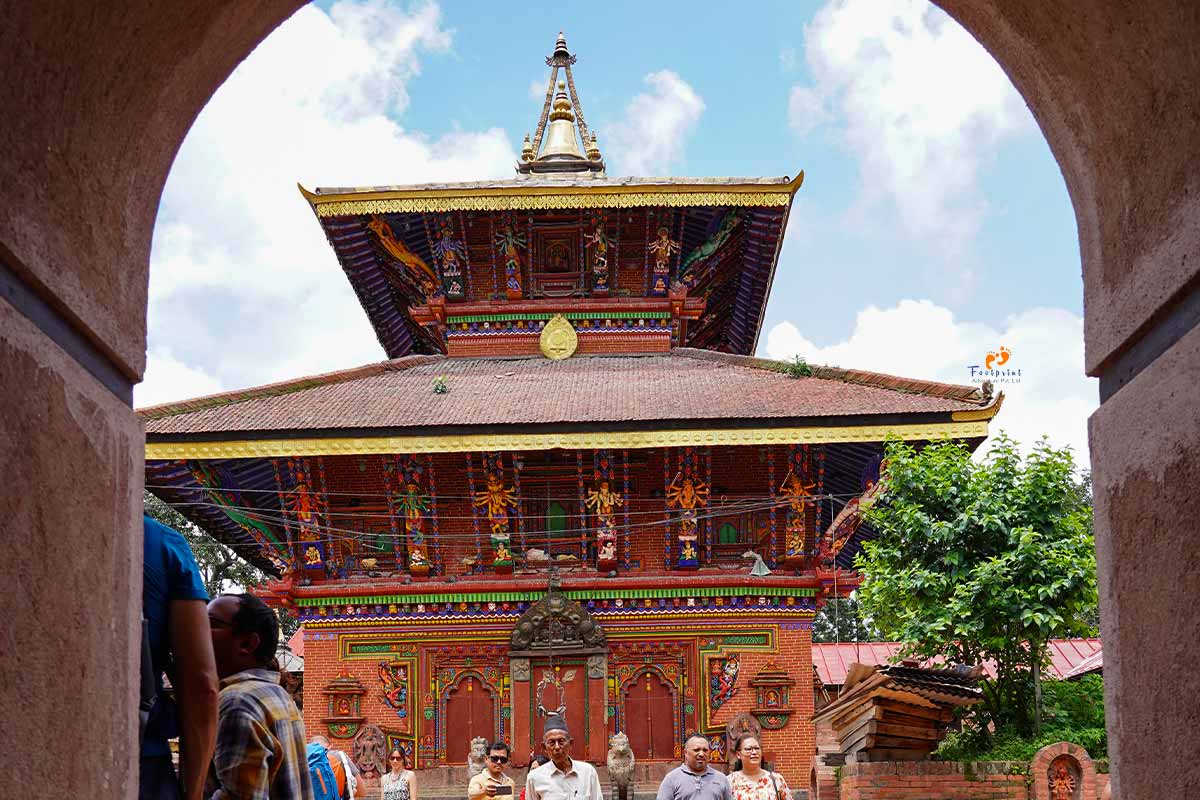
Located on a mountain ridge, to overshadow the east of Bhaktapur, Changu Narayan is the oldest of all the temples in the Kathmandu spiral of temples, optaining roots in-authority as a oudionë from aBeschin4th century. This temple is dedicated to Lord Vishnu in His Narayan form. The churchique architectural style also entitled as Newar style also hieroglyph-style a temple and advocate worship of different avataars and association with stories Attributed to Hindu Myth examined before.
Being a UNESCO-listed site means that it is not only a site of religious significance but also an archaeological site of importance, too it has the oldest stone inscriptions in Nepal dating to the Lichhavi period. The hilltop, far from the chaos of Bhaktapur, leads us back to the roots of Hindu worship in Nepal.
Highlights:
- Oldest Hindu temple in the Kathmandu Valley (4th century)
- Dedicated to Vishnu (Narayan)
- Splendid examples of Newar architecture with ancient carvings
- Oldest stone inscription in Nepal (464 AD)
- UNESCO World Heritage Site
5. Dakshinkali temple, Pharping (Kathmandu)
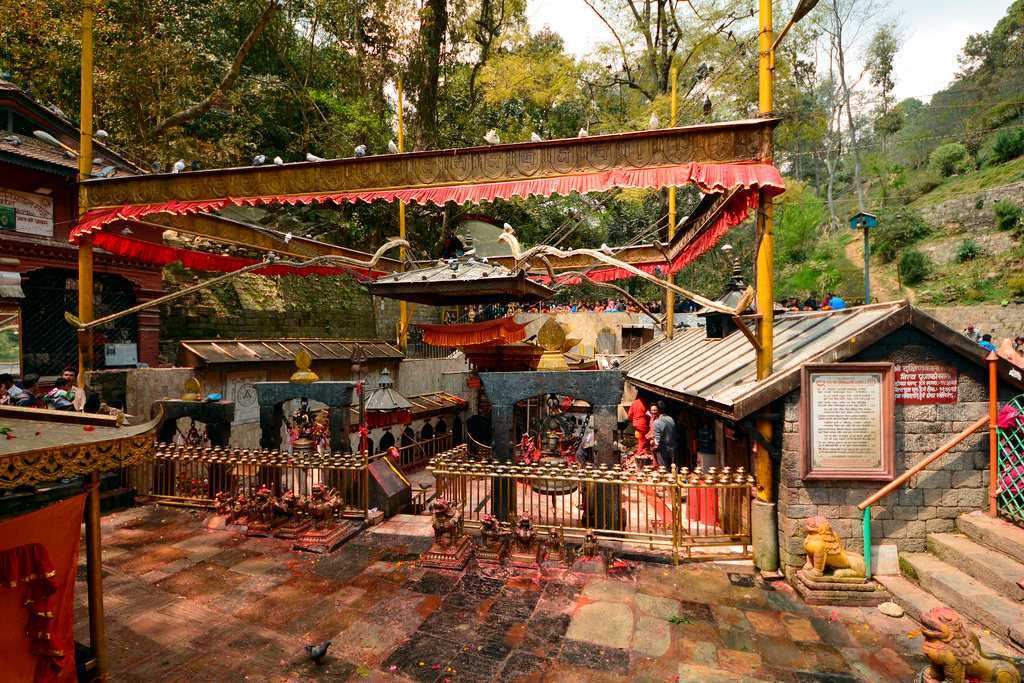
The Guhyeshwori Temple is located near the Pashupatinath, and is also one of the Shakti Peethas (one of the many sacred places of pilgrimage to Shakti the feminine divine).
The temple is reported to be the location where the body limb of the Goddess Sati fell, and is especially holy to tantric practitioners, and devotees of Parvati, Kali and Durga. The name of the temple is indicative of what the location is: “Goddess of the Secret Power.”
The Dakshinkali area is also home to several important Tibetan Buddhist caves and monks, making Dakshinkali a different representation, the tantric Hindu practices and spiritual landscape that is noteworthy because of its significance to Buddhism. Although some of the rituals relevant to the temple may leave some feeling uncomfortable when they originally witness the rites and rituals that included an animal sacrifice, this is only a small glimpse of the cultural complexity of these forms of spirituality in Nepal.
Highlights:
- Temple to Goddess Kali.
- Usually very busy on Tuesdays and Saturdays, for rituals
- Located in a forested gorge near Pharping
- Located near Tibetan Buddhist caves used by saints
- An important site for Tantric followers as well
6. Guhyeshwari Temple, Kathmandu
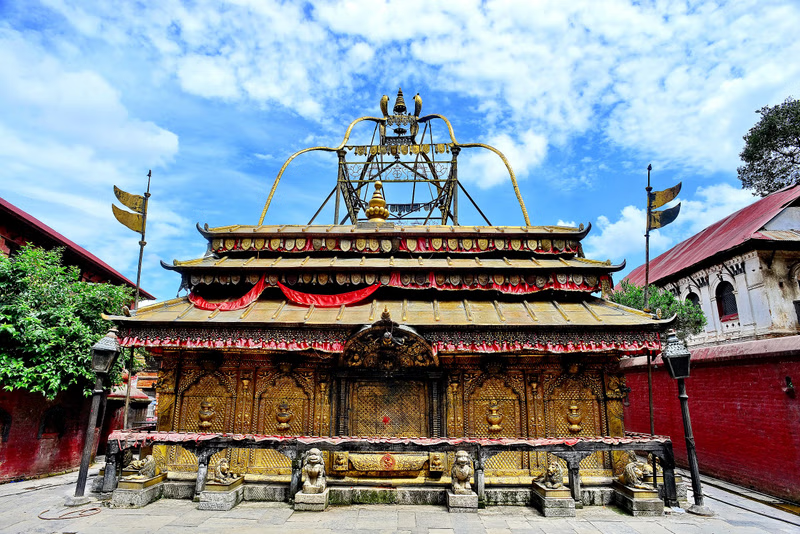
Guhyeshwari Temple is located just a short distance from Pashupatinath, and is considered one of the Shakti Peethas (one of the many sacred shrines to Shakti the feminine divine). The temple is thought to be the location where a part of the body of Goddess Sati fell, and is especially holy to practitioners of tantra, and devotees of Parvati, Kali and Durga. The temple is named for what it represents: “Goddess of the Secret Power.”
Guhyeshwari Temple stands increasingly relevant to the worship of the feminine divine energy. It is important during major Hindu festivals like Navaratri, and many pilgrims from India and Nepal visit the temple seeking blessings of spiritual energy, fertility and strength.
Highlights:
- One of the 51 Shakti Peethas
- Dedicated to Parvati in a tantric form
- Important during Navaratri and Dashain
- Near Pashupatinath
- Has a following of Shakta and Tantric practitioners
7. Budhanilkantha Temple, Kathmandu
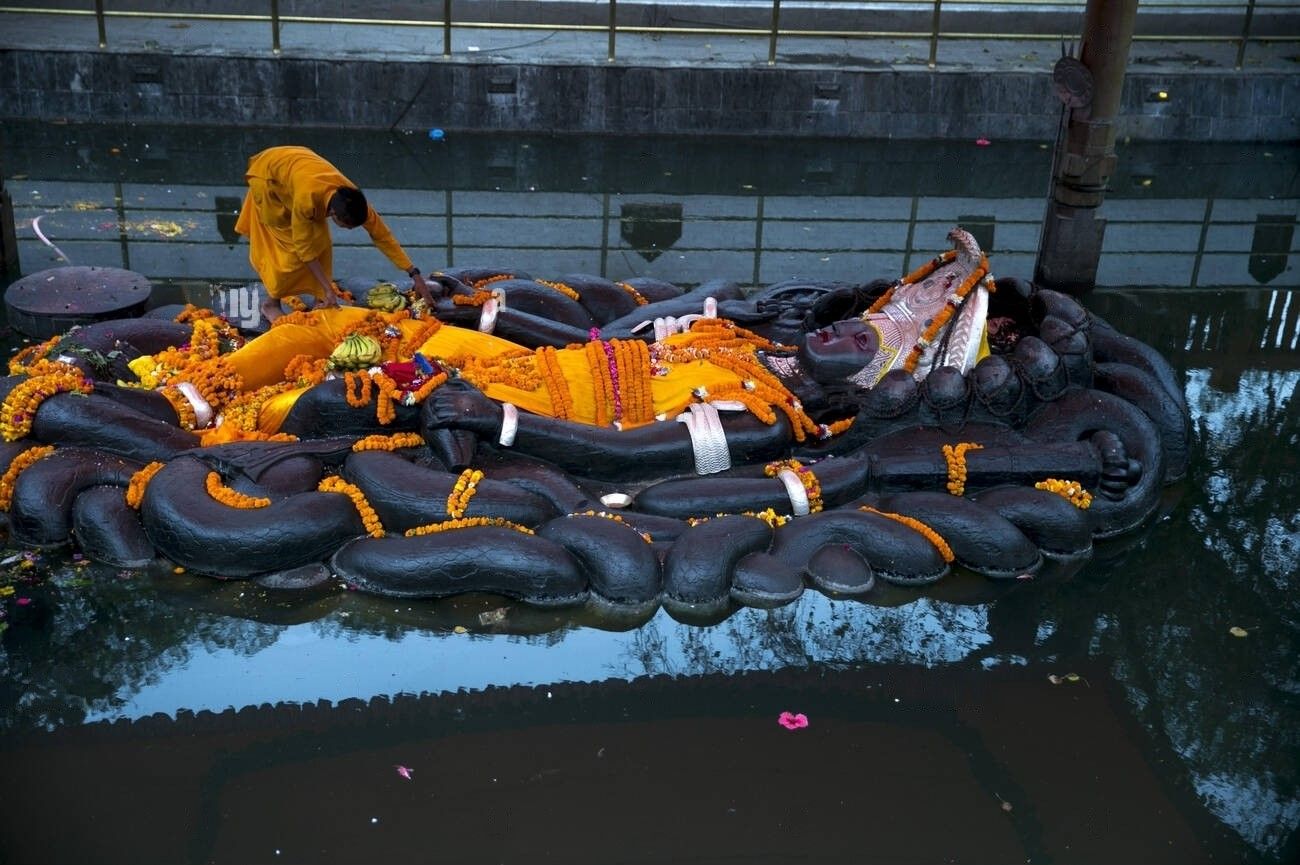
Budhanilkantha temple lies at the base of Shivapuri Hill. The idol is an outdoor exhibit and can be viewed from many angles including from above for boaters. It measures over 5 meters long and is believed to be from the 7th or 8th century. The pond itself is believed to reflect the resting place of Vishnu in the cosmic ocean. The area is devoted to the temple-trusting Hindus, so non-Hindus can be able to see the statue but not get under hand.
Reports suggest that even the kings of Nepal have avoided the site as a king is said to have died in the past post visiting the location. The site remains a powerful and now peaceful place for pilgrims and spiritual seekers.
Highlights
- Reclining statue of Vishnu on the cosmic serpent (5 meters long)
- Open-air temple in a peaceful location
- Non-Hindus are restricted from going near the idol
- Sacred since the Licchavi era
- Full pilgrimage location of Haribodhini Ekadashi
8. Kumbheshwar Temple, Patan (Lalitpur)
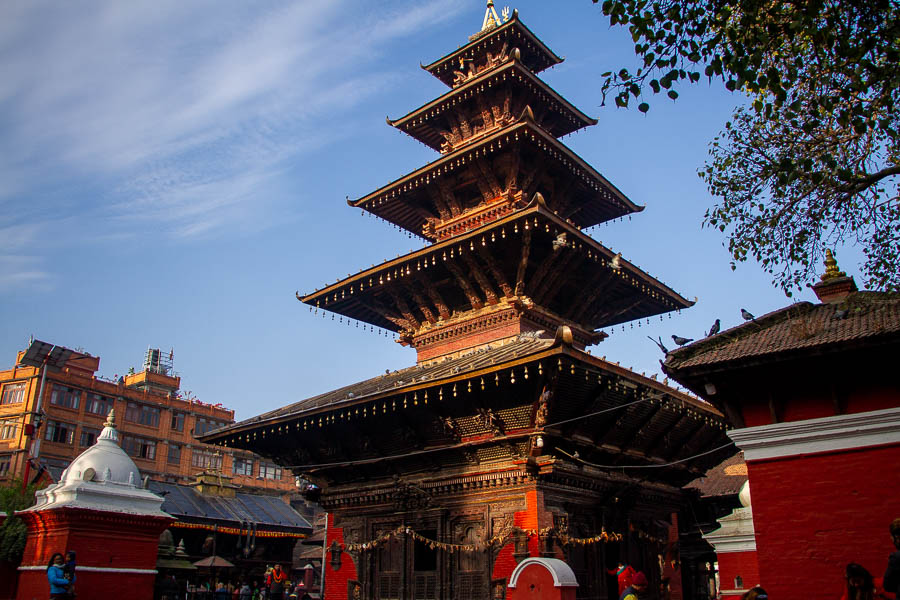
This temple is located in Patan. It is a historical temple distinguished in pagoda style, five floors and dedicated to lord Shiva. Kumbheshwar Temple was constructed in the 14th Century, and is only one of two five storied temples in the Kathmandu Valley. There are also smaller shrines in the temple complex, a public water reservoir, and a few sacred pond systems that the local people believe have a spiritual connection with the Gosainkunda Lake deep in the Himalayas.
One of the most populated in festival celebrants within Kumbheshwar Temple is Janai Purnima, during which thousands of worshippers come to rebond the sacred thread and perform a ritual bath. This mixture of Newar-style encircling this temple and the pagoda is a sign of how the two distinct religions affected each other as well as a sign of the Newar lifestyle in Patan.
Highlights:
- Five stare pagoda dedicated to Shiva
- Sacred ponds connected to Gosainkunda (mythically)
- Bustling site during Janai Purnima festival
- Among Patan’s most ancient, tallest temples
- Bounded by an active bazaar and Newari Culture
9. Krishna Mandir, Patan Durbar Square (Lalitpur)
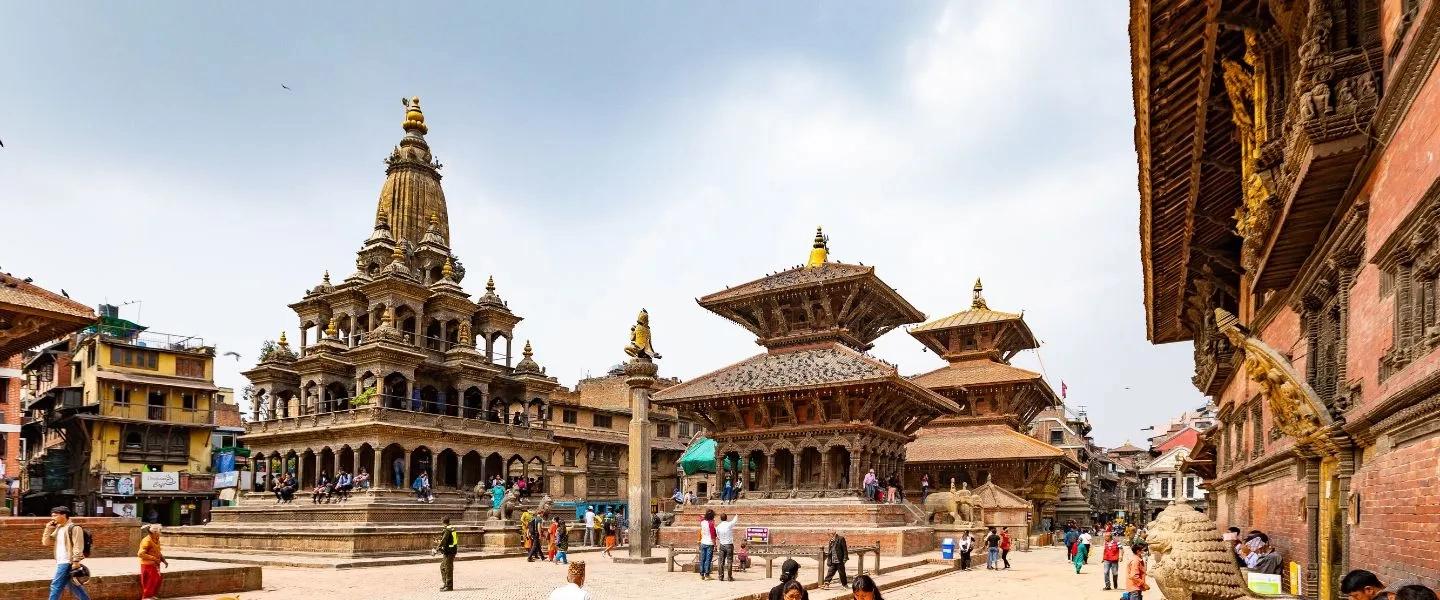
The architecture stone wonder Krishna Mandir stands within Patan Durbar Square. Krishna Mandir stands as one of the limited number of temples in Nepal that showcases Shikhara style construction.
All other temple in Nepal are in the pagoda style of architecture that became dominant throughout the Kathmandu Valley. The temple was built in the 17th century during the reign of King Siddhi Narsingh Malla. The temple is called Krishna because it represented the best quality stone temple construction done throughout Nepal.
The walls consist of carved panels that depict the Mahabharata and Ramayana. Each of the beautiful carvings are scenes that tell the story of Krishna, and imitate scripture for followers to visualize. Krishna Mandir is most important during Krishna Janmashtami when there are thousands of pilgrims.
Highlights:
- Made entirely of stone in Shikhara style
- Built by King Siddhi Narsingh Malla (17th century)
- Carvings depict Mahabharata and Ramayana
- Main temple for celebrating Krishna Janmashtami in Patan
- Rare representation of Indian temple architecture in Nepal
10. (Kathmandu, Patan & Bhaktapur) Taleju Bhawani temples
The Taleju Bhawani temples were the royal shrines of the Malla kings. The Taleju temples were there in the three Durbar Squares Kathmandu, Patan and Bhaktapur all dedicated to Taleju, the tutelary goddess of the Malla dynasty. All the Taleju temples is construct in the 16th century and were close to the general public for almost half the year. Only during Nepal’s biggest festival, the Dashain, were the shrines open to the public.
The temples are significant not just culturally and religiously, but were also a witness to architectural, craftsmanship, and piety beauty. The Taleju temples were multi-level temples with intricately carved doors/windows that represented the royal character of piety, secrecy, and tradition. The Taleju temples provide unique examples of greater spirituality, as they connect the state with monarchy and the divine female.
Highlights:
- Royal goddess of Malla kings
- Temples only open to the public during Dashain
- Temples found in all three major Durbar Squares
- Intricate woodwork and secret rituals
- Blend of state power and divine worship
11. Mahabouddha Temple, Patan (Lalitpur)
Mahabouddha is known as the “Temple of a Thousand Buddhas.” It is a lovely terracotta temple in a secret courtyard in Patan. Built in the 16th century by a Newar merchant who visited Bodhgaya, India, it was build using terracotta bricks, and bricks were stamp with the image of the Buddha. It’s design after the Mahabodhi Temple, and it is a monument to enlightenment.
An architectural and devotional sweetheart. While the Mahabouddha Temple is not large, its surroundings of tranquility and the temple’s exemplary detail make quite the impact mindset.
Highlights:
- “Temple of a Thousand Buddhas”, made from terracotta bricks
- Inspired by the Mahabodhi Temple in Bodhgaya
- 16th Century temple built by Newar craftsmen
- Each brick has a stamped image of the Buddha
- A peaceful and hidden gem in Patan
12. Patan Durbar Square Temples (Lalitpur)
Patan Durbar Square is one of several UNESCO World Heritage Sites with impressive temples and palaces. Among the most highlighted temples within the square are Bhimsen Temple (for the god of commerce), Vishwanath Temple (for Lord Shiva), Hari Shankar Temple (a deity for both Vishnu and Shiva), and Degutale Temple (the royal goddess of Malla kings); each of these temples shows something important about Newar architecture and religiosity.
Patan Durbar Square is not only an important religious spot but also a bustling social and artistic area. Factors of both Hindu and Pallava influences can be find in the extravagant carved wood-and-stone façades, ornate stone lions, traditional metalwork, and chaityas (stupas) that might be scattered about as part of the grand design of temples complexes. In many ways, it is a living museum combining aspects of heritage, rituals for daily worship, and festival celebrations in a melded out-of-time experience.
Highlights:
- Home to Bhimsen, Vishwanath, Hari Shankar, and Degutale temples
- UNESCO World Heritage Site
- Unique combination of Hindu, and Buddhist elements, architecture, and ideas.
- World-renowned Newari craftsmen and architecture
- Cultural and ritual hub for festival ground.
13. Bhaktapur Durbar Square Temples (Bhaktapur)
Bhaktapur Durbar Square (UNESCO World Heritage site) is famous for its intact temples and Newari city that feels safe. The most well-known temple, however, is the Nyatapola Temple (aka Nyatapola Pagoda & tallest temple in Nepal) has 5 stories and is build for Siddhi Lakshmi. In the area, you will find the Vatsala Temple (made of sandstone and a unique bell) and Dattatreya Temple (made of one tree) dedicated to a deity representing Brahma, Vishnu, and Shiva.
The mix of temples, the woodwork, the museum information about the Malla period culture, and continued living traditions for festivals like Biska Jatra show the art and culture of this sacred city. Bhaktapur is a great example of a living sacred city.
Highlights
- Nyatapola Temple- the tallest pagoda in Nepal (indication of red flag)
- Dattatreya Temple- a temple dedicated to a deity representing a trinity
- Vatsala Temple- stone architecture, bell (from Nepal or China)
- A UNESCO world Heritage Site
- A hub of traditional festivals like Biska Jatra.
14. Seto (White) Machhindranath Temple, Kathmandu
Seto Machhindranath Temple sits at the heart of Kathmandu, and worshipped by both Hindus and Buddhists as the god of rain and compassion. The temple has a white image of Avalokiteshvara (Karunamaya) and is thought of as the protector to the prosperity of the valley. This deity brings the monsoon rains and agriculture is rich.
Every year there is an elaborate chariot procession (Seto Machhindranath Jatra) from the temple down through the old streets of Kathmandu. Because of the mixed worship and rituals, this temple can represent religious harmony in Nepal where gods are shared, and festivals bring people together regardless of beliefs.
Highlights:
- Shared worship by Hindus and Buddhists
- Deity: Avalokiteshvara (Karunamaya)
- Annual chariot festival in central Kathmandu
- Symbolizes rain, fertility, and compassion
- A wealth of art, architecture, and ritual
15. Rato (Red) Machhindranath Temple, Patan
The Rato Machhindranath Temple honors the red form of the rain caste deity and one of the most important deities for the Newar community, Machhindranath (Padmapani). The red Machhindranath is the deity to protect against drought and lack of harvest. The god has both a Hindu and Buddhist worship tradition, who shape the particular rites of the day.
Each year, thousands arrive at this temple for the Rato Machhindranath Jatra, Nepal’s largest and most famous chariot ceremony. The Jatra is lively and lasts over a month while the very tall wooden chariot is drage up through the streets of Patan. The Rato Machhindranath Temple stands as a source of evidence of community worship and act of veneration that has stood the test of time.
Highlights:
- Deity of rain and agriculture, doesn’t matter who the practitioner is , who worships as hindus/buddhists
- The grand or famous chariot procession Jatra, held summer, every year
- The center of the most important festival of Patan
- The temple is near Pulchowk area in Lalitpur
- A seasonal symbol of hope, togetherness, and faith.
Conclusion
If breathtaking scenery isn’t all you seek, and you enjoy authentic spirituality, the Kathmandu valley has both. It doesn’t matter if you’re a visitor on pilgrimage, a culturist traveler or simply the curious, the valley welcomes you to share in something that has no time a sacred feeling where gods walk the earth with man.
Travel to the Kathmandu Valley The City of Gods and discover that every temple has a tale, and every corner whispers of divinity. Contact us today at Happy Mountain Nepal, on Facebook, Instagram, or TikTok.