
Kathmandu to Pokhara: Travel Options, Costs & Tips

Kathmandu, the capital of Nepal, is a special living heritage city with ancient monuments all around. Shrines and old temples are observed in city streets, nearly in every square and corner. Kathmandu’s cultural sites include Durbar Square, Pashupatinath, a holy Hindu temple, Swayambhunath (Monkey Temple), and Boudhanath, a Buddhist stupa. If daring enough, why not take a bit of paragliding, zip-flying, trekking, or one of several city highs/lows. Pokhara city is A Place to chill out, get cool, and have a glance at Nepal and the wonderful Himalayas!
Thamel is the tourist slum, and rainbow shops and cafes’ center and cultural festivals. Kathmandu is religious and heritage-saturated as well, something which will surprise the visitor amongst Nepal facts. The city tour is, therefore, an excellent idea to start your Nepalese experience.
Pokhara: A Peaceful City by the Mountains
Pokhara is a laid-back lakeside resort town surrounded by massive Annapurna (Himalaya) mountains, and where not only is it possible to leave the madness of Kathmandu far, far behind you, it’s actually quite literally an option. It is renowned in itself for its own natural beauty, and it has the stunning Phewa Lake, which guests visiting tourists boat across as they just sit and look up in awe at the white snow-capped Machapuchare (Fishtail) mountain.
The sunrises on Sarangkot are the quintessential postcard for a dreamer; and during the day, you can view the World Peace Pagoda, get a breathtaking view of a peaceful view of Devi’s Fall, and then look down at the world below the shadows of Gupteshwor’s Cave. And if you’re feeling adventurous, you can go paragliding, zip-flying, and trekking around the highs and lows of the city. The city of Pokhara is a wonderful space: a chance to unwind, de-stress, relax, and take in the country of Nepal and the Himalayas.
Kathmandu to Pokhara
Pokhara to Kathmandu is one of the most favourite routes in Nepal, with the fascinating capital city of Kathmandu, the old temple city with complete streets, congested narrow lanes, culture, heritage; and Pokhara, the peaceful and lovely City of Lakes and Mountains with adventure-touring activities such as paragliding and trekking.
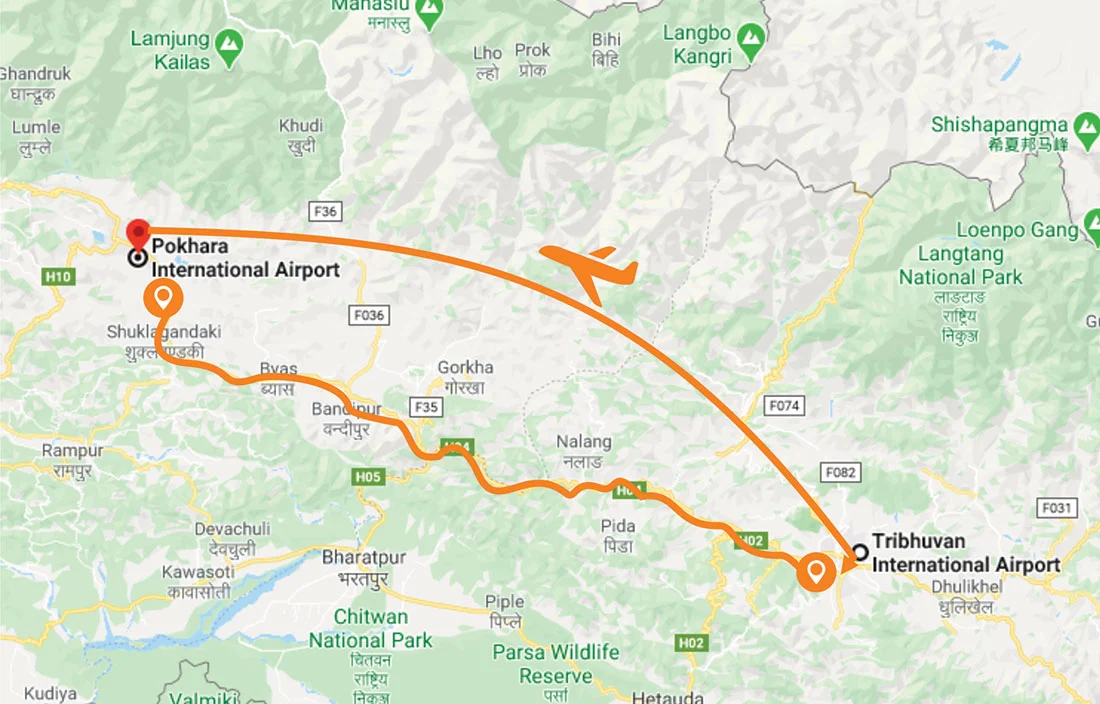
Kathmandu to Pokhara is just 200 kilometers, and people from all over the world come to this destination by bus, vehicle, or even by flight on a daily basis. In between, you get views of green hills, rivers, tiny villages, and farmed fields on landscapes. It’s a journey trip to view the diversity and beauty of the Kathmandu and Pokhara route, as well as of Nepal in general. Whether you’re a tourist, trekker, or local traveler, this journey connects two of the most important and exciting places in the country.
1. Kathmandu to Pokhara by Flight: Fast, Convenient & Scenic
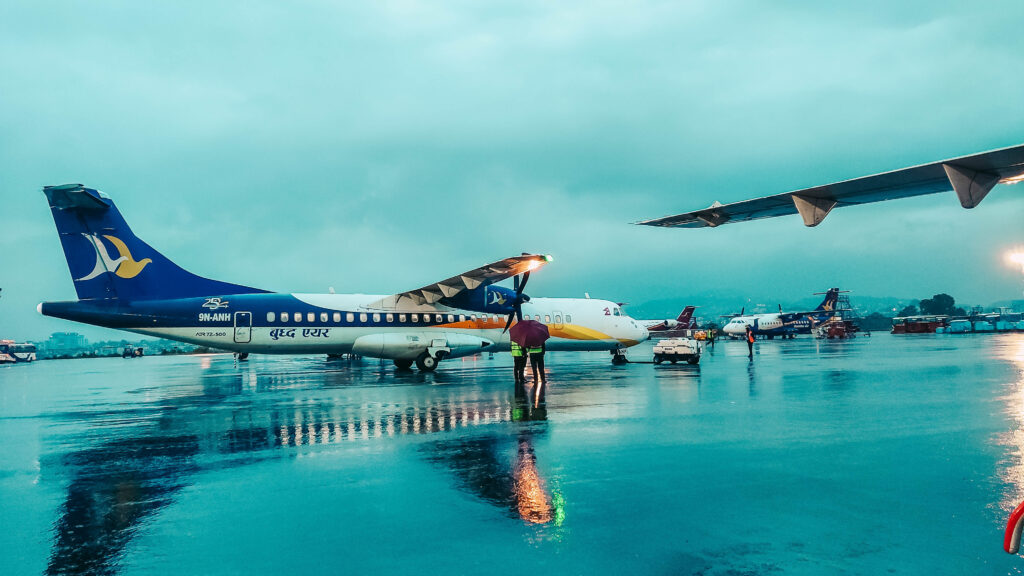
If you are in a hurry or you are looking for something convenient, then definitely flying is the fastest way to travel from Kathmandu to Pokhara. Buddha Air, Yeti Airlines, and Shree Airlines operate several flights a day. If you are purchasing a flight from Buddha Air, they also operate a somewhat bigger jet plane during peak hours.
From departure at Tribhuvan Domestic Airport in Kathmandu to arrival at the brand new International Airport in Pokhara, the flight is about 25 minutes. Although the aircraft employed for the flights are small prop planes with a capacity of about 20 passengers, the scenery from above is absolutely breathtaking. On a clear day, you can actually spot the Langtang, Manaslu, and Annapurna hills in the distance.
Kathmandu to Pokhara by flight
Ticket fare for a flight from Pokhara to Kathmandu will depend on where you are from. Nepalis and Indians will have residents’ rates, while foreign nationals, being residents, will be charged around 1.75 times the residents’ rate, and foreign tourists pay in USD135 and at the highest. It costs at most one-way from Pokhara to Kathmandu, flights of around NPR 6500 to NPR 10000. It’s a brief flight, but sometimes it could be late, or worse, get canceled if it’s during monsoon season or early morning flights during winter. To be safe, do not schedule your domestic flight on the same day as your international flight.
Advantages:
- Shortest amount of time to travel, only about 25 minutes
- Breathtaking views of the Himalayas such as the Annapurna and Manaslu ranges
- Comfortable and stress-free with little physical effort
- Multiple flights during the day, great for busy travel schedules.
Disadvantages:
- Flights can be delayed or canceled due to weather, particularly in the monsoon season or in the winter months when the mornings are foggy.
- Relatively expensive compared to bus travel.
- Limited baggage is allowed due to a smaller aircraft.
- Transferring to and waiting at the airport can add to the total travel time.
2. Kathmandu to Pokhara by Tourist Bus: Inexpensive and Scenic
One of the most popular options to get to Pokhara is to take a tourist bus. Taking a tourist bus is a relatively safe, inexpensive, and uncomfortable albeit long way to travel through the heart of Nepal. Tourist buses typically depart Kantipath (just outside of Thamel) between 7:00 AM and 7:30 AM. While you may be waiting in line to get on a tourist bus going to one of Nepal’s most travelled destinations, once on the bus, you can expect to get to Pokhara in about 7-9 hours on a normal commute basis; however, with traffic and depending on weather and road conditions, allow some extra time to make it to Pokhara. Compared to local or public buses, a tourist bus is a better way to travel and is generally more comfortable and safer.
Tourist buses generally have cushioned seats and large windows so you would get a glimpse of the countryside, and the tours will stop at clean bathrooms and restaurants along the way. Tourist bus ticket prices vary from about NPR 800 for normal buses to NPR 2,500 for the premium, like Greenline or Jagadamba, which are accompanied by facilities like Wi-Fi, steward service, and lunches in pleasant resorts like Riverside Springs.
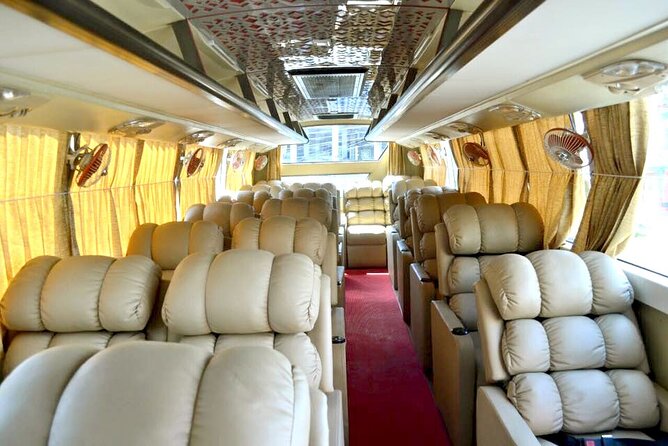 Kathmandu to Pokhara by bus
For the most part, tourist buses take the Prithvi Highway, which keeps close to the Trisuli River as the road serpentines through hills, little valleys, and stops roadside at little towns such as Muglin, Damauli, and Dumre. Along the way in your tourist bus, you can get a glimpse or two of a few cable cars to the Manakamana Temple or ask for a brief sidetrip to Bandipur, a Newari hilltop town with great mountain views and plenty of cultural heritage.
If safety, views, and comfort at very little expense are what you’re after, take the tourist bus. One thing to do with the tourist bus is to reach the departure point early, perhaps 15-30 minutes ahead of your departure, especially during trekking season when the bus will be full.
Advantages:
- Low budget option with prices ranging from affordable buses to deluxe buses.
- Typically clean seats and clean toilets on tourist buses.
- Panoramic drive on the Prithvi Highway flanked by rivers and mountains will be stunning.
- Clean restaurant points at stop points and clean toilets on the route during travel.
- Potential discovery of small towns such as Bandipur en route.
Disadvantages:
- Generally, longer than a private car or plane, depending on traffic volume (7 to 9 hours).
- May be packed like sardines, particularly in season. You might not want to hold out for a seat.
- May be at the mercy of road conditions and traffic jams.
- Less convenient: You can’t have a car on rent since you’re at the mercy of fixed departure.
3. Kathmandu to Pokhara by Local Minibus or Bus: Raw and Bargain
Local buses and minibuses run from Gongabu New Bus Park or the Kalanki junction of Kathmandu for those who want a raw (and unstructured) Nepal experience. Locals are largely opting for local minibuses and buses that travel on the same route, running very often throughout the day and sometimes at night.
If you want to go the cheap route, then local buses would be the cheapest; expect to pay approx. NPR 900-1,500 (depending on where you are travelling); but expect the same 7-12 hours of travel (also depending on whether you consider traffic, weather, and numerous stops to pick-up/drop-off passengers, the multiple long hours of travel add up in terms of time! The majority of the local buses will be full to capacity, dirty, noisy, and have poor ventilation or insufficient seating for the number of people on the bus. If you want to be local or part of the bustle of locals, this is your way of transportation, but it’s certainly not for the weak of stomach or those who are used to luxury.
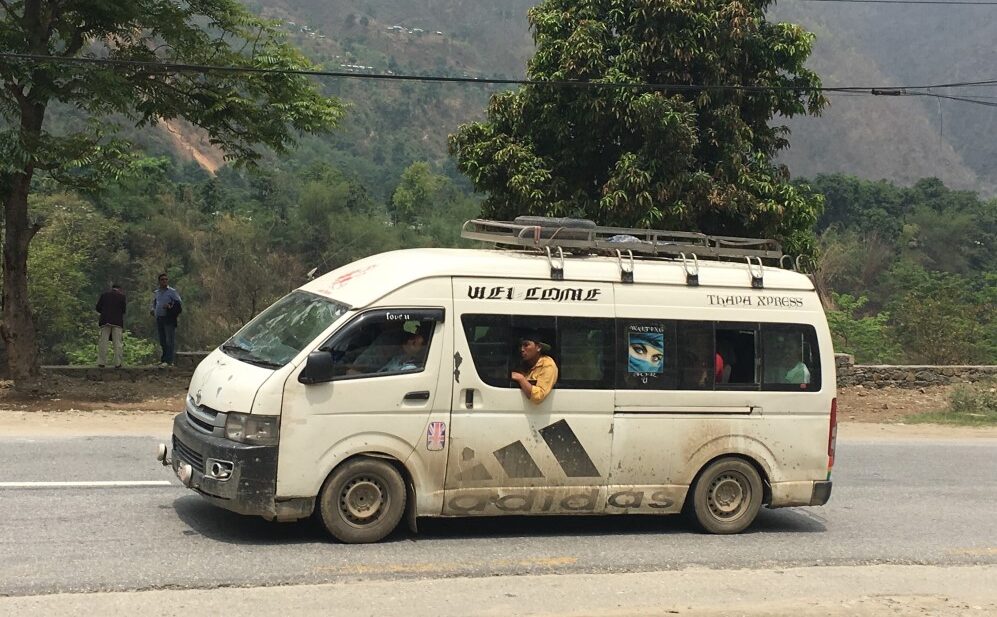 Kathmandu to Pokhara by Local Minibus
A second alternative from the local bus is a minibus or Toyota Hiace car, which will normally be slightly faster because they are smaller and they go more frequently for the journey. The Hiace can reduce your total travel time by perhaps another two hours. But since these are smaller cars, their capacity for carrying things is low, and since you can be ‘full,’ you will feel a little more cramped when you ride. They speed dangerously, which might not be so secure for everyone involved.
The disadvantage with this one is that, of course, money is saved using local bus services, and safety, comfort and cleanliness will be sacrificed by traveling like that. Loud music on board, occasional stops at bazaars, and irregular stopping times or frequencies are what you can look forward to with this as your choice.
Advantages:
- Least expensive transport between Kathmandu to Pokhara.
- Minibuses run most of day and night.
- Real local travel and you’ll get to know Nepalis traveling too.
- Minibuses might be faster than local buses.
Disadvantages:
- Usually packed and loud with lower hygiene standards.
- Seats are not comfortable and there is no forethought to climate control.
- Most schedules are vague and there are so many stops you could take 12 hours!
4. Kathmandu to Pokhara by Private Car/ Jeep
This is probably the best option if cost is not an issue and you’d like the benefit of flexibility, comfort and privacy at your own pace. This is the most bespoke travel. You can leave when you want, stop when you want, travel at your leisure.
It takes around 6-8 hours driving time to arrive by private vehicle (depending on stops). A car with a driver is around 11000-18000 NPR each way. Some larger vehicles/pickups like a Scorpio SUV or Toyota Hiace (for larger groups) would be more like 20000-25000 NPR each way. Air conditioning would almost always be an extra charge, about 10-25% of the base charge.
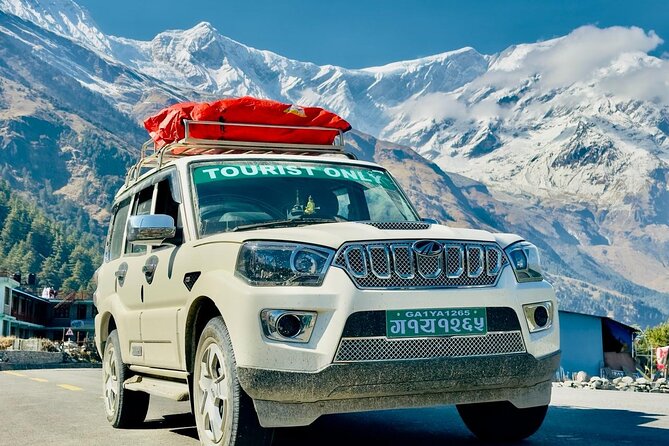 Kathmandu to Pokhara by Private Car/ Jeep
This transport mode is great for photographers, citizens, and families who would love to make a stop at offbeat places or lunch in seclusion like Bandipur, Kurintar, or Begnas Lake. You can even choose to break at the Manakamana cable car terminal or even a brief commercial white-water rafting excursion along the way. Remember that car rentals in nepal typically all come with drivers, and overseas nationals, for insurance and licensing reasons, cannot drive themselves. Round-trip has an overnight stay fee, and multi-day usage has time limits on how long you hold onto it.
Advantages:
- Full flexibility in the departure time and break time on the trip.
- Slanting seating arrangements and air conditioning availability.
- Good choice for tourists, families, and tourists who require some privacy.
- Facility to visit off-beat destinations such as Manakamana or Bandipur.
- You can make it your own and go whenever you wish; it eliminates a lot of hassle connected with working within a schedule.
Disadvantages:
- Can be more expensive than other road travel options than there are.
- Availability will be subject to day of week, degree of lead time you will have for arranging.
- Rentals will be for the driver’s salary, i.e., rental agreement is not for self-drive, or driving ourselves.
- Travel time still on a traffic road condition basis (6-8 hours).
- Possible additional charge for the air conditioning and wait time.
5. Kathmandu to Pokhara by Rafting: Adventure with a Splash
If you want to make the journey itself an adventure, white-water rafting from Kathmandu to Pokhara is the way to go! While you won’t be rafting the whole way, most companies offer 1-2-day rafting trips on the Trisuli River which is located roughly 3 hours from Kathmandu and ends a few hours before Pokhara. The journey typically begins with a bus transfer to the put-in approximately 30 minutes outside of Charaudi. After 3 or 4 hours of paddling class II–IV white water, you will camp on the river bank or continue straight to the take-out point. Note that the van ride provided by the tour operators will whisk you the rest of the way to your destination!
This option is perfect if you are traveling with a group of friends or simply want to combine an outdoor experience with your transfer. The one-day trips can run anywhere from about NPR 3,500–5,000 per person. The amount will depend on the tour operator, but all will include gear, guide, meals and transport.
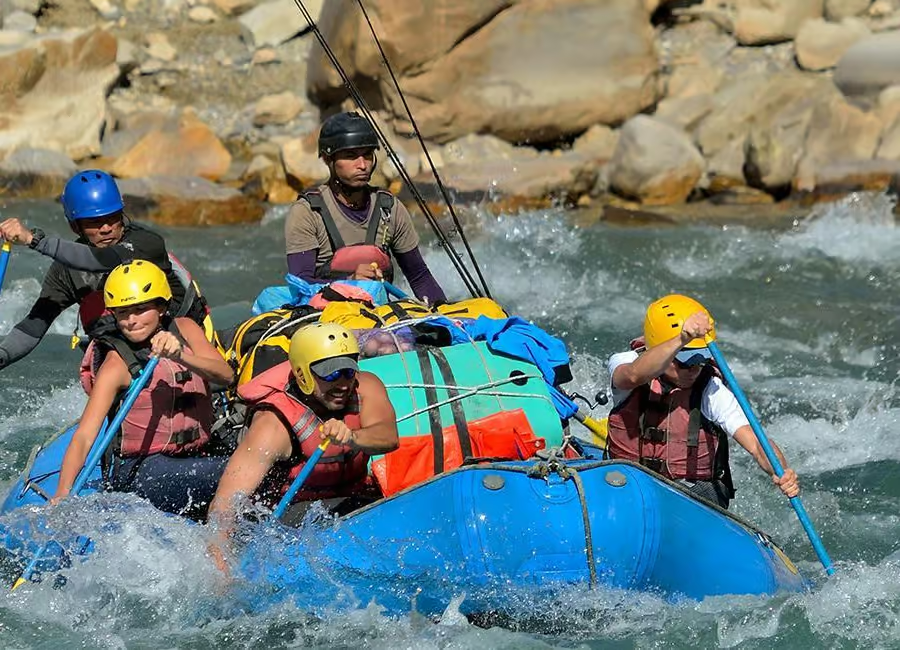
Rafting trips are the best during the pre-monsoon (March-may) and post-monsoon (September-November) seasons. Due diligence should always be taken in terms of review and credentials for your safety. All of the tour operations will typically offer safety gear, experienced guides, and insurance.
Advantages:
- It’s a fun and exciting way of traveling through the country.
- You are blending travel with an exciting outdoor adventure on Nepal’s Trisuli River.
- You are provided with professional guides, safety equipment and supplies.
- You will be camping by the river and can indulge in nature ‘up close and personal’.
- It is larger in general in pre and post-monsoon seasons when the water level is sufficient.
Disadvantages:
- It’s a short journey since you need to reserve your seat in advance.
- River rafting is weather- and water-dependent.
- In case you are a time-constrained tourist, have health complications or are traveling with disability, it’s not feasible.
- There could be an additional fee over flying by bus, depending on the deal.
Conclusion
Traveling from Kathmandu to Pokhara is not just traveling point A-B; it’s a part of your Nepali experience. Irrespective of whether you would like to reach there most quickly by air, experience another culture by tourist bus, travel authentically and where locals take you by local transport, travel in comfort by private vehicle, or experience the adrenaline rush by booking a tour for river rafting, there is one method to travel as per your expenses and travel class.
Take your time to decide what’s most important for your journey: speed, scenery, comfort, or adventure. And once you arrive in Pokhara, with its calm lakes, towering peaks, and relaxed atmosphere, you’ll know that the trip, no matter how long or bumpy, was well worth it. Contact us today at Happy Mountain Nepal, Facebook, Instagram, or TikTok.