
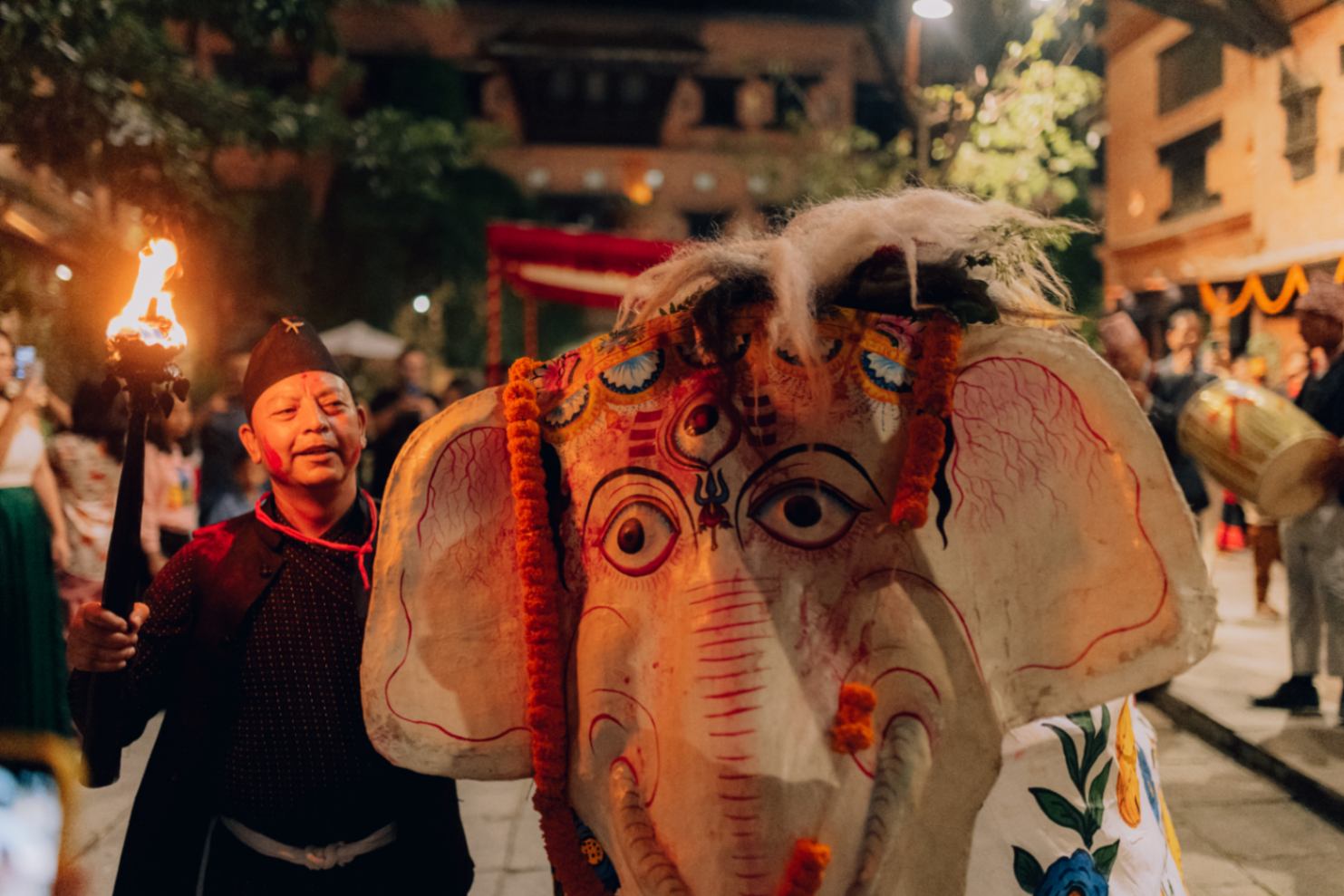
Gaijatra & Janai Purnima in Nepal: The Day I Lived Two Festivals at Once

It felt truly incredible to experience the magic of Gaijatra & Janai Purnima in Nepal this year. I honestly could not believe that Gaijatra & Janai Purnima would take place on the same day! It seemed the city was prepping for a cosmic heartbeat, one with gaiety & chaos, and the other with dignity and grace. I had no sense that the day would stay with me forever.
Morning- Gaijatra in Bhaktapur
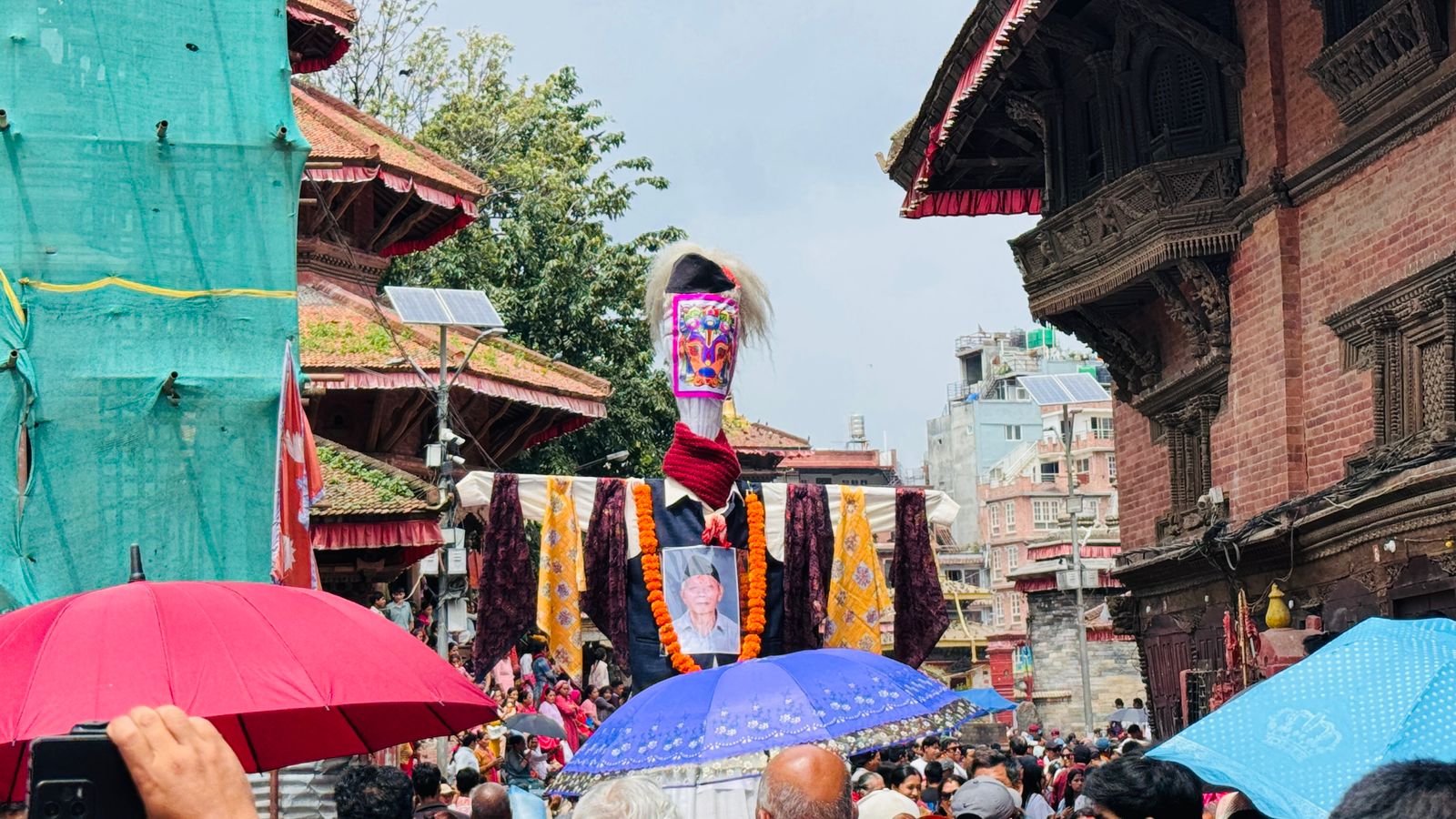
I flowed into Bhaktapur Durbar Square shortly after the sun’s rays peeked over the horizon, and the light was soft and golden. Rain earlier had darkened and slicked the bricks, their earthy surface emanating soaked ink and incense. The bigger magic was in the people. Gaijatra, also referred to as the “Festival of Cows.” It is a day to remember those who have died in the past year. Families lead cows or dressed kids down the street in the belief that to have a holy cow walk helps a spirit’s journey to the afterlife.
The streets were already alive with motion. Drummers banged on large dha drums with regularity, flutes trilled bright melodies that intertwined with the smells and sounds, and laughter was all around. Children burst into little clusters with faces painted and colorful robes. Women reached over, carving wooden railings of balconies to dismiss rice and flowers on walking processions.
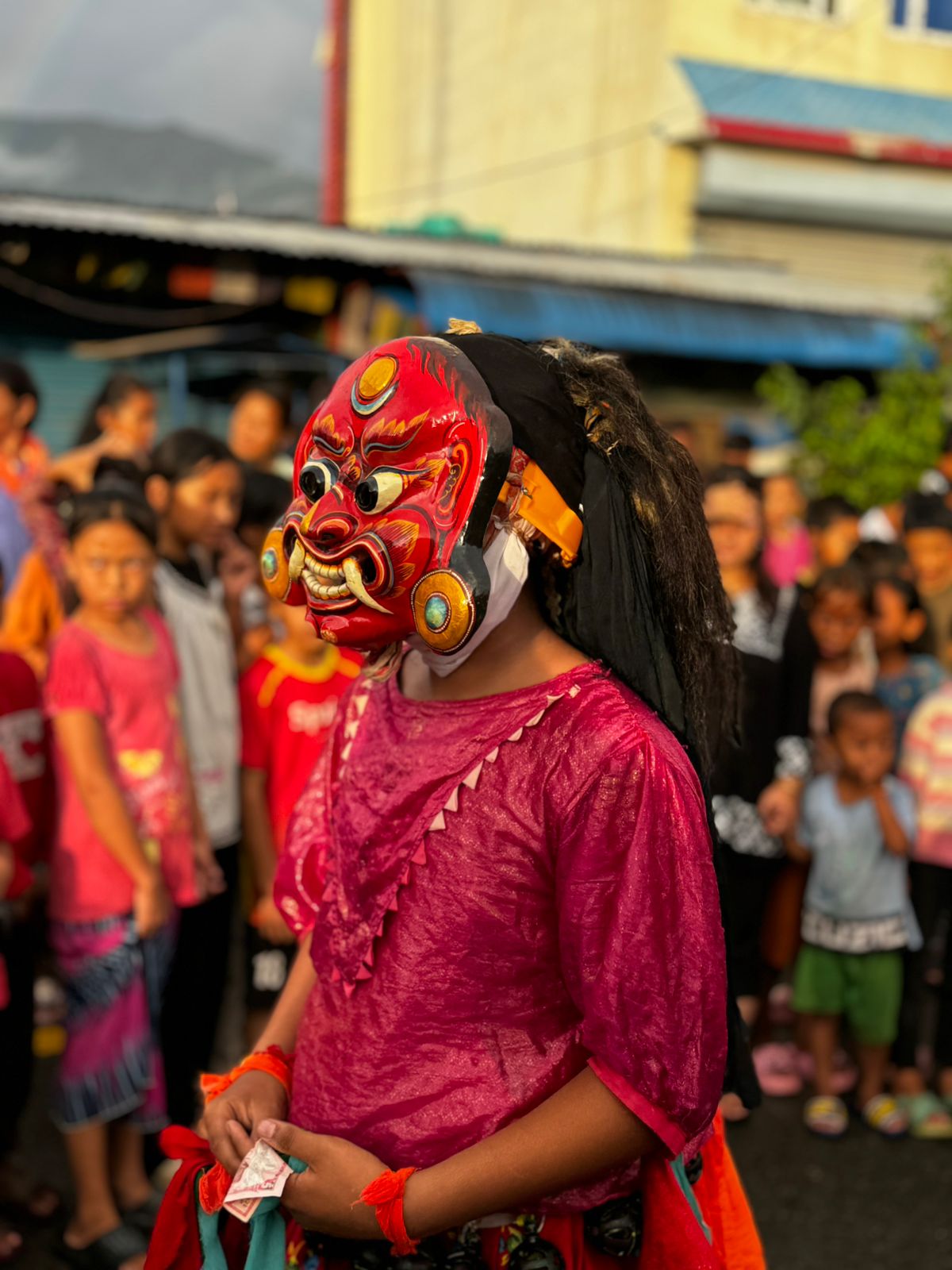
I paused to watch a group of young boys dressed as gods with faces painted gold and blue, their crowns slightly awry on their heads. They struck poses for photos and basked in all the attention. Over by a family, a cow beautifully decorated with fresh marigolds and shiny red cloth was led by the family, and calmly observed the chaos around it. I learned later that if there is no cow in the home, a child is dressed up as a cow, ensuring that every parted soul is still properly sent to heaven.
At that point, a little girl in a yellow sari ran up and tugged my sleeve and pulled me into a quiet courtyard. There, an old woman was sitting, her deep red sari matched the flowers on her brass plate. Without saying a word, she placed a tika on my forehead, and her warm hands pressed down.
She invited me in when she saw how wet I was. It was a small room that smelled of wood smoke and cardamom tea. She poured me a cup, which warmed me. The sweetness comforted me in a way similar to being comfy warm on a cold day. Then it struck me that Gaijatra was not just a time to remember the dead but to act for the living; to make them smile and love them through generosity.
I wanted to give her something important, so I pulled out my MP3 player. I went to my main system and made a disc for her of the more popular Nepali folk songs according to her listening tastes, which I offered her. She took it as if it were a treasure. Right then, in a tiny kitchen with rain pouring outside, the sound of some distant festival music on the radio. I realized I had entered a tiny but rich space that was the very core of Gaijatra with joy that comes from memory, and memory that lives through joy.
Upon completion of my travels in Bhaktapur. I arrived at Pashupatinath Temple, the focal point of spirituality for thousands of people in Kathmandu. Janai Purnima is a day for Hindu males to memorialize and transition their sacred thread. A janai, one representing purity and responsibility. Everyone, men, women, and children, can wear a Raksha Bandhan, a wrist thread made of cotton that has red and yellow and is intended for good protection.
The temple at Pashupatinath was busy, but a different busy from the one in Bhaktapur, it was noticeably quieter with funny chants. The Bagmati river was flowing very slowly and poorly reflected the heavy, dark clouds that were raining into it. Pilgrims were going into bubbling waters to bathe, clambering out shivering, and smiling. The air was thick and rich with the aromas of burning ghee lamps, marijuana, and sandalwood.
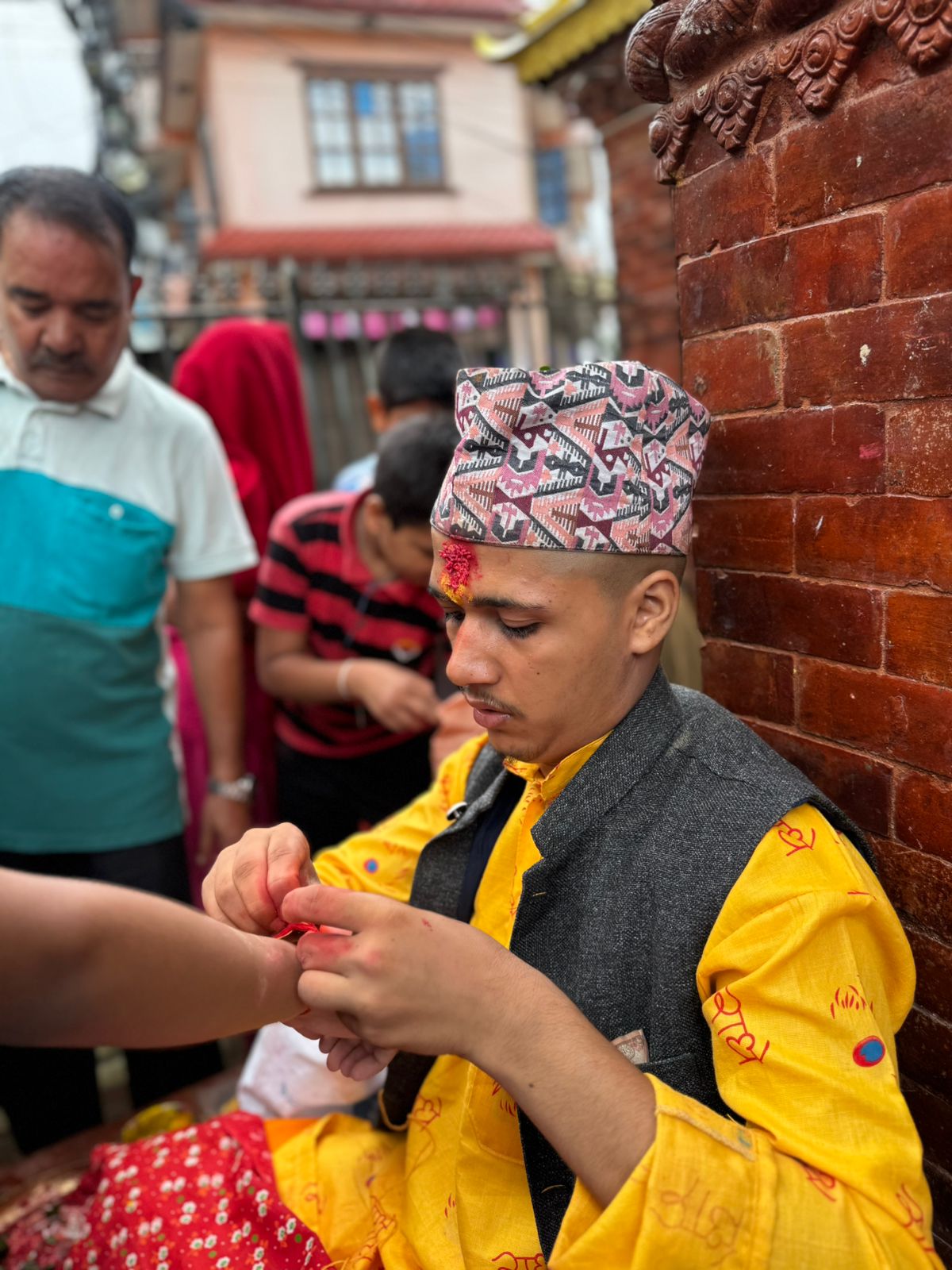
Long lines of priests sat cross-legged, working quickly with their hands to tie their threads and mutter blessings. There were men clothed in white material retying their sacred thread. A ritual that has existed for centuries. I watched a father help his young son tie the boy’s first thread. The father’s voice was gentle and proud.
A young priest motioned for me to come over. I sat before him and was enveloped by the sound of chants and bells. He tied the raksha bandhan around my right wrist. I felt an odd calmness inside, as if this thread was not merely a blessing for protection, but it was also the necessary quietness for me to belong to the moment in this place.
I thought about how only hours earlier I had experienced Gaijatra’s joy and laughter. Now I was sitting in the calm, sacred embrace of Janai Purnima. It was as if the two festivals were telling me something together. Life is about the balance between the joy of celebrating and the quietude of remembering, a duality of celebration and reflection.
Evening- Threads and Connections
As daylight faded, the temple’s courtyards shimmered with hundreds of oil lamps brightening the evening. I had just gotten ready to leave, but I stopped at a chatpate stall where a man was tossing puffed rice, with chili, onion, and coriander, with his arms flying all over the place in making this mess. A woman beside me took some from her paper cone and offered me some. My mouth was on fire, so we both recoiled and laughed at how spicy it was. She told me she had come from Dolakha just for Janai Purnima. Before I left, she stuffed a small package of roasted soybeans in my hand. “For your journey,” she said.
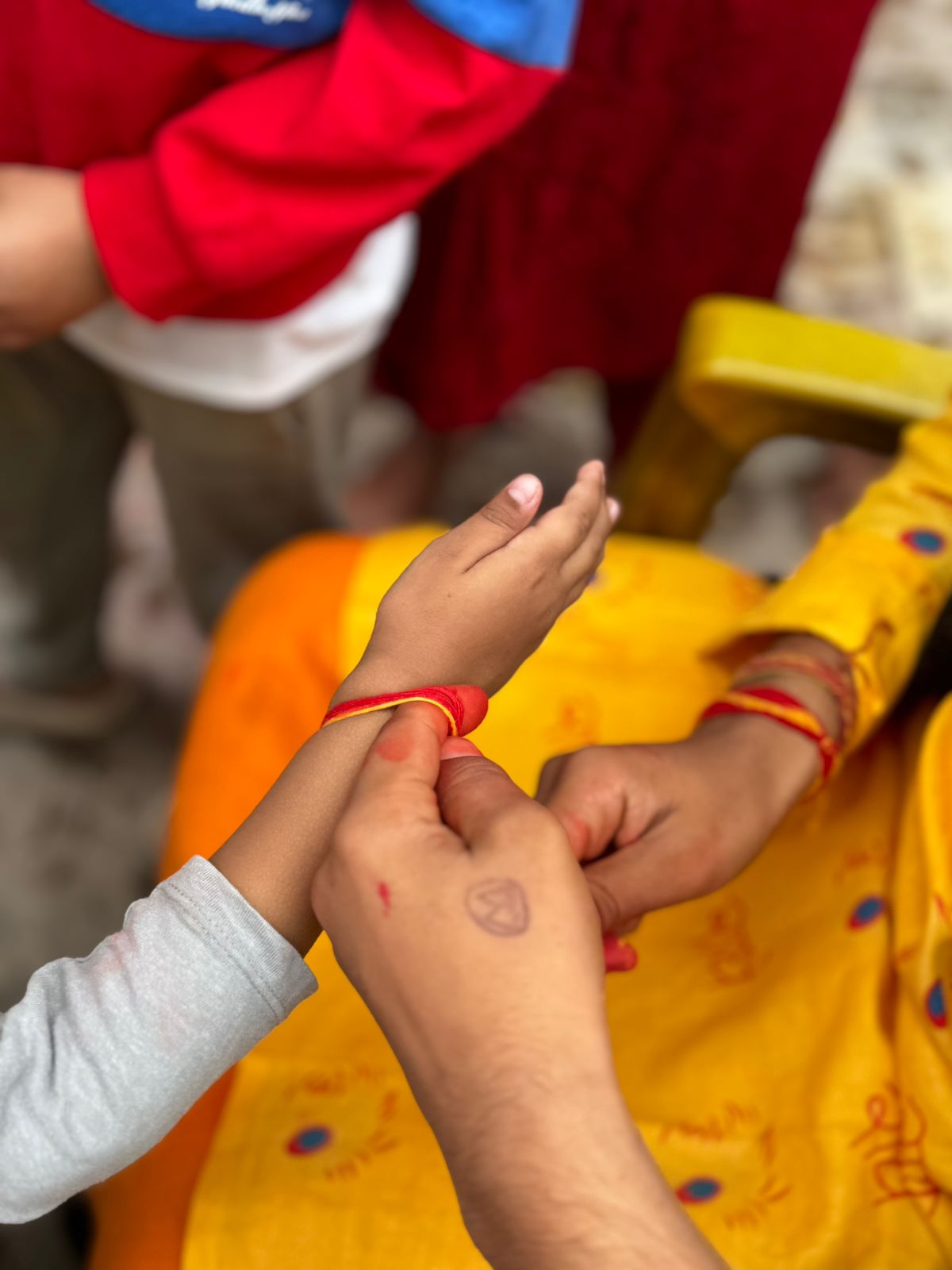
That night, when I arrived home and looked in a mirror. I still had the red tika from Gaijatra on my forehead. The thread of protection that was Janai Purnima on my wrist, and a package of soybeans in my backpack from a random person.
I did not just “see” two festivals that day. But “felt” them. I walked their streets, drank their tea, wore their blessing,s and laughed with their people.
Two festivals, one heart.
Gaijatra taught me that in sadness there can be laughter, there can be song, and there can be joy. Not to forget, but to remember in love, because it was love that was lost. Janai Purnima taught me that protection is not always walls or weapons . Sometimes it is a thread, a prayer, or the kindness of a stranger. I am so glad Happy Mountain Nepal made my journey so beautiful.